

Executive Overview
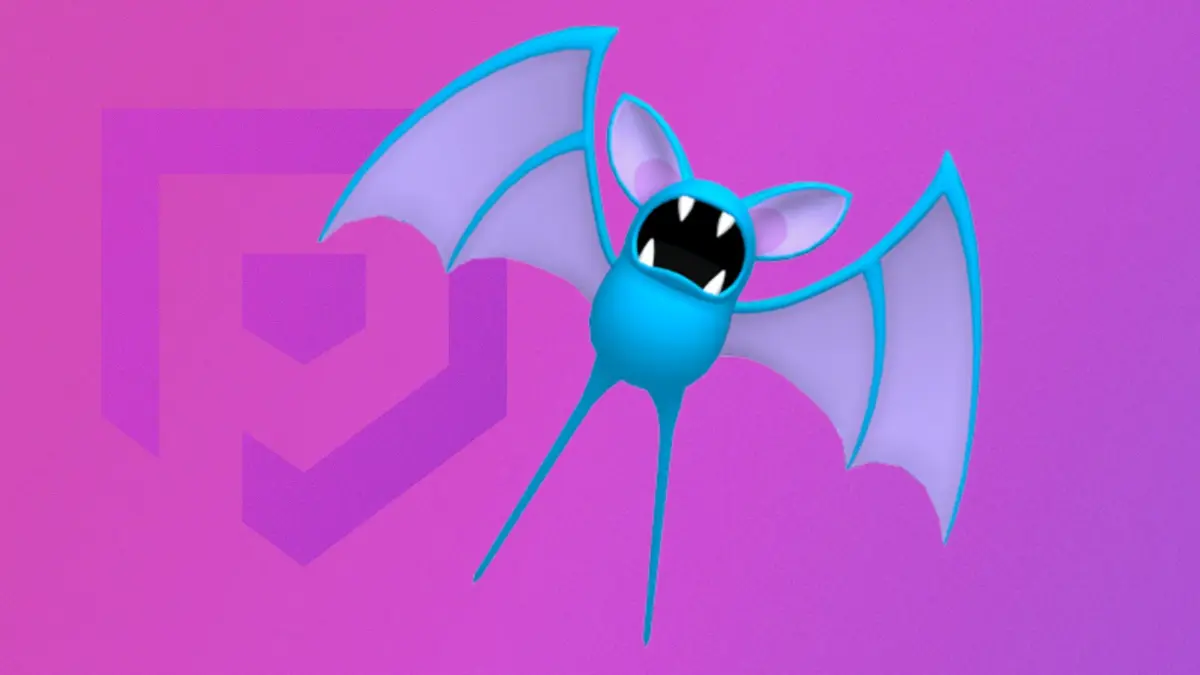
Since its debut in the 1996 seminal titles Pokémon Red and Pokémon Blue, Zubat (#0041 in the National Pokédex) has maintained a ubiquitous presence across the handheld and console titles of the Pokémon media franchise. Classified as the "Bat Pokémon," Zubat occupies a distinct biological and tactical niche defined by its dual Poison/Flying typing, sightless navigation via echolocation, and a multi-stage evolutionary sequence that culminates in one of the fastest physical disruptors in competitive play: Crobat.
While historically infamous among casual players for its overwhelming encounter rates within dark cave biomes, Zubat represents a critical case study in creature design, evolutionary mechanics, and type-coverage dynamics. Mechanically designed as an early-game Speed-oriented encounter, Zubat serves as an introduction to status affliction (via moves like Supersonic and Confuse Ray) and early-game sustain (via drain-based attacks like Absorb and Leech Life).
This dossier provides an exhaustive analysis of Pokémon #0041, examining its historical distribution across nine generations of main-series games, core battle metrics, type effectiveness matrix, learnset mechanics, and long-term standing within both competitive metas and franchise lore.
Detailed Chronology: Regional Distribution and Generational Evolution
Zubat’s distribution across nine generations reflects Game Freak’s changing design philosophy regarding wild encounters, habitat design, and regional Pokédex rosters.
[Zubat] --(Level 22)--> [Golbat] --(High Friendship)--> [Crobat]The Evolutionary Pipeline
- Zubat: The base stage focused on early-game Speed growth and disruptor status moves.
- Golbat: Achieved upon reaching Level 22. Gains significant increases to base stats, particularly HP, Attack, and Speed.
- Crobat: Achieved when Golbat levels up while maintaining a high Friendship (Happiness) level (typically 220+ in legacy mechanics or 160+ in modern mechanics). Introduced in Generation II, this final stage elevates the line into an elite Speed bracket (Base 130 Speed).
Generational Habitat Breakdown
Generation I (Kanto: Red, Blue, Yellow)
Zubat was introduced as the predominant cave encounter in Kanto, establishing its reputation as a persistent obstacle for traveling trainers.
- Key Encounter Locations: Mt. Moon, Rock Tunnel, Seafoam Islands, Victory Road.
Generation II (Johto: Gold, Silver, Crystal)
With the introduction of the day/night cycle, Zubat’s distribution expanded to open-air routes during nocturnal hours, while remaining a 24-hour inhabitant of subterranean locations.

- Gold & Silver: Routes 3, 4, 32, 33, 42 (Night); Burned Tower, Dark Cave, Ice Path, Ilex Forest, Mt. Moon, Mt. Mortar, Rock Tunnel, Slowpoke Well, Tohjo Falls, Union Cave, Whirl Islands.
- Crystal: Adds nocturnal encounters on Routes 9, 10, 30, and 31.
Generation III (Hoenn, Kanto Remakes, Orre: Ruby, Sapphire, Emerald, FireRed, LeafGreen, Colosseum, XD)
- Ruby, Sapphire, & Emerald: Cave of Origin, Granite Cave, Meteor Falls, Seafloor Cavern, Shoal Cave, Victory Road. (Emerald adds Altering Cave).
- FireRed & LeafGreen: Altering Cave, Icefall Cave, Lost Cave, Mt. Moon, Rock Tunnel, Seafoam Islands, Victory Road.
- Orre Region: Obtainable via Trade in Colosseum; catchable at the Cave Poké Spot in XD: Gale of Darkness.
Generation IV (Sinnoh & Johto Remakes: Diamond, Pearl, Platinum, HeartGold, SoulSilver)
- Diamond, Pearl, & Platinum: Routes 203, 204, 206, 207, 208, 209, 211, 216, 217 (Night); Acuity Lakefront (Night), Iron Island, Lost Tower, Mt. Coronet, Oreburgh Gate, Oreburgh Mine, Ravaged Path, Wayward Cave.
- HeartGold & SoulSilver: Retains Johto distributions; adds Cliff Cave (Night) and designated Safari Zone biomes.
Generation V (Unova: Black, White, Black 2, White 2)
In an effort to reset the regional ecosystem, original Black & White excluded Zubat entirely from the main storyline.
- Black & White: Obtainable solely via breeding evolved forms (Golbat/Crobat transferred post-game).
- Black 2 & White 2: Integrated into the urban subterranean ecosystem via the Castelia Sewers.
Generation VI (Kalos & Hoenn Remakes: X, Y, Omega Ruby, Alpha Sapphire)
- X & Y: Connecting Cave.
- Omega Ruby & Alpha Sapphire: Cave of Origin, Granite Cave, Meteor Falls, Scorched Slab, Seafloor Cavern, Sealed Chamber, Shoal Cave, Victory Road.
Generation VII (Alola & Kanto Re-imagining: Sun, Moon, Ultra Sun, Ultra Moon, Let’s Go)
- Sun, Moon, Ultra Sun, & Ultra Moon: Diglett’s Tunnel, Hau’oli Cemetery, Lush Jungle, Memorial Hill, Poké Pelago, Seaward Cave, Ten Carat Hill, Verdant Cavern (Ultra games add Sandy Cave).
- Let’s Go, Pikachu! & Let’s Go, Eevee!: Cerulean Cave, Diglett’s Cave, Mt. Moon, Pokémon Tower, Rock Tunnel, Seafoam Islands, Victory Road.
Generation VIII (Galar, Sinnoh Remakes, Hisui: Sword, Shield, BDSP, Legends: Arceus)
- Sword & Shield: Absent from the base Galar Pokédex; reintroduced via The Crown Tundra expansion (Ballimere Lake, Dyna Tree Hill, Frigid Sea, Frostpoint Field, Giant’s Bed, Lakeside Cave, Roaring-Sea Caves, Tunnel to the Top).
- Brilliant Diamond & Shining Pearl: Mirrors Gen IV, expanding encounters into the Grand Underground (Bogsunk Cavern, Grassland Cave, Spacious Cave, Swampy Cave, Sunlit Cavern).
- Legends: Arceus: Widely distributed across ancient Hisui:
- Obsidian Fieldlands: Deertrack Heights, Deertrack Path, Nature’s Pantry, Oreburrow Tunnel, Obsidian Falls, Tidewater Dam, Windswept Run, Worn Bridge.
- Crimson Mirelands: Bolderoll Slope, Cloudpool Ridge, Diamond Heath, Diamond Settlement.
- Coronet Highlands: Ancient Quarry, Heavenward Lookout, Wayward Cave, Wayward Wood.
- Alabaster Icelands: Snowpoint Temple.
Generation IX (Paldea & Lumiosa: Scarlet, Violet, Legends: Z-A)
- Scarlet & Violet: Unobtainable natively in the base Paldea region or The Hidden Treasure of Area Zero DLC wild spawns (requires transfer via Pokémon HOME or trade).
- Legends: Z-A: Confirmed for urban/subterranean biomes within hyperspace segments of Lumiose City.
Supporting Context & Metrics: Biological, Stat, and Move Data
Primary Species Metadata
| Metric | Scientific / Game Data |
|---|---|
| National Pokédex # | #0041 |
| Primary Type | Poison |
| Secondary Type | Flying |
| Standard Ability | Inner Focus (Prevents flinching; immune to Intimidate in Gen VIII+) |
| Hidden Ability | Infiltrator (Bypasses light screens, Reflect, Safeguard, Mist, and Substitutes) |
| Gender Ratio | 50% Male / 50% Female |
| Sexual Dimorphism | Female Zubat possess distinctly smaller/shorter fangs than males |
| Catch Rate | 255 (43.9% at full HP with a standard Poké Ball) |
| Egg Group | Flying |
| EV Yield | +1 Speed |
Base Stat Distribution
Zubat’s stat allocation prioritizes initiative over bulk or offensive output. Its base 55 Speed sets the foundation for its eventual transformation into Crobat.
HP         [40]  ■■■■■
Attack     [45]  ■■■■■■
Defense    [35]  ■■■■
Sp. Atk    [30]  ■■■■
Sp. Def    [40]  ■■■■■
Speed      [55]  ■■■■■■■
Total: 245- Hit Points (HP): 40
- Attack: 45
- Defense: 35
- Special Attack: 30
- Special Defense: 40
- Speed: 55
- Base Stat Total: 245
Type Matchup Matrix
Zubat’s dual Poison/Flying combination yields a strong defensive profile, highlighted by a quad-resistance to three major physical types and a total immunity to Ground.
   Weaknesses (2x)         Resistances (0.5x / 0.25x)       Immunities (0x)
┌───────────────────┐    ┌───────────────────────────┐    ┌──────────────────┐
│  Electric  Ice    │    │ Fairy (0.5x) Poison (0.5x)│    │                  │
│  Psychic   Rock   │    │ Bug (0.25x)               │    │  Ground (0x)     │
│                   │    │ Fighting (0.25x)          │    │                  │
│                   │    │ Grass (0.25x)             │    │                  │
└───────────────────┘ └───────────────────────────┘ └──────────────────┘- Immune (0x Damage): Ground
- Double Resistance (0.25x Damage): Bug, Fighting, Grass
- Single Resistance (0.5x Damage): Fairy, Poison
- Neutral Damage (1x): Dark, Dragon, Fire, Flying, Ghost, Normal, Steel, Water
- Weaknesses (2x Damage): Electric, Ice, Psychic, Rock
Moveset Specification (Modern Standard)
Level-Up Progression
| Level | Move Name | Type | Category | Power | Accuracy |
|---|---|---|---|---|---|
| 1 | Supersonic | Normal | Status | — | 55% |
| 1 | Absorb | Grass | Special | 20 | 100% |
| 5 | Gust | Flying | Special | 40 | 100% |
| 8 | Bite | Dark | Physical | 60 | 100% |
| 12 | Wing Attack | Flying | Physical | 60 | 100% |
| 15 | Quick Attack | Normal | Physical | 40 | 100% |
| 18 | Whirlwind | Normal | Status | — | — |
| 22 | Hypnosis | Psychic | Status | — | 60% |
| 26 | Haze | Ice | Status | — | — |
| 30 | Confuse Ray | Ghost | Status | — | 100% |
| 34 | Poison Fang | Poison | Physical | 50 | 100% |
| 42 | Air Slash | Flying | Special | 75 | 95% |
| 50 | Leech Life | Bug | Physical | 80 | 100% |
Learnable Technical Machines (TMs)
| Move Name | Type | Category | Operational Utility |
|---|---|---|---|
| Agility | Psychic | Status | Drastically raises user’s Speed stage (+2) |
| Crunch | Dark | Physical | Medium coverage; chance to lower Target Defense |
| Curse | Ghost | Status | Stats modifier (Speed down, Atk/Def up for non-Ghosts) |
| Dual Wingbeat | Flying | Physical | Multi-hit STAB utility |
| Endure | Normal | Status | Guarantees survival at 1 HP from fatal attacks |
| Facade | Normal | Physical | Doubles output power when afflicted by major status |
| Fly | Flying | Field/Physical | Two-turn invulnerability STAB attack |
| Giga Drain | Grass | Special | Sustained healing against Rock/Water types |
| Heat Wave | Fire | Special | Crucial Fire coverage against Steel/Ice types |
| Nasty Plot | Dark | Status | Sharp Special Attack setup (+2) |
| Ominous Wind | Ghost | Special | Low-power chip attack with rare stat boost potential |
| Poison Fang | Poison | Physical | STAB attack with 50% Badly Poison (Toxic) chance |
| Protect | Normal | Status | Defensive scouting standard move |
| Razor Wind | Normal | Special | Legacy two-turn area effect attack |
| Shadow Ball | Ghost | Special | High-accuracy anti-Psychic coverage |
| Sludge Bomb | Poison | Special | High-power STAB move with 30% Poison chance |
| Substitute | Normal | Status | Creates HP decoy to block status/pivots |
| Swagger | Normal | Status | Confuses target while sharply raising their Attack |
| Swift | Normal | Special | Never-miss chip move |
| Taunt | Dark | Status | Shuts down rival hazard/setup/status plays |
| U-turn | Bug | Physical | Critical momentum pivot utility |
| Whirlwind | Normal | Status | Forces opponent switch; clears stat setups |
| Zen Headbutt | Psychic | Physical | Anti-Poison physical coverage option |
Official Statements, Lore Context, and Public Perception
Design Philosophy and Ecological Lore
Official Pokédex entries describe Zubat as a nocturnal, cave-dwelling organism that lacks eyes entirely. To navigate pitch-black subterranean environments, it continuously emits high-frequency ultrasonic waves from its mouth, acting as a natural radar system.
[Subterranean Cave Environment]
       │
       ├─► Lack of Eyesight (Echolocation via Supersonic Output)
       ├─► Colony Clustering (Hanging upside down in tight groups)
       └─► Epidermal Vulnerability (Sunburn risk from extended UV exposure)
Game Freak’s environmental lore notes that Zubat colonies cluster together in caves to maintain body heat. Exposure to direct sunlight causes skin burns, forcing the species to remain inside dark caverns until nightfall.
Franchise Reception & Community Sentiment
Zubat holds a complex position within gaming culture:

- The Encounter Rate Phenomenon: During Generations I through IV, Zubat was notorious for its high spawn rates inside caves. Paired with its access to Supersonic (causing Confusion) and Mean Look (preventing escape), it became an infamous fixture of early games.
- The Friendship Pivot: Introduced in Generation II, the requirement to max out Friendship to obtain Crobat shifted player perception. Zubat evolved from a nuisance into a rewarding, long-term investments. This design tied a Pokémon’s evolution to how well a player cared for it, showcasing the bond between trainer and Pokémon.
Future Outlook: Modern Viability and Legacy
Competitive Legacy (The Crobat Pipeline)
While Zubat itself is restricted to Little Cup (LC) formats in competitive play—where it functions as an Eviolite-supported utility pivot using U-turn, Defog, and Toxic—its strategic value stems from its final evolution, Crobat.
       [Zubat Competitive Utility Arc]
                     │
    ┌────────────────┴────────────────┐
    ▼                                 ▼
[Little Cup Tier]             [VGC / OU Formats]
(Via Zubat)                   (Via Crobat)
• Eviolite Bulk               • 130 Base Speed Tier
• Status Distruption          • Priority Tailwind Support
• U-turn Scouting             • Anti-Lead Taunt / Defog
Crobat’s Base 130 Speed makes it a mainstay across multiple competitive generations:
- Speed Lead & Disruptor: With access to fast Taunt, Super Fang, and Hypnosis, it disrupts enemy setups before they act.
- Support Utility: In VGC (Double Battles), Crobat acts as a Tailwind enforcer, setting up team-wide Speed advantages while resisting common Fighting-, Grass-, and Fairy-type attacks.
- Infiltrator Advantage: Its Hidden Ability lets it bypass defensive screens like Reflect, Light Screen, and Substitute, dealing direct damage to setup sweepers.
Evolutionary Retrospective
As the Pokémon franchise transitions toward seamless open-world environments (as seen in Pokémon Legends: Arceus and Pokémon Scarlet & Violet), Zubat’s role continues to adapt. The removal of random cave encounters in favor of overworld spawns allows players to observe Zubat colonies flying in realistic patterns, roosting on cave ceilings, and emerging at dusk.
From a simple sprite in 1996’s Mt. Moon to a fully modeled nocturnal creature, Zubat remains a cornerstone of the Pokémon franchise—a classic example of how early-game encounters can evolve into competitive assets.






Belum ada komentar. Jadilah yang pertama berkomentar!