In the global landscape of intellectual property management, few franchises have demonstrated the enduring cultural and commercial resonance of Kohei Horikoshi’s My Hero Academia (known natively as Boku no Hero Academia or Hiroaka). As the franchise transitions into a post-serialization era—following the conclusion of its manga in August 2024 and the broadcast of its televised anime finale in December 2025—the licensing ecosystem surrounding the IP has adapted with remarkable agility.
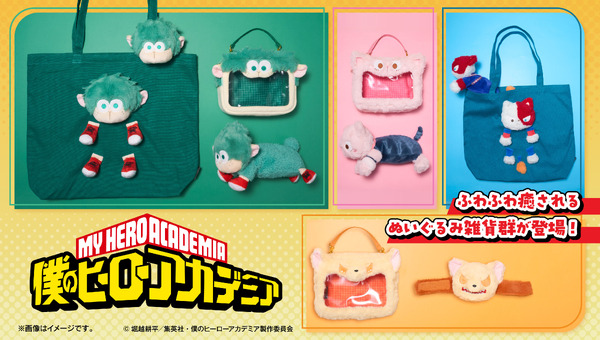
The latest manifestation of this transition is the newly announced "Animal Design" plush lifestyle collection from prominent Japanese novelty and toy manufacturer Eyeup. Featuring stylized animal iterations of the series’ iconic protagonists—specifically "Deku Cat" (Izuku Midoriya), "Baku Dog" (Katsuki Bakugo), "Ocha Neko" (Ochaco Uraraka), and "Shoto Cat" (Shoto Todoroki)—this collection represents a calculated shift in consumer targeting. By translating high-octane superhero character designs into soft, "kawaii" (cute) lifestyle accessories, Eyeup and the My Hero Academia production committee are directly tapping into Japan’s lucrative nui-katsu (plush-toy-related consumer activities) and oshi-katsu (dedicated fan support activities) subcultures.
Pre-orders for the lineup have officially launched on the Eyeup Official Online Store and major e-commerce platforms like Amazon, ahead of a wider brick-and-mortar retail rollout scheduled for September 2026. This release is strategically timed to coincide with the ongoing "My Hero Academia The Animation 10th Anniversary" campaign, demonstrating how legacy shonen properties maintain monetization momentum long after their central narratives have concluded.
Detailed Chronology: A Decade of Heroics
To understand the market timing of the Eyeup Animal Collection, it is necessary to examine the decade-long timeline of My Hero Academia’s multi-platform expansion. The franchise’s commercial journey is characterized by a synchronized progression between print serialization, television animation, and consumer product licensing.
+-----------------------------------------------------------------------------+
|                                  TIMELINE                                   |
+-------------------+---------------------------------------------------------+
| July 2014         | Manga serialization begins in Weekly Shonen Jump.       |
+-------------------+---------------------------------------------------------+
| April 2016        | Season 1 of the TV anime adaptation by Studio Bones.    |
+-------------------+---------------------------------------------------------+
| August 2024       | Manga series officially concludes after 10 years.       |
+-------------------+---------------------------------------------------------+
| December 13, 2025 | "FINAL SEASON" (Season 8) concludes with Episode 170.   |
+-------------------+---------------------------------------------------------+
| January 2026      | "The Animation 10th Anniversary" project launches.      |
+-------------------+---------------------------------------------------------+
| September 2026    | Nationwide retail release of Eyeup's Animal Collection. |
+-------------------+---------------------------------------------------------+
The Manga Foundation (2014–2024)
Written and illustrated by Kohei Horikoshi, My Hero Academia debuted in Shueisha’s Weekly Shonen Jump in July 2014. Set in a world where 80% of the human population possesses superhuman abilities known as "Quirks," the narrative follows Izuku Midoriya, a Quirkless boy who inherits the legendary "One For All" power to combat the rising tide of villainy. The manga ran for approximately ten years, concluding its narrative run in August 2024 to widespread international coverage and massive print circulation figures.
The Television Phenomenon (2016–2025)
In April 2016, animation studio Bones launched the first season of the television anime adaptation. Over the next nine years, the series maintained an annual or biennial production cycle, culminating in its eighth and final installment: My Hero Academia FINAL SEASON. On December 13, 2025, the anime reached its definitive conclusion with its 170th episode. This finale closed the book on the animated journey of Class 1-A, cementing the series as one of the most prolific and consistent modern anime adaptations.
Following the conclusion of the television series, the franchise entered its commemorative phase. The year 2026 marks a decade since the anime first broadcasted. Under the banner "My Hero Academia The Animation 10th Anniversary," the production committee launched a year-long project consisting of retrospective exhibitions, collaborative events, and exclusive merchandise rollouts. The Eyeup Animal Collection serves as a key pillar of this anniversary strategy, bridging the gap between historical media consumption and ongoing physical retail engagement.
Supporting Context & Metrics: The "Kawaii" Economy and Product Portfolio
The commercial success of the Eyeup Animal Collection lies in its design philosophy: "animalization" (reimagining human characters as animals). In the Japanese character goods market, this approach serves two main purposes. First, it lowers the barrier to entry for casual consumers who might find standard action figures or character-heavy merchandise too conspicuous for daily use. Second, it appeals directly to collectors who participate in nui-katsu, a social media-driven hobby where fans photograph plush toys in aesthetically pleasing settings, such as cafes, parks, and travel destinations.
Product Portfolio Breakdown
The collection consists of four distinct product categories, designed to scale from small portable accessories to larger utility bags.
+-------------------------------------------------------------------------+
|                       PRODUCT LINEUP AT A GLANCE                        |
+-------------------+----------------------+----------------+-------------+
| Product Name      | Variations           | Size (mm)      | Price (JPY) |
+-------------------+----------------------+----------------+-------------+
| "Nemuritai" Plush | Deku, Baku, Shoto    | 120 x 160 x 70 | 1,760       |
+-------------------+----------------------+----------------+-------------+
| Plush Pen Pouch   | Deku, Baku, Ocha,    | 100 x 260 x 125| 3,300       |
|                   | Shoto                |                |             |
+-------------------+----------------------+----------------+-------------+
| Plush Pouch       | Deku, Baku, Ocha,    | 160 x 240 x 70 | 3,190       |
|                   | Shoto                |                |             |
+-------------------+----------------------+----------------+-------------+
| "Nuitacchi" Bag   | Deku, Baku, Shoto    | 350 x 420 x 110| 5,500       |
+-------------------+----------------------+----------------+-------------+
1. "Nemuritai" Plush (ねむりタイ)
Character Options: Deku Cat, Baku Dog, Shoto Cat (3 types)
Dimensions: Approx. H120 × W160 × D70 mm
Material Composition: Polyester, Reucon, POM
Retail Price: 1,760 Yen (tax included)
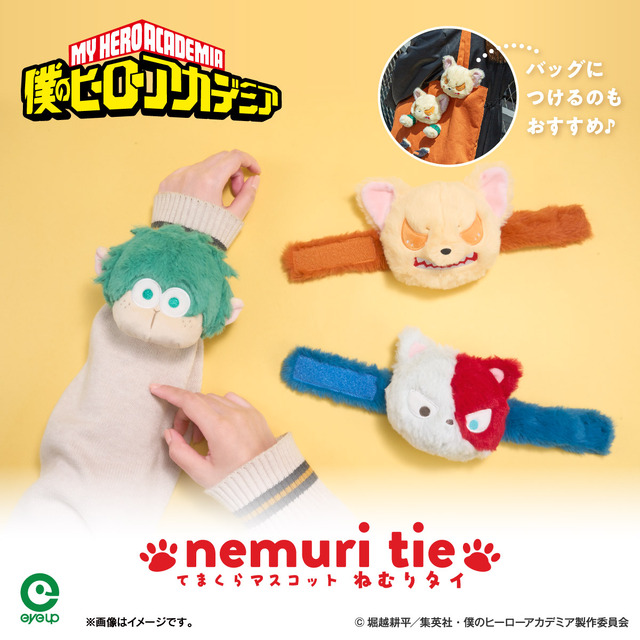
Design Analysis: The "Nemuritai" (literally "Want to Sleep") line features characters in a relaxed, sleeping posture. Equipped with a plastic clasp (POM), these plushies are designed to be hung from backpacks or keychains, serving as subtle, portable markers of fan identity.
2. Plush Pen Pouch (ぬいぐるみペンポーチ)
Character Options: Deku Cat, Baku Dog, Ocha Neko, Shoto Cat (4 types)
Dimensions: Approx. H100 × W260 × D125 mm
Material Composition: Polyester, Reucon, POM
Retail Price: 3,300 Yen (tax included)
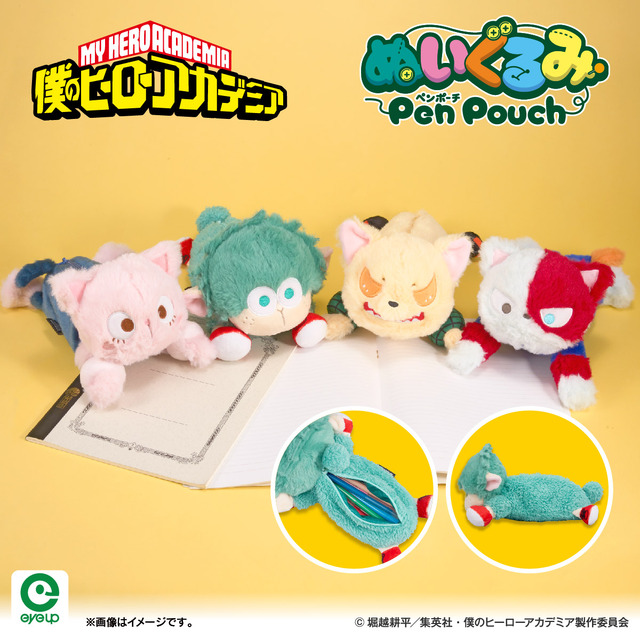
Design Analysis: This item balances novelty with everyday utility. The elongated body of the animal design naturally accommodates pens, pencils, and stationery, targeting students and young office professionals who wish to integrate their hobbies into their workspaces.
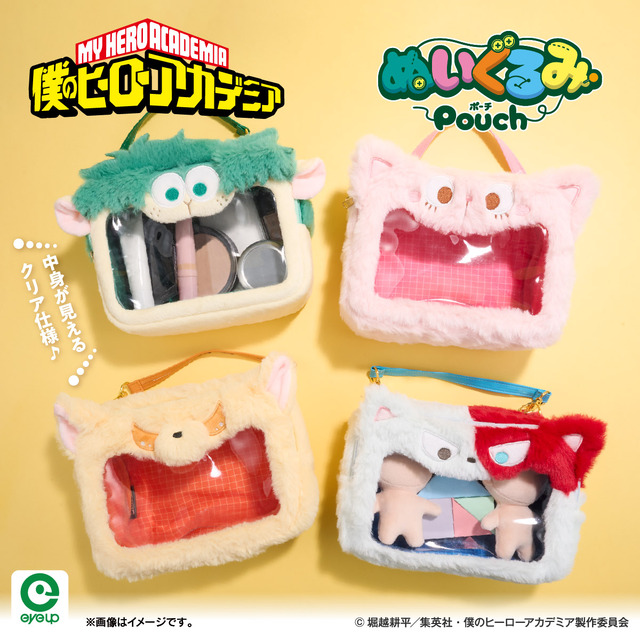
3. Plush Pouch (ぬいぐるみポーチ)
Character Options: Deku Cat, Baku Dog, Ocha Neko, Shoto Cat (4 types)
Dimensions: Approx. H160 × W240 × D70 mm
Material Composition: Polyester, ATBC-PVC, Reucon, POM, Iron, Zinc Alloy
Retail Price: 3,190 Yen (tax included)
Design Analysis: Incorporating a transparent window element made of ATBC-PVC, this pouch is designed for display. It allows users to store cosmetics or small electronics while keeping the interior contents visible, a popular feature in modern Japanese accessory design.
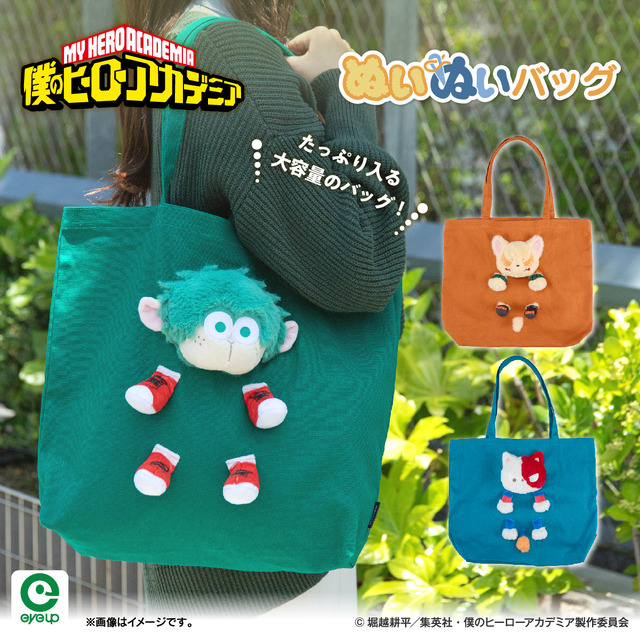
4. "Nuitacchi" Bag (ぬいたっちバッグ)
Character Options: Deku Cat, Baku Dog, Shoto Cat (3 types)
Dimensions: Approx. H350 × W420 × D110 mm
Material Composition: Cotton, Rayon, Polyester
Retail Price: 5,500 Yen (tax included)
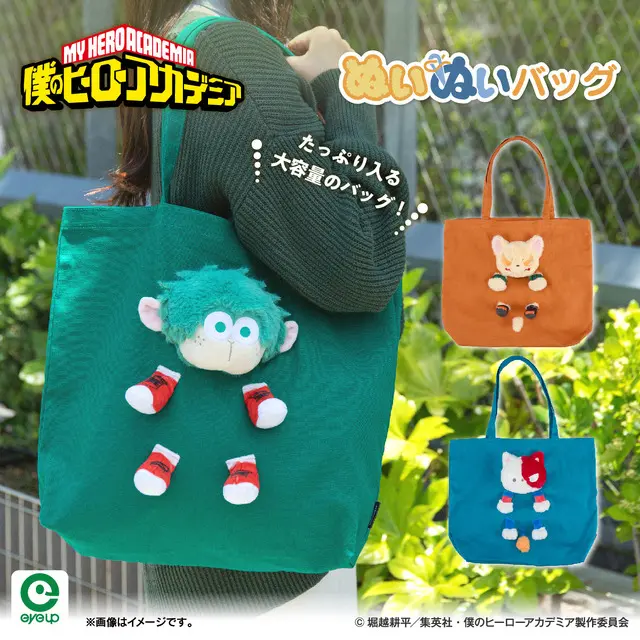
Design Analysis: The largest item in the collection, the "Nuitacchi" Bag is a high-capacity tote constructed from a durable cotton-rayon blend. It is designed to carry larger personal items or secondary plush toys, functioning as a practical bag for conventions, shopping, or daily travel.
Official Statements & Licensing Ecosystem
The production and distribution of the Eyeup Animal Collection are governed by a multi-tiered licensing framework. The copyright notice—(C) Kohei Horikoshi / Shueisha, My Hero Academia Production Committee—highlights the cooperative efforts of the original creator, the publisher (Shueisha), and the production committee (which includes major industry players like Toho Co., Ltd., Yomiuri Telecasting Corporation, and Studio Bones).
An industry analyst specializing in character licensing noted:
"Post-finale merchandise planning requires a delicate balance. When a series ends, raw action figures and plot-specific collectibles often see a standard dip in demand. However, lifestyle-focused, collaborative goods—such as Eyeup’s animal-themed lifestyle collection—tend to perform steadily. They treat the characters as lifestyle brands rather than just narrative entities. This keeps the IP integrated into the consumer’s daily life, preserving brand value for future spin-offs, theatrical releases, or anniversary campaigns."
Pre-orders are currently being processed through Eyeup’s official online portal, alongside dedicated listings on Amazon Japan. This omni-channel distribution strategy ensures maximum accessibility for both local and international collectors using proxy buying services.
Future Outlook: Sustaining a Legacy Franchise
As My Hero Academia navigates its first year without active manga serialization or weekly anime broadcasts, the franchise’s commercial trajectory will be closely watched by industry professionals. Historically, intellectual properties of this scale—such as Naruto, Bleach, and Demon Slayer—do not disappear from the market after their main stories conclude. Instead, they transition into legacy management.
The 10th Anniversary project, running throughout 2026, is designed to keep the brand active. By scheduling the retail release of the Eyeup Animal Collection for September 2026, the licensing committee ensures a steady stream of consumer touchpoints throughout the year.
Furthermore, this lifestyle-oriented merchandising strategy serves as a model for other modern shonen properties. By decoupling characters from their battle-worn contexts and placing them into approachable, everyday designs, publishers can sustain fan engagement across a broader demographic, including female collectors and casual lifestyle consumers. The "Animal Design" collection is not just a collection of soft goods; it is a case study in how modern entertainment franchises maintain their relevance, community connection, and commercial footprint long after the final battle has been fought.









Belum ada komentar. Jadilah yang pertama berkomentar!