

Executive Overview
The modern video game landscape is wonderfully diverse, yet logistically exhausting. Gone are the days when a gamer’s library could be neatly contained on a single living room console or a solitary desktop tower. Today’s enthusiasts routinely hop across ecosystems—switching seamlessly between Sony’s PlayStation 5, Microsoft’s Xbox Series X/S, Nintendo Switch, high-end PC storefronts like Steam and Epic Games, and mobile platforms including Apple Arcade and iOS native titles.
Yet, this multi-platform renaissance has introduced a persistent headache: fragmentation.
Every hardware manufacturer and digital storefront maintains its own walled garden. Sony tracks your trophies, Microsoft logs your gamerscore, Steam measures your hours played, and Apple manages achievements via Game Center. But what happens when you want a unified bird’s-eye view of your entire entertainment collection? How do you keep track of physical cartridges, digital downloads, active subscriptions, and a backlog stretching into the hundreds without relying on messy spreadsheets or half-baked notes apps?
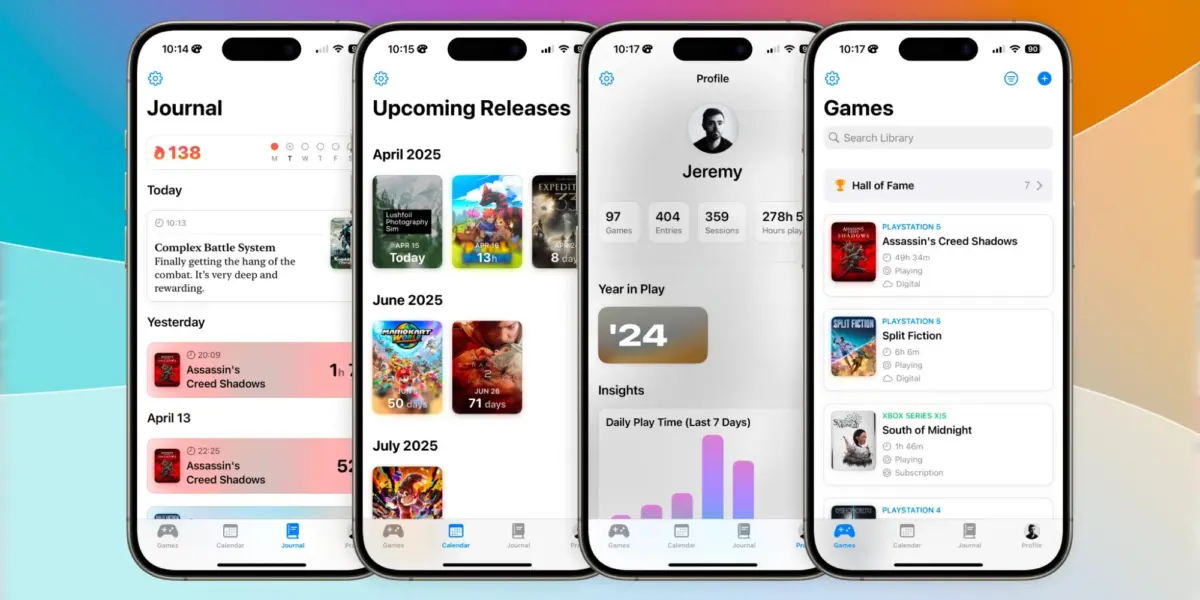
Enter GamePal, a meticulously designed companion app for the iPhone and broader Apple ecosystem. Built specifically to bridge the gaps left by proprietary platform managers, GamePal functions as a centralized hub for tracking, organizing, and analyzing your gaming habits. By integrating with databases like IGDB to automatically pull rich metadata—such as high-resolution artwork, release dates, and developer descriptions—the app transforms the chore of library management into an intuitive, visually satisfying experience.
In this comprehensive report, we examine GamePal’s core feature set, its deep integration into the Apple software ecosystem, the broader market dynamics driving the need for cross-platform organization tools, and what the future holds for this rising utility app.
Detailed Chronology: The Evolution of Game Library Management
To understand the necessity of an independent aggregator like GamePal, one must examine how the concept of the "game library" has evolved over the past four decades, and how the industry arrived at such severe fragmentation.
Phase One: The Physical Era (1980s – Late 2000s)
For decades, managing a video game collection was a tactile, physical endeavor. Gamers lined up cartridges on shelves, stacked CD jewel cases, and arranged instruction manuals in binders. Organization was manual, relying purely on memory, alphabetical shelf placement, or physical catalogs provided by gaming magazines. While simple, this era was constrained by physical space and geography; your collection lived wherever your console and shelves lived.
Phase Two: The Digital Silos (Late 2000s – 2020)
The advent of digital distribution—pioneered heavily by Valve’s Steam on PC, followed by the Xbox Live Marketplace, PlayStation Network, and Nintendo eShop—radically altered consumer habits. Games transformed from tangible commodities into software licenses tethered to specific online accounts.

While this eliminated clutter, it birthed the "silo" effect. A gamer’s library was suddenly locked inside proprietary digital storefronts. Steam users couldn’t easily view their PlayStation titles within the same interface, and mobile purchases existed in an entirely separate universe. Platform holders had zero incentive to build bridges to their competitors, leaving consumers trapped in disconnected ecosystems.
Phase Three: The Rise of Subscription Services (2020 – Present)
The complexity multiplied exponentially with the arrival of subscription-based models like Xbox Game Pass, PlayStation Plus, EA Play, Ubisoft+, and Apple Arcade. Gamers no longer just owned games or bought them digitally; they "rented" vast rotational libraries that changed month by month.
Keeping track of what was currently installed, what had left a subscription service, what was owned physically, and what was waiting in a digital backlog became an administrative nightmare.
The Birth and Maturation of GamePal
Recognizing this acute administrative fatigue, independent developers began crafting dedicated aggregator tools. GamePal entered the market as a modern response to this chaos. Designed from the ground up for Apple’s modern software guidelines, GamePal leverages contemporary iOS frameworks to deliver a frictionless user experience.
Rather than forcing users to manually input every detail of a game—such as its release date, developer credits, and promotional banners—GamePal integrated robust database backends like IGDB (Internet Game Database). By streamlining the input process down to a simple search query, platform tag, and status designation, GamePal bridged the gap between raw data and personal curation. Over successive updates, the app expanded from a basic cataloging tool into a holistic lifestyle tracker, introducing session logging, iCloud synchronization, offline capabilities, and deep system-level integrations like widgets and custom app icons.
Supporting Context & Metrics: The Scale of Modern Fragmentation
To fully appreciate the utility of a cross-platform manager like GamePal, it is vital to analyze the statistical and behavioral trends defining contemporary gaming.
The Multi-Console Household
According to recent industry data from consumer research firms focusing on digital entertainment, over 65% of dedicated gamers actively utilize more than one gaming platform on a regular basis. A typical "hybrid" gamer might own a Nintendo Switch for portable play, a PlayStation 5 for cinematic story-driven blockbusters, and an iPhone or iPad for casual mobile gaming or Apple Arcade titles.
This hardware diversification means that the average gamer’s total library—spanning completed titles, current playthroughs, and backlogs—frequently exceeds 150 to 300 unique software titles across their lifetime. Remembering where a specific game was purchased, whether it was a physical disc or a digital license, or if it was accessed via a temporary subscription becomes statistically improbable without external aid.

The Backlog Crisis
Industry psychologists and consumer advocates often point to the phenomenon of the "Steam Backlog" or "Game Pass Paralysis"—a state of choice overload where players own hundreds of games but struggle to commit to any single title.
- Analysis of Backlog Sizes: Surveys indicate that roughly 40% to 50% of games owned in digital libraries remain unplayed or barely touched.
- The Psychology of Organization: Studies in productivity consistently show that visualizing data—such as filtering games by completion status ("Finished," "Playing," "Dropped," or "Wishlist")—dramatically reduces decision fatigue. By allowing users to categorize their libraries by ownership type (Physical, Digital, or Subscription), GamePal directly addresses this psychological barrier, transforming an intimidating wall of icons into a manageable, structured inventory.
The Apple Ecosystem Advantage
GamePal’s strategic decision to anchor itself within the Apple ecosystem (requiring iOS 17 or later) is backed by robust platform metrics. Apple’s user base heavily values design consistency, cross-device privacy, and seamless synchronization. By utilizing iCloud for instant data propagation between an iPhone, iPad, and potentially future Apple silicon implementations, GamePal ensures that a user’s meticulously curated library is always at their fingertips—even when traveling underground or in areas with zero cellular connectivity, thanks to its offline-first architecture.
Feature Deep-Dive: What Makes GamePal Tick?
GamePal’s feature set is thoughtfully engineered to cater to both casual players who dabble in mobile titles and hardcore enthusiasts with sprawling multi-platform collections. Below is a detailed breakdown of its core capabilities:
1. Intelligent Search and IGDB Metadata Integration
Adding a game to a traditional spreadsheet requires looking up release dates, developer names, and cover art manually. GamePal bypasses this friction entirely.
- Users simply type the name of the title into the search bar.
- The app queries IGDB (Internet Game Database) to pull down official assets instantly.
- High-resolution cover art, promotional screenshots, synopses, and official release dates populate automatically, turning the user’s library into a visually stunning, magazine-quality interface.
2. Granular Categorization & Filtering
Not all games are acquired equally. GamePal understands the nuances of modern ownership by letting users sort titles across multiple dimensions:
- Platform Assignment: Tag a game as PlayStation 5, Xbox Series X, Nintendo Switch, PC, iOS, etc.
- Ownership Status: Distinguish between physical cartridges/discs, permanent digital purchases, and temporary access via subscription services (like Apple Arcade or Game Pass).
- Playing Status: Easily filter games into custom buckets: Played, Playing, Backlog, Wishlist, or Abandoned.
3. Personal Notes and Rating Systems
A library manager should reflect the user’s personal relationship with their media. GamePal includes dedicated fields for personal ratings and custom notes. Whether a user wants to jot down why they put down an RPG halfway through, record a favorite memory from a multiplayer session, or log completion times, these personal layers transform the app from a cold database into a personal gaming journal.
4. Session Tracking and Analytics
One of GamePal’s most powerful utility features is its session logger. Gamers can log individual play sessions to monitor precisely how many hours they are investing in specific titles. Over time, this builds a data-driven profile of your gaming habits, answering questions like:
- Which game am I actually spending the most time with?
- Am I bouncing between too many titles at once without finishing them?
- How does my playtime distribution look across different platforms?
5. Native iOS Integration: Widgets, Icons, and Offline Support
GamePal does not feel like a ported web app; it is deeply native to iOS 17 and later.

- Widgets: Users can place customizable home screen widgets displaying their current "Now Playing" game, quick stats, or backlog highlights.
- Custom App Icons: True to the customization-loving nature of modern iPhone users, GamePal offers alternative app icons to match various aesthetic home screen themes.
- Offline Functionality: Recognizing that gamers frequently travel or find themselves in poor reception areas, the app is built to work seamlessly offline, syncing changes silently to iCloud the moment an internet connection is re-established.
6. Pricing Model and Accessibility
GamePal is available as a free download on the App Store, lowering the barrier to entry for curious users. For power users seeking advanced features, customization options, and expanded utilities, the developers offer a paid subscription tier known as the "Platinum" membership.
Future Outlook: The Horizon of Independent Game Management
As the video game industry continues to evolve, the necessity for independent, consumer-first aggregation tools will only intensify. Several macroeconomic and technological trends point toward a bright—and increasingly essential—future for apps like GamePal:
The Convergence of Cloud Gaming and Streaming
With cloud gaming services (such as Xbox Cloud Gaming, GeForce NOW, and Amazon Luna) allowing users to stream games instantly across devices without local installations, the physical boundaries of hardware are dissolving even further. In a world where a game can be launched instantly from a browser or a smart TV, keeping track of where a license resides and what service it belongs to becomes even more complex. Universal aggregators will become the ultimate directory for cloud-era media consumers.
The Expansion of Apple’s Gaming Footprint
Apple continues to make aggressive pushes into the traditional gaming space. With the rollout of powerful Apple Silicon chips (M-series processors) in Macs, iPads, and iPhones, alongside the sustained growth of Apple Arcade and high-profile AAA port arrivals (such as Resident Evil, Death Stranding, and Assassin’s Creed titles on iOS), the iPhone is rapidly morphing into a legitimate core gaming device. As the library of high-end games native to iOS expands, tools like GamePal that can manage both console blockbusters and mobile titles within a single interface will see a surge in relevance.
Potential Roadmap Enhancements
While GamePal is already robust, the community of users and tech analysts anticipate several logical paths for future development:
- Social Sharing Features: Allowing users to share custom lists, reviews, and backlog updates with friends or social networks.
- Import/Export Utilities: Enabling users to import existing game lists from spreadsheets, Steam profiles, or other tracking websites to eliminate manual data entry during onboarding.
- Expanded Watchlists and Release Radar: Automated notifications alerting users when a wishlist item drops in price or receives a major content update.
Conclusion
In an era dominated by corporate silos, subscription churn, and multi-platform households, keeping track of your digital entertainment shouldn’t feel like a second job. GamePal successfully cuts through the administrative clutter, offering iPhone users a polished, feature-rich, and visually stunning companion app to master their gaming lives.
By combining automated metadata fetching via IGDB, granular categorization, session tracking, and native iOS design principles like iCloud sync and home screen widgets, GamePal bridges the gap between chaos and curation. Whether you are a casual mobile player looking to organize your Apple Arcade favorites or a hardcore multi-console owner drowning in an endless backlog, GamePal stands out as an indispensable sidekick for your digital adventures.
GamePal is available now as a free download on the App Store, requiring an iPhone running iOS 17 or later, with optional "Platinum" subscription tiers available for advanced features.








Belum ada komentar. Jadilah yang pertama berkomentar!