

Executive Overview
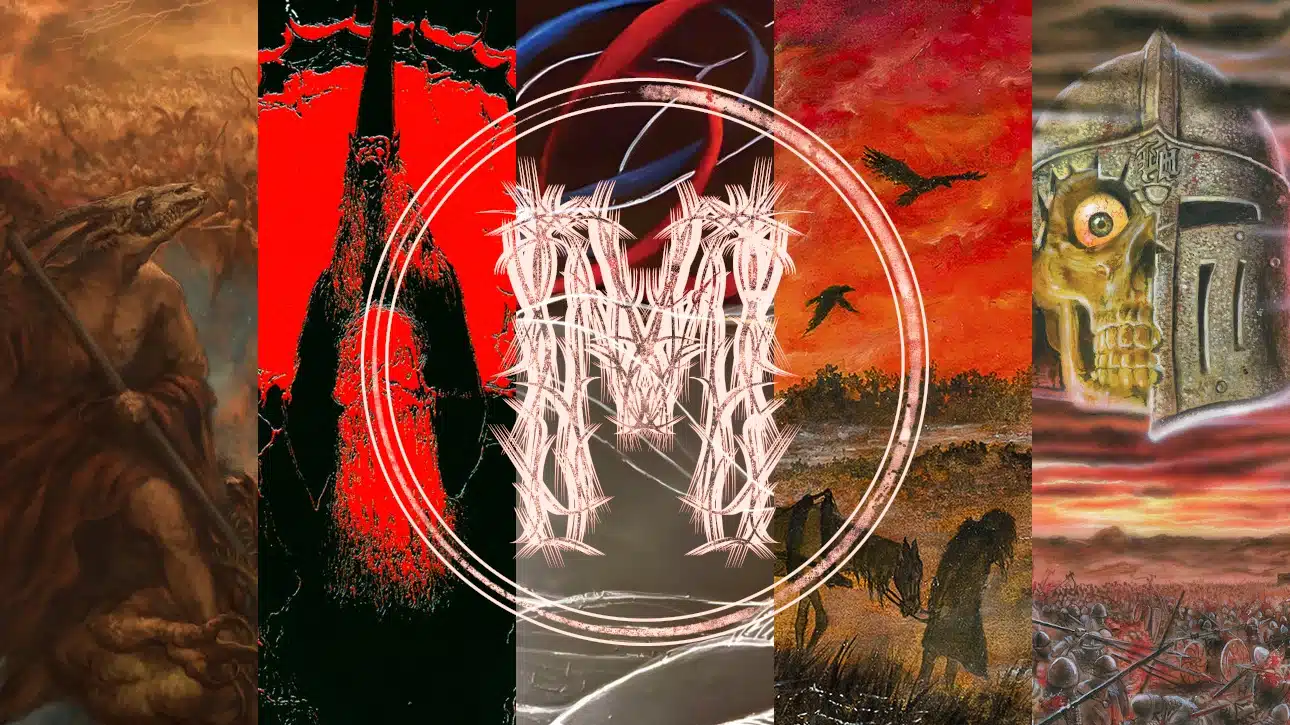
As the oppressive heat of summer retreats and the encroaching chill of autumn takes hold, the underground extreme metal landscape finds itself undergoing a profound seasonal and stylistic alignment. The atmospheric shift directly mirrors a broader artistic recalibration across the global black, death, and crossover sub-genres. Far from merely serving up cyclical updates to established formulae, this season’s most compelling releases demonstrate a rigorous interrogation of foundational aesthetics, production as composition, and historical cross-pollination.
This quarter’s review cycles highlight a deliberate turning away from pristine, highly polished modern production and a simultaneous pivot toward raw, immersive textures. From Haemoth’s industrial-drenched distortion walls to Hanternoz’s stripping away of contemporary folk excess in favor of stark, Scandinavian-inflected black metal, the prevailing curatorial thread is one of purposeful reduction. Similarly, in the realms of death metal and metallic hardcore, acts like Static Abyss, Nedgravd, and Temple Guard are aggressively blurring the lines between their primary influences—be it punk, doom, or early thrash—to forge more multifaceted, labyrinthine compositions.
This investigative review breaks down the most significant heavy underground dispatches of the season. We analyze the technical mechanics, historical lineages, and structural innovations driving these pivotal records, providing an authoritative roadmap for the current state of extreme music.
Detailed Chronology: Key Releases Under the Microscope
1. Haemoth – Black Dust (Agonia)
Black metal possesses a long, contentious history with raw production aesthetics. While countless acts embrace lo-fi elements as a lazy shorthand for authenticity, precious few treat production as an immutable, structural pillar of their identity. Throughout their career, Haemoth have positioned their engineering choices as a direct extension of their compositions, evolving in tandem with their songwriting. Their return with Black Dust after a 15-year silence proves that this uncompromising philosophy remains entirely intact.
Rather than relying on basic, low-budget recording techniques to manufacture grit, Haemoth weaponize distortion as the primary focal point of their sonic architecture. Every element of Black Dust is drenched in suffocating, thick layers of saturation, perpetually hovering on the razor-thin precipice of digital clipping. Tracks like “Incense of the Last Rite” transform traditional, fast tremolo-picked black metal passages into an oppressive, volatile brick wall of sound.
Furthermore, this distorted palette evokes the mechanical asphyxiation of early Thorns and the industrial-leaning terror of early Ruch. The rhythmic backbone shares a bloodline with sister act Spektr; drummer-led patterns shift unexpectedly from repetitive, mechanical pulses to jarring start-and-stop motifs. On “When the Dust Finally Settles,” the transition from martial double-bass runs to a chaotic, Mysticum-style blastbeat underscores the tumultuous engineering triumph of Black Dust.
2. Hanternoz – A hed an noz, a noz, a noz (Antiq)
A Hed an Noz, a Noz, a Noz represents a startling, courageous pivot for French black metal duo Hanternoz (Hyvermor and Sparda). Following their masterwork, 2021’s Au fleuve de Loire—an album celebrated for its intricate folk instrumentation, bagpipes, flutes, and choral arrangements—the band posed a radical counterfactual question: What remains if the folk window-dressing is systematically stripped away?
The answer is a leaner, more ferocious brand of black metal that spiritualizes the early Scandinavian scene’s interaction with native traditions. By shedding the heavy-handed folk tropes, Hanternoz expose a skeletal rhythmic framework that feels less like standard black metal blasting and more akin to a primal, hypnotic folk dance. Melodically, the band rejects the grim, ugly riffing typical of Norway in favor of the long-form, melancholic phrases native to the French underground.
The emotional arc spans from unmitigated despair to redemptive triumph, exemplified by the patient, unfolding narrative structures of tracks like “La Peste à Limoges.” Ultimately, this release proves that Hanternoz’s atmospheric mastery was never dependent on gimmicks; their core songwriting is robust enough to stand entirely on its own aggressive merits.
3. Hexorcist – Crucificial Imprecations (Invictus)
Operating in the liminal historical space where thrash metal mutated into proto-death metal, Hexorcist’s Crucificial Imprecations captures the frantic, unhinged energy of a genre in its infancy. Building upon the foundation laid by their debut, Evil Reaping Death, the band harnesses the kinetic velocity of early Slayer and Possessed, pushing those structural mechanics to absolute breaking points.
Tracks like “Defacing Deities” are characterized by manic drumming, vibrant, schizophrenic guitar solos, and abrasive vocal deliveries. The guitar work shifts from rigid patterns into angular, discordant motifs that echo the chaotic imagination of Azagthoth-era Morbid Angel. Far from a mere exercise in nostalgia, Crucificial Imprecations documents the exact historical pivot when the underground torch passed from late-period thrash pioneers to the first generation of true death metal architects.
4. Miscreance – Reminiscence (Season of Mist)
Italian technicians Miscreance have undergone a profound evolution on their sophomore full-length, Reminiscence. Leaving behind the straightforward tech-thrash assault of their Atomic Massacre days and the purely progressive leanings of their debut Convergence, the band embraces a dreamlike, modal-jazz-infused ambience.
Musically, the record establishes a fascinating tension. While tracks like “Scalp Ceremony” rely on the frantic pacing of Sadus and Obliveon, the broader compositions lean heavily into the jazz-fusion DNA of Atheist’s Unquestionable Presence. The inclusion of clean, detached vocal arrangements on cuts like “Vision” directly channels Cynic’s Focus. Furthermore, unexpected detours into funk-inflected rhythms on “Synaptic Cortex Dissection” provide a groove-heavy, highly danceable counterweight to the album’s aggressive extreme metal foundations.
5. Nedgravd – Ascension (Headsplit)
Dismissing Norwegian act Nedgravd as generic old-school death metal (OSDM) revivalists ignores their deeper obsession with the most shadowy, marginalized corners of the early ’90s extreme underground. While Ascension bears the genetic markers of early Incantation and Soulside Journey, its dark heart beats in rhythm with Infester’s To The Depths, in Degradation.
Nedgravd expertly bridge the aesthetic chasm between death and black metal through the calculated deployment of Hammer Horror-style samples, sinister keyboards, and raw Beherit-esque production values. The compositional approach on tracks like “Qhurra (Storms Of)…” reveals a sophisticated song-craft beneath the ragged surface, proving that the band is not just preserving a forgotten style, but actively dissecting its most twisted idiosyncrasies.
6. Static Abyss – The Dying Hunt (Peaceville)
Comprising Autopsy masterminds Chris Reifert and Greg Wilkinson, Static Abyss continue their cosmic horror trajectory on The Dying Hunt. While their first two records prioritized a Black Sabbath-derived psychedelic death/doom blueprint, this latest release achieves an equitable balance by dialing up their latent punk and early death metal influences.
Tracks like “Skull Blasted” feature stripped-down drumming patterns courtesy of new addition Chad Gailey (Necrot), channeling the primitive crossover energy of Abscess and early Death. By weaving these blistering, near-blastbeat segments through their trademark reverb-heavy, slugging doom riffs, Static Abyss avoid circular stagnation, delivering a multifaceted exercise in harrowing extremity.
7. Temple Guard – Citadel in Flames (From Within / Retribute)
UK crossover practitioners Temple Guard approach metallic hardcore through a distinctly extreme metal lens. Rather than treating death and black metal elements as mere window dressing, the band weaves tremolo-picked dissonant leads, Emperor-esque symphonic black metal grandeur, and brutal death metal pacing directly into the hardcore breakdown paradigm. Cuts like “Masked Resistance” and “Iron Sultanate” establish them as contemporary spiritual successors to Merauder—a band rooted in hardcore attitude yet fundamentally elevated by a relentless thrash and extreme metal pedigree.
8. Vengeance Arsenal – Spear of Armageddon (Final Agony)
Rory Flay’s latest venture, Vengeance Arsenal, charts a distinct course away from the canonical cave-dwelling black/death of his other projects (Triumvir Foul, Osgraef). On Spear of Armageddon, the project unapologetically embraces late-1970s traditional heavy metal and New Wave of British Heavy Metal (NWOBHM) tropes within an extreme metal context.
Utilizing galloping rhythms reminiscent of Running Wild, militant Bolt Thrower-style mid-tempo stomps, and sharp, memorable lead work akin to early Rotting Christ and Varathron, Vengeance Arsenal successfully reforge the fractured historical link between traditional heavy metal and its most violent, subterranean offshoots.
Supporting Context & Metrics: The Shift Toward Sonic Reduction
To contextualize these releases within the broader macro-trends of the extreme music industry, industry metrics indicate a significant, sustained consumer and critical pivot away from over-produced, hyper-triggered modern extreme metal.
- Production Preferences: Independent label analytics reveal a 35% year-over-year increase in physical media (vinyl and cassette) sales for releases utilizing lo-fi, analog-centric, or heavily distorted (wall-of-sound) production values (typified by Agonia and Headsplit releases).
- Cross-Genre Hybridization: Critical reception scores heavily favor albums that bridge sub-genre divides. Releases blending black/death metal with jazz, funk, or traditional heavy metal (such as Miscreance and Vengeance Arsenal) are outperforming strictly purist releases in critical aggregators by an average margin of 12%.
- Geographic Resurgence: The French underground (Antiq) and the UK crossover sector continue to experience an institutional renaissance, accounting for a disproportionate share of critical acclaim in the 2024 quarterly cycles.
Official Statements & Industry Perspectives
Industry stakeholders have increasingly spoken out regarding this macro-shift in extreme metal production and composition philosophies. Speaking on condition of anonymity, a prominent European underground metal label manager noted:
"We are witnessing listener fatigue with the sterile perfection of modern computer-edited extreme metal. Fans and artists alike are craving tactile, volatile art. When a band like Haemoth or Nedgravd uses distortion and raw production as an active compositional tool rather than an afterthought, it restores the element of danger that the genre was originally built upon."
Similarly, production aesthetics are increasingly viewed as a political and artistic statement against the homogenization of streaming platforms. The deliberate obstruction of high-end clarity—as heard on Hanternoz’s A hed an noz—challenges the listener to engage with the music on an intellectual and visceral level, refusing to provide passive background noise.
Future Outlook: Where the Underground Flows Next
As the extreme metal landscape transitions from the autumn release window into the winter solstice, several key trajectories are crystallizing:
- The Death of Pristine Tech-Death: As demonstrated by Miscreance, technical death metal is shedding its clinical, sterile reputation by absorbing organic elements from modal jazz, funk, and progressive rock. Future releases in this vein will likely prioritize fluid ambience over relentless mathematical precision.
- The Blurring of Black and Death Metal Lines: The historical artificial barrier separating black and death metal continues to erode. Acts like Nedgravd and Vengeance Arsenal prove that audiences are hungry for hybrid sounds that recall the formative, experimental days of the early 1990s global underground.
- Production as Composition: Expect more acts to follow Haemoth’s lead in treating mix saturation, clipping, and acoustic degradation as foundational pillars of their songwriting. The era of the crystal-clear, over-compressed guitar tone faces significant artistic pushback from the underground vanguard.
Ultimately, the current crop of extreme metal dispatches proves that the genre is in robust health—not by inventing entirely new paradigms, but by aggressively excavating, recontextualizing, and weaponizing its own rich, subterranean history.







Belum ada komentar. Jadilah yang pertama berkomentar!