

Executive Overview
The dawn of the global COVID-19 pandemic fundamentally disrupted every facet of modern society, thrusting digital communication channels into unprecedented prominence. As physical institutions—from universities and corporate offices to places of worship and entertainment venues—shuttered their doors to curb the spread of the virus, billions of people retreated into their homes. In this climate of profound isolation and uncertainty, digital platforms emerged as the primary lifelines for human connection, commerce, and public health communication.
Among these platforms, YouTube occupied a uniquely vital and complex position. Serving simultaneously as a global town square, an educational archive, and an entertainment medium, the Google-owned video-sharing giant faced an extraordinary dual mandate: to safeguard its massive user base from a deluge of dangerous medical misinformation while providing economic and operational stability to the millions of creators and artists whose livelihoods depend on the ecosystem.
In response to the escalating crisis, YouTube leadership rolled out a multi-layered initiative designed to combat the infodemic, facilitate massive shifts toward remote and digital gatherings, and recalibrate its notoriously stringent monetization policies. Historically, the platform’s "Sensitive Events" policy categorized widespread crises—such as natural disasters or sudden tragedies—as temporary blackouts for ad revenue to prevent exploitation. However, as COVID-19 transitioned from a sudden outbreak into an ongoing, defining feature of everyday global existence, this blanket approach proved unsustainable for professional creators and news organizations alike.
This report provides an in-depth investigation into YouTube’s strategic response during the early and critical phases of the pandemic. It examines how the platform sought to balance public health responsibilities with creator advocacy, the technical and policy adjustments made to accommodate surges in live streaming, and the policy evolution that allowed trusted voices to sustain their operations financially through one of the most tumultuous periods in modern media history.
Detailed Chronology: The Escalation of a Global Infodemic and Platform Response
The trajectory of the COVID-19 pandemic caught global tech platforms largely unawares regarding the sheer scale of the digital infodemic that accompanied it. As coronavirus cases began to multiply outside of East Asia in early 2020, YouTube’s internal monitoring teams identified an immediate and exponential surge in both user engagement and speculative content.
Phase 1: The Initial Outbreak and Misinformation Containment (Late January – February 2020)
In the earliest weeks of the outbreak, YouTube’s primary defensive mechanism relied on its established "Four Rs of Responsibility"—Remove, Reduce, Raise, and Reward. The platform faced immediate pressure to root out viral conspiracies, fake cures, and videos discouraging people from seeking professional medical treatment.
- Swift Removals: Content violating core community guidelines—such as claims that chemical disinfectants could cure the virus or assertions that the pandemic was a deliberate hoax intended to manipulate populations—was aggressively targeted for removal upon flagging.
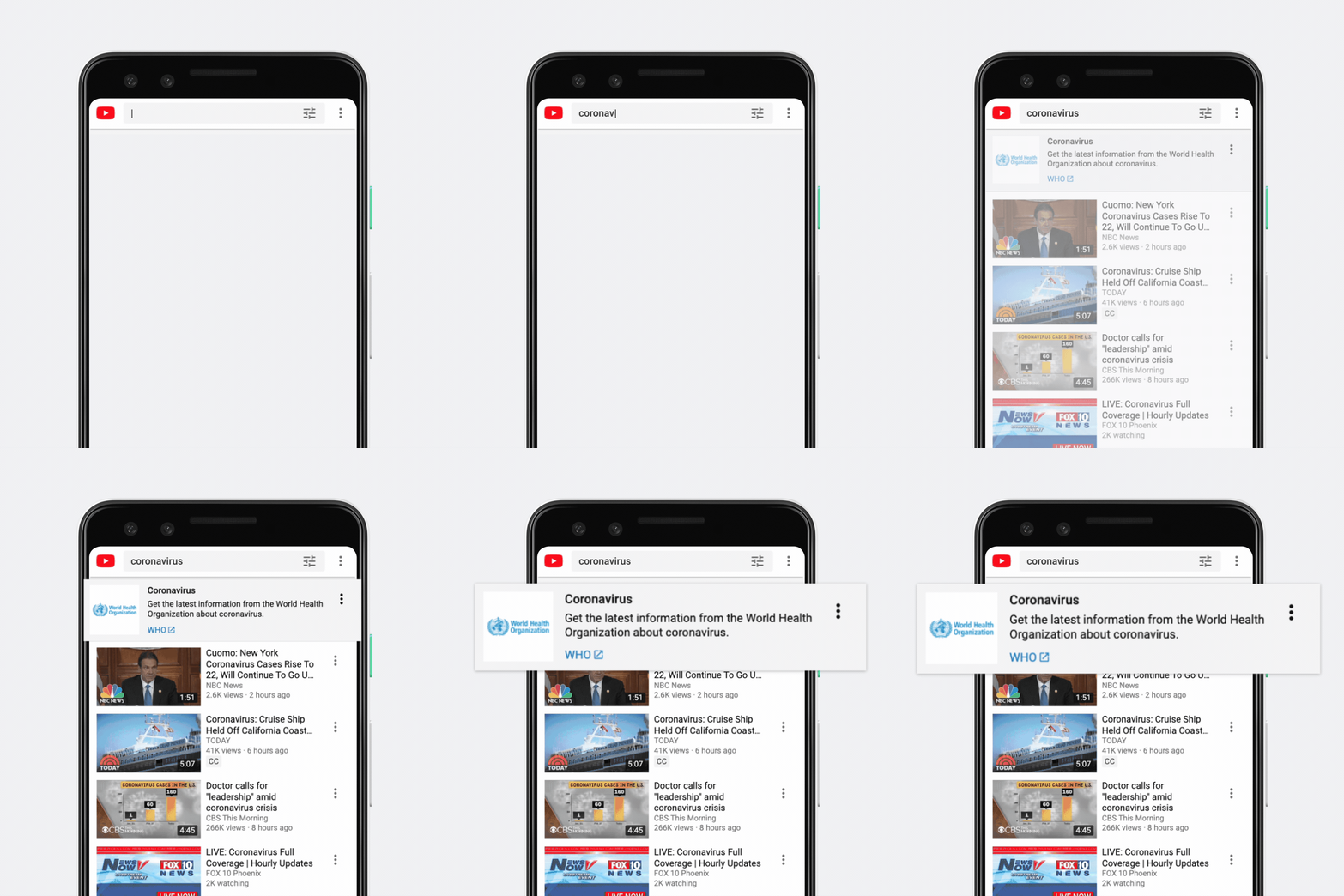
- Algorithmic Adjustments: Engineering teams re-weighted search algorithms and recommendation engines to systematically "raise" authoritative sources. Rather than allowing sensationalist or panic-inducing videos to trend, the homepage and recommendation sidebars began prioritizing updates from institutions like the World Health Organization (WHO), the Centers for Disease Control and Prevention (CDC), and regionally accredited health ministries.
Phase 2: Shifting to Public Support and Infrastructure Adaptation (Late February – March 2020)
As governments across Europe and the Americas began implementing lockdowns, YouTube recognized that informational triage was no longer sufficient. The platform initiated large-scale promotional campaigns, donating significant advertising inventory directly to governments and non-governmental organizations (NGOs) in heavily impacted regions. This allowed public health officials to deploy timely, targeted public service announcements directly to local populations.
Concurrently, the platform witnessed an unprecedented architectural strain. With schools closed and public gatherings banned, organizations scrambled to move operations online. Stanford University, corporate tech conferences, and local religious congregations began utilizing YouTube’s live-streaming infrastructure en masse. YouTube’s infrastructure teams worked around the clock to meet this sudden, compounding demand for live broadcasting, ensuring that global connectivity remained uninterrupted despite unprecedented bandwidth constraints worldwide.
Phase 3: The Monetization Crisis and Policy Pivot (March 2020 onward)
By mid-March, a critical economic friction point emerged. Under YouTube’s existing "Sensitive Events" policy, content that discussed ongoing, fast-moving crises of high magnitude—traditionally applied to sudden events like plane crashes, mass shootings, or earthquakes—was entirely demonetized. The rationale was twofold: to deter opportunistic creators from profiting off human tragedy, and to reassure brand advertisers that their promotional spots would not appear adjacent to distressing or morbid footage.
However, creators and independent news publishers quickly realized that the COVID-19 pandemic did not fit the mold of a short-term natural disaster. It was the singular, dominant news story of the era. For creators whose channels focused on daily commentary, science education, or independent journalism, the blanket demonetization of any video containing more than a passing mention of the coronavirus threatened financial ruin. Recognizing that quality journalism and educational content are vital public goods during a prolonged crisis, YouTube leadership announced a fundamental policy recalibration: the selective return of monetization for trusted channels and self-certified creators discussing the pandemic.
Supporting Context & Metrics: The Scale of the Challenge
To fully appreciate the magnitude of YouTube’s interventions during this period, one must examine the staggering metrics governing the platform’s ecosystem.
- Global Reach: During the peak lockdowns of spring 2020, YouTube’s daily active user base spanned over two billion logged-in users worldwide, watching upwards of a billion hours of video every single day.
- The Live-Streaming Surge: Internal platform data revealed double-digit percentage spikes in live-streaming viewership week-over-week during March 2020. Educational streams and virtual worship services alone saw increases of over 500% in certain regional markets as communities adapted to social distancing mandates.
- Information Panels and Directives: YouTube deployed informational panels—contextual boxes appearing directly beneath relevant videos—to tens of millions of users daily, steering them toward authoritative health portals. On the platform’s homepage, banner notices directed users instantly to the WHO and CDC dashboards, generating millions of referral clicks daily to verified health data.
- Enforcement Volume: While automated systems and human moderators removed hundreds of thousands of dangerous medical misinformation videos globally, the platform simultaneously faced a reduction in human moderation capacity as Google transitioned its workforce to remote operations. This necessitated a heavier reliance on machine learning classifiers to catch policy violations at scale, presenting a persistent balancing act between over-censorship and public safety.
Official Statements and Leadership Perspectives
The transition in policy and tone was communicated directly to the creator community through official statements from YouTube executives, emphasizing partnership, empathy, and the indispensable role of digital creators in maintaining social cohesion.
In a comprehensive update issued to creators and artists, YouTube leadership framed the platform’s role not merely as a tech enterprise, but as a cultural custodian during a period of global vulnerability:

"Over the past several weeks, as we’ve all seen the growing crisis around the coronavirus, we at YouTube have been thinking about how these developments might affect you. We often say that you’re the heart of YouTube, and during this difficult time we wanted to share how we’re working to help and support you."
Addressing the delicate balance between censorship and freedom of expression—particularly regarding medical claims—the platform reiterated its absolute commitment to authoritative guidance:
"It remains our top priority to provide information to users in a responsible way. From the very beginning of this outbreak, we’ve worked to prevent misinformation associated with the spread of the virus. We’re also raising up authoritative sources in search and recommendations and showing information panels on relevant videos."
On the crucial economic question of monetization, executive leadership candidly acknowledged the limitations of the legacy "Sensitive Events" framework when applied to a multi-year global event:
"Our sensitive events policy was designed to apply to short-term events of significant magnitude, like a natural disaster. It’s becoming clear this issue is now an ongoing and important part of everyday conversation, and we want to make sure news organizations and creators can continue producing quality videos in a sustainable way."
Highlighting the emotional and psychological importance of the platform beyond hard news, executives praised the community-building efforts of independent creators:
"People around the world come to YouTube for information, but they’re also looking for something more: to find relief and connect as a community. Creators and artists bring us together, offering entertainment and solace through conversations that help us feel less alone."
Future Outlook: Legacy, Policy Evolution, and the Post-Pandemic Digital Landscape
The policy pivots and infrastructural stress-tests experienced by YouTube during the COVID-19 pandemic catalyzed a permanent evolution in how tech platforms govern global health crises and support digital labor.
1. The Maturation of "Sensitive Events" Frameworks
The pandemic forced platform governance teams to abandon rigid, binary definitions of crises. Going forward, trust and safety departments recognized the necessity of dynamic policy frameworks capable of distinguishing between short-term tragedies and protracted socio-historical events. The introduction of selective monetization via self-certification and trusted news partnerships laid the groundwork for modern nuanced content moderation, where financial sustainability is balanced against the imperative to curb monetization for bad actors.
2. The Institutionalization of Remote Public Infrastructure
The massive migration of universities, religious institutions, corporate entities, and government bodies onto YouTube’s live-streaming infrastructure proved that digital platforms are essential public utilities. Even as physical venues reopened in the post-pandemic era, hybrid models of connection—combining in-person gatherings with global live-streamed broadcasts—became standard practice across nearly every industry. YouTube’s capacity upgrades during the crisis permanently elevated its status from an entertainment network to vital public communication infrastructure.
3. Trust, Verification, and the Ongoing War on Misinformation
The lessons learned in combating COVID-19 medical misinformation directly informed YouTube’s subsequent approaches to global elections, geopolitical conflicts, and emerging scientific debates. The aggressive elevation of authoritative sources, the refinement of contextual information panels, and the close collaboration with international bodies like the WHO established a playbook for institutional trust-building that continues to define platform governance in the digital age.
Ultimately, YouTube’s response to the coronavirus pandemic underscored both the vulnerabilities and the extraordinary potential of centralized digital spaces. By listening to the economic anxieties of its creator base, tightening its guardrails against harmful falsehoods, and expanding its technical capacity to keep isolated populations connected, the platform navigated one of the most turbulent chapters in modern history—leaving an indelible mark on the future of media, communication, and digital community.









Belum ada komentar. Jadilah yang pertama berkomentar!