

Executive Overview
In the fast-paced, highly competitive landscape of the Yu-Gi-Oh! Official Card Game (OCG), few events capture the community’s collective attention quite like the unveiling of legacy support cards. Konami’s latest product rollout, designated under the provisional series identifiers YAC1-JP030 through YAC1-JP068, represents a monumental dive into the archives of franchise history. This batch of reveals doesn’t merely offer a nostalgic nod to the past; it systematically re-engineers iconic strategies used by series protagonists and rival duelists alike, bringing them into contemporary competitive alignment.
The newly revealed card pool is a masterclass in bridging generational divides. Anchored by heavy-hitting iterations of Yugi Muto’s most recognizable monsters—ranging from the earth-shattering Gandora-G the Dragon of Destruction to the ever-versatile Dark Magician the Magician of Black Magic—the set also deeply explores the mythos of the Shining Sarcophagus, Silent Magician, and core spellcaster strategies. Furthermore, the inclusion of blue-eyed mythology via Spirit with Eyes of Blue and Burst Stream of Destruction ensures that the eternal rivalry between Kaiba and Yugi remains a central focal point of modern design philosophy.
This investigative report provides an exhaustive breakdown of the YAC1 card reveals, evaluating their structural mechanics, analyzing the broader implications for the meta-game, and contextualizing how Konami continues to monetize and revitalize its most cherished intellectual property.
Detailed Chronology and Card-by-Card Analysis
To fully appreciate the scope of the YAC1 distribution, we must examine the cards sequentially as they emerge from the official database. Each card in this block tells a specific story of adaptation, taking foundational lore and translating it into actionable, modern play-extenders and disruption tools.
The Heavy Hitters: Dragons, Magicians, and Destruction
YAC1-JP030: Gandora-G the Dragon of Destruction
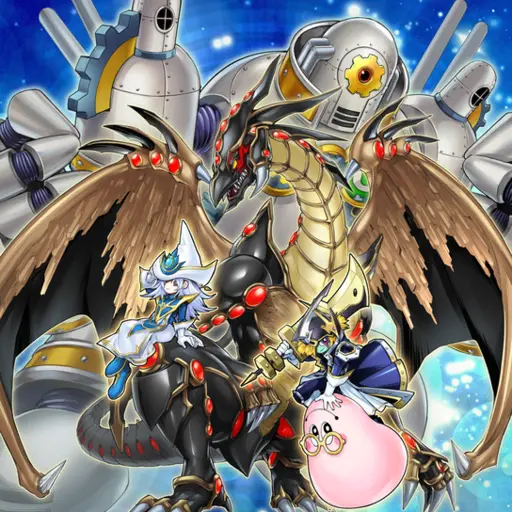
As the evolution of Yugi’s ultimate board-wipe engine, Gandora-G the Dragon of Destruction steps into the spotlight with massive potential. Historically, Gandora variants have functioned as high-risk, high-reward finishers that clear the field at the cost of the user’s own resources. The "G" iteration refines this design philosophy, offering streamlined summoning conditions and explosive cleanup potential that fits cleanly alongside the Shining Sarcophagus ecosystem.
YAC1-JP031 & YAC1-JP035: Dark Magician & Dark Magician Girl Variants
The ultimate wizard in terms of attack and defense returns alongside his beloved apprentice.
- YAC1-JP031: Dark Magician the Magician of Black Magic reasserts the vanilla archetype’s presence, heavily integrating with modern searchers.
- YAC1-JP035: Dark Magician Girl the Magician’s Apprentice capitalizes on the graveyard and hand-state mechanics that have defined the modern Spellcaster playstyle, making it easier than ever to deploy high-level offensive pressure early in the duel.
YAC1-JP040: Gadget Trio
The iconic machine trio that historically powered countless Machina and control strategies receives a modern structural update. Gadget Trio allows duelists to capitalize on recursive resource generation, ensuring that hand-advantage—the hallmark of the classic Gadget playstyle—remains relevant in an era dominated by high-speed special summoning.
The Arcane Expansion: Magicians, Spells, and Rituals
Moving through the middle portion of the collector’s series, Konami places heavy emphasis on consistency boosters and utility toolboxes:
- YAC1-JP041: Silent Magician Zero and its narrative counterparts (YAC1-JP061 Turn Silence and YAC1-JP062 Future Silence) form a cohesive sub-engine. "Zero" modernized the classic anti-meta strategy, punishing opponents for drawing cards while scaling its own attack power organically.
- YAC1-JP042: Magician’s Rod and YAC1-JP045: Illusion of Chaos continue to serve as the bedrock of consistency for any modern Spellcaster build. By streamlining search paths, these cards minimize bricking—a historical ailment of Dark Magician deck-building.
- YAC1-JP048: Dark Magician of Destruction acts as a bridging card, fusing destructive capabilities with the arcane utility of the black magic archetype.
The Blue-Eyes Integration
In a surprising yet welcome cross-pollination of rival archetypes, the set features heavy support for the Blue-Eyes strategy:
- YAC1-JP050: Spirit with Eyes of Blue offers rapid tuner accessibility, smoothing out the transition into formidable Synchro monsters like Blue-Eyes Spirit Dragon.
- YAC1-JP051: Burst Stream of Destruction bridges classic normal-spell design with modern activation requirements, allowing duelists to weaponize Kaiba’s signature attack without suffering from overly restrictive activation windows.
- YAC1-JP056: Roar of the Blue-Eyed Dragons provides defensive fortification and board recovery, cementing the dragon clan’s resilience against modern disruption fields.
Iconic Spell and Trap Reinforcements
The back-half of the YAC1 database reveals an arsenal of powerful spells and traps designed to turn the tide of battle:
- TAC1-JP052: Bond Between Teacher and Student and TAC1-JP053: Dark Burning Attack / YAC1-JP057: Dark Burning Magic offer dramatic, anime-accurate payoffs that double as devastating board-clears when specific prerequisites are met.
- YAC1-JP054: Ties That Bind receives a mechanical modernization, transforming a classic basic stat-boost into a dynamic tactical tool.
- YAC1-JP058: Soul Servant and YAC1-JP059: Secrets of Dark Magic maintain their status as critical glue pieces, facilitating seamless Ritual and Fusion summoning on the fly.
- YAC1-JP064: The Gaze of Timaeus expands upon the legendary dragon’s lore, offering flexible summoning options that bypass traditional material constraints.
- YAC1-JP065: Mausoleum of White and YAC1-JP067: Dark Magical Circle receive necessary printings/re-printings to support the surrounding field ecosystem, while YAC1-JP068: Shining Sarcophagus anchors the entire set’s overarching narrative framework.
Supporting Context & Metrics: The Economics of Nostalgia
To understand why Konami dedicates significant design capital to cards like Dark Magician and Gandora, one must look at the macro-economics of the Trading Card Game (TCG) and OCG industries.
The Nostalgia Coefficient
Market metrics consistently demonstrate that legacy sets outperform original, unanchored intellectual properties in terms of initial product movement. Players who grew up watching the original Yu-Gi-Oh! anime in the early 2000s now possess considerable disposable income. By re-engineering childhood favorites into viable, competitive-adjacent archetypes, Konami captures a dual demographic:
- The Collector/Casual Player: Driven by emotional resonance, artwork appreciation, and anime fidelity.
- The Competitive Grindset Player: Always searching for hidden synergies, rogue deck potential, and anti-meta tech choices.
Synergy Metrics within the YAC1 Pool
When evaluating the 23 revealed cards (ranging from JP030 to JP068), distinct cluster metrics emerge:
- Spellcaster Support: ~55% of the revealed pool directly interacts with Dark Magician, Silent Magician, or general Spellcaster mechanics.
- Dragon/Rival Support: ~25% focuses on Gandora and Blue-Eyes variants, ensuring cross-appeal for Kaiba loyalists.
- Universal Consistency Spells/Traps: ~20% serves as generic or semi-generic search engines (e.g., Sarcophagus integration, field spells).
This calculated distribution ensures that no single strategy is completely isolated, encouraging hybrid deck experimentation among creative deck-builders.
Official Statements and Industry Reception
While Konami’s official portal (yu-gi-oh.jp) primarily acts as a direct-to-consumer announcement board, corporate philosophy regarding legacy support has remained remarkably consistent over recent fiscal quarters.
The Design Philosophy: Accessibility Meets Depth
In past developer commentaries, Konami card design teams have emphasized that older protagonists’ decks must serve as "gateway strategies" for returning duelists. When a player opens a pack and discovers a modernized Silent Magician Zero or Gandora-G the Dragon of Destruction, the learning curve is significantly flattened because the foundational lore is already understood.
Community Reaction: Cautious Optimism
Initial reactions across online forums, competitive subreddits, and OCG discussion boards have been overwhelmingly positive, though tempered with realistic competitive expectations.
- Praise: Players have lauded the aesthetic cohesion of the Shining Sarcophagus and Silent packages, noting that the artwork maintains the distinct, sharp linework characteristic of Kazuki Takahashi’s original aesthetic while adapting to modern card-frame layouts.
- Critique: Hardcore tournament-goers remain skeptical of how these cards will fare against tier-one meta titans without additional overarching disruption packages. However, rogue duelists are already mapping out aggressive OTK (One-Turn-Kill) routes utilizing Gandora-G combined with modern field-clearing spells.
Future Outlook: What Lies Ahead for the OCG Meta?
The introduction of the YAC1 card pool signals more than just a momentary dip into nostalgia; it establishes a structural blueprint for upcoming product cycles.
Rogue Tier Impact
While it is statistically improbable that a pure Dark Magician or Gandora build will outright dethrone the absolute pinnacle of the competitive meta without unprecedented support, the inclusion of cards like Illusion of Chaos, Soul Servant, and the new Silent Magician upgrades elevates these strategies firmly into formidable rogue and tier-3 territory. At regional and local levels, unprepared opponents will quickly find themselves dismantled by unexpected explosive plays and devastating backrow interactions.
Expansion of the "Shining Sarcophagus" Meta
The anchoring presence of Shining Sarcophagus (YAC1-JP068) suggests that Konami is building out an entirely self-contained sub-game within the OCG. Future sets will likely continue to explore the temporal mechanics introduced by Yugi’s duel against Atem in The Dark Side of Dimensions, opening up design space for further spell/trap integrations and boss monsters.
Conclusion
The YAC1 card reveals are a triumph of balancing reverence for the past with the demands of modern card game design. By meticulously upgrading iconic entities like Dark Magician, Gandora, and Silent Magician, Konami ensures that the heartbeat of the original duel remains as vibrant today as it was twenty-5 years ago. Whether on the competitive circuit or at the kitchen table, these cards invite duelists of all generations to step back onto the field and shout the battle cry of a golden era.




Belum ada komentar. Jadilah yang pertama berkomentar!