

Executive Overview
The mobile gaming landscape is on the brink of another seismic shift. Following earlier official teasers that gave enthusiasts a first look at the striking and unconventional design of Lenovo’s upcoming flagship gaming smartphone—the Lenovo Legion Y90—the industry has been abuzz with speculation. Now, the veil of mystery has been thoroughly lifted. A massive specifications leak has surfaced from the Chinese microblogging platform Weibo, courtesy of the well-known tipster Panda is bald, painting a vivid picture of a device designed not just to compete, but to utterly dominate the high-end mobile gaming segment.
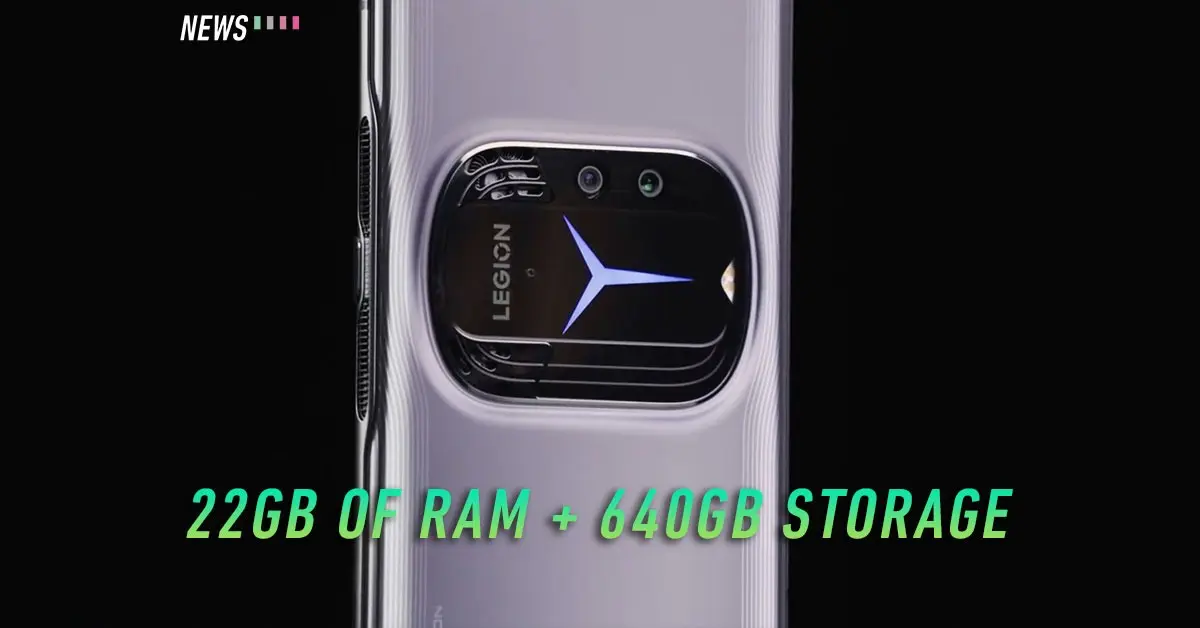
In an era where smartphones increasingly blur the line between portable communication devices and dedicated gaming consoles, Lenovo is refusing to pull any punches. The Legion Y90 is shaping up to be an absolute technical titan. According to the leaked documentation and regulatory benchmarks, the device boasts a massive 6.92-inch high-refresh-rate AMOLED display, top-tier cooling architectures, and staggering memory configurations that push past traditional boundaries—including an unprecedented 22GB total RAM capacity made possible through virtual memory expansion.
Powered by Qualcomm’s bleeding-edge Snapdragon 8 Gen 1 system-on-chip (SoC), the Legion Y90 is clearly engineered for hardcore gamers and power users who demand uncompromising performance. As we look ahead to its anticipated official rollout alongside the Lenovo Legion Y700 gaming tablet, this comprehensive deep-dive examines the leaked specifications, evaluates the technological implications of Lenovo’s engineering choices, and contextualizes where the Legion Y90 fits within the fiercely competitive 2022 mobile gaming ecosystem.
Detailed Chronology: From First Teasers to the Massive Spec Leak
The journey of the Lenovo Legion Y90 from a secretive project to one of the most anticipated mobile devices of the year has been marked by strategic marketing and inevitable insider disclosures. Understanding this timeline highlights how Lenovo has managed to build sustained hype within the tech community.
Phase 1: The Design Reveal
The initial chapter of the Legion Y90 story began when Lenovo officially broke cover to tease the smartphone’s external aesthetics. Eschewing the subtle, understated designs typical of mainstream flagship phones, the Legion Y90 embraced a distinctly futuristic, gamer-centric industrial design language.
Teasers showcased a heavily stylized rear chassis, centering the brand’s iconic RGB-illuminated Legion logo and housing a unique camera module layout. Unlike many contemporary smartphones that place their thermal management components near the top of the device, Lenovo’s architectural design philosophy has historically centered its processing core and cooling systems in the middle of the chassis. This ensures that when the device is held horizontally in landscape mode—the standard posture for mobile gaming—the user’s hands do not encounter thermal hotspots. The teasers also confirmed the integration of physical gaming controls, laying the groundwork for what users could expect in terms of ergonomics.
Phase 2: The Weibo Leak and Specification Unveiling
Following the visual appetizers provided by official channels, the floodgates opened wide when Weibo user Panda is bald published a comprehensive spec sheet screenshot and accompanying details. This leak transformed theoretical speculation into concrete hardware expectations.
The leaked data provided precise metrics for the display panel, internal storage tiers, exact battery capacities, and auxiliary hardware features such as haptic motors and shoulder triggers. By cross-referencing these details with subsequent reports from industry aggregators like Notebookcheck, tech analysts were able to piece together a nearly complete puzzle of Lenovo’s upcoming flagship. Rather than incremental upgrades over its predecessor (the Legion Duel 2), the Y90 represents a holistic redesign focused on sustaining peak performance under heavy, prolonged gaming loads.
Supporting Context & Metrics: Under the Hood of the Legion Y90
A spec sheet is only as good as the hardware synergy it enables. A granular examination of the Lenovo Legion Y90’s leaked specifications reveals an uncompromising approach to mobile engineering, touching upon every critical component of modern smartphone architecture.
+-------------------------------------------------------------------------
|               LENOVO LEGION Y90: LEAKED SPECIFICATION MATRIX
+-------------------------------------------------------------------------
| Display Panel      | 6.92-inch AMOLED, 144Hz Refresh Rate,
|                    | 720Hz Touch Sampling Rate
+-------------------------------------------------------------------------
| Processor (SoC)    | Qualcomm Snapdragon 8 Gen 1 (4nm)
+-------------------------------------------------------------------------
| Memory (RAM)       | 18GB Physical RAM + 4GB Virtual RAM (Up to 22GB Total)
+-------------------------------------------------------------------------
| Internal Storage   | Up to 640GB (Configuration-dependent)
+-------------------------------------------------------------------------
| Battery & Charging | 5,600mAh Dual-Cell Design with 68W Fast Charging
+-------------------------------------------------------------------------
| Thermal Management | Double Engine Air Cooling Technology
+-------------------------------------------------------------------------
| Audio              | Dual Front-Facing Speakers with Dolby Atmos
+-------------------------------------------------------------------------
| Controls & Haptics | Dual X-Axis Linear Motors, 2x2 Ultrasonic Shoulder Keys
+-------------------------------------------------------------------------
Display Performance: Immersion and Responsiveness
At the front, the Legion Y90 is reported to feature a sprawling 6.92-inch AMOLED display. For competitive mobile gamers, screen real estate and response times are paramount. The panel reportedly supports a buttery-smooth 144Hz refresh rate, ensuring that high-frame-rate titles—such as Call of Duty: Mobile, PUBG Mobile, and Genshin Impact (where supported)—render with absolute fluidity, minimizing motion blur and input lag.
Furthermore, the display integrates a blistering 720Hz touch sampling rate. This metric measures how many times per second the screen registers touch inputs from the user’s fingers. A 720Hz touch sampling rate translates to near-instantaneous touch registration, giving competitive players a critical millisecond advantage in twitch-reaction scenarios.
Processing Power and the RAM Arms Race
Under the hood, the device is anchored by Qualcomm’s flagship Snapdragon 8 Gen 1 system-on-chip, built on an advanced 4nm manufacturing process. This processor brings architectural improvements over previous generations, including a Cortex-X2 prime core, enhanced Adreno graphics processing, and sophisticated AI engines capable of handling complex computational photography and gaming rendering tasks.
However, the most eye-catching detail in the leaked spec sheet is the memory configuration. The Legion Y90 is equipped with a staggering 18GB of physical LPDDR5 RAM. As if that were not enough to satisfy even the most demanding multitasking workloads, the system incorporates a 4GB virtual RAM expansion feature, allowing the device to draw upon internal storage to temporarily boost total available memory up to an astonishing 22GB.
To put this into perspective, 22GB of RAM surpasses the memory capacity found in many modern consumer laptops and desktop computers. While standard mobile applications rarely utilize more than 8GB to 12GB of RAM under normal operating conditions, this surplus ensures that background applications remain resident indefinitely, completely eliminating aggressive app-reloading and providing massive headroom for heavy emulation and extreme gaming scenarios.
Storage capacities are equally robust, with leaks indicating options scaling up to an impressive 640GB, ensuring users have more than enough space to store massive media libraries, high-resolution textures, and expansive gaming titles without constantly managing internal storage limits.
Thermal Management: Double Engine Air Cooling Technology
One of the greatest challenges facing modern mobile processors—particularly the heat-prone Snapdragon 8 Gen 1—is thermal throttling. When a chip gets too hot, it automatically reduces its clock speeds to lower temperatures, resulting in stuttering frame rates and degraded performance during extended gaming sessions.
To combat this, Lenovo has integrated its proprietary Double Engine Air Cooling Technology. While full mechanical details of the cooling apparatus are still emerging, the system is expected to utilize an advanced vapor chamber cooling system paired with active or passive aerodynamic airflow channels. By actively expelling heat away from the central chassis, the Legion Y90 aims to sustain maximum processing performance indefinitely, avoiding the performance degradation that plagues traditional smartphones.
Battery Capacity and Power Delivery
Powering a 6.92-inch 144Hz AMOLED display and an overclocked Snapdragon processor requires a substantial power reserve. The Legion Y90 packs a hefty 5,600mAh battery, split into a dual-cell architecture designed to optimize charging speeds and thermal distribution during high-wattage power delivery.
The device supports 68W fast charging, allowing users to rapidly replenish their battery reserves between gaming sessions. While some competitors in the ultra-fast charging space push past 120W, a 68W rating paired with a 5,600mAh capacity strikes a pragmatic balance between rapid turnaround times and long-term battery health preservation.
Ergonomics, Controls, and Audio
For mobile gamers who prefer physical tactile feedback over flat glass touchscreens, the Legion Y90 features comprehensive control schemes. The device includes 2×2 shoulder keys (ultrasonic or physical triggers positioned along the edges of the device), allowing users to map complex in-game actions—such as aiming, firing, or gear selection—to finger rest points.
Tactile feedback is handled by dual X-axis linear motors, which provide crisp, directional haptic vibrations that simulate recoil, footsteps, and environmental impacts with high precision. Audio immersion is equally prioritized, featuring dual Dolby Atmos-tuned speakers capable of delivering expansive soundstages and accurate spatial audio positioning without requiring external headphones.
Future Outlook: Lenovo’s Strategic Positioning in 2022
The leak of the Lenovo Legion Y90 specifications paints a picture of a brand that refuses to compromise on hardware excess. As the mobile gaming market matures, brands are increasingly forced to differentiate themselves through holistic ecosystem integration and specialized hardware features rather than simple software tweaks.
The Ecosystem Play: Launching Alongside the Legion Y700 Tablet
Crucially, industry reports indicate that the Lenovo Legion Y90 is expected to launch alongside the brand’s highly anticipated gaming tablet, the Lenovo Legion Y700. By simultaneous releasing a flagship gaming phone and a compact, performance-focused gaming tablet (which features a Snapdragon 870 processor and a unique aspect-ratio-switching feature), Lenovo is signaling a concerted push to capture market share across multiple mobile gaming form factors.
This dual-pronged hardware release strategy allows Lenovo to cater to both pocket-friendly competitive gamers and multimedia enthusiasts who prefer a larger tablet display for immersive role-playing games and media consumption.
Market Implications and Competition
When the Legion Y90 officially hits store shelves—widely projected to occur before the midpoint of 2022—it will enter a fiercely competitive arena populated by heavyweights such as the ASUS ROG Phone series, the RedMagic lineup from Nubia, and Black Shark offerings.
In this landscape, the Legion Y90’s unique selling propositions will undoubtedly be its symmetrical thermal layout, its uncompromising 18GB/22GB RAM configuration, and its deep integration with Lenovo’s gaming software ecosystem. For power users and mobile gaming enthusiasts who prioritize sustained raw performance, thermal endurance, and desktop-class multitasking capabilities, the Legion Y90 is shaping up to be one of the most compelling mobile releases of the year.
As we await official pricing, regional availability, and final confirmation of these leaked specifications from Lenovo, one thing remains abundantly clear: the Legion Y90 is not just a smartphone built for gaming; it is a portable powerhouse designed to challenge our very perceptions of what mobile hardware can achieve. Stay tuned as we continue to track developments and provide official coverage upon the Legion Y90’s global unveiling.









Belum ada komentar. Jadilah yang pertama berkomentar!