

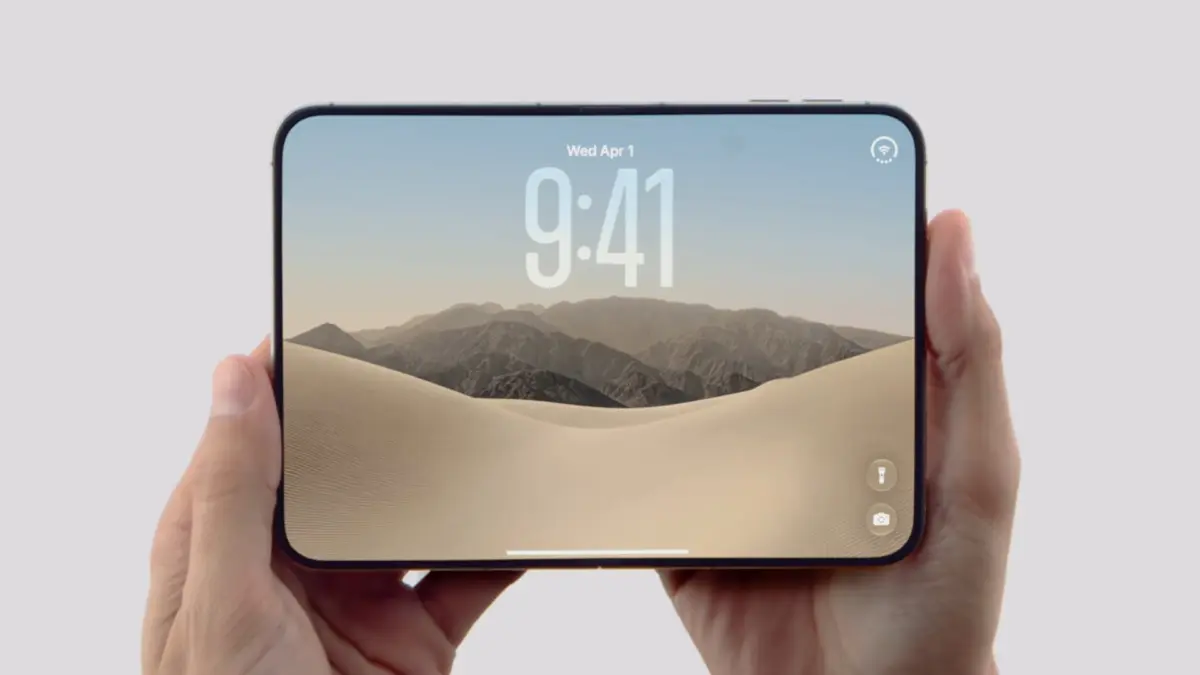
Executive Overview
In what represents one of the most pivotal product announcements in modern consumer technology, Apple Inc. officially entered the foldable smartphone market during its flagship September 9, 2026 keynote event. Dubbed the iPhone Duo, the Cupertino-based tech giant’s debut foldable device aims to redefine a category long criticized for hardware compromises, visual display creases, and awkward form factors. Positioned alongside the newly announced iPhone 18 Pro and iPhone 18 Pro Max, the iPhone Duo signifies Apple’s ambition to bridge the gap between high-performance mobile communication, tablet-grade productivity, and enthusiast-level mobile gaming.
Unlike early-generation foldables from industry competitors that relied on elongated, narrow outer screens reminiscent of TV remote controls, the iPhone Duo features a passport-inspired external geometry coupled with an expansive 7.6-inch internal screen modeled on the iPad aspect ratio. Driven by the all-new A20 Pro silicon chip, a nano-textured display surface engineered to minimize crease distortion, and a global eSIM-only power structure housing split dual batteries, the device enters the market at a starting price of $1,999 for the 256GB model, scaling up to 2TB of internal storage. Pre-orders are scheduled to open on October 18, 2026, with global retail availability beginning October 23, 2026.
+-----------------------------------------------------------------------+
|                         IPHONE DUO LAUNCH TIMELINE                    |
+-----------------------------------------------------------------------+
|  [Sept 9, 2026]       -->  [Oct 18, 2026]       -->  [Oct 23, 2026]    |
|  Official Keynote          Pre-Orders Open         Global Retail      |
|  Announcement              (256GB - 2TB)           Availability       |
+-----------------------------------------------------------------------+
Detailed Chronology: From Rumor to Reality at the 2026 Apple Event
The road to the iPhone Duo has been characterized by years of intense industry speculation, supply chain leaks, and prolonged R&D cycles. For nearly a decade, Apple watched from the sidelines as rival OEMs introduced multiple generations of flexible-display hardware. The company’s September 9, 2026 keynote marked the formal culmination of this multi-year development arc.
+-----------------------------------------------------------------------+
|                     PRODUCT LINEUP OVERVIEW & MATRIX                   |
+-----------------------------------+-----------------------------------+
| Feature / Metric                  | iPhone Duo                        |
+-----------------------------------+-----------------------------------+
| Internal Display                  | 7.6-inch, iPad-Ratio Nano-Textured|
| Outer Display Geometry            | Passport-Style Ergonomic Aspect   |
| Processor                         | A20 Pro (Fastest Smartphone CPU)  |
| Graphics Boost                    | +40% GPU Performance over Gen

 17  |
| Battery Endurance                 | Up to 44 Hours Video Playback     |
| Charging Speed                    | 0% to 50% in 20 Minutes           |
| SIM Architecture                  | 100% eSIM Worldwide (No Physical) |
| Starting Price                    | $1,999 USD (256GB Base Tier)      |
| Pre-Order / Launch Dates          | Oct 18, 2026 / Oct 23, 2026       |
+-----------------------------------+-----------------------------------+
During the presentation, Apple structured its hardware reveal around a dual-track strategy: bolstering its conventional glass-slab flagships via the iPhone 18 Pro series while inaugurating an entirely new tier of ultra-premium devices with the Duo. Key milestones within the release schedule demonstrate a deliberate launch strategy:
- September 9, 2026: Official unveil during Apple’s live-streamed event at Steve Jobs Theater in Cupertino, California. Technical demonstrations centered on screen durability, GPU thermal efficiency, and iOS multitasking.
- October 18, 2026: Opening of global pre-orders across online storefronts, carrier partners, and retail channels. Options span 256GB, 512GB, 1TB, and an enthusiast-tier 2TB capacity.
- October 23, 2026: In-store availability and worldwide order fulfillment across primary operating markets in North America, Europe, Asia-Pacific, and Latin America.
Supporting Context & Technical Metrics
To overcome the architectural limitations that have hampered foldable smartphones since their inception—namely thermal throttling, visible screen degradation, poor battery life, and software scaling issues—Apple introduced several technical innovations across display, silicon, chassis engineering, and power management.
Form Factor and Display Engineering
A primary design priority for Apple’s engineering team was avoiding the sensation of "two phones stuck together." When folded, the iPhone Duo assumes a wider, passport-style shape that closely mirrors traditional pocket notebooks rather than the tall, narrow aspect ratios found on competing foldable devices. This wider cover display allows for a traditional typing experience without screen crampedness.
Unfolding the device reveals a 7.6-inch flexible OLED panel engineered with an aspect ratio directly modeled after the iPad mini series. To solve the persistent issue of screen creases, Apple deployed an updated nano-textured glass substrate. This custom optical layer serves a dual purpose:
- Reflective Mitigation: It diffuses ambient light across the flexible screen, reducing glare during outdoors use.
- Structural Masking: It drastically reduces optical light distortion over the central hinge mechanism, rendering the internal crease virtually invisible during typical viewing angles.
+-----------------------------------------------------------------------+
|                    IPHONE DUO FORM FACTOR PROFILE                     |
+-----------------------------------------------------------------------+
|                                                                       |
|   CLOSED STATE                    OPENED STATE                        |
|   [ Passport Aspect ]             [ 7.6" iPad-Ratio Display ]         |
|   +---------------+               +-------------------------------+   |
|   |               |               |               |               |   |
|   |  Cover Screen |   =======>    |  Left Screen  | Right Screen  |   |
|   |               |   Unfolds     |   (App A)     |   (App B)     |   |
|   +---------------+               +-------------------------------+   |
|   Wide Ergonomics                 Nano-Textured Low-Crease Panel      |
|                                                                       |
+-----------------------------------------------------------------------+
Next-Generation Silicon & Thermal Management
At the core of the iPhone Duo—as well as the companion iPhone 18 Pro lineup—is Apple’s new A20 Pro processor. Built on an advanced ultra-dense node architecture, Apple claims the A20 Pro features the fastest central processing unit (CPU) in any mobile device.
For graphics-heavy workloads, the A20 Pro integrates a redesigned graphics processing unit (GPU) delivering a 40% increase in graphics performance over the previous generation A19 Pro. This headroom is explicitly engineered to handle high-frame-rate AAA mobile games and real-time ray-tracing environments.
To maintain continuous high-performance output without thermal throttling, Apple redesigned the internal cooling structure across its flagship fleet:

- Vapor Chamber Innovation: The iPhone 18 Pro and Pro Max introduce a next-generation vapor cooling system featuring three times the surface area of the vapor chamber utilized in the iPhone 17 Pro.
- Structural Materials: The internal mid-frame incorporates a chassis composed of 80% recycled stainless steel, offering structural rigidity to preserve alignment across the folding mechanical hinge while efficiently dissipating heat from the central processing unit.
+-----------------------------------------------------------------------+
|                     THERMAL DISSIPATION EVOLUTION                     |
+-----------------------------------------------------------------------+
|  iPhone 17 Pro Vapor Chamber Surface Area  | [====] (1x Baseline)     |
|                                            |                          |
|  iPhone 18 Pro/Duo Next-Gen Vapor Chamber  | [============] (3x Area) |
+-----------------------------------------------------------------------+
Battery Architecture, Audio, and Camera Integration
Power distribution within a folding chassis presents unique mechanical challenges. To maximize internal spatial volume, Apple eliminated physical SIM card trays globally, making the iPhone Duo an eSIM-only device worldwide.
This spatial saving allowed engineers to implement a split dual-battery architecture distributed across both halves of the device chassis:
- Battery Life: Delivers up to 44 hours of continuous video playback when operating via the external cover screen.
- Charging Dynamics: Supports accelerated fast-charging capabilities, capable of replenishing the dual battery system from 0% to 50% capacity in 20 minutes.
- Audio Architecture: Top- and bottom-mounted spatial audio speaker enclosures provide balanced, directional surround sound across both portrait and landscape orientation.
- Imaging Pipeline: The primary camera module utilizes the same high-resolution sensor hardware featured in the flagship iPhone 18 Pro, supported by new on-device computational editing features optimized for dual-screen interaction.
Official Statements and Industry Alignment
During the product introduction, Apple executives emphasized that software integration was key to making the new hardware useful for daily workflows. The software team expanded the core capabilities of iOS to natively leverage the dual-screen estate:
"With the iPhone Duo, we didn’t simply want to make a folding display; we set out to reimagine how iOS functions when given a broader canvas," stated Apple executive leadership during the keynote address. "By combining the productivity power of iPadOS multitasking with the portability of the iPhone, users can run two live iOS home screens simultaneously, interact with their email inboxes and messaging threads side by side, and execute heavy computational workflows without dropping frames."
The gaming industry has reacted rapidly to the announcement. Software publishers are moving to leverage both the expansive screen estate of the Duo and the thermal ceiling of the iPhone 18 Pro line. Notably, publisher partners confirmed that the upcoming title Monster Hunter Outlanders will feature exclusive, high-fidelity cinematic visual modes tailored specifically to launch alongside the iPhone 18 Pro series and the iPhone Duo.
+-----------------------------------------------------------------------+
|                    IOS DUAL-SCREEN MULTITASKING                       |
+-----------------------------------------------------------------------+
| +-----------------------------------+-------------------------------+ |
| |        PANEL 1 (LEFT DISPLAY)     |     PANEL 2 (RIGHT DISPLAY)   | |
| +-----------------------------------+-------------------------------+ |
| |  - Primary Home Screen / App A    |  - Secondary Home / App B     | |
| |  - Email Inbox Master List        |  - Message Thread Detail      | |
| |  - Game Dashboard / Controls      |  - Full Screen Main Canvas    | |
| +-----------------------------------+-------------------------------+ |
+-----------------------------------------------------------------------+
To assist developers in scaling existing applications for the 7.6-inch display, Apple released an updated software development kit (SDK) featuring dynamic viewports that automatically transition applications between cover-screen and main-screen modes without requiring app restarts or causing UI stretching.
Future Outlook: Redefining Mobile Hardware and Market Dynamics
The launch of the iPhone Duo marks a significant shift in the competitive landscape of high-end mobile computing. By setting the base price at $1,999, Apple is establishing an ultra-premium hardware category above its existing Pro Max tier. This strategy reflects both the higher cost of manufacturing foldable components and Apple’s attempt to position the device as a multi-use hybrid capable of replacing both a smartphone and a compact tablet.
+-----------------------------------------------------------------------+
|                    PRICE TIERING STRUCTURE (USD)                      |
+-----------------------------------------------------------------------+
|  $1,999  +-------------------------------------+  iPhone Duo (256GB)  |
|          | (Scales up to 2TB Capacity)         |                      |
|  $1,199+ +-------------------------------------+  iPhone 18 Pro Max   |
|  $999+   +-------------------------------------+  iPhone 18 Pro       |
+-----------------------------------------------------------------------+
Industry analysts anticipate several long-term market movements following Apple’s entry into the foldable space:
- Accelerated Foldable Adoption: Apple’s entry into the foldable market validates the form factor for mainstream consumers, likely pushing major competitors like Samsung, Google, and Motorola to refine their design strategies and hardware standards.
- Growth in High-End Mobile Gaming: The combination of the A20 Pro’s enhanced GPU (+40% performance gain), expanded vapor chamber cooling, and large screen real estate positions the iPhone Duo and iPhone 18 Pro series as primary targets for developers bringing high-end console-style games to mobile platforms.
- eSIM Expansion: Apple’s decision to make the iPhone Duo completely eSIM-dependent across all global regions will likely accelerate telecom carriers’ adoption of digital SIM infrastructure, hastening the removal of physical SIM card trays across the broader smartphone market.
- Enterprise Productivity Integration: The ability to execute true side-by-side app workflows without the horizontal spatial limitations of traditional smartphones makes the Duo an attractive tool for enterprise customers, financial traders, and content creators who require split-screen multitasking on the go.
While the $1,999 starting price point will limit initial market penetration to early adopters, enterprise users, and technology enthusiasts, the iPhone Duo lays the engineering foundation for Apple’s mobile strategy over the next decade. As component manufacturing matures and flexible glass yield rates improve, the design principles introduced in the Duo are expected to trickle down across Apple’s broader portable hardware portfolio.









Belum ada komentar. Jadilah yang pertama berkomentar!