

Executive Overview
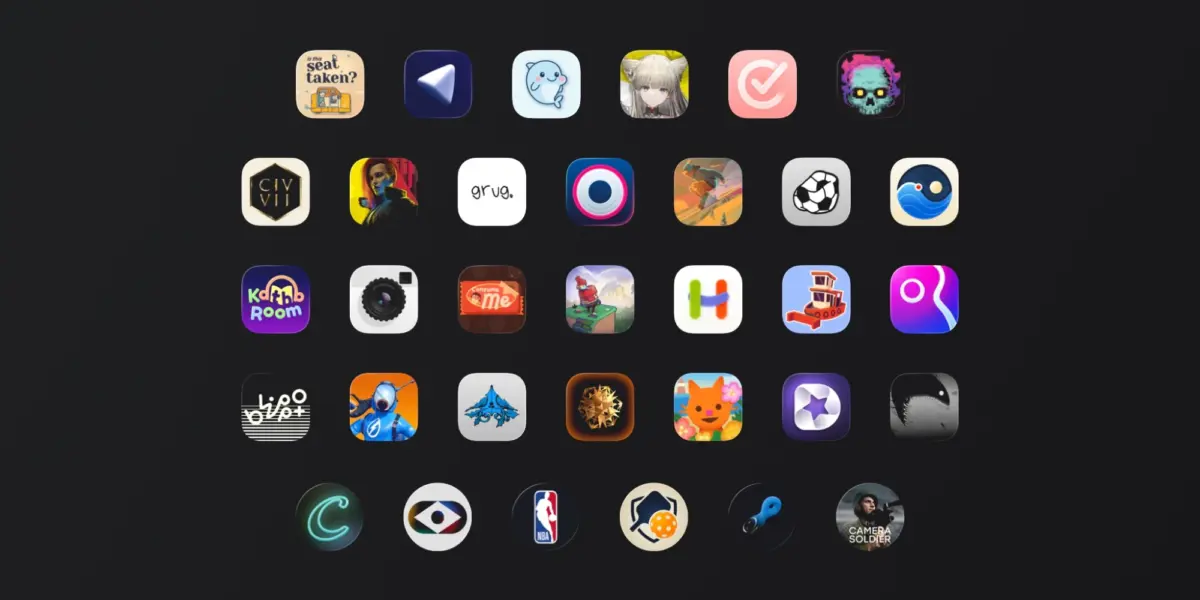
As the technology world prepares for the impending kickoff of Worldwide Developers Conference 2026 (WWDC26)—cemented further by Apple’s official dispatch of press invitations for the marquee keynote—the Cupertino-based tech giant has turned the spotlight onto the creative backbone of its ecosystem. Apple has officially announced the finalists for the prestigious 2026 Apple Design Awards (ADAs).
Recognized globally as one of the highest accolades a developer can achieve within the Apple ecosystem, the ADAs spotlight the absolute pinnacle of human-computer interaction, visual storytelling, technical achievement, and functional ingenuity across the App Store. This year’s cohort features a tightly curated lineup of 36 total finalist slots spread evenly across six distinct categories: Delight and Fun, Inclusivity, Innovation, Interaction, Social Impact, and Visuals and Graphics. Each category pits three standout apps and three phenomenal games against one another, though overlapping nominations mean the actual tally of distinct software titles sits just shy of 36.
These finalists represent the bleeding edge of what is possible on iOS, iPadOS, macOS, watchOS, and visionOS. They harness proprietary frameworks, push the boundaries of Apple silicon, and demonstrate a profound commitment to user experience. As the industry counts down the days to WWDC26, the announcement of these finalists serves as both a celebration of contemporary software craftsmanship and a preview of where mobile and desktop computing are heading next.
Detailed Chronology: The Road to the 2026 Apple Design Awards
The unveiling of the 2026 Apple Design Award finalists is the latest milestone in a carefully orchestrated seasonal roadmap that defines Apple’s developer relations calendar. Understanding the cadence of this journey contextualizes the significance of reaching finalist status.
Early Spring: Submission and Scrutiny
Months before the public announcements, independent developers, major studios, and solo garage coders alike submit their applications for consideration. Apple’s internal design and engineering evaluation teams—comprising veteran evangelists, human interface designers, and platform architects—begin the arduous process of evaluating thousands of App Store releases.
Every candidate is scrutinized not merely for surface-level polish, but for deep architectural integration. The evaluation looks at how fluidly an app adopts Dynamic Type, how intelligently it handles VoiceOver, whether it optimizes for Metal graphics APIs, and how seamlessly it leverages hardware features like the Neural Engine, ProMotion displays, and spatial computing sensors on Apple Vision Pro.
The Late-May Reveal
As spring transitions into summer, the timeline accelerates. Apple officially fires the starting gun for WWDC by dispatching press invites for the keynote address, signaling that the global developer community’s annual pilgrimage is officially underway. Capitalizing on this wave of anticipation, Apple lifts the veil on the ADA finalists.

By releasing the list weeks ahead of the actual conference, Apple grants these elite developers a moment in the global sun. It allows the tech press, enthusiasts, and fellow developers to examine the titles, download the builds, and speculate on which software will ultimately take home the coveted physical ADA trophy—a beautifully crafted, aluminum-and-glass monolith designed to symbolize creative excellence.
The Upcoming Winners’ Circle
Following the announcement of the finalists, the final winners will be selected and announced in the coming weeks, culminating during the festivities of WWDC26. Historically, winners are celebrated in dedicated developer sessions, spotlighted across the App Store editorial tabs, and invited to meet directly with Apple executives, including CEO Tim Cook and Senior Vice President of Worldwide Marketing Greg Joswiak.
Supporting Context & Metrics: Anatomy of an Apple Design Award
To truly understand the weight of an Apple Design Award nomination, one must examine the metrics of scale and philosophy that govern the modern App Store economy.
The Scale of the App Store Ecosystem
Home to nearly two million apps, the App Store is a hyper-competitive global marketplace. Standing out amid this ocean of software requires more than just a clever concept; it demands uncompromising execution. When Apple narrows the field down to just 36 finalist slots across six categories, it is filtering through a pool of entries submitted by developers from over 100 countries.
Decoding the Six Core Pillars
Apple structures the Design Awards around philosophical pillars that dictate what the company values most in software design:
- Delight and Fun: These applications and games transform utilitarian tasks or leisure time into memorable, highly engaging, and emotionally satisfying experiences. They make exceptional use of Apple technologies—such as Core Haptics, spatial audio, and SpriteKit—to create an undeniable sense of joy.
- Inclusivity: Great software must serve everyone. Finalists in this category demonstrate extraordinary empathy, providing accessible experiences for individuals across a broad spectrum of physical abilities, sensory needs, linguistic backgrounds, and cognitive profiles.
- Innovation: This category honors pioneers. These are titles that utilize Apple technologies in completely novel, state-of-the-art ways, effectively rewriting the rulebook for what is possible within their respective genres.
- Interaction: Simplicity is the ultimate sophistication. Finalists here deliver interfaces that feel entirely natural, featuring intuitive controls, responsive gestures, and ergonomic layouts that feel native to whichever Apple platform they inhabit.
- Social Impact: Technology at its best changes lives for the better. These titles tackle critical societal challenges, raise awareness for pressing global issues, foster community connections, or provide life-changing utility to marginalized groups.
- Visuals and Graphics: Aesthetics matter profoundly in the Apple ecosystem. Finalists in this classification boast breathtaking artistic direction, meticulously hand-drawn or vector-crafted interfaces, and silky-smooth animations that establish a cohesive, immersive world.
Official Perspectives and Industry Impact
While the formal press releases provide the structural framework of the awards, the cultural and economic ripples they send through the developer ecosystem are profound. Industry analysts often look to the ADA finalists as a leading indicator of where developer investment is flowing.
In past statements regarding the awards, Apple executives have consistently emphasized that good design is no longer just about how an app looks—it is fundamentally about how it works, how it treats the user’s data privacy, and how inclusively it is built from the ground up.

For indie developers, an ADA nomination can be a transformative business event. Historically, inclusion on the finalist or winner list triggers a massive surge in organic App Store visibility, driving downloads, validating years of bootstrapping, and frequently attracting venture capital or strategic acquisition interest. It transforms unknown creators into industry celebrities within the Apple developer circuit. Furthermore, it validates the multi-year investments Apple makes in developer tooling—proving that when Apple releases complex frameworks like Swift, SwiftUI, or Metal, creative developers will weaponize them to build experiences that were previously thought impossible on consumer hardware.
Future Outlook: Looking Beyond WWDC26
As the technology sector looks past the immediate horizon of WWDC26, the 2026 Apple Design Award finalists offer a clear glimpse into the future of computing.
Several overarching trends emerge from this year’s roster. First is the maturation of spatial computing. With Apple Vision Pro gaining market footing and visionOS evolving rapidly, developers are no longer treating augmented and virtual reality as novel gimmicks; they are integrating spatial paradigms natively into productivity suites, educational tools, and immersive gaming.
Second, the integration of ambient machine learning—powered by Apple silicon and on-device neural processing—is becoming invisible yet ubiquitous. Apps are increasingly predictive, personalized, and context-aware without sacrificing user privacy or draining device batteries.
Finally, the democratization of software creation tools means that the gap between AAA studio output and solo indie projects continues to narrow. The 2026 finalists prove that a small, passionate team armed with modern SwiftUI and robust APIs can out-design, out-innovate, and out-maneuver massive corporate entities simply through superior creative vision and acute attention to detail.
As the winners are crowned in the coming weeks, the tech world will watch closely to see which of these extraordinary digital creations claims the ultimate prize, setting a new benchmark for excellence that the rest of the industry will spend the next year striving to match.







Belum ada komentar. Jadilah yang pertama berkomentar!