

Executive Overview
The portable gaming landscape has long been dominated by smartphones and specialized handheld consoles. While dedicated gaming tablets have occasionally surfaced, they have historically struggled with a fundamental hardware-software mismatch: aspect ratio incompatibility. Because traditional tablets are typically engineered around a 16:10 aspect ratio to maximize productivity and media consumption, competitive mobile gamers have often found themselves playing at a distinct tactical disadvantage. When tackling fast-paced multiplayer titles—particularly Multiplayer Online Battle Arenas (MOBAs) like League of Legends: Wild Rift or Honor of Kings—tablet users frequently miss out on critical peripheral vision that smartphone players enjoy natively due to their wider, cinematic display ratios.
Enter Lenovo. Expanding aggressively upon its established Legion gaming ecosystem, the technology giant is preparing to launch the Lenovo Legion Y700, a dedicated gaming tablet designed from the ground up to conquer the unique pain points of mobile esports enthusiasts. Recent leaks and official teasers courtesy of Lenovo executive Lin Lin have revealed critical details about the upcoming device, most notably its inclusion of Qualcomm’s highly reliable Snapdragon 870 System-on-Chip (SoC) and a revolutionary software feature dubbed Ultra-Wide Viewing Mode.
By allowing users to dynamically adjust their display’s aspect ratio to 21:10, Lenovo is attempting to bridge the gap between pocket-sized gaming phones and larger-format slates. Coupled with a high-performance 8.8-inch display boasting a 120Hz refresh rate, 240Hz touch sampling rate, and 100% DCI-P3 color gamut coverage, the Legion Y700 aims to establish a brand-new gold standard for portable, large-screen competitive gaming. While an official release date remains tightly under wraps, the industry buzz surrounding Lenovo’s latest project indicates that the wait may soon be over.
Detailed Chronology: Unfolding the Legion Y700 Narrative
The journey of the Lenovo Legion Y700 has been marked by a deliberate, calculated drip-feed of marketing materials, executive teases, and regulatory leaks that have steadily built anticipation within the mobile tech community.
Phase 1: Initial Concept and Teaser Campaign
The narrative began in late 2021 and early 2022 when Lenovo’s mobile division started pivoting toward a dual-pronged strategy for its Legion brand. Alongside teasers for the aggressively styled Legion Y90 gaming smartphone, executives began hinting at a companion device that would satisfy gamers desiring a larger canvas without sacrificing competitive viability.
Industry insiders quickly caught wind of Lenovo’s ambitions as promotional posters surfaced across Chinese social media platform Weibo. These early marketing assets confirmed that Lenovo was not simply recycling an existing media tablet chassis; instead, they were building an entirely bespoke 8.8-inch form factor explicitly tuned for gaming ergonomics and visual fidelity.
Phase 2: Lin Lin’s Architectural Deep-Dive
As speculation mounted, Lenovo executive Lin Lin stepped forward to provide concrete specifications regarding the tablet’s internal architecture and visual capabilities. Moving away from bleeding-edge chips plagued by thermal throttling concerns, Lin Lin confirmed that the Legion Y700 would house the Qualcomm Snapdragon 870 processor. This decision was praised by hardware analysts who recognized that the Snapdragon 870 offers an optimal sweet spot between sustained high-level gaming performance and thermal efficiency—critical factors for a compact tablet chassis.
Phase 3: Solving the Field-of-View Dilemma
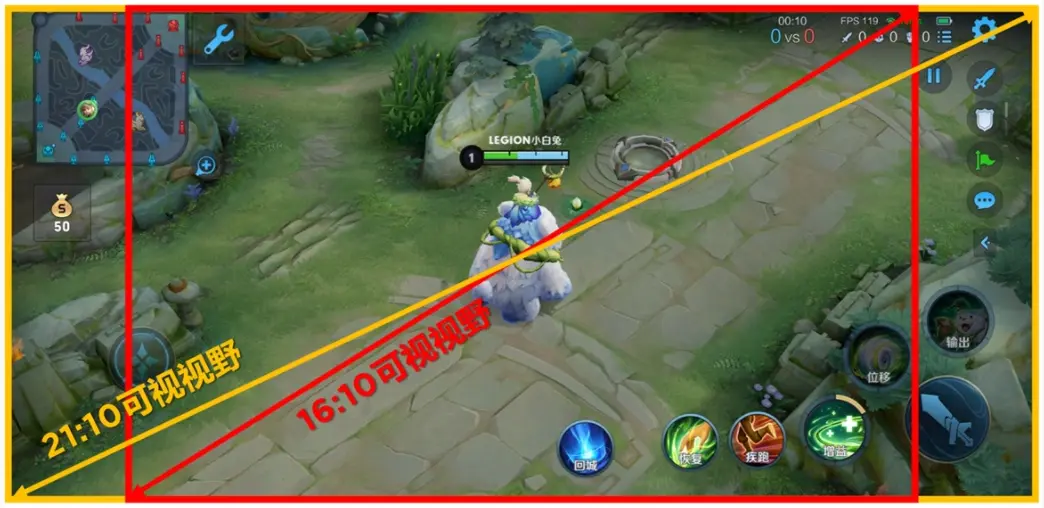
Perhaps the most significant revelation in the chronology of the Legion Y700 was the unveiling of its aspect ratio adjustment technology. Demonstrating how traditional 16:10 tablet screens crop out vital map information in popular MOBA titles, Lenovo showcased its proprietary solution: the Ultra-Wide Viewing Mode. By allowing gamers to shift their viewing window to a 21:10 aspect ratio and reposition game assets toward the center or bottom of the display, Lenovo addressed a multi-year grievance held by tablet-based competitive gamers.
Supporting Context & Metrics: Under the Hood of the Legion Y700
To truly appreciate the engineering philosophy behind the Lenovo Legion Y700, one must examine the raw technical specifications and the contextual market challenges it seeks to overcome.
Display Architecture and Visual Performance
At the heart of the Legion Y700’s appeal is its display panel. Eschewing the cumbersome 10-inch-plus sizes common in mainstream productivity slates, Lenovo opted for a compact 8.8-inch LCD display. This size strikes a delicate balance: it is large enough to render complex user interfaces and touch controls comfortably, yet small and light enough to prevent hand fatigue during extended gaming sessions.
Key display metrics include:
- Resolution: 2560 × 1600 pixels, ensuring sharp text rendering and crystal-clear in-game textures.
- Refresh Rate: 120Hz, delivering buttery-smooth motion handling that is essential for high-framerate competitive shooters and fast-paced action titles.
- Touch Sampling Rate: 240Hz, guaranteeing ultra-responsive touch registration to minimize input latency during critical split-second maneuvers.
- Color Gamut: 100% DCI-P3 coverage, providing vibrant, cinematic color reproduction that enhances both gaming and media consumption experiences.
+-----------------------------------------------------------------+
|               LENOVO LEGION Y700: DISPLAY METRICS               |
+--------------------------+--------------------------------------+
| Screen Size              | 8.8-inch LCD                         |
| Native Resolution        | 2560 x 1600                          |
| Refresh Rate             | 120Hz                                |
| Touch Sampling Rate      | 240Hz                                |
| Color Gamut              | 100% DCI-P3                          |
| Native Aspect Ratio      | 16:10                                |
| Expanded Aspect Ratio    | 21:10 (via Ultra-Wide Viewing Mode)  |
+--------------------------+--------------------------------------+
The Aspect Ratio Battle: Overcoming the MOBA Disadvantage
The core technical innovation highlighted by Lenovo’s recent disclosures revolves around aspect ratio management. Historically, tablets utilize a 16:10 aspect ratio, which is vertically taller than the 20:9 or 21:9 aspect ratios found on modern gaming smartphones.
In competitive multiplayer games—such as Riot Games’ League of Legends: Wild Rift or Tencent’s Honor of Kings—the game engine calculates the visible field of view (FoV) horizontally. Because smartphone screens are wider relative to their height, players using phones can see enemies approaching from the left or right flanks earlier than tablet players. Conversely, tablet players see slightly more vertical space, which yields negligible tactical value in games mapped to a top-down or isometric perspective.
Lenovo’s Ultra-Wide Viewing Mode directly neutralizes this disparity. By letting users switch the rendering aspect ratio to 21:10, the tablet artificially widens the horizontal field of view. Furthermore, recognizing that stretching or shifting a UI element to the top of an 8.8-inch screen would make touch controls difficult to reach, Lenovo incorporated customizable positioning controls. Gamers can anchor the game interface to the center or push it toward the bottom of the screen, ensuring that thumbs remain comfortably positioned over virtual joysticks and ability buttons without straining the hands.
Processing Power: Why the Snapdragon 870?
While flagship mobile devices frequently race to adopt the newest, most expensive silicon on the market, Lenovo’s choice of the Qualcomm Snapdragon 870 for the Legion Y700 is a masterclass in pragmatic engineering.
Built on a robust 7nm process node, the Snapdragon 870 features an octa-core Kryo 585 CPU with a prime core clocked up to 3.2 GHz, paired with an Adreno 650 GPU. While it succeeds the older Snapdragon 865 and 865+, it has earned legendary status among mobile gamers and hardware reviewers alike for its exceptional thermal stability. Unlike some newer flagship chipsets that suffer from aggressive thermal throttling under sustained heavy loads, the Snapdragon 870 maintains high, consistent frame rates over hours of intensive gaming without turning the device into an uncomfortable hand-warmer. This makes it an ideal heartbeat for a dedicated gaming tablet where sustained performance trumps benchmark flexing.
Official Statements and Industry Insights
The rollout of information regarding the Legion Y700 has been heavily driven by executive communications on Weibo, where Lenovo mobile leadership actively engages with the tech community to build excitement and gather consumer feedback.
Lin Lin, a prominent voice within Lenovo’s executive ranks, has been instrumental in detailing the device’s feature set. In a series of detailed social media posts, Lin emphasized that the Legion Y700 was conceptualized not merely as a scaled-up smartphone, but as a specialized tool tailored to address real-world complaints from mobile gamers.
"Tablets have massive potential for immersive gaming, but hardware alone is not enough," industry analysts note regarding Lenovo’s strategy. "By tackling software-level disadvantages like aspect ratio scaling, Lenovo is proving that they understand the nuanced demands of competitive esports players who prefer a larger canvas."
Tech commentators and hardware reviewers have similarly lauded the decision to prioritize ergonomic software solutions. For years, mobile gamers transitioning from phones to tablets had to accept compromised fields of view or rely on third-party workarounds. Lenovo’s native integration of an adjustable 21:10 viewing mode signals a maturing mobile gaming market where manufacturers are finally listening to enthusiast communities.
Future Outlook: What Lies Ahead for the Legion Y700 and Mobile Gaming
As the mobile gaming industry continues to burgeon—projected to generate billions in global revenue and capture a massive share of the interactive entertainment market—the hardware ecosystem must evolve in lockstep. The introduction of the Lenovo Legion Y700 points toward several important trends and future outlooks for the sector:
1. The Rise of Specialized Niche Form Factors
For a long time, the tablet market was bifurcated into two categories: productivity-focused slates (like the Apple iPad Pro or Samsung Galaxy Tab S series) and budget media consumption devices. Lenovo’s commitment to an 8.8-inch dedicated gaming tablet creates a brand-new sub-category. If the Legion Y700 proves commercially successful, competitors may be forced to reevaluate their compact tablet portfolios, potentially sparking a new wave of gaming-centric slates from rival manufacturers.
2. Software Optimization as a Competitive Edge
Hardware specifications—such as RAM capacity, refresh rates, and processor speeds—are increasingly becoming commoditized. As raw performance plateaus across high-end devices, software-level innovations will become the primary differentiator for gaming hardware. Features like Lenovo’s Ultra-Wide Viewing Mode demonstrate that software features designed to solve genuine gameplay bottlenecks will drive consumer loyalty far more effectively than raw spec-sheet bragging rights.
3. Ecosystem Synergy and Cross-Platform Play
With Lenovo simultaneously developing the Legion Y90 smartphone and the Legion Y700 tablet, the company is solidifying its ecosystem approach to mobile gaming. Gamers may soon find themselves able to seamlessly sync profiles, performance profiles, and accessory preferences across multiple Lenovo Legion devices, creating a unified gaming experience whether they are on the move with a smartphone or settling in at home with a tablet.
Conclusion: Anticipating the Official Launch
While Lenovo has yet to announce an official, definitive release date or global pricing structure for the Legion Y700, the momentum behind the device is undeniable. By marrying a perfectly sized 8.8-inch 120Hz display with the dependable performance of the Snapdragon 870 and groundbreaking aspect ratio customization, Lenovo is positioning the Legion Y700 to be one of the most exciting mobile hardware releases of the year. As we await further announcements, one thing is certain: the rules of engagement for tablet gaming are about to change.









Belum ada komentar. Jadilah yang pertama berkomentar!