

By Adam Roarty
Senior Editor, Esports News
Last Updated: September 10, 2026
Executive Overview
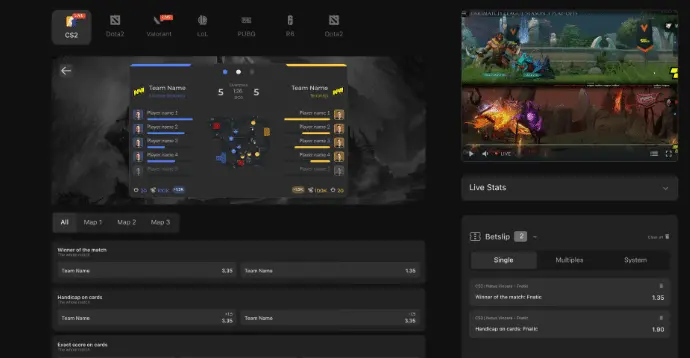
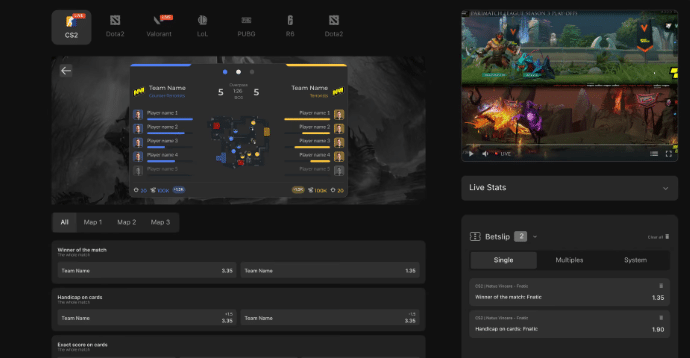
In a significant strategic expansion for the esports data sector, prominent infrastructure platform GRID has officially launched GRID Odds, a state-of-the-art esports betting and pricing service tailored specifically for licensed gambling operators. Going live initially for four of the industry’s most prominent competitive titles—Counter-Strike 2 (CS2), Dota 2, Valorant, and League of Legends—the new product is designed to bridge the gap between raw tournament infrastructure and commercial bookmaking.
GRID Odds introduces an advanced, data-driven pricing mechanism that provides clients with deep market coverage. The service spans traditional match and map winners to intricate player propositions and lightning-fast in-round betting markets. According to company executives, the core competitive advantage of GRID Odds lies in its foundation: direct access to official, low-latency tournament data through long-standing partnerships with major game publishers and tournament organizers, including Riot Games, Ubisoft, KRAFTON, ESL FACEIT Group, and BLAST.
As the global sports betting landscape shifts increasingly toward live, in-play wagering, GRID is positioning itself not just as a data provider, but as a core architect of modern esports trading. This launch arrives on the heels of a massive surge in esports financial volume, underscored by GRID’s recent strategic maneuvers into broader prediction markets, such as its high-profile partnership with Polymarket.
Detailed Chronology: Building the Modern Esports Trading Desk
The rollout of GRID Odds represents the culmination of years of infrastructural development, strategic executive recruitment, and market positioning. To understand how GRID reached this milestone, it is essential to trace the company’s trajectory over the past several years.
Laying the Foundations
Since its inception, GRID operated with a singular conviction: the long-term viability and success of esports betting depend entirely on reliable, official data access. Unofficial scraping and delayed feeds have historically plagued the esports gambling sector, leading to market suspensions, integrity vulnerabilities, and inaccurate pricing models. GRID sought to solve this by securing exclusive and official data rights directly from game publishers.
Over successive years, the company accumulated an impressive portfolio of partnerships. By establishing direct pipelines with tier-one tournament organizers like ESL FACEIT Group and BLAST, alongside developers such as Riot Games, Ubisoft, and KRAFTON, GRID built an authoritative ecosystem of game-state telemetry.
Strategic Leadership and Trading Infrastructure
To transform this vast influx of raw data into a commercial betting product, GRID made critical executive appointments over the past year. Thomas Warburton, Co-Founder and Chief Business Officer of GRID—who brought six years of invaluable industry experience from Sky Betting and Gaming—stepped up to spearhead the company’s deeper push into the betting sector.
Recognizing that a powerful data feed requires institutional-grade trading architecture, GRID subsequently appointed Evgeniy Bekker as Vice President of Trading. Bekker, formerly the Director of Trading at BETER, was brought on to construct GRID’s proprietary trading desk “from the ground up.”
Under Bekker’s guidance, the trading team focused heavily on modeling high-frequency, complex live markets. By combining Bekker’s traditional sports and esports trading acumen with GRID’s publisher-sanctioned data feeds, the company created the operational backbone necessary to support GRID Odds at scale.
The 2026 Launch
By September 2026, the groundwork laid by Warburton, Bekker, and the broader GRID engineering teams culminated in the commercial rollout of GRID Odds. The service debuted as a fully realized turnkey and feed solution for global betting operators, immediately supporting CS2, Dota 2, Valorant, and League of Legends, with promises of further title expansions on the horizon.
Supporting Context & Metrics: The Dominance of In-Play Wagering
To fully appreciate the commercial timing of GRID Odds, one must examine the macro-economic shifts currently defining the esports betting sector. Live, in-play wagering has officially eclipsed traditional pre-match betting, fundamentally altering how operators monetize competitive gaming.
The Rise of In-Play Markets
According to industry data highlighted by GRID, live betting now accounts for approximately 70% of all stakes placed on esports markets globally. Unlike traditional sports, where pre-match betting often holds a larger market share, the digital-native audience of esports heavily favors real-time engagement. Fans consume matches via live streams on platforms like Twitch and YouTube while simultaneously placing wagers on unfolding map dynamics.
However, offering robust in-play markets for fast-paced titles like Counter-Strike 2 or Valorant is notoriously difficult without ultra-low latency data. Traditional bookmakers relying on broadcast streams often experience delays of several seconds, making automated in-round betting vulnerable to exploitation or forcing operators to suspend markets prematurely.
Thomas Warburton emphasized this structural reality during the launch announcement:
"In-map player options and in-round micro markets are not a modelling choice but rather are a question of access. Leveraging that access for our customers is why GRID Odds stands out in the market, letting us serve far more operators who are serious about esports."
Expanding Horizons: Prediction Markets and Polymarket
GRID’s ambitions extend far beyond traditional sportsbook integrations. The company has aggressively explored adjacent financial and prediction markets, most notably through its landmark partnership with Polymarket secured in June 2026.
This strategic alliance unlocked unprecedented liquidity and consumer engagement. Bolstered by the integration, GRID’s overall volume surged to historic records in July 2026, hitting $790 million in esports volume—a massive 33% increase compared to June alone.
While prediction markets such as Polymarket and Kalshi currently face regulatory blocks in jurisdictions like the United Kingdom, industry analysts are closely monitoring regulatory bodies, which are actively considering lifting or relaxing restrictions on these financialized prediction formats. GRID’s early positioning in this space ensures that if and when UK and European regulators greenlight these markets, the company will be uniquely positioned to supply the underlying data infrastructure.
Official Statements and Industry Perspective
The launch of GRID Odds has elicited strong reactions from leadership, emphasizing the company’s philosophy regarding data integrity and product quality.
Thomas Warburton, Co-Founder and Chief Business Officer, reinforced the company’s foundational ethos:
"GRID has been built on a single conviction: esports betting success depends on official data access. GRID Odds is the logical, scalable extension of that position."
Addressing the structural health of the new trading division, Warburton expressed immense confidence in his executive team:
"I am glad to have Evgeniy leading the trading side. He brings the experience to drive the business forward, with a team behind him that knows the success lies in the product."
From an operational standpoint, the overarching sentiment within GRID is that the broader gambling industry has matured past simple, rudimentary match-winner markets. As esports bettors demand sophisticated, micro-moment betting opportunities—such as pistol-round winners, specific player-kill props, and objective captures—operators can no longer rely on generic pricing models. GRID Odds aims to fill this exact operational vacuum by offering precise, automated, and publisher-backed pricing feeds.
Future Outlook
The commercial debut of GRID Odds marks a pivotal turning point for the intersection of esports data infrastructure and commercial gambling. As esports continues to cement its status as the fastest-growing in-play sport on the global betting board, the demand for institutional-grade integrity and low-latency feeds will only intensify.
Looking forward, several key trajectories are likely to define GRID’s path over the next 12 to 24 months:
- Title Expansion: While GRID Odds currently supports CS2, Dota 2, Valorant, and League of Legends, the maturation of other competitive ecosystems—such as mobile esports (e.g., Mobile Legends: Bang Bang and PUBG Mobile)—presents clear avenues for future product scaling.
- Regulatory Evolution in Prediction Markets: With UK regulators actively reviewing the status of prediction markets, successful lobbying and compliance frameworks could open up hundreds of millions of dollars in new, legalized wagering volume across Europe.
- Technological Advancements in Automated Trading: Under the leadership of Evgeniy Bekker, GRID’s trading desk is expected to continually refine its machine-learning models and automated risk-management tools, allowing operators to offer deeper micro-markets with minimized liability exposure.
Ultimately, GRID Odds signals that esports betting has graduated from a speculative novelty into a highly sophisticated, data-driven vertical. By anchoring its service in official publisher rights and elite-tier trading expertise, GRID has firmly established the benchmark for how modern esports odds should be priced, distributed, and consumed.









Belum ada komentar. Jadilah yang pertama berkomentar!