

Executive Overview
For decades, the modern video game enthusiast has faced a paradoxical problem: while the medium has never been more accessible, managing a digital and physical footprint has never been messier. Modern gaming is spread thin across a fragmented landscape. A single player might maintain a Steam library for PC titles, a PlayStation Network account for console exclusives, a Nintendo eShop profile for handheld gaming, an Xbox Game Pass subscription, and a smattering of mobile apps and indie titles.
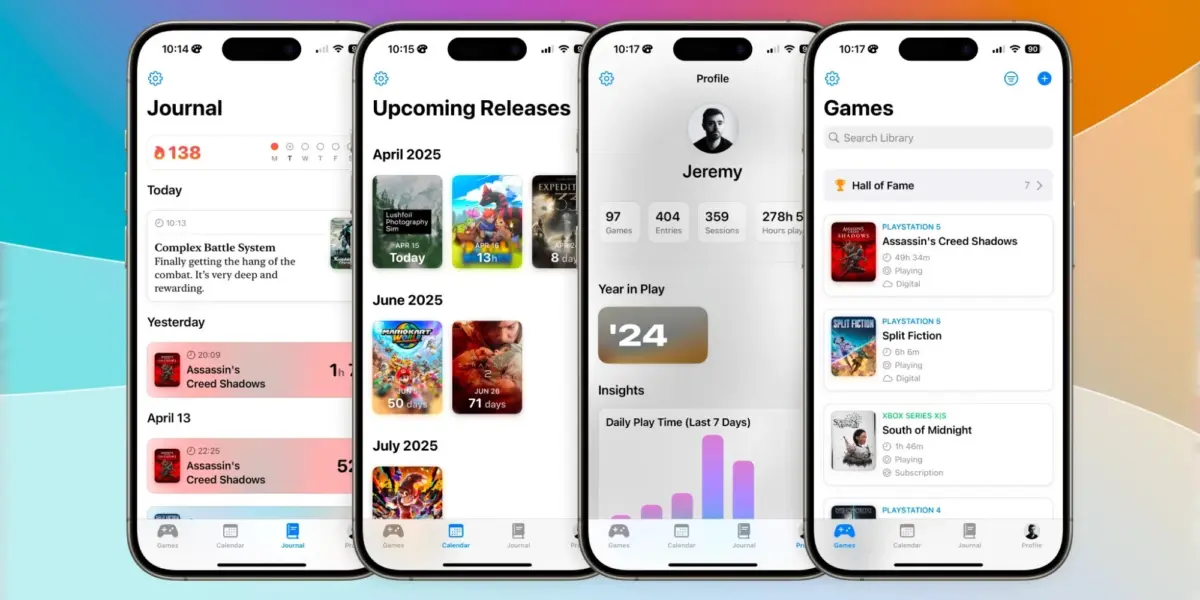
While native ecosystems like Apple’s Game Center, Xbox achievements, and Steam profiles do a commendable job tracking metrics within their own walled gardens, none of them offer a unified source of truth. Enter GamePal, an innovative, feature-rich companion application designed explicitly for the iPhone. Built to bridge the chaotic gaps of multi-platform gaming, GamePal acts as a centralized vault, cataloging tool, and session tracker for everything a player owns, has beaten, or hopes to play next.
By leveraging powerful external databases like IGDB (Internet Game Database), seamless iCloud synchronization, and native iOS integrations such as widgets and custom app icons, GamePal is positioning itself as an indispensable utility for both casual players and hardcore collectors. Available now on the App Store for iOS 17 and later, this application is redefining how gamers interact with their own digital and physical histories.
Detailed Chronology: The Evolution of Game Library Management
To understand why an application like GamePal is both timely and necessary, one must look at how digital distribution transformed the video game marketplace over the past twenty years.
The Era of Physical Ownership
In the fifth and sixth console generations, managing a video game collection was straightforward and tactile. Gamers lined their shelves with plastic cases, cartridge boxes, and cardboard sleeves. A quick glance at a living room bookshelf told the entire story of a player’s history, financial investments, and platform allegiances. Physical organization was as simple as alphabetizing titles or sorting them by platform.
The Digital Gold Rush and Fragmentation
The advent of digital storefronts—spearheaded by Steam on PC and later adopted universally by Sony, Microsoft, and Nintendo—shattered this centralized physical reality. Suddenly, games became invisible data points residing on hard drives, cloud servers, and proprietary digital storefronts.

Concurrently, the rise of subscription services like Xbox Game Pass, PlayStation Plus, and Apple Arcade meant players no longer strictly "owned" games in the traditional sense; rather, they licensed vast rotating libraries of content. This shift introduced severe organizational fatigue. Gamers frequently found themselves buying duplicate titles across platforms simply because they forgot they already owned them digitally, or losing track of backlog titles buried deep within different storefront menus.
The Birth of GamePal
Recognizing this acute consumer pain point, independent developers engineered GamePal to serve as a universal ledger. Moving away from platform-locked ecosystems, the application was built from the ground up to embrace platform agnosticism.
Upon its release, GamePal introduced a frictionless onboarding process. Instead of forcing users to manually input obscure metadata, developers integrated direct search hooks into IGDB. This meant that typing a title immediately populated high-resolution cover artwork, official synopses, developer credits, release dates, and promotional screenshots.
Over successive updates leading into 2025, GamePal evolved from a simple static cataloging spreadsheet into an active engagement tracker. Features like session logging, custom notes, rating systems, and offline functionality transformed the app from a passive database into an active gaming companion.
Supporting Context & Metrics: Why Gamers Need a Unified Vault
The modern gaming market is larger, more lucrative, and more diverse than ever before. According to industry metrics, the global gaming population exceeds 3 billion active players, with a significant percentage interacting with more than one gaming medium.
The Backlog Crisis
Market research consistently highlights a psychological phenomenon unique to modern entertainment: the "video game backlog anxiety." With thousands of indie titles launching annually alongside multi-hundred-hour blockbusters, players are accumulating libraries far faster than they can consume them.

- The Paradox of Choice: When presented with libraries containing hundreds of digital titles across Steam, Epic Games, Nintendo Switch, and PS5, players often suffer from choice paralysis.
- Financial Waste: Without a centralized ledger detailing physical vs. digital vs. subscription ownership, consumers routinely repurchase games on sale for platforms they already own them on.
GamePal directly targets these pain points by introducing structured filtering parameters:
- Ownership Type: Users can instantly isolate games they physically own on disc/cartridge from those locked behind digital storefronts or active subscription tiers.
- Playing Status: Categorizations such as "Played," "Currently Playing," "Completed," and "Want to Play" turn an overwhelming digital hoarding problem into an actionable, gamified checklist.
Deep Apple Ecosystem Integration
GamePal does not exist in a vacuum; it is engineered explicitly to take advantage of the modern iOS architecture. By utilizing iCloud synchronization, a user’s library instantly mirrors across their iPhone, iPad, and other compatible Apple devices without manual data transfers.
Furthermore, the inclusion of offline capabilities ensures that users traveling, commuting, or experiencing network outages can still access, update, and review their game catalogs. The addition of iOS Widgets allows gamers to display their current playing status, recent sessions, or backlog highlights directly on their home screens, keeping their gaming goals top-of-mind throughout the day. Custom app icons also provide enthusiasts with the aesthetic personalization expected from premium iOS utilities.
Official Statements and Developer Vision
While independent developer updates and release notes outline the technical capabilities of the software, the overarching philosophy behind GamePal speaks to a deeper community desire for digital organization and mindfulness in gaming.
"GamePal is the perfect sidekick for your gaming adventures, designed to elevate your gaming experience and help you keep track of your ever-growing collection," states the official application description on the App Store. "Whether you’re a casual player or a hardcore enthusiast, GamePal is here to make your gaming life more organized, insightful, and fun."
Industry analysts have praised this approach, noting that software apps acting as middleware for lifestyle hobbies are experiencing a massive surge in popularity. Much like Letterboxd revolutionized film tracking or Goodreads organized book collections, GamePal is carving out a vital niche by applying social and organizational cataloging to interactive media.

The developers have emphasized that user feedback remains the core driver of upcoming feature deployments. By keeping the interface clean, lightning-fast, and deeply integrated with community-driven databases like IGDB, the app ensures that metadata remains accurate and comprehensive without requiring exhausting manual data entry from the user base.
Future Outlook: The Road Ahead for Game Management
As the video game industry marches further into a hybrid future defined by cloud streaming, handheld PC devices (such as the Steam Deck and ROG Ally), and cross-play ecosystems, the need for platform-agnostic tools will only intensify.
What’s Next for GamePal?
Looking forward, the roadmap for utility apps like GamePal points toward deeper analytical integration. While current iterations allow users to log gaming sessions and track playtime manually, future evolutions could see automated playtime tracking, expanded social sharing features allowing friends to compare backlogs, and more granular achievement-tracking integration.
Monetization-wise, GamePal utilizes a freemium model. The core cataloging and tracking features are available to download for free on the App Store, lowering the barrier to entry for curious gamers. For power users seeking advanced customization, extended data export capabilities, and unhindered access to premium utility features, a paid "Platinum" subscription tier is available.
Conclusion
Ultimately, GamePal represents a mature response to the clutter of modern digital life. By bringing order to the chaos of multi-platform gaming, it allows enthusiasts to spend less time managing files, searching storefronts, or wondering where they left a physical cartridge, and more time actually playing the games they love.
For any iPhone user juggling multiple consoles, subscription services, and digital storefronts, downloading GamePal is not just an organizational upgrade—it is an essential companion for the modern gaming journey.







Belum ada komentar. Jadilah yang pertama berkomentar!