

Executive Overview
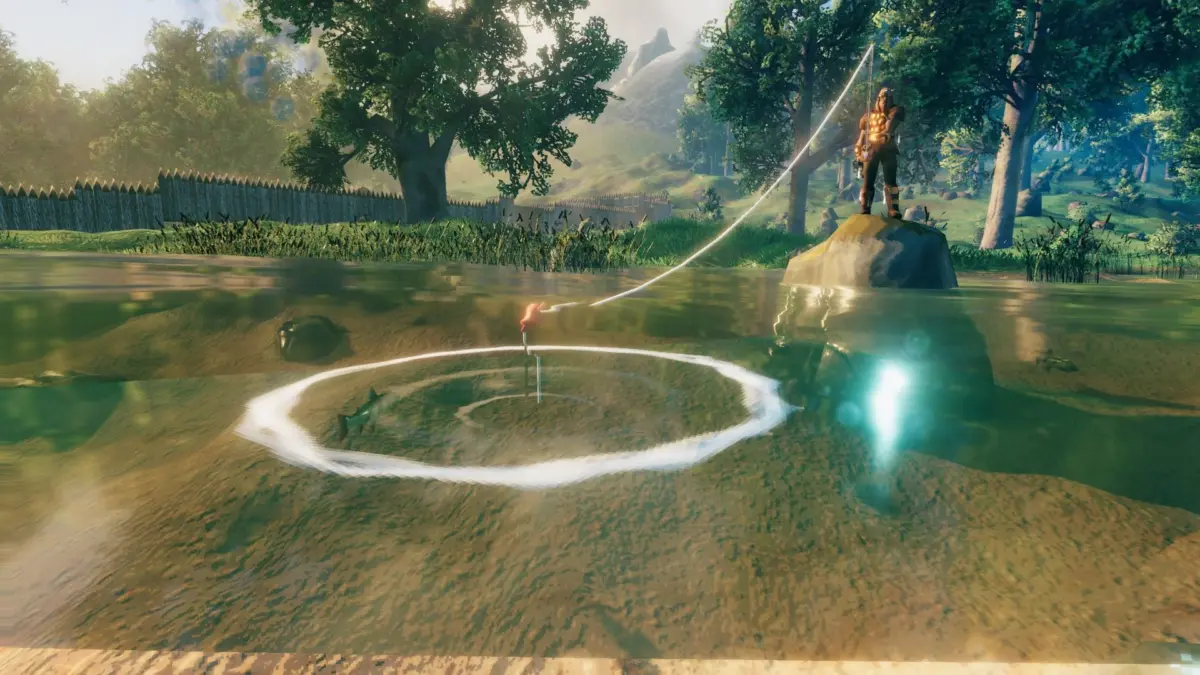
For all the unrelenting brutality of surviving, building, and conquering the Norse underworld in Coffee Stain Publishing’s survival-crafting masterpiece Valheim, the game offers moments of profound tranquility. When you are not actively hunting down Odin’s sworn enemies, raiding goblin camps, or braving freezing mountain peaks, casting a line into the rippling waters of the tenth realm provides a rewarding and atmospheric change of pace.
Yet, like almost every survival mechanic in Valheim, fishing is far from a trivial mini-game. It demands strategic preparation, precise resource management, and an understanding of the game’s stamina mechanics. While the visual serenity of watching a bobber drift across a misty fjord might suggest a casual pastime, failing to treat a fishing trip with the same respect as a boss encounter will leave you exhausted, empty-handed, and watching your target swim away.
This guide serves as the definitive reference manual for aspiring Viking anglers. From acquiring your very first rod and procuring specialized bait to executing the physical technique of the catch and managing your precious stamina reserves, we break down everything you need to know to transform yourself from an amateur shore-caster into a master of the deep.
Detailed Chronology: From Novice Wanderer to Master Angler
Understanding how to fish in Valheim requires a structured approach. Because the game diverges from its standard crafting loops for this particular activity, players must follow a specific sequence of milestones to achieve success on the water.
Phase 1: Locating the Merchant and Acquiring Gear
In a survival title where nearly every piece of equipment—from crude stone axes to elaborate black metal armor—is forged by your own hands with materials harvested from the biome, fishing stands out as an exception. You cannot craft a fishing rod at a workbench or forge.
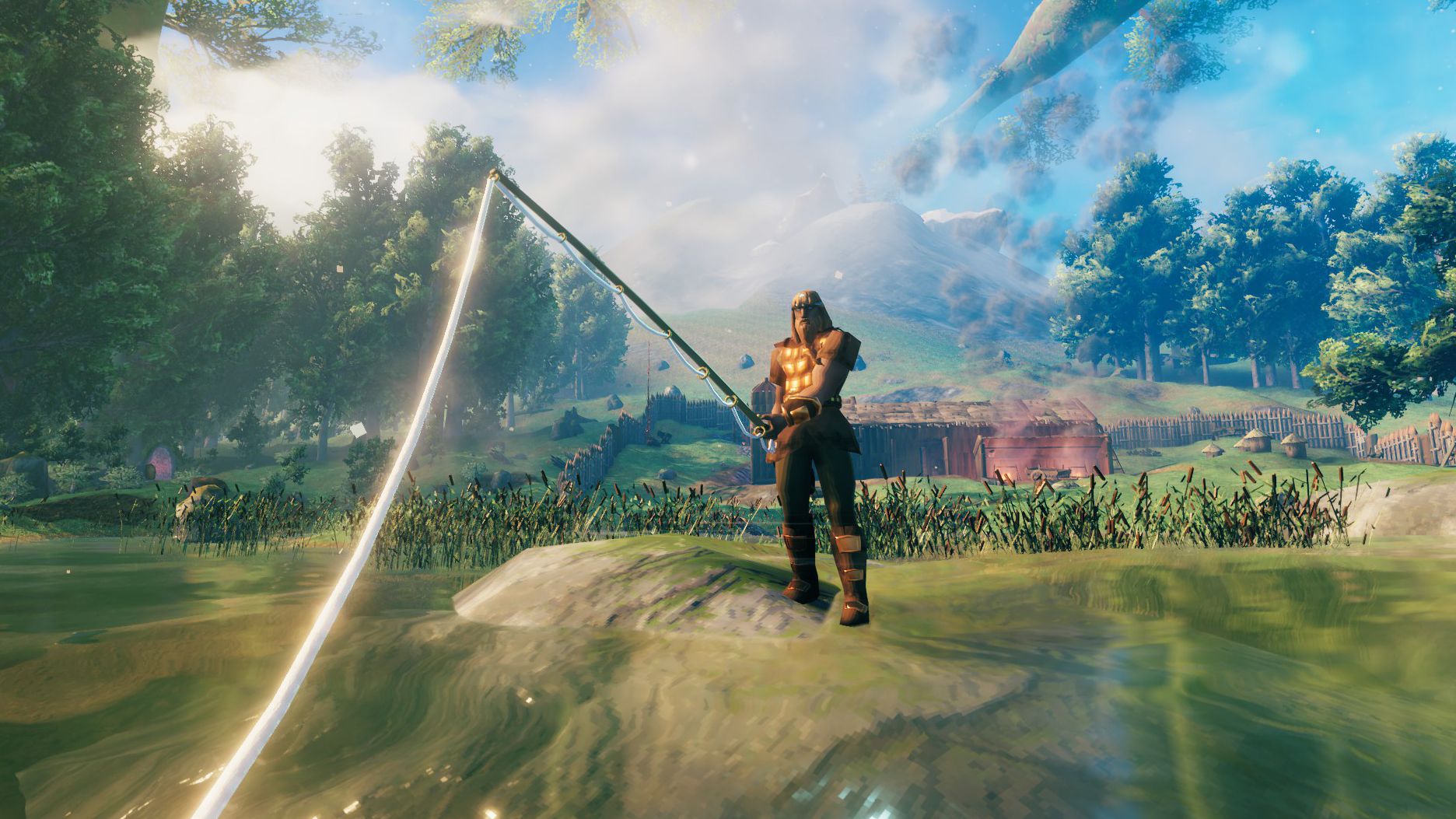
Instead, your journey begins with locating Haldor the Trader, the elusive merchant who sets up camp somewhere within the dense, perilous expanses of the Black Forest biome. Finding Haldor can be one of the most time-consuming early-game hurdles. Because worlds are procedurally generated, there is no single fixed coordinate for the merchant, though he typically spawns within a reasonable distance from the initial sacrificial stones, often nestled near the border of other biomes.
- The Investment: Once you track down Haldor, you must be prepared to spend hard-earned wealth. A standard fishing rod costs 350 coins, while a bundle of 20 pieces of basic bait runs 10 coins. Coins can be gathered by selling valuable gems found in burial chambers or by looting chests across various biomes.
- The Rare Alternative: For players who prefer extreme risks over commerce, there is a minute chance to acquire a fishing rod out in the wild. They can occasionally be found as rare loot items inside frost caves within the Mountain biome. However, seasoned veterans heavily advise against relying on this method; drop rates are exceptionally low, making a direct purchase from Haldor the only reliable path forward.
Phase 2: Preparing for the Catch
Once your inventory is stocked with a rod and bait, you cannot simply sprint to the nearest body of water and start casting. Fishing in Valheim is governed strictly by your character’s physical endurance.
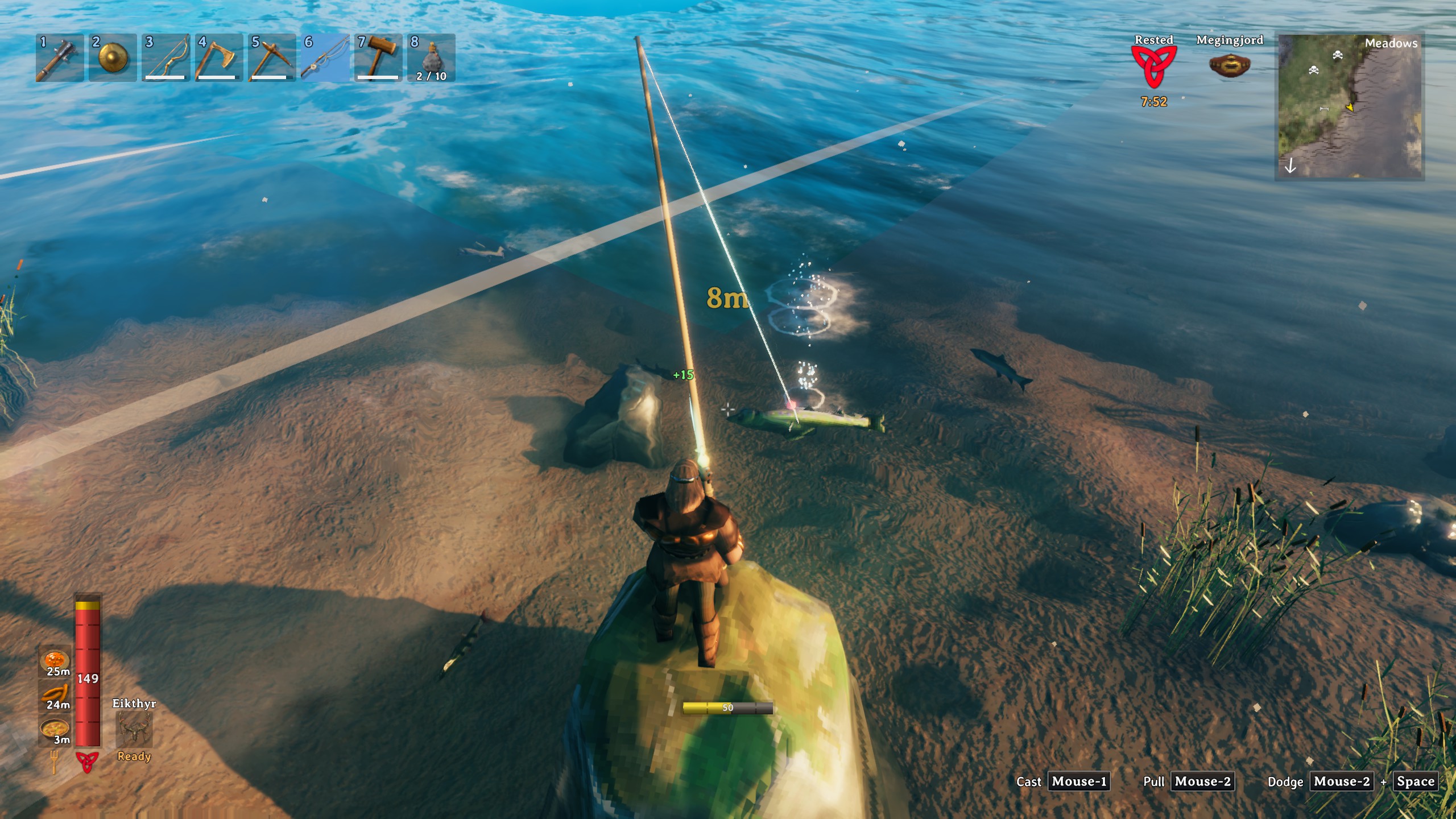
- Equipping the Rod and Bait: Open your inventory screen. Place the fishing rod into your active hotbar. To arm the rod with ammunition, right-click on the stack of fishing bait in your inventory while the rod is equipped. This attaches the bait to the hook, signaling that you are ready to cast.
- Stamina Management: Reeling in a struggling fish drains your stamina pool at a rapid rate. If your stamina hits zero before the fish reaches the shoreline or your boat, the line snaps, the fish escapes, and your bait is lost. Therefore, treat your fishing expedition like a combat excursion: consume high-tier stamina foods to maximize your total bar, and pack plenty of stamina-regenerating meads for extended battles against larger catches.
Phase 3: The Execution
With your gear ready and your stamina pool maximized, approach a body of water where fish are visibly swimming near the surface—coastal waters, rivers, and deep lakes are all viable locations.
- Casting: Face the water and press Mouse 1 (or your designated primary attack button) to cast your line. A meter or visual indicator will dictate the distance; aim for areas where fish are actively rippling the water’s surface.
- The Bite: Watch your bobber closely. When a fish approaches and takes an interest in your bait, the bobber will violently dip and tug beneath the surface accompanied by a distinct audio cue.
- The Hook: The moment you see and hear the bite, instantly press Mouse 2 (or your designated block button). This sets the hook into the fish’s mouth, initiating the retrieval phase.
- Reeling: Press and hold down Mouse 2 to reel the fish toward you. Keep a close eye on your stamina meter. If you notice your stamina depleting dangerously fast, tap or briefly release the button to let your stamina regenerate, ensuring you don’t lose your grip entirely.
- Collection: Once the fish is pulled close enough to your character or the edge of your boat, target it with your crosshairs and press E (or your interaction key) to scoop it directly into your inventory.
Supporting Context & Metrics: The Economics and Mechanics of Valheim Angling
To truly optimize your time on the water, it is vital to analyze the underlying metrics that govern the Valheim fishing system.
+-----------------------------------------------------------------+
|                    VALHEIM FISHING ECONOMICS                    |
+----------------------------------+------------------------------+
| Item / Action                    | Cost / Requirement           |
+----------------------------------+------------------------------+
| Fishing Rod (Haldor Purchase)    | 350 Coins                    |
| Fishing Bait (Bundle of 20)      | 10 Coins                     |
| Frost Cave Loot Drop Rate        | Extremely Rare (<1% chance)  |
| Primary Stamina Drain Metric     | Continuous Hold (Mouse 2)    |
+----------------------------------+------------------------------+
Why Fish? The Culinary and Crafting Value
While early-game survival in Valheim relies heavily on foraging raspberries, hunting boars, and roasting deer meat, fish quickly transition from a novelty to an essential component of high-tier food preparation.
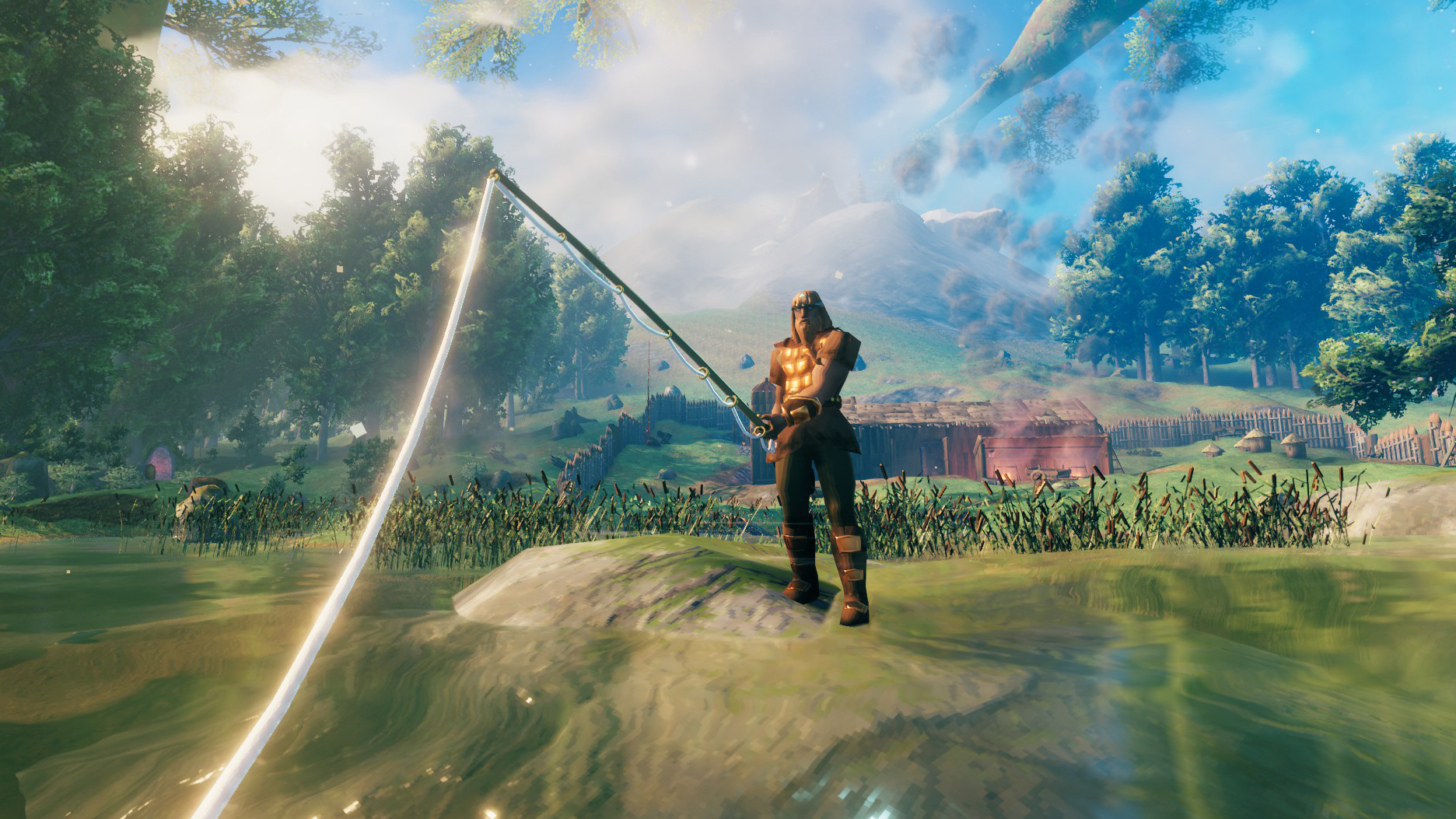
As you progress into the Swamps, Mountains, and Plains, advanced cooking stations unlock recipes that require raw fish as a primary ingredient. These seafood dishes provide some of the best health and stamina bonuses in the game, making them mandatory for surviving encounters with abominations, stone golems, and fulings. Furthermore, gathering fish eliminates the need to constantly scour land-based biomes for protein, offering a sustainable, renewable food source right from the safety of your home base or longship.
The Physics of the Catch
The game’s physics engine plays a significant role in how fish behave once hooked. Larger fish species found in deeper or more dangerous biomes exhibit greater resistance, pulling harder against the line and draining stamina at an accelerated rate. If you attempt to fish from a small raft during rough weather or stormy seas, the rolling waves can disrupt your positioning, making it significantly harder to land your catch. For optimal results, build a sturdy wooden dock or anchor your longship in calm cove waters before casting.
Official Statements and Developer Insights
The developers at Coffee Stain Studios have frequently discussed the philosophy behind Valheim’s survival systems, emphasizing a deliberate balance between relentless hardship and moments of meditative reprieve.
In past developer logs and community updates, the team noted that mechanics like fishing were introduced specifically to ground the player experience in the tactile reality of Norse culture and exploration. Waterways were the lifeblood of the Viking age, serving as trade routes, battlegrounds, and sources of sustenance. By making fishing a distinct, tactile activity—requiring currency to start, stamina to execute, and patience to master—the developers ensured that harvesting the sea felt like a genuine accomplishment rather than an afterthought.
While early iterations of fishing in Valheim were noted by the community as overly punishing due to rapid stamina loss and scarce bait availability, subsequent patches have refined the system. Quality-of-life adjustments have made stacking bait, managing inventory weight, and identifying school spawns much more intuitive, cementing fishing as one of the game’s most beloved sideline activities.
Future Outlook: What’s Next for Valheim’s Ecosystem?
As Valheim continues its development cycle through major biome updates and expansive patches—such as the Mistlands and Ashlands additions—the scope of maritime gameplay continues to evolve.
Looking ahead, the community eagerly anticipates potential expansions to the game’s aquatic systems. While current fishing mechanics focus primarily on basic rod-and-reel interactions from shorelines or vessels, future updates could introduce deeper oceanic threats, net-fishing mechanics, or entirely new species of deep-sea leviathans that turn a routine fishing trip into a high-stakes boss battle.
For now, mastering the fundamentals outlined in this guide ensures that every Viking warrior is well-equipped to tame the lakes and oceans of the tenth realm. Stock up on coins, scout out Haldor in the Black Forest, manage your stamina wisely, and may your lines never snap as you conquer the waters of Valheim.








Belum ada komentar. Jadilah yang pertama berkomentar!