

Executive Overview
Acclaimed Japanese auteur Hirokazu Koreeda returns with his latest speculative drama, Sheep in the Box, a haunting and ethically provocative science-fiction feature set for release by Neon and Picturehouse on July 24, 2026, in the United States, followed by its European premiere at the Edinburgh International Film Festival on August 14, 2026. Distributed globally amidst growing cultural anxieties regarding artificial intelligence, human-machine integration, and the commodification of memory, the film explores a near-future landscape where the devastating loss of a child can be met with a home-delivered, bespoke humanoid android designed to mimic the deceased.
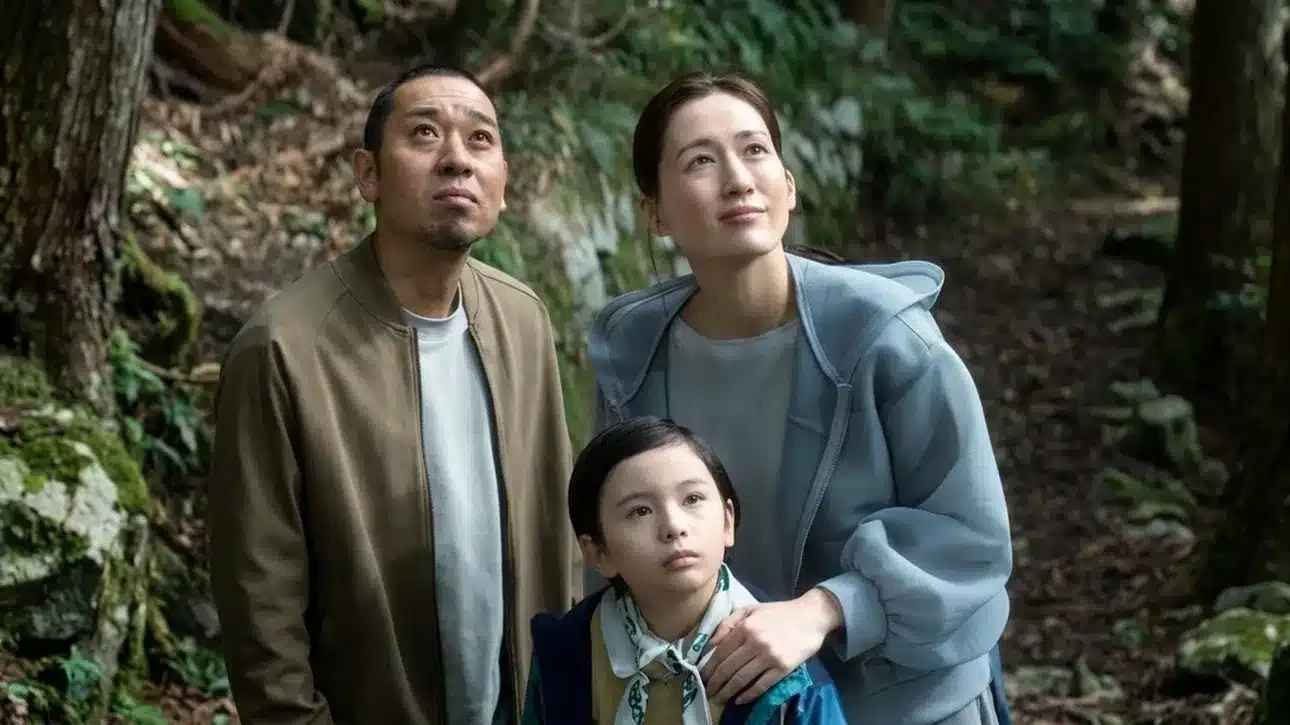
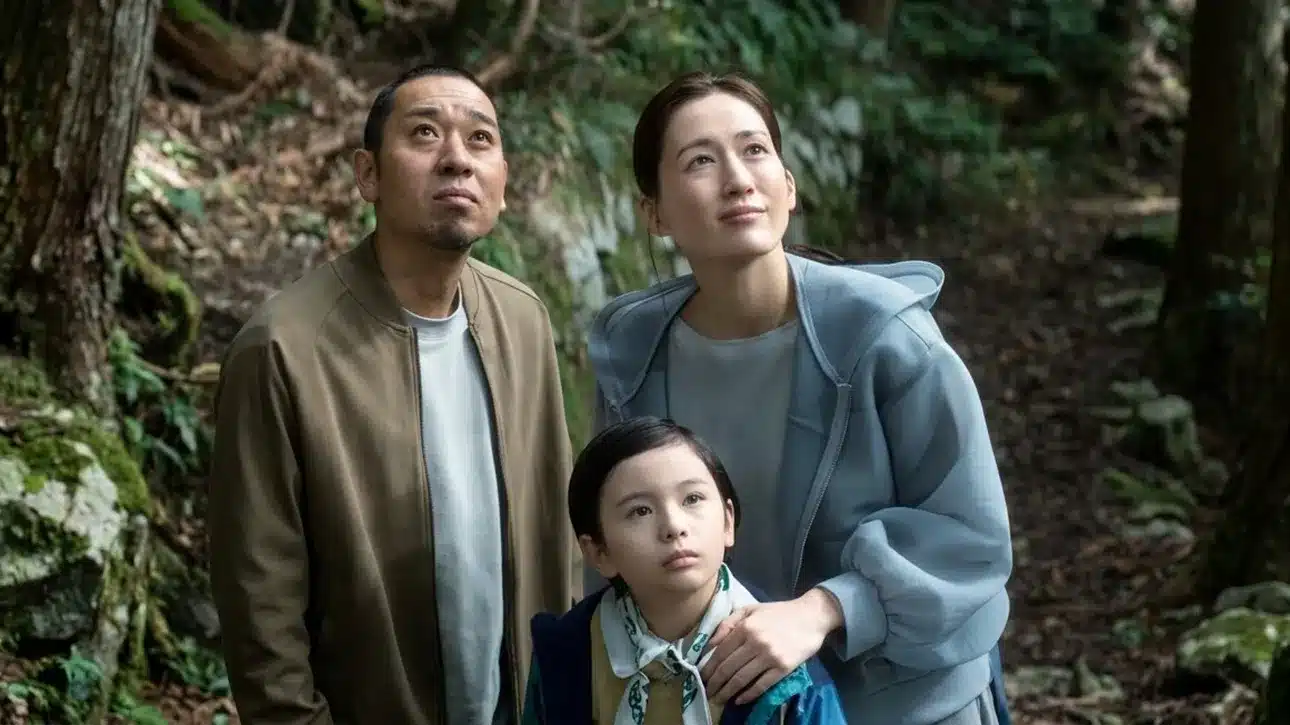
Starring Haruka Ayase as Otone and Daigo Yamamoto as Kensuke, the film follows a grieving couple living in the shadow of a fatal accident that claimed the life of their seven-year-old son, Kakeru, played in algorithmic memory by young actor Kuwaki Rimu. Two years post-tragedy, the family’s domestic sphere is invaded—or comforted, depending on one’s tolerance for techno-grief—by a customized machine built from family photographs, behavioral data, and user-selected parameters of age and intelligence.
Yet, rather than framing this radical integration as a dystopian fracturing of the human soul, Koreeda’s lens adopts a disquietingly naive, pastoral tone. The film presents the acquisition of a synthetic substitute not as a betrayal of organic memory, but as a seamless, palatable stage of mourning. In doing so, Sheep in the Box invites audiences to confront a deeply unsettling question: When we substitute data for DNA, are we achieving genuine therapeutic healing, or are we simply sanitizing the raw, jagged edges of human suffering to make it more digestible for the modern consumer?
Detailed Chronology & Narrative Breakdown
The Arrival: Deliveries from the Cloud
The narrative architecture of Sheep in the Box is meticulously engineered around the mundane intrusions of high-tech logistics into deeply sacred spaces. The film opens in a state of stasis. Otone and Kensuke are frozen in the Amber of their grief, trapped two years after the sudden death of young Kakeru (Kuwaki Rimu). The catalyst for the disruption—and the ostensible healing—arrives not via a dramatic clinical breakthrough, but through the mundane mechanism of a drone drop.
Among standard household packages, a robotic stork descends, carrying promotional material for customizable humanoid androids engineered specifically to alleviate parental bereavement. The presentation is startlingly frictionless. The film strips the procedure of its inherent ethical ambivalence, treating the process of uploading memories, selecting cognitive parameters, and ordering a replica of one’s dead child as casually as ordering furniture.
As the narrative progresses, the synthetic boy arrives on the doorstep, instantly inserted into the home’s ecosystem. The psychological toll on the parents is immediate yet bifurcated. Kensuke, the father, struggles visibly. Played with a bruised, exhausted restraint by Yamamoto, Kensuke is a man caught between the revulsion of his new reality and the desperate need to appease his wife. In the early formative days, his processing of trauma is conveyed through anguished pauses between sips of beer, his heavy gaze tracking the machine as it wanders the halls asking mundane questions about train lines and wall drawings—details the original Kakeru once cherished.
The Metaphor of Materials: Glass, Wood, and Code
Koreeda grounds the film’s thematic explorations in the professional and philosophical lives of the parents, weaving a rich tapestry of tactile versus synthetic metaphors. Otone is an architect striving to integrate natural solutions into her designs, anchored by her deep affection for trees. In the backyard, she has planted a lemon tree in memory of her late son—a living organism now growing lush and vibrant.
Kensuke is a carpenter working under an old-school artisan who imparts esoteric wisdom about the spirits of timber. Apprentices are instructed to hold scraps of wood to their ears to listen to what the material "wants" to become, embodying the philosophy that trees possess souls and that every fragment of a felled life must be honored.
These motifs directly mirror the creation of the android. As the machine adapts to its environment, it begins mirroring the aesthetic and philosophical preoccupations of its creators. It shows a sudden, calculated fascination with plants, memorizes wood types, and—in a moment that dances on the razor’s edge between poignant and deeply uncanny—mimics the gesture of holding wood scraps to its ear.
For the characters within the film’s universe, this behavioral mimicry serves as definitive confirmation: He learned from you; therefore, he is your son. The android even echoes Otone’s professional mantra, "That’s why I love architecture," while attempting to construct a treehouse. The film uses this dynamic to reflect contemporary sociological phenomena: just as users in our world anthropomorphize modern AI systems, reading deep emotional resonance into algorithmic responses, Koreeda’s characters desperately project soul and identity onto raw data processing.
The Uncanny Valley of Innocence
Young actor Kuwaki Rimu delivers a performance defined by profound physical and psychological discomfort, particularly in the film’s first half. By leaning into small imprecisions—such as slightly misplaced smiles at the onset of solemn or tragic exchanges—Rimu endows the synthetic child with a chilling sense of otherness.
This tension reaches its apex in moments designed by the director to evoke sweetness, which instead curdle into pure dread. In one striking sequence, the robot wakes up in the dead of night within its charging module—its designated "little stool"—already smiling blankly into the pitch-black room. It is a brilliant, unsettling subversion of Spielbergian wonder, exposing the automated, unblinking mechanics of a machine pretending to love.
Supporting Context & Metrics
To contextualize the release and cultural resonance of Sheep in the Box, industry analysts and psychological researchers have noted several key data points regarding the intersection of artificial intelligence, synthetic companionship, and modern grief management:
- Release Windows: Global theatrical distribution is managed by Neon in North America (slated for July 24, 2026) and Picturehouse in the UK (premiering August 14, 2026 at the Edinburgh International Film Festival), positioning the film squarely in the prestige summer-to-autumn corridor.
- The Anthropomorphization Index: Recent psychological studies indicate a 40% year-on-year increase in users projecting emotional autonomy onto conversational and companion AI models—a behavioral trend that Sheep in the Box satirizes and critiques by scaling it up to parental bereavement.
- Cinematographic Brightness Metrics: Eschewing the dark, rain-slicked neon alleys traditionally associated with sci-fi tales of artificial humans, Koreeda and his Director of Photography utilize high-key lighting, abundant natural sunlight filtering through tree canopies, and major-key string arrangements (dominated by the cello) to create an artificial atmosphere of relentless optimism.
- Thematic Reception: Early critical consensus highlights a thematic schism within the film: while it succeeds brilliantly as an exploration of prolonged, chronic grief that lingers within a household, it stumbles when attempting to equate associative learning and behavioral mimicry with the profound, unconditional bonds of parenthood.
Official Statements & Production Insights
In promotional materials and early press statements released by Neon and Picturehouse, the production team has emphasized the film’s exploration of human resilience rather than its technological dystopia.
"We are not interested in building a world of flying cars and blinking red lights," director Hirokazu Koreeda noted in an early production brief. "We are interested in the quiet corners of a house where a parent’s grief refuses to expire. Sheep in the Box looks at how far a human heart will stretch when faced with an empty room, and what tools—organic or artificial—we invent to patch the holes left behind."
Producer statements further highlight the deliberate choice to frame the narrative with warm, inviting aesthetics rather than cold alienation. "If we had painted this future in shades of gray and blue, the audience would immediately reject the premise," notes the production notes. "By bathing the screen in golden sunlight and natural wood tones, we force the viewer into the same moral ambiguity as the parents. We make you understand why they open the door to the machine."
Lead actor Daigo Yamamoto reflected on his grueling physical and emotional preparation for the role of Kensuke: "Playing a father who must look into a face that breaks his heart every single day required a delicate balance. Kensuke isn’t weak; he is exhausted by love. He accepts the unacceptable because the alternative—letting go entirely—feels like drowning in an ocean without a shore."
Future Outlook & Critical Legacy
As Sheep in the Box prepares for its simultaneous US and European theatrical rollout in the summer of 2026, it arrives at a crucial cultural inflection point. As artificial intelligence systems become increasingly integrated into daily life, elder care, and digital legacy preservation—where deceased loved ones are reconstructed via chatbots and deepfake video—Koreeda’s film serves as both a mirror and a cautionary tale.
Ultimately, Sheep in the Box transcends its science-fiction trappings to pose an enduring philosophical inquiry. While it begins as a searing examination of trauma and the nonlinear timeline of grief, its conclusion exposes the limitations of our modern impulse to engineer away suffering. By attempting to humanize the artificialization of parental bonds, the film reveals the tragic futility of trying to code our way out of mortality.
Whether audiences will embrace Koreeda’s sun-drenched, unsettling vision of synthetic kinship or recoil from its cheerful erasure of ethical boundaries remains to be seen. However, one thing is certain: when the credits roll and the cheerful cello strains fade into silence, viewers will look at the glowing screens in their pockets—and the synthetic companions quietly entering our homes—with a newly awakened, profound unease.







Belum ada komentar. Jadilah yang pertama berkomentar!