

Executive Overview
On September 17, Japan celebrates "Monorail Opening Day," commemorating the historic 1964 debut of the Tokyo Monorail Haneda Line. Coinciding with the Tokyo Olympics, this milestone symbolized Japan’s rapid postwar modernization and its budding romance with futuristic, high-speed transit. In the cultural imagination, this fascination with complex mechanical systems and human-engineered vessels naturally bled into the nation’s artistic output. Chief among these expressions is the giant robot—or mecha—a narrative fixture that has dominated Japanese animation for over half a century. Far more than mere instruments of combat, these colossal machines serve as mirrors for societal anxieties, technological optimism, and existential inquiries.
To chart the shifting tides of this iconic genre, Tokyo-based anime authority Anime! Anime! conducted an extensive readership survey exploring a deceptively simple question: "What is your favorite giant robot?"
The results, collected in September 2026, reveal a highly fragmented yet fiercely loyal fandom. While the legendary RX-78-2 Gundam secured the top spot, the rest of the leaderboard exposed a fascinating multi-generational divide. From the gritty military realism of the "Real Robot" era to the campy, hot-blooded heroism of "Super Robots," and even the sentimental, narrative-driven mechs of children’s cinema, the survey underscores how the definition of the "giant robot" has diversified. This investigative report analyzes the survey’s findings, provides a detailed chronology of the genre’s evolution, decodes the demographic metrics, and evaluates the commercial and artistic future of mecha in a rapidly changing global entertainment landscape.
Detailed Chronology: The Evolutionary Arc of the Giant Robot
To understand why certain mechs dominated the survey, one must trace the chronological milestones of the genre. The history of Japanese mecha is not a linear progression of visual effects, but a series of philosophical shifts in how humanity relates to technology.
[1972] Mazinger Z (The Pilot-Operated Pioneer)
   │
[1974] Getter Robo (The Combining Super Robot)
   │
[1977] Combattler V (Super Electromagnetic Synergy)
   │
[1979] Mobile Suit Gundam (The Real Robot Revolution)
   │
[1980] Space Runaway Ideon (Cosmic/Existential Sci-Fi)
   │
[1984] Transformers / Convoy (Trans-Pacific Toy Synergy)
   │
[1997] GaoGaiGar (The Zenith of Hand-Drawn Brave Era)
   │
[2001] Z.O.E Dolores, i (Intelligent, Character-Driven AI)
   │
[2010] Star Driver (Theatrical, Stylized Bishounen Mecha)
   │
[2024] Brave Bang Bravern! (Post-Modern Satire & Subversion)
The Dawn of the Super Robot (1970s)
Before robots were treated as military hardware, they were modern mythical deities. The debut of Go Nagai’s Mazinger Z in 1972 revolutionized pop culture by placing the pilot inside the robot’s head, transforming the machine into an extension of the human will. This era birthed the "Super Robot" sub-genre, characterized by unique, often extraterrestrial energy sources, mythical armor, and shouting named attacks.
In 1974, Ken Ishikawa and Go Nagai introduced Getter Robo, pioneering the concept of multiple vehicles combining to form different robotic configurations. By 1977, Tadao Nagahama’s Super Electromagnetic Robot Combattler V perfected the five-vehicle combination sequence, establishing a formula that would dominate toy aisles and television screens alike. These mechs represented postwar technological optimism—technology as a benevolent, protective shield against external threats.
The Real Robot Revolution (1979–1980s)
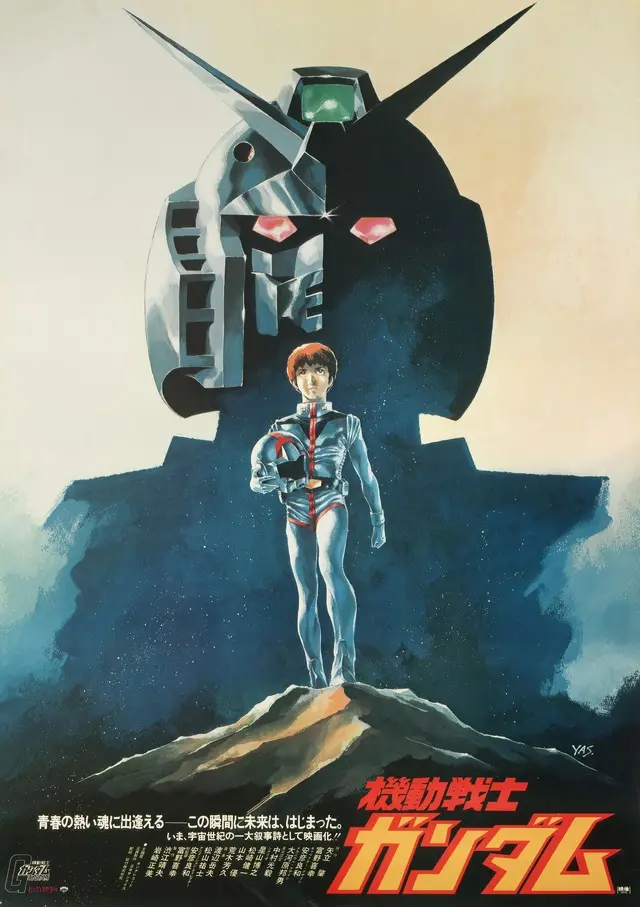
The paradigm shifted permanently in 1979 with Yoshiyuki Tomino’s Mobile Suit Gundam. Tomino stripped away the superheroic mystique of giant robots, treating them instead as mass-produced, industrial weapons of war—dubbed "Mobile Suits." The RX-78-2 Gundam was not a god; it was a military prototype that required maintenance, ammunition, and a manual.
This "Real Robot" movement was further cemented by Space Runaway Ideon (1980), which explored the terrifying, world-ending potential of ancient alien technology, and the legendary Zaku—the green, mono-eyed workhorse of the Zeon military. The Zaku revolutionized the industry by proving that a nameless, mass-produced "enemy" mech could achieve the same legendary status as the heroic protagonist’s machine.
The Trans-Pacific Boom and the Brave Era (Late 1980s–1990s)
In the mid-1980s, the partnership between Japanese toy manufacturer Takara and American entertainment company Hasbro gave rise to Transformers. Known to Japanese fans as Fight! Super Robot Lifeform Transformers, the franchise reframed robots as sentient alien organisms capable of disguise. The heroic leader Convoy (Optimus Prime) became a global icon of paternal authority and moral integrity.
As the Real Robot genre grew increasingly complex and political, the 1990s saw a deliberate return to hot-blooded heroism through Sunrise’s Brave Series (Yusha). This movement culminated in 1997 with The King of Braves GaoGaiGar. Directed by Yoshitomo Yonetani, GaoGaiGar represented the absolute zenith of hand-drawn cell animation, combining the heavy mechanical weight of industrial machinery with the roaring, unapologetic energy of classic Super Robots.
Deconstruction, Satire, and Modern Subversion (2000s–Present)
In the 21st century, the genre has turned inward, reflecting on its own tropes. Shows like Z.O.E Dolores, i (2001) experimented with sentient, highly emotional mecha AI, while Star Driver (2010) reimagined mecha combat as a theatrical, elegant masquerade with sleek, high-fashion silhouettes.
Most recently, Cygames and Masami Obari’s Brave Bang Bravern! (2024) took the anime community by storm by brilliantly juxtaposing realistic, high-tech military defense forces with a campy, theme-song-singing Super Robot. This modern self-awareness proves that the giant robot is a highly elastic concept, capable of transitioning from harrowing military drama to laugh-out-loud parody.
Supporting Context & Metrics: Decoding the Survey
The survey conducted by Anime! Anime! offers a valuable dataset regarding the contemporary mecha fandom. To understand the forces driving these rankings, we must examine the underlying demographics.
Fandom Demographics
| Metric | Category | Percentage |
|---|---|---|
| Gender Distribution | Male | ~75% |
| Female | ~25% | |
| Age Distribution | Under 19 | ~15% |
| 30s | ~25% | |
| 50s | ~30% | |
| Other Ages | ~30% |
Critical Analysis of the Demographics
The demographic split reveals several key realities about the mecha genre in the mid-2020s:
- The Over-50 Hegemony: The largest single voting bloc (30%) belongs to individuals in their 50s. This is the generation that grew up during the golden age of Super Robots and witnessed the birth of Mobile Suit Gundam in 1979. Their votes heavily favored classic designs like the original Gundam, Mazinger Z, Getter Robo, and Combattler V, demonstrating the powerful grip of childhood nostalgia.
- The 30s Renaissance: Representing 25% of the vote, this cohort came of age during the late 1990s and early 2000s. This group’s preferences are shaped by New Mobile Report Gundam W (1995), GaoGaiGar (1997), and Mobile Suit Gundam SEED (2002). Their loyalty to Wing Gundam Zero and Freedom Gundam highlights an era where mecha designs became sleeker, more stylized, and heavily character-driven.
- The Youth Gap and Modern Entry Points: The under-19 demographic (15%) represents a smaller but vital segment. Younger fans are not necessarily watching 1970s archives; instead, they are introduced to mecha through modern cinematic blockbusters like Mobile Suit Gundam SEED FREEDOM (2024), seasonal sensations like Brave Bang Bravern!, or mainstream shonen powerhouses like ONE PIECE (which recently featured the ancient giant robot Emet during the Egghead Arc).
The Bronze-Medal Gridlock: A Fragmented Genre
The most striking statistical anomaly of the survey is the massive tie for third place. While Gundam took a commanding first place (11% of the vote) and Zandacross secured second (4%), a whopping nine distinct robots tied for third place.
This gridlock is highly telling. It indicates that outside of the universal consensus of the original Gundam, the mecha community is deeply fragmented into highly specialized sub-fandoms. A fan of the slow-paced, cosmic tragedy of Ideon shares very little in common with a fan of the gag-centric, whimsical giant Happy Robo from Smile PreCure!. The mecha genre is no longer a monolith; it is a collection of distinct artistic niches.
Detailed Narrative Analysis of the Top Contenders
      RANKING LEADERBOARD
┌─────────────────────────────────┐
│ 1st: RX-78-2 Gundam (11%)       │
├─────────────────────────────────┤
│ 2nd: Zandacross (4%)            │
├─────────────────────────────────┤
│ 3rd: (Tie - 9 Mechs)            │
│      - Ideon                    │
│      - GaoGaiGar                │
│      - Getter Robo              │
│      - Combattler V             │
│      - Convoy (Optimus Prime)   │
│      - Zaku                     │
│      - Bravern                  │
│      - Mazinger Z               │
│      - Freedom Gundam           │
└─────────────────────────────────┘
1st Place: RX-78-2 Gundam (Mobile Suit Gundam) — 11% Support
The undisputed king of the survey remains the original Gundam. Designed by Kunio Okawara, the RX-78-2 is widely considered the "primary color standard" of heroic anime design.
Survey respondents repeatedly praised the machine’s functional simplicity. "It is the origin of everything," wrote one 50-year-old voter. "The clean tri-color palette of red, blue, and white, combined with a silhouette that isn’t over-decorated, makes it an immortal masterpiece."
Beyond the screen, the Gundam’s cultural footprint is reinforced by the global phenomenon of Gunpla (Gundam plastic models), which accounts for a massive portion of Bandai Namco’s annual revenue. The physical existence of life-sized Gundam installations in Yokohama, Odaiba, and Fukuoka has elevated the machine from a fictional vehicle to a monument of engineering ambition. "Seeing the life-sized Gundam move in Yokohama was a religious experience," remarked another respondent. "It bridged the gap between anime fantasy and industrial reality."
2nd Place: Zandacross / Judo (Doraemon: Nobita and the Steel Troops) — 4% Support
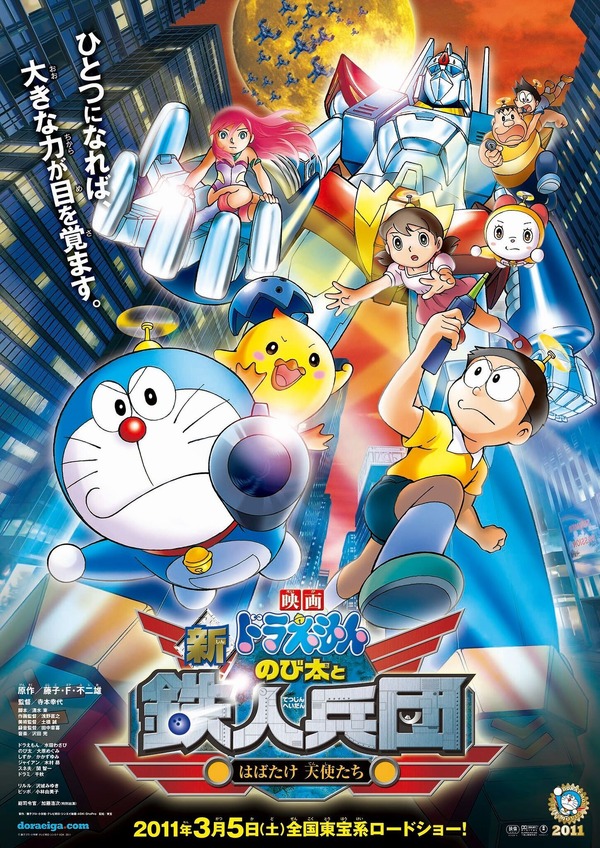
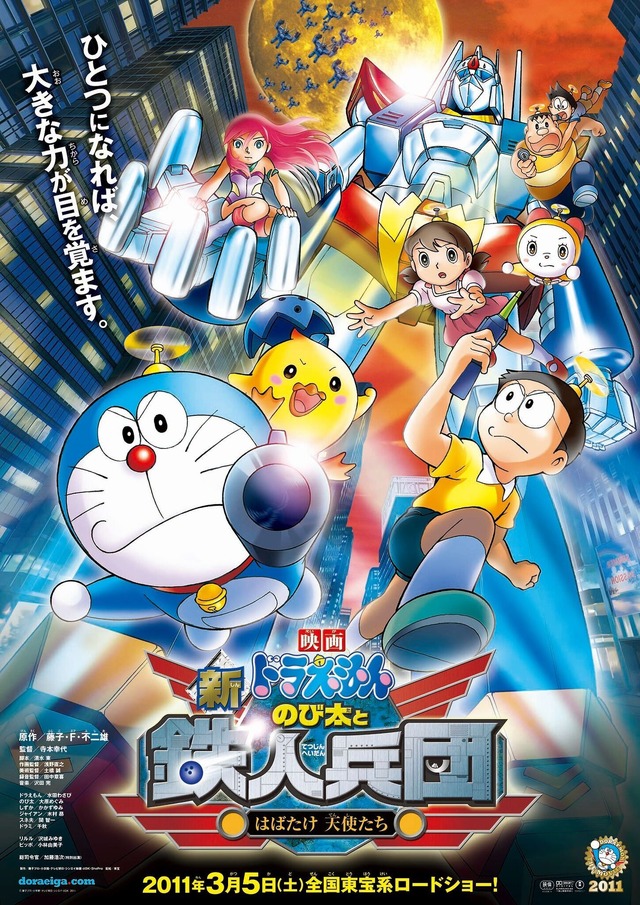
The inclusion of Zandacross in the second-place spot is the survey’s most fascinating revelation, showcasing how children’s cinema can leave a lifelong emotional mark. Originally appearing in the 1986 film Doraemon: Nobita and the Steel Troops (and beautifully reimagined in the 2011 remake New Nobita and the Steel Troops: Winged Angels), Zandacross is a giant humanoid robot discovered in pieces by Nobita and Doraemon in a mirror world.
       [Zandacross Construction]
                  │
        (Assembled by Nobita)
                  │
  [Hostile Mechatopian Weapon: Judo]
                  │
   (Modified by Doraemon's Tools)
                  │
  [Pippo: Cute, Chick-like AI Companion]
                  │
    (Redemption & Emotional Sacrifice)
While visually reminiscent of Mobile Suit Zeta Gundam’s Hyaku Shiki, Zandacross’s appeal lies entirely in its narrative weight. The robot is actually "Judo," a weapon sent by the robotic empire of Mechatopia to enslave humanity. However, through the use of Doraemon’s gadgets, its brain unit is separated and transformed into a small, talking, chick-like creature named Pippo.
The emotional core of the film centers on Pippo’s gradual redemption as he bonds with Nobita and his friends, ultimately choosing self-sacrifice to save humanity. "Pippo’s transition from a hostile, arrogant weapon to a crying child who just wants to protect his friends is one of the most tear-jerking arcs in animation history," wrote a 30-year-old fan. Zandacross proves that a robot’s design is only as powerful as the soul assigned to it.
Notable Tier-3 Contenders: Subverting Expectations
Bravern (Brave Bang Bravern!)
Representing the modern vanguard, Bravern’s high ranking highlights the explosive impact of the Winter 2024 anime season. Voiced with theatrical passion by Kenjiro Tsuda, Bravern is a sentient Super Robot who suddenly appears during an alien invasion, insisting on playing his own heroic theme music and forcing his reluctant, traumatized pilot, Isami Ao, to execute coordinated, heroic attacks.
Fans were captivated by the show’s brilliant tonal shift, which began as a gritty, realistic military thriller before pivoting into unapologetic Super Robot camp. "Bravern is hilarious, but beneath the comedy is a genuinely brilliant mystery regarding his true origin," noted a younger respondent.
Convoy / Optimus Prime (The Transformers)
For decades, Convoy has stood as the ultimate symbol of robotic leadership. Japanese fans of a certain age still hold a deep reverence for the original 1984 animated series, where the character’s booming voice (provided by Tessho Genda) and noble sacrifice in the 1986 film cemented his legendary status.
The survey responses reflected a warm nostalgia for the era when localizers renamed Optimus Prime to "Convoy" to fit Japanese toy branding. "With Transformers One hitting theaters, it’s amazing to see this character still leading the charge after 40 years," wrote one voter.
The Zaku (Mobile Suit Gundam)
Tying with its heroic counterpart, the Zaku’s high placement is a testament to the genius of Kunio Okawara’s industrial design. By giving the Zeon forces a rugged, utilitarian machine with a sliding mono-eye, Gundam pioneered the idea of the "grunt" mech.
"The Zaku is a masterpiece of industrial design," explained an engineering student who voted in the survey. "It looks like something that could actually be built on a factory line. It has hoses, exposed armor plates, and a heavy, grounded stance. It’s the ultimate blue-collar robot."
Official Statements: Industry Perspectives on the Mecha Genre
The enduring popularity of these designs is no accident; it is the result of deliberate creative and commercial strategies. Industry veterans have frequently commented on the unique challenges and triumphs of maintaining the mecha genre’s relevance.
In an interview discussing the production of the record-breaking film Mobile Suit Gundam SEED FREEDOM (which grossed over 4.8 billion yen at the Japanese box office), director Mitsuo Fukuda emphasized the importance of physical weight in mecha animation:
"In the modern era, it is very easy to make robots move fluidly using 3D CGI. But if a robot moves too fast, like a human, it loses its mechanical identity. A giant robot must have inertia. When it stops, the armor plates must vibrate. When it steps, the ground must shake. That is what makes the audience believe the machine actually exists."
Reflecting on the legacy of the Brave Series and his work on Brave Bang Bravern!, veteran animator and director Masami Obari spoke on the emotional resonance of these designs:
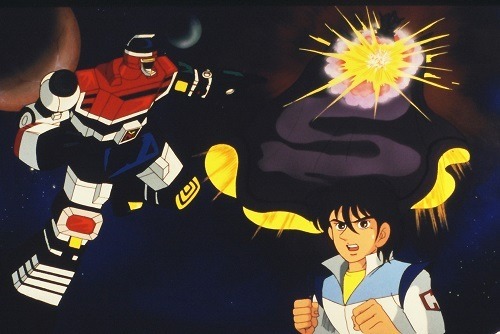
"A giant robot is a canvas for human emotion. Whether it is a Real Robot operated by a pilot in a cockpit or a Super Robot with its own consciousness, the robot must reflect the passion of the story. When I draw a robot, I don’t just think about the joints and gears; I think about its expression. Even a metal face can show courage, anger, or sorrow if drawn with enough conviction."
Furthermore, Bandai Namco’s financial reports consistently highlight that mecha IP remains a primary driver of global merchandise sales. The company’s continued investment in life-sized statues and state-of-the-art model kit manufacturing in Shizuoka demonstrates an institutional belief that the physical, tactile experience of mecha is vital to its longevity.
Future Outlook: Is the Giant Robot Still Relevant?
As the anime industry marches deeper into the digital age, critics have occasionally questioned whether the giant robot genre is losing its cultural dominance. The rise of fantasy isekai and character-driven dramas has undeniably crowded the broadcast schedules. However, the data from this survey and recent industry trends suggest that mecha is not dying; rather, it is undergoing a profound metamorphosis.
                  [THE FUTURE OF MECHA]
                            │
       ┌────────────────────┴────────────────────┐
       ▼                                         ▼
[Mainstream Integration]                [Global Cross-Media]
e.g., ONE PIECE (Emet)                  e.g., Transformers One,
Gundam in Pop Culture                   International Gunpla Boom
Mainstream Integration and Cross-Pollination
Rather than remaining confined to its own niche, the giant robot is increasingly integrated into mainstream, non-mecha franchises. A prime example is Eiichiro Oda’s ONE PIECE, where the recent "Egghead Arc" introduced Emet, an ancient giant robot powered by a mysterious energy source from a lost civilization. Luffy’s star-eyed, ecstatic







Belum ada komentar. Jadilah yang pertama berkomentar!