What is pop music? For musicologists Nate Sloan and Charlie Harding, authors of Switched on Pop, the answer bypasses traditional sonic definitions. Pop, they argue, is not a genre; rather, it is a commercial and marketing category encompassing everything that achieves mass commercial success, regardless of its underlying stylistic properties. Defined by the capital it generates and its vast cultural footprint, pop music has historically been viewed by purists with professional suspicion. Yet, its distinct, ubiquitous pleasures and its profound everyday uses make it one of the most vital, illuminating fields for modern scholars, cultural critics, and historians to investigate.
For generations, however, popular music received scant critical validation, let alone academic praise. While pioneering figures laid early historical foundations in the 1970s, and later critics championed a "singles-over-albums" paradigm, the 21st century has experienced a seismic shift. Today’s digital age has cultivated a vibrant, fiercely debated ecosystem for pop music writing—navigating the shifting battlegrounds of rockism and poptimism.
While general surveys of American popular music abound, a distinct, elite subset of literature has emerged that focuses squarely on pop as an art form, an industry, and a cultural mirror. The following investigative retrospective examines the ten definitive books on pop music published in the 21st century so far, ranked by personal critical preference. These works scrutinize the most popular—though not always critically anointed—music of the modern era, elevating it to the status of serious inquiry.
Detailed Chronology: A Decade-by-Decade Evaluation of 21st-Century Pop Scholarship
The evolution of 21st-century music writing mirrors the changing status of pop itself: once marginalized as ephemeral bubblegum, it is now recognized as a complex sociological text. The literature reflecting this transformation can be traced chronologically through key milestones in publishing.
The Mid-2000s: The Re-Evaluation of Taste
The foundational breakthroughs of modern pop criticism began in earnest during the mid-2000s, when writers first dared to interrogate the class assumptions behind "good taste."
Carl Wilson’s Let’s Talk About Love: A Journey to the End of Taste (2007) changed the landscape by treating a universally maligned artifact—Céline Dion’s blockbuster 1997 album—not as a punchline, but as a legitimate sociological phenomenon. Wilson combined rigorous analysis with an outsider’s curiosity to deconstruct why certain art is embraced by the masses while being rejected by cultural elites.
The Late 2000s to 2010s: Challenging the Canon
As the decade turned, historians began systematically dismantling traditional, rock-centric narratives that had long dominated American musicology.
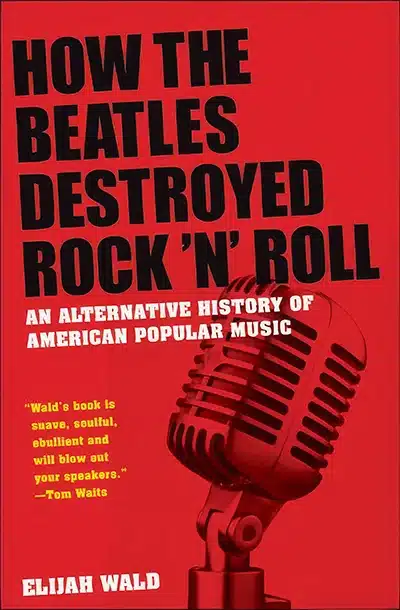
Elijah Wald’s How the Beatles Destroyed Rock ’n’ Roll (2009) offered an audacious alternative history. Wald argued that historical literature drastically overemphasized rock and jazz while misunderstanding the mechanics of true popular appeal, successfully rehabilitating discarded icons like Paul Whiteman.
Bob Stanley’s Yeah! Yeah! Yeah! The Story of Pop Music from Bill Haley to Beyoncé (2014) provided an encyclopedic, opinionated, and infectiously enthusiastic survey spanning half a century of pop evolution, making even controversial historical takes sound intuitively correct.
David Hajdu’s Love for Sale: Pop Music in America (2016) streamlined American pop history into witty, trend-focused chapters that tracked the rise of the album, the singer-songwriter, and the music video with striking personal intimacy.
The Late 2010s to the Present: Intersectional Lenses and Close Readings
The most recent wave of pop literature has expanded to explore intersections of gender, technology, chart mechanics, and marginalized identities.
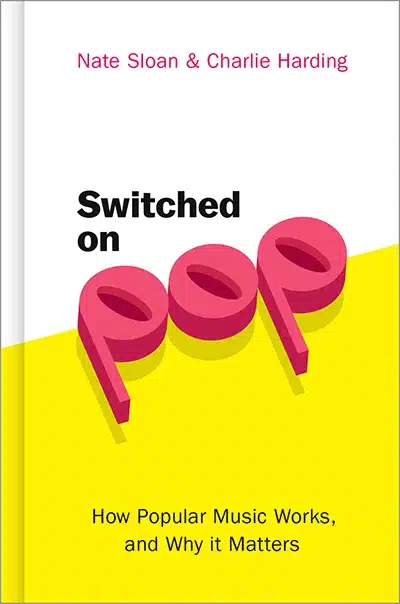
Nate Sloan and Charlie Harding’s Switched on Pop (2019) translated complex music theory into accessible terms, delivering masterclasses on hooks, beat drops, and sampling in 21st-century hits.
Sasha Geffen’s Glitter Up the Dark: How Pop Music Broke the Binary (2020) examined how generations of artists weaponized pop to dismantle gendered expectations, cementing the genre’s role as a vehicle for radical self-expression.
Bob Stanley’s Let’s Do It: The Birth of Pop Music (2022) turned the clock back to the pre-rock era, unearthing the rich, foundational soil of mid-century vocal jazz and Tin Pan Alley.
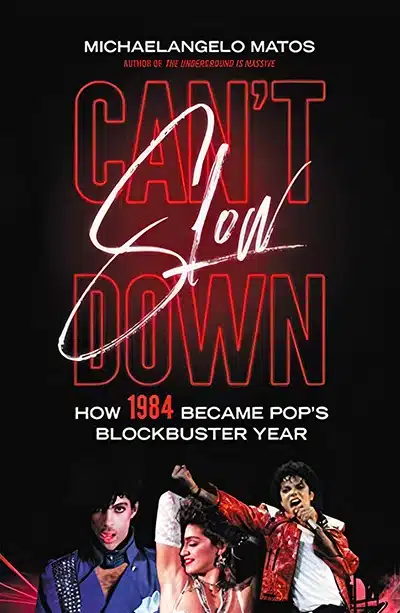
Michaelangelo Matos’s Can’t Slow Down: How 1984 Became Pop Music’s Blockbuster Year (2022) delivered exhaustive, high-energy reportage on a twelve-month period that reshaped radio, MTV, and the global pop landscape.
Tom Breihan’s The Number Ones (2022) transformed the Billboard Hot 100 into a dynamic narrative timeline, using twenty unexpected chart-toppers to decode seismic shifts in media and culture.
Danyel Smith’s Shine Bright: A Very Personal History of Black Women in Pop (2022) integrated memoir and cultural criticism to honor the foundational, often overlooked contributions of Black women who built the very architecture of modern pop.
Supporting Context & Metrics: Defining the Scope of Pop Literature
To understand the weight of these texts, one must examine the metrics that separate general music anthologies from specialized pop studies. While masterworks like Ann Powers’s Good Booty, Kelefa Sanneh’s Major Labels, and Rob Harvilla’s 60 Songs That Explain the ’90s are essential reading for any music aficionado, they maintain a broad canvas. The definitive pop texts isolated in this retrospective share several distinct characteristics:
Direct Engagement with the Commercial Core: Unlike rock criticism, which frequently romanticizes anti-commercial authenticity, pop literature directly engages with the mechanics of the charts, radio rotation, marketing pipelines, and corporate structures.
Accessibility Coupled with Rigor: Titles like Switched on Pop and The Number Ones prove that deep musicological and historical critique can be communicated with populist verve, inviting novices and academics alike into the discourse.
Identity and Transgression: Modern pop literature explicitly tracks how marginalized communities—particularly women and queer artists—utilized pop as a Trojan horse to subvert societal expectations.
Official Statements and Critical Perspectives
The ongoing rehabilitation of pop music as a subject worthy of intellectual rigor has been championed by its authors and critics alike. In Switched on Pop, Sloan and Harding assert:
"Pop isn’t a genre; it’s a marketing category that encompasses everything that is commercially successful, regardless of sound."
This perspective frees the critic from defending an artist’s "authenticity," allowing for a more honest appraisal of how music functions in everyday life. Similarly, Danyel Smith writes in Shine Bright about the redemptive power of the genre, crediting "the surge and strength of Black pop" with giving her the resilience to navigate a historically exclusionary and systemic industry.
Carl Wilson, reflecting on the mechanics of taste in Let’s Talk About Love, notes that confronting our biases against commercial art forces us to confront our own class anxieties:
"To sneer at commercial pop is often a proxy for sneer-tagging the people who consume it—the working class, teenagers, and women."
Future Outlook: Where Pop Music Writing Goes From Here
As the music industry continues to fracture into hyper-personalized streaming algorithms, algorithmic core sounds, and TikTok-driven micro-trends, the future of pop music literature faces both exhilarating challenges and unprecedented opportunities.
The traditional model of chronicling physical album eras—such as Matos’s deep dive into 1984 or Stanley’s pre-rock excavations—will likely give way to real-time digital ethnographies. Scholars will increasingly need to interrogate how decentralized global markets (such as the dominance of K-pop, Latin trap, and Afrobeats) redefine what constitutes "pop" on a planetary scale.
Furthermore, as the boundaries between high art and commercial product continue to dissolve, the framework established by the literature of the 2000s ensures that future critics will approach the charts not with suspicion, but with the curiosity, empathy, and intellectual rigor the medium has always deserved.







Belum ada komentar. Jadilah yang pertama berkomentar!