

Executive Overview
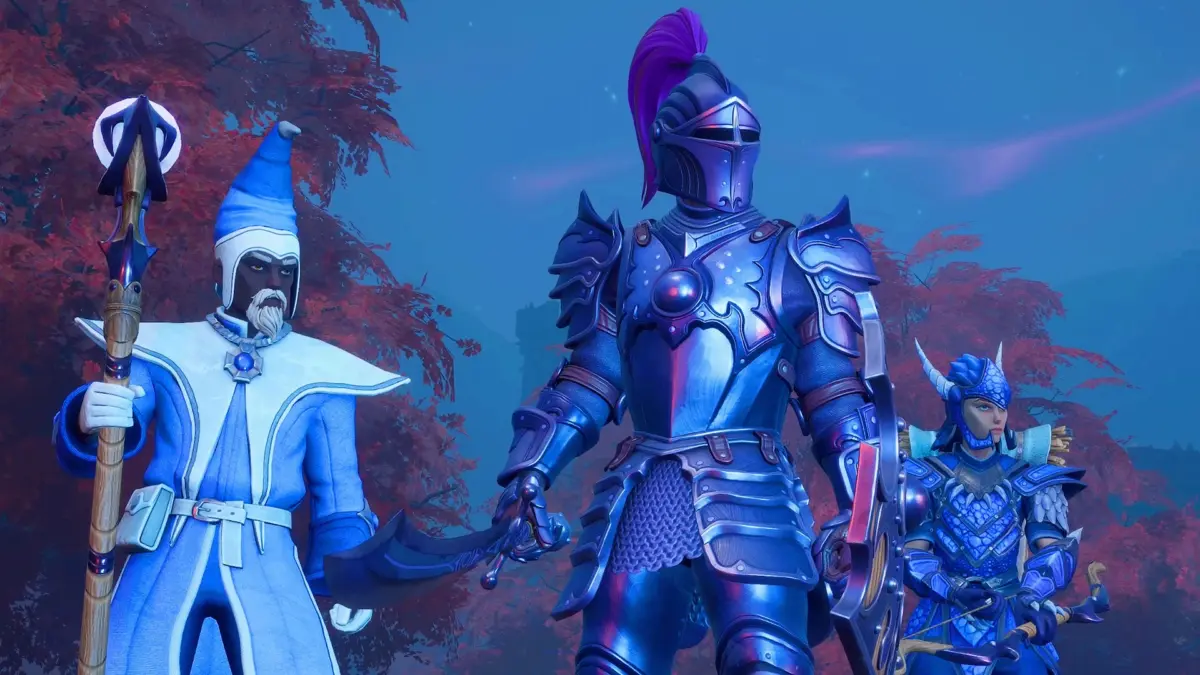
Jagex’s expansion of the RuneScape intellectual property into the survival-crafting genre with RuneScape Dragonwilds marks a significant milestone in the studio’s multiplatform strategy. Set in the rugged wilderness of Ashenfall, the title blends sandbox survival mechanics, resource gathering, and tactical combat against goblins and legendary beasts with modern multiplayer networking paradigms. A central pillar of this release is its comprehensive cross-platform play support, uniting players across the PC ecosystem (Steam, Epic Games Store, and the proprietary Jagex Launcher), PlayStation 5, Xbox Series X|S, and Nintendo’s high-performance hardware, the Nintendo Switch 2.
+-----------------------------------------------------------------------+
|                 RuneScape Dragonwilds Crossplay Matrix                 |
+----------------------+----------------------+-------------------------+
| Target Platform      | Crossplay Supported? | Cross-Save Supported?   |
+----------------------+----------------------+-------------------------+
| PC (Steam/Epic/Jagex)|         YES          |  YES (Steam Cloud Only) |
| PlayStation 5        |         YES          |           NO            |
| Xbox Series X|S      |         YES          |           NO            |
| Nintendo Switch 2    |         YES          |           NO            |
+----------------------+----------------------+-------------------------+
While cross-platform networking enables seamless co-op sessions regardless of hardware choice, the title’s technical architecture features critical distinctions between character progression containment, local hosting caps, and dedicated server configurations. Most notably, RuneScape Dragonwilds enforces strict account isolation: cross-progression and cross-save functionality are entirely absent across hardware families. Consequently, character states, inventory data, and base-building milestones remain locked to the initial purchasing platform.
Furthermore, player capacity is tied directly to network infrastructure—standard peer-to-peer sessions cap at four concurrent players, while dedicated server architectures expand instance limits to six players while imposing specific system memory and server management parameters.
Technical Integration and Networking Architecture
The crossplay infrastructure in RuneScape Dragonwilds connects disparate console networks—PlayStation Network, Xbox Network, Nintendo Switch Online—and PC storefront API frameworks into a unified matchmaking instance. This design ensures that platform-level barriers do not fragment the player base across Ashenfall.
                              [ Unified Session Host ]
                                         |
             +---------------------------+---------------------------+
             |                                                       |
   [ Direct Invite System ]                                [ Public Server Browser ]
             |                                                       |
   +---------+---------+                                   +---------+---------+
   | Dynamically Generated|                               | Filterable Metadata    |
   | Alpha-Numeric Code  |                               | Session State Flags   |
   +-------------------+                                   +-------------------+
             |                                                       |
             +---------------------------+---------------------------+
                                         |
                              [ Cross-Platform Client ]
             (PC / PlayStation 5 / Xbox Series X|S / Nintendo Switch 2)
Session Initiation and Host Handshakes
Multiplayer sessions in RuneScape Dragonwilds operate on a host-authoritative model. When initiating a world instance, the host player must explicitly toggles crossplay functionality within the lobby parameter settings prior to world initialization.
[ Host Client ]
      │
      ├──> Enables "Crossplay Allowed" Flag in World Settings
      │
      ├──> Requests Session Registration from Matchmaking Master Server
      │
      ├──> Receives Ephemeral Session ID & Rotational Invite Code
      │
      └──> Broadcasts Session Metadata to Public World Browser
Upon launching a crossplay-enabled world, the game client registers the instance with Jagex’s cross-platform matchmaking master server, returning two primary connectivity vectors:
- Public World Browser Visibility: The world instance broadcasts its session state, latency parameters, and hosting metadata to a global server list accessible from all supported platform clients.
- Dynamic Invite Code Generation: The hosting client generates an alphanumeric key that acts as a direct connection token. This key bypasses native platform friend lists (e.g., PlayStation Friends or Steam Community lists), enabling friction-free join requests from external ecosystems.
To maintain network security and prevent unauthorized instance lingering, invite codes are ephemeral. Whenever a world host terminates a session or reloads an instance, the matchmaking service revokes the existing handshake key and generates a new token upon re-initialization. Players attempting to reconnect to a persistent world after a host reboot must acquire the newly minted session code.
Cross-Progression Limitations and Data Storage Protocols
Despite enabling unified multiplayer instances across disparate hardware, RuneScape Dragonwilds maintains strict data boundaries regarding player saves and progression states.
+------------------------------------------------------------------------+
|                     Data Isolation & Storage Model                     |
+------------------------------------------------------------------------+

 [ Platform Realm: PC (Steam) ]        [ Platform Realm: PlayStation 5 ]
  ├── Character Save Data               ├── Character Save Data
  ├── Ashenfall Base States             ├── Ashenfall Base States
  └── Cloud Synchronization             └── Cloud Synchronization
       (Steam Cloud Storage)                 (PlayStation Network Cloud)
            │                                     │
            X <==== NO CROSS-PLATFORM TRANSFER ===> X
            │                                     │
            └───────────────────┬─────────────────┘
                                │
                      [ Shared Game Session ]
                   (Crossplay Multiplayer Realm)
Hardware-Bound Character Files
Character profiles, unlocked recipes, attributes, inventory contents, and world progression are bound to the native save structure of the host platform. A character created on a Nintendo Switch 2 or PlayStation 5 cannot be downloaded, synced, or transferred to a PC or Xbox Series X|S copy of the game.
This structural separation stems from localized profile authentication mechanisms. Progression data relies on native console cloud storage pipelines (e.g., PlayStation Network Cloud Storage, Xbox Cloud Saves, Nintendo Switch Online Data Cloud) rather than a centralized, external account database linked to a singular Jagex master profile.

PC Storefront Parity vs. Ecosystem Isolation
Within the PC ecosystem, data persistence follows strict platform boundaries:
- Steam Cloud Support: Players using Steam can access character files across multiple PC devices—such as a primary desktop rigging and portable handheld PCs running SteamOS—via standard Steam Cloud synchronization.
- Storefront Separation: Cross-save functionality remains unsupported across disparate PC storefronts (e.g., migrating a Steam character file directly to an Epic Games Store profile without manual local file moving).
For multi-device players, this architecture requires creating dedicated characters for specific platforms. While a Nintendo Switch 2 user can join a session hosted by a PC player, their character state remains anchored within the Nintendo ecosystem infrastructure.
Technical Metrics: Memory Allocation and Hosting Standards
RuneScape Dragonwilds employs two distinct networking modes for multiplayer play: Peer-to-Peer (P2P) Co-Op and Dedicated Servers. System requirements, performance metrics, and client capacity vary significantly between these hosting environments.
+-------------------------------------------------------------------------+
|                  Hosting Modes & Resource Metrics                       |
+------------------------+-----------------------+------------------------+
| Feature / Requirement  | Peer-to-Peer (P2P)    | Dedicated Server       |
+------------------------+-----------------------+------------------------+
| Maximum Player Cap     | 4 Players (1 Host + 3)| 6 Players              |
| Hosting Compatibility  | All Platforms         | PC / Authorized Hosts  |
| Client Joining Ability | All Platforms         | All Platforms          |
| Base RAM Requirement   | System Standard       | 2.0 GB Dedicated Base  |
| RAM Allocation per Cap | Integrated            | +1.0 GB per Active User|
| Total RAM (Max Cap)    | N/A                   | 8.0 GB Dedicated System|
| Configuration Access   | In-Game Menus         | Configuration File / CLI|
+------------------------+-----------------------+------------------------+
Peer-to-Peer (P2P) Standard Co-Op
The default co-op mode uses a host-client P2P arrangement integrated into the main game client.
- Maximum Party Capacity: 4 Players (1 Host + 3 Clients).
- Hardware Support: All platforms—PC, PS5, Xbox Series X|S, and Switch 2—can act as P2P session hosts or joining clients.
- Resource Impact: The host machine handles world state simulation, AI pathfinding for wilderness fauna and enemy factions, physics calculations, and data routing for connected clients. Console hosting performance depends on available system memory and local bandwidth headroom.
Dedicated Server Architecture
To support larger groups and persistent world environments, Jagex offers a standalone dedicated server platform.
                     [ Dedicated Server Host (PC Engine) ]
                          │ Base Memory Overhead: 2GB RAM
                          │ Per-Player Scaling: +1GB RAM
                          │ System Max (6 Players): 8GB RAM
                          │
     +--------------------+--------------------+--------------------+
     │                    │                    │                    │
[ PC Client ]       [ PS5 Client ]     [ Xbox Client ]    [ Switch 2 Client ]
(Steam / EGS) (PSN Network) (Xbox Network) (Nintendo Cloud)- Maximum Party Capacity: 6 Players.
- Platform Hosting Restrictions: Console platforms (PS5, Xbox Series X|S, Switch 2) cannot natively host dedicated server instances due to platform OS resource limits and background process constraints. Console users connect exclusively as client nodes to external dedicated servers.
- Hosting Platforms: Dedicated server software runs on Windows/Linux PC environments or via managed third-party hosting providers such as Shockbyte.
Server Memory Allocation Formula
Hosting a smooth dedicated server requires precise hardware resource management. Memory allocation scales linearly based on active client connection targets:
$$textTotal Required RAM (GB) = textBase RAM Overhead (2.0 GB) + (textActive Players times 1.0text GB)$$
To host a max-capacity 6-player session, the hosting machine must reserve a minimum of 8.0 GB of dedicated RAM solely for the server process, excluding host operating system overhead:
$$textMemory Overhead = 2.0text GB Base + (6 times 1.0text GB) = 8.0text GB RAM$$
Configuration and Administration
Dedicated servers require manual configuration via internal text files within the game directory (RuneScape Dragonwilds Config). Administrators can adjust parameters including:

- Target tick rate and server refresh frequency
- Port forwarding configurations (UDP/TCP binding)
- Maximum player connection limits (up to the 6-player cap)
- Crossplay authentication toggles
- World save interval frequencies and backup routines
Official Statements and Strategic Context
Jagex’s operational decisions regarding RuneScape Dragonwilds reflect a focused approach to multiplatform survival-crafting development. During recent technical briefings on the title’s networking architecture, development leads addressed both the inclusion of crossplay and the exclusion of cross-progression.
"Bringing Ashenfall to life across multiple platform architectures required making early foundational choices regarding network state management. Universal crossplay was an essential day-one requirement—our goal was to ensure that regardless of whether a player chooses PC, traditional home consoles, or handheld platforms like the Nintendo Switch 2, the community remains unified in a single ecosystem.
"Regarding cross-progression, our decision to isolate save data to individual platforms stems from complex account validation pipelines and security protocols tied to platform-specific cloud storage architectures. By utilizing native system save structures, we maintain maximum stability and protect character integrity from corruption across platform boundaries, while focusing our network bandwidth on low-latency co-op performance."
— Jagex Technical Architecture Team
Industry analysts note that this approach aligns with standard practices for mid-sized survival-crafting launches. Utilizing platform-native cloud infrastructure reduces back-end operating overhead by eliminating the need for complex, cross-platform proprietary database management systems—an operational trade-off that prioritizes real-time multiplayer stability over profile portability.
Industry Implications and Future Outlook
The technical decisions driving RuneScape Dragonwilds highlight broader shifts in cross-platform development across modern gaming hardware.
+-----------------------------------------------------------------------+
|             Architectural Trade-Off Analysis: Dragonwilds             |
+-----------------------------------------------------------------------+
  ADVANTAGES                                   LIMITATIONS
  ├── Day-One Community Unity                  ├── Platform Character Lock-In
  ├── Storefront & Platform Parity             ├── Hard 4-Player Cap on P2P
  ├── Scalable Dedicated Hosting               ├── Host Hardware-Bound Specs
  └── Friction-Free Code Invites               └── Console Dedicated Host Blockage
The Role of Next-Gen Handheld Hardware
By including the Nintendo Switch 2 alongside the PlayStation 5, Xbox Series X|S, and high-end PCs, Jagex establishes RuneScape Dragonwilds as a modern, cross-platform survival experience. The console’s increased RAM capacity and upgraded processing capabilities allow portable players to join the same instance environments as PC desktop users without compromising host simulation fidelity.
Potential Infrastructure Roadmap
While Jagex has not officially announced plans to introduce cross-progression, community feedback points toward several potential post-launch infrastructure enhancements:
- Jagex Account Unification: Expanding the centralized Jagex Account network could enable server-side character profile synchronization, potentially bringing cross-progression in future title updates.
- Expansion of Dedicated Server Limits: As server performance data accumulates, optimization updates may allow server administrators to push dedicated instance player limits beyond the current 6-player cap.
- Console Client Optimizations: Future patches aim to optimize memory consumption on hosted P2P sessions, improving framerate consistency during high-density combat events and large-scale base construction in Ashenfall.
For the current player base, RuneScape Dragonwilds delivers an accessible, cross-platform co-op experience. While players must carefully choose their primary platform due to hardware-bound character progression, the universal crossplay architecture ensures that exploring Ashenfall, constructing survival outposts, and battling the wilderness remains a unified experience across all modern platforms.







Belum ada komentar. Jadilah yang pertama berkomentar!