

Executive Overview
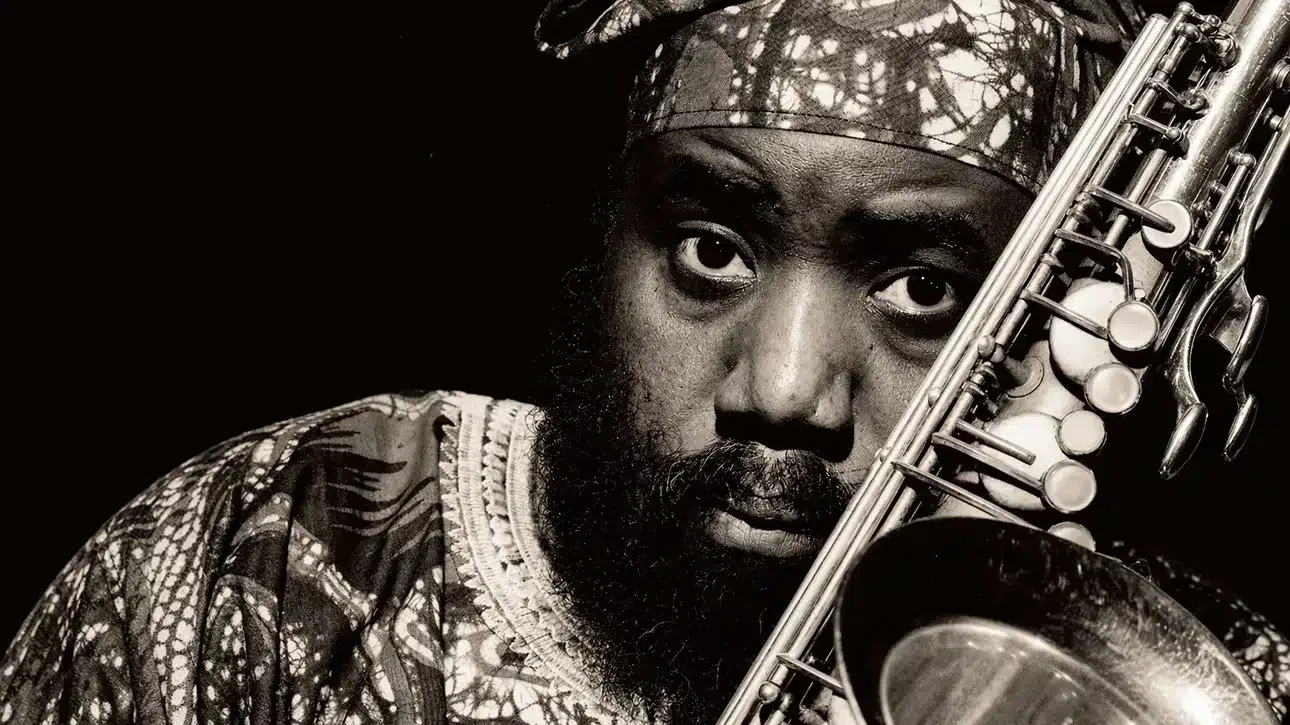
In the tapestry of late 20th-century American avant-garde music, few instrumentalists wielded the physical authority, spiritual devotion, and intellectual rigor of tenor saxophonist David S. Ware. Emerging from the crucible of the mid-1980s New York free jazz resurgence alongside peers like Charles Gayle, William Parker, and William Hooker, Ware forged a sonic language that effortlessly bridged the ferocious, exploratory blasts of the late Coltrane-Ayler axis with an unyielding reverence for jazz tradition and melodic structure.
This retrospective is anchored by one of Ware’s final extensive interviews, conducted in early 2012. Initially delayed due to what appeared to be routine health management for a man who had grappled with chronic illness—culminating in a life-saving kidney transplant in 2009 after a decade of dialysis—the exchange took on a poignant, historical gravity following his passing in October 2012.
Though his music cultivated a fiercely devoted international following, Ware’s cultural footprint remained stubbornly subterranean relative to his monumental talent. He was an artist gone too soon, leaving behind a rich reservoir of unfulfilled potential. Thanks to tireless archival efforts by his longtime label, AUM Fidelity, his legacy continues to be preserved through essential live recordings and meticulous reissues. This investigation traces Ware’s journey from a young New Jersey drummer to an uncompromising titan of the New York loft scene, examining the mentorships, spiritual philosophies, and stylistic shifts that defined a singular career.
Detailed Chronology: From Plainfield to Planetary Unknown
Roots, Rhythms, and the Boston Interlude
Born David Spencer Ware in Plainfield, New Jersey, in November 1949, the future saxophone icon initially felt an entirely different calling. Much like an automobile owner drawn to a specific mechanical aesthetic, the young Ware was magnetically attracted to the drums.
"It’s like being attracted to a certain car; it fits you," Ware recalled during our 2012 interview. "Rhythm is part of life, and I gravitated towards expressing those rhythms. Not that they cannot be expressed on other instruments."
That rhythmic impulse soon migrated to the tenor saxophone. Following his graduation from high school in suburban Scotch Plains, Ware relocated to Boston to attend the iconic Berklee College of Music. However, his tenure there was famously brief—spanning just three semesters. Rather than serving as an artistic awakening, Berklee proved to be a negative catalyst, reinforcing what he resolutely did not want to do with his art. At just 17 years old, his conceptual compass was already permanently fixed.
The Sonny Rollins Connection
While navigating the musical landscapes of New Jersey and Boston, Ware made frequent pilgrimages to New York City to witness the bleeding edge of jazz innovation. These excursions yielded an unexpected and life-altering mentorship with tenor saxophone colossus Sonny Rollins.
Accounts of their initial meeting vary—some sources cite an exchange of letters following a mutual introduction, while others describe a chance encounter in a Greenwich Village grocery store. Regardless of the exact genesis, Rollins took the teenage Ware under his wing, imparting esoteric techniques such as trademark circular breathing.
When asked how he managed to secure the attention of an established master, Ware offered a characteristically candid response:
"There was no convincing. I used to go see him play in Greenwich Village and, at one point, I told him I wanted him to listen to me play. That’s when the musical relationship began. We started to practice together from that point. There was never any form of instruction: we just practiced freely together. There was no word passed or anything."
The Mystery of The Third World (1968)
Ware’s earliest recorded documentation remains one of the most compelling and elusive chapters in free jazz lore. In 1968, Ware convened at the home of Boston-area alto saxophonist and flutist Abdul Hannan alongside a coterie of progressive musicians to capture a challenging, spiritually charged tape. Influenced heavily by late-period John Coltrane, Albert Ayler, Marion Brown, and Pharoah Sanders, the group incorporated unconventional instruments—such as the violin and electric piano—while hinting at nascent world music textures.
Intending to secure a record deal, the ensemble circulated copies of the tape under the proposed title The Third World. History took a strange turn shortly thereafter. In 1970, Latin jazz innovator Gato Barbieri released an album with the exact same title, exploring remarkably parallel sonic spaces. Ware remained convinced the overlap was no accident:
"In 1968, Abdul, myself, and a friend of ours had a meeting in New York with someone from a magazine… We spoke to that person about our concept of The Third World, and we left a tape. A little later, we called to get their feeling about the music, and their response, which sounded silly or crazy to us, was that they didn’t have a machine to play the tape. Not long after that, Gato came out with that album. Right away we thought they stole the concept we had introduced to them. I don’t think it was a coincidence, but what could we do? None of us knew anything about how things were working at the time; we were naive."
Although Hannan eventually issued the 1968 recordings as a scarce private pressing in 1971, he subsequently retreated from the jazz community and aggressively blocked subsequent reissue efforts. Today, original copies of The Third World command three- and four-figure sums on the collector market, standing as a monument to a lost epoch of exploratory idealism.
The Loft Era and European Recognition
Relocating permanently to New York around 1973, Ware immersed himself in the legendary downtown loft scene. Operating both as a bandleader and as an in-demand sideman, he collaborated with monumental avant-garde figures like pianist Cecil Taylor and drummer Andrew Cyrille. Reflecting on these contrasting environments, Ware noted:
"It was two different ways of approaching improvisation. Cecil Taylor has his music set up a certain way, which makes you improvise a certain way: a specific system that runs through all his music. Andrew is different: you go from piece to piece with him."
Recordings like Taylor’s Dark to Themselves and Cyrille’s Junction and Metamusicians’ Stomp elevated Ware’s profile. They also catalyzed his own collaborative trio, Apogee, featuring pianist Gene Ashton (Cooper-Moore) and drummer Marc Edwards. Self-financing a New York studio session in 1977, the group caught the attention of the Swiss avant-garde imprint HatHut, which released the material in 1979 as Birth of a Being. This milestone, alongside his French-released solo debut From Silence to Music, established Ware as a ferocious yet deeply melodic force on the European and domestic touring circuits.
The Taxi Years and the Art of Resilience
Despite critical acclaim, the economic realities of free jazz in the late 1970s and early 1980s—compounded by the commercial rise of jazz fusion and mainstream revivals—forced Ware to step back from full-time performance. For over a decade, he earned his living as a New York City cab driver. When asked if those years matched the gritty cinematic depictions found in films like Martin Scorsese’s Taxi Driver, Ware offered a blunt, protective silence: "There is nothing I want to share about that."
A serendipitous encounter with bassist William Parker while driving through the East Village reignited Ware’s career. Though he hesitantly returned to the bandstand, Ware maintained his day job behind the wheel until 1995, when a traffic collision in which a motorist ran a red light resulted in a broken knee, permanently ending his driving days. Throughout his life, Ware maintained a philosophical detachment from the commercial pressures of the music industry:
"I play music because I love it, because I am excited about the potential of a certain band. Making a living is like a side effect, and I am fortunate I don’t have to think of playing music as a way to make a living. Even though I am making a living with it, that is not the first consideration. It is not the first intention. The first intention is always the music itself."
The Classic Quartet and Final Frontiers
The reunion with Parker birthed the David S. Ware Trio (featuring drummer Marc Edwards), documented brilliantly on 1988’s Passage to Music (Silkheart Records). This marked the dawn of Ware’s mature period, characterized by his utilization of alternative reed instruments like the saxello and stritch, alongside an increasingly sophisticated command of dynamic interplay.
By the early 1990s, the trio expanded into a legendary quartet with the addition of visionary pianist Matthew Shipp, supported by a succession of dynamic drummers including Whit Dickey, Susie Ibarra, and Guillermo E. Brown. Albums such as Great Bliss, Flight of I, and Third Ear Recitation cemented a signature voice that balanced avant-garde deconstruction with profound structural discipline.
Ware’s fearless eclecticism also led to a brief, unprecedented major-label stint with Columbia Records during Branford Marsalis’s tenure as creative consultant. The resulting 1998 album, Go See the World, featured a stunning 14-minute modal blues deconstruction of Marvin Hamlisch and Barbra Streisand’s "The Way We Were," showcasing Ware and Shipp’s telepathic rapport.
In his final years, despite severe health challenges, Ware continued to push boundaries. Projects like Shakti (2009)—which introduced guitarist Joe Morris into his sonic palette—and his final quartet, Planetary Unknown (featuring Parker, Cooper-Moore, and veteran drummer Rashied Ali), proved that Ware viewed his historical foundations not as museum artifacts, but as fuel for perpetual reinvention.
Supporting Context & Metrics
To fully understand David S. Ware’s place in jazz history, it is vital to examine the structural and spiritual pillars that sustained his output:
- Discography Scale: Spanning over four decades, Ware recorded more than 25 albums as a leader across labels such as HatHut, Silkheart, Homestead, Columbia, Thirsty Ear, and AUM Fidelity.
- The Transcendental Connection: Deeply influenced by transcendental meditation, Ware’s daily spiritual practice informed his compositional philosophy. This connection led to his inclusion in the 2011 David Lynch Foundation documentary, David S. Ware: A World of Sound.
- Health Resilience: Despite battling end-stage renal disease, which required a grueling ten-year regimen of dialysis, Ware continued to tour and record at an elite level, ultimately receiving a life-saving kidney transplant in May 2009.
- Archival Vitality: Posthumous releases managed by AUM Fidelity have consistently charted critical acclaim, proving that interest in Ware’s uncompromising aesthetic has only grown since his passing.
Official Statements & Archival Quotes
Throughout our 2012 interview, Ware articulated a clear, unwavering artistic credo. His reflections serve as an essential manifesto for modern creative improvised music:
On the primacy of sound:
"Long before we got to New York, I always thought I was working on my own personal sound, so by the time the quartet formed, there was a huge reservoir of concepts to delve into. That included music that had set melodies and music without set melody."On tradition and solo performance:
"With a player like me, this tradition exists. My playing stays on top of the tradition, and that is why I want to play more solo. By listening to only one instrument, people can have a chance to hear how tradition runs through my playing."On artistic integrity:
"Jazz is a very gracious way of self-expression, to express oneself through a musical instrument. And it should be a very creative way. Creativity is the biggest part: one should not repeat oneself in jazz as much as possible."
Future Outlook: Preserving the Ware Legacy
More than a decade after his passing, David S. Ware’s artistic footprint continues to reverberate across the global avant-garde landscape. The preservation of his recorded catalog by independent guardians like Steven Joerg of AUM Fidelity ensures that new generations of musicians and listeners encounter his towering tenor sound.
While health prematurely silenced his horn in October 2012—cutting short high-concept endeavors like Planetary Unknown—the philosophical framework he established remains intact. Ware proved that free jazz did not need to abandon its historical lineage to be radically forward-thinking, nor did it need to sacrifice spiritual gravity for technical display. As long as artists seek a synthesis of tradition, transcendence, and unyielding personal expression, the beacon lit by David S. Ware will continue to shine brightly across the musical cosmos.








Belum ada komentar. Jadilah yang pertama berkomentar!