

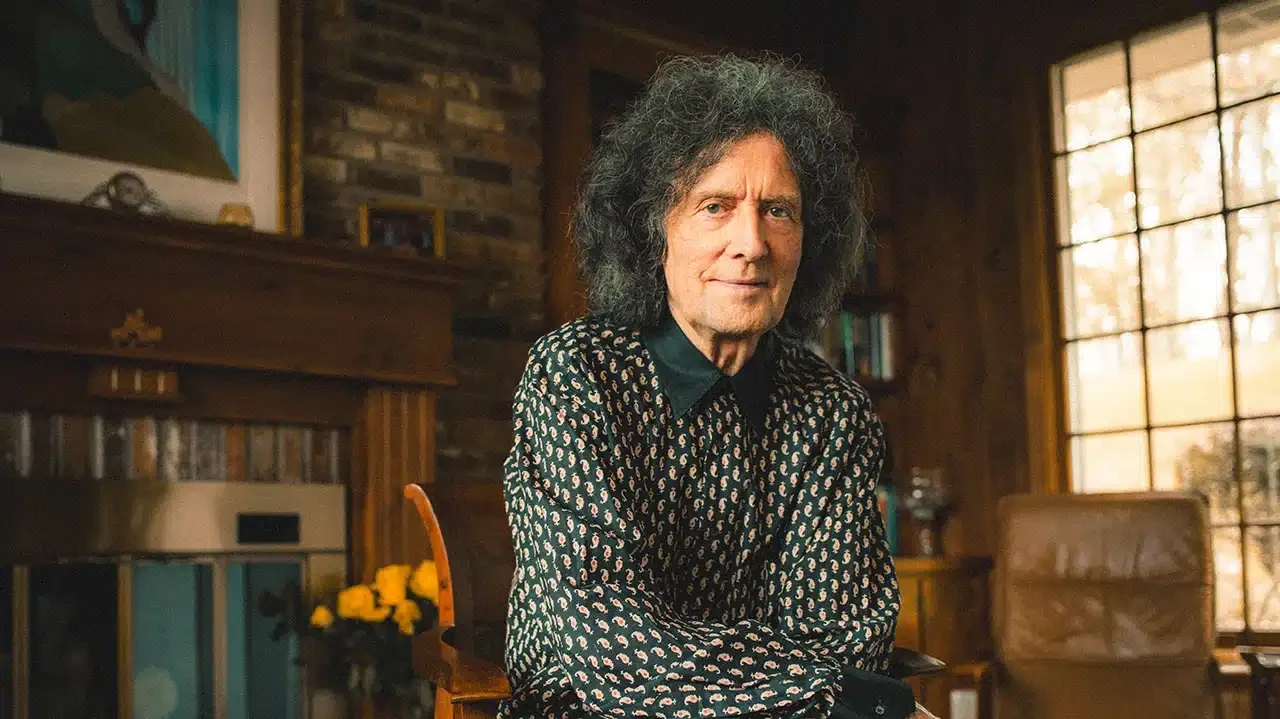
Sitting in a luxurious, sunlit Dublin hotel room—a glowing television broadcasting news silently in the background and a familiar keyboard resting within arm’s reach—Gilbert O’Sullivan looks every bit the seasoned master of pop craftsmanship. Approaching his landmark 80th birthday this December, the legendary singer-songwriter displays the restless drive of an artist half his age. Decades of living in Britain have done nothing to dilute his fiercely guarded Irish identity; if anything, his connection to his homeland has only deepened, punctuated recently by his formal appointment as a Freeman of Waterford City and County in 2024.
O’Sullivan’s latest studio album, On the Record, serves as a masterclass in organic, unfettered songwriting. The record features an array of musical highlights, most notably a haunting, emotionally fragile duet with Andrea Corr on the track "Is That You?" Far from slowing down, O’Sullivan remains deeply engaged in the contemporary cultural conversation. Whether he is discussing his idiosyncratic piano-tuning habits, his foundational musical roots alongside members of what would become Supertramp, or the enduring legacy of 1960s pop architecture, O’Sullivan approaches his craft with uncompromising clarity. This profile explores his enduring career, his creative processes, his perspective on aging in the music industry, and his unyielding refusal to be pigeonholed by convention.
Detailed Chronology & Historical Context
To truly understand Gilbert O’Sullivan’s unique place in the pantheon of popular music, one must trace a timeline defined by calculated risks, serendipitous collaborations, and a fiercely independent creative spirit.
The 1960s: Formative Years and the Supertramp Connection
Long before international chart-topping success with anthems like "Nothing Rhymed," "Clair," and "Get Down," a young O’Sullivan was cutting his teeth in the fertile musical landscape of the 1960s. It was during this era that his path crossed with Rick Davies, who had recently completed four years at art school.
"I was playing Searchers material when I joined a band with Rick, a guitarist, and a bassist," O’Sullivan recalls. "It was a step-up. We were that good! I was on drums, Rick was on keys. A really good band, and I was beginning to write songs."
The fledgling group traveled to London to lay down demos, recording two of O’Sullivan’s original compositions, with Davies sharing vocal duties on one. While the band possessed professional potential, the practical realities of life intervened; the guitarist and bassist held apprenticeships they were unwilling to risk. Davies took on grueling day jobs—working on a farm and later in a factory, waking up at six in the morning—while O’Sullivan spent time window-cleaning.
Ultimately, Davies transitioned into the band that would evolve into Supertramp, while O’Sullivan broke through meteorically as a solo artist with "Nothing Rhymed." Never forgetting his roots, O’Sullivan later engineered a reciprocal boost, inviting Supertramp to mime on Top of the Pops during his second record cycle and bringing Davies in to play on the studio recording.
The Evolution of the Sound and the "De-Tuned" Piano
O’Sullivan’s sonic signature—characterized by quirky, melodic arrangements that share stylistic DNA with Supertramp’s Crime of the Century—is rooted in financial necessity that birthed a brilliant artistic quirk. When he moved to London in 1967 to crack the music industry, he managed to squeeze an upright piano into a shared bedroom. Unable to afford a professional tuner (which cost a prohibitive £10 at the time), he left the instrument slightly de-tuned.
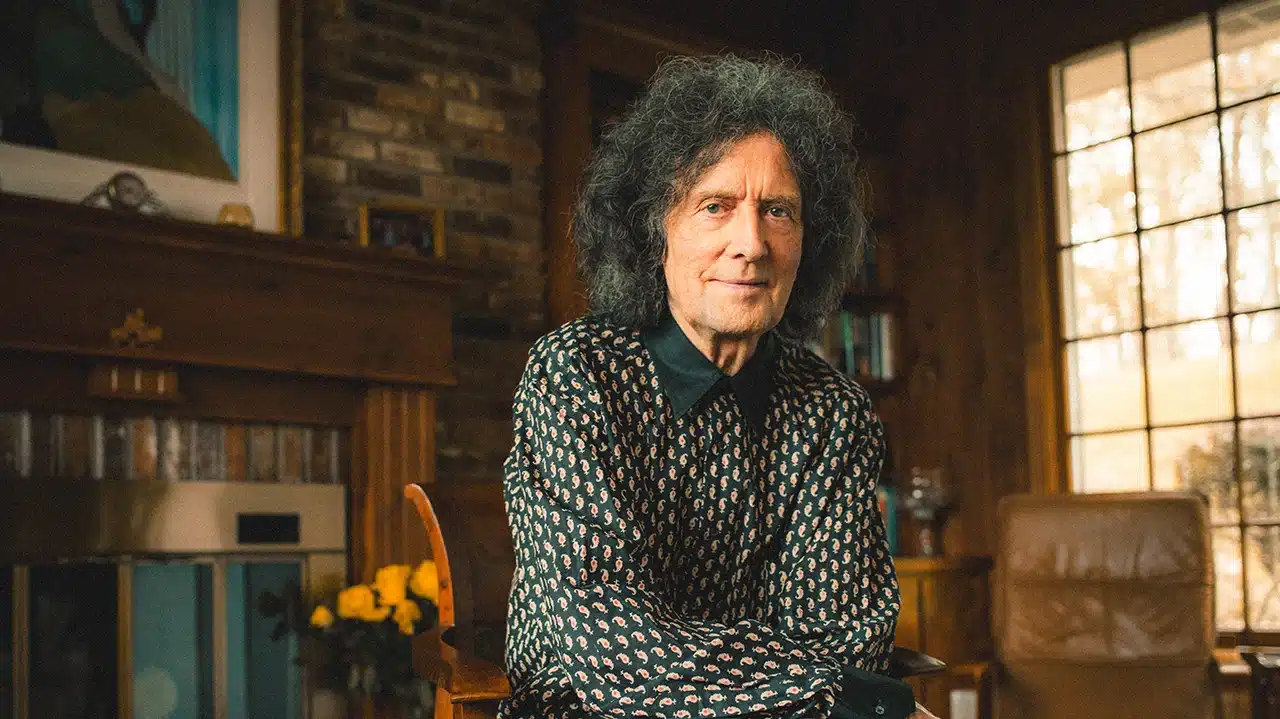
That pragmatic compromise set a lifelong precedent. To this day, nearly every piano O’Sullivan has owned has been deliberately kept a semi-tone below concert pitch. While some tracks are played in standard pitch, the majority of his compositional work is born from these uniquely calibrated keys, giving his body of work an inimitable warmth and intimacy.
Supporting Context & Metrics: Recording Philosophy and Artistic Influences
In an era dominated by digital manipulation, playlist-driven tailoring, and remote collaboration via software like Skype (a method used by contemporaries like Graham Gouldman in 2012), O’Sullivan remains an ardent champion of live, room-based recording.
The Ethan Johns Partnership and Organic Production
For On the Record, O’Sullivan enlisted producer Ethan Johns (son of legendary engineer Glyn Johns). The methodology was refreshingly traditional:
- The Session: O’Sullivan meets with Johns to review the material, allowing the producer to select his preferred tracks and handpick elite studio musicians.
- The Live Foundation: Musicians gather closely around O’Sullivan’s piano. Following a brief rehearsal, they record a nearly live basic track.
- The Minimalist Approach: Overdubs and vocals are layered afterward, but the foundational heartbeat of the song is captured live in the room, bypassing heavy digital processing.
"I had everyone in the room," O’Sullivan notes regarding his work with Johns. "I really like that, and don’t go for digital." This organic approach restored a vital layer of critical credibility to his later-career output, following under-appreciated gems like Latin ala G!.
Vocal Delivery and the Mechanics of the Voice
O’Sullivan’s approach to vocal tracking stands in stark contrast to perfectionists like the late Dusty Springfield, who famously recorded line-by-line due to performance anxiety. O’Sullivan prefers an efficient, holistic approach:
- The Three-Take Rule: "I do one take, and Andy, my producer, will ask for another, and then I’ll do a third," he explains. "He will take those three, and get the best parts."
- Double-Tracking Mastery: Drawing comparisons to John Lennon and Paul McCartney—noting McCartney’s double-tracked performance on "All My Loving"—O’Sullivan reveals an uncanny technical precision. He rarely required headphones to match his own pitch, effortlessly layering vocal tracks to achieve a rich, commercial sheen on hits like "No Matter How I Try."
Cultural Influences
O’Sullivan acknowledges a rich tapestry of inspirations that shaped his artistic identity:
- Bob Dylan: Influenced early on by Dylan’s distinct, unconventional vocal delivery rather than technical perfection, teaching O’Sullivan that distinctiveness outweighs conventional beauty in singing.
- The Beatles: Serving as the gold standard for songwriting structure, lyrical depth, and vocal innovation.
- 1960s Pop Architecture: A decade he regards as the absolute golden age of recorded music, informing the sophisticated chord progressions heard on tracks like "I Must Be Going," which nods subtly to Steely Dan.
Official Statements & Direct Perspectives
During our extended conversation in Dublin, O’Sullivan offered candid, often humorous insights into his personal life, political anxieties, and his upcoming live performances.
On Aging, Mortality, and "Growing Old Disgracefully"
Approaching 80 in December 2024/2025, O’Sullivan forcefully rejects the notion that his new album is preoccupied with mortality or quiet retirement. While tracks like "See Us Gone" touch upon geopolitical anxiety—specifically referencing the chilling realities of modern warfare and the rhetoric surrounding nuclear escalation—he insists that aging is a state of active defiance rather than decline.

"’Growing Old Disgracefully’ is not autobiographical, but I am of this generation," he says with a grin. "We are sidelined, and we get the argument that we should be gardening, or whatever. That’s not me saying [that’s what we should do], but it has that attitude. I had the title pinned on the wall for months, and the song seems to go down really well onstage. We have T-shirts with the title written on them!"
He draws parallels to peers like Paul McCartney, the Who, and Bob Dylan, noting that their generation continues to defy industry expectations of geriatric sidelining. Discussing vocal preservation into advanced age, he observes a natural evolution: "It’s a Johnny Cash scenario with his voice. He’s 84, so he can’t be hitting those high notes anymore… People like Rod Stewart, they drop the pitch. I’ve done that, because as you get older, the voice gets deeper, so it makes sense to drop the pitch."
On Irish Identity and the Sanctuary of Jersey
Having resided in Jersey for over a decade, O’Sullivan values the isolation and creative space it affords him. A non-driver living away from motorways and social distractions, he maintains a purpose-built home studio featuring both analog and digital setups.
Yet, his Irish roots remain profoundly anchored. Reflecting on his honorary Freedom of Waterford City and County, his voice warms with evident pride. He notes past socially conscious compositions like "The Luck of the Irish" and "Divorce Irish Style," expressing mild amusement that local reviewers rarely credited him for tackling the complex socio-political realities of his homeland.
"I identify as Irish," he beams. "I didn’t like the approach taken against them. The attitude people had towards them…"
Future Outlook & Live Performance Strategy
With On the Record cementing his critical renaissance, O’Sullivan’s immediate future is firmly focused on the stage. Preparing for an intimate live run in Dublin, he remains committed to delivering a stripped-back, lyric-forward concert experience.
- The Live Setup: Accompanied by longtime guitarist Bill Shanley, O’Sullivan plans to deliver a tightly curated 90-minute set blending new material with immortal classics.
- Setlist Philosophy: Fans can rest assured that foundational touchstones like "Alone Again (Naturally)" and fan-favourite singalongs like "Matrimony" will feature prominently.
- Lyrical Clarity: By scaling down the instrumentation to a piano-and-guitar core, O’Sullivan ensures that his intricate, story-driven lyrics are delivered with crystal-clear precision.
Conclusion
Gilbert O’Sullivan’s career cannot be neatly filed away as a legacy act resting on 1970s laurels. Through meticulous craftsmanship, an unwavering commitment to organic studio recording, and a sharp, witty perspective on aging, he continues to enrich the landscape of popular music. As long as he remains fit, healthy, and seated at his de-tuned piano, popular music owes him a debt far greater than any accolades he has yet received.







Belum ada komentar. Jadilah yang pertama berkomentar!