

Executive Overview
The Korean cinematic landscape is preparing for a jolt of high-tension psychological horror with the official premiere date announcement and striking promotional campaign for My Home. Directed at audiences who relish a slow-burn descent into paranoia, the upcoming feature film stars rising talent Jang Gyuri alongside veteran powerhouse Bae Jong Ok. Set against the backdrop of contemporary urban isolation and economic precarity, My Home explores a terrifying question that resonates deeply with modern youth: How much of your safety would you compromise for a place to live?
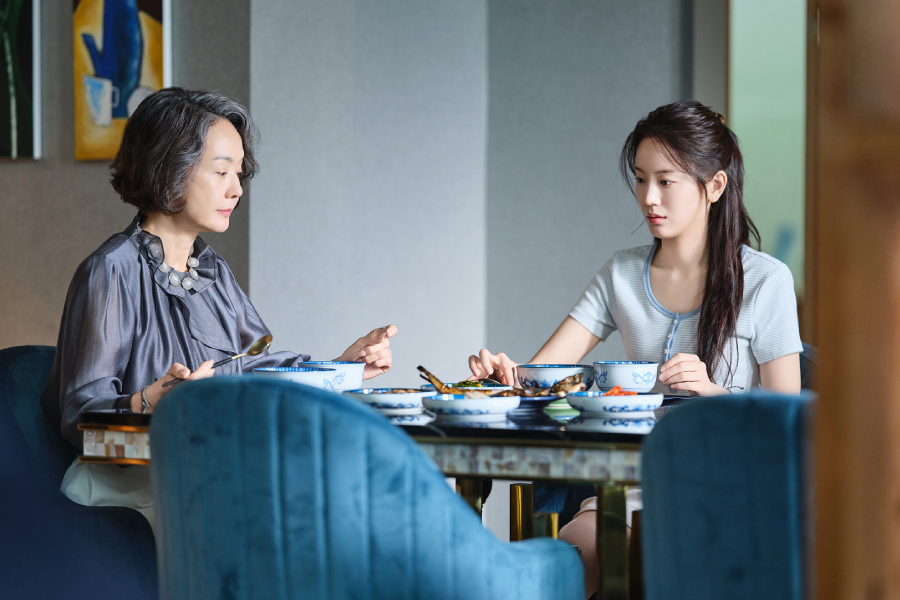
The narrative centers on Gyu Bin, a vulnerable 24-year-old college student navigating the brutal realities of independence with virtually no safety net. When she secures a luxury apartment under astonishingly generous terms—specifically, zero rent—it feels like the breakthrough she desperately needs. However, the dream residence quickly curdles into a claustrophobic nightmare as she co-habits with her enigmatic, hyper-elegant landlady, Geum Rim.
With the release of an ominous, red-drenched teaser poster laden with traditional Korean shamanistic iconography and unsettling symbolism, distributor and production teams have officially locked in a theatrical release date of November 25. As anticipation mounts, industry analysts and horror enthusiasts alike are tracking My Home as a dark-horse contender in the K-thriller genre, blending visceral supernatural dread with sharp socio-economic commentary on contemporary housing crises.
Detailed Chronology: The Anatomy of a Suspenseful Marketing Rollout
The path to My Home’s theatrical debut has been meticulously orchestrated to build atmospheric tension, moving from quiet production murmurs to an aggressive, visually striking promotional campaign that has set social media and film forums abuzz.
Phase 1: Casting and Conceptual Genesis
Initial industry whispers regarding the pairing of Jang Gyuri and Bae Jong Ok began circulating as producers sought a dynamic intergenerational contrast for the lead roles. The casting was finalized with Jang stepping into the shoes of the financially strapped collegiate protagonist, Gyu Bin, while Bae signed on to portray the chillingly sophisticated landlady, Geum Rim. The addition of Kim Min Chul as Bu Young—an observant ally whose suspicions form a crucial narrative counterweight—completed the primary ensemble. The production was designed from the ground up to maximize psychological friction, leveraging Bae’s decades of dramatic gravitas against Jang’s grounded, empathetic relatability.
Phase 2: The Visual Reveal and Thematic Teasing
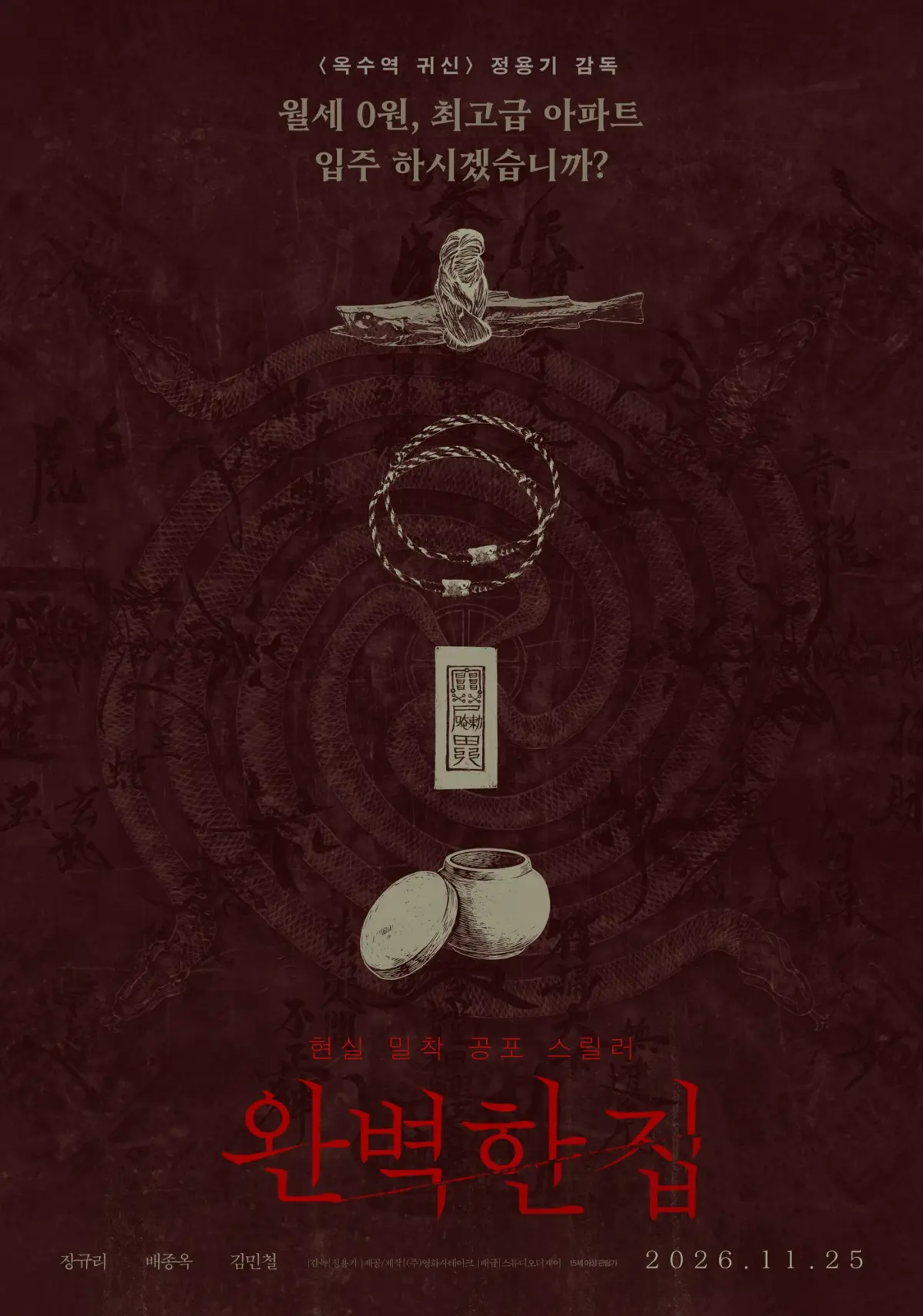
The campaign reached a critical juncture with the unveiling of the film’s primary promotional poster. Eschewing traditional horror tropes of shadowy slashers or jump-scare imagery, the poster relies heavily on color theory and cultural symbolism. Rendered in an aggressive, blood-red tone, the artwork immediately rivets the viewer’s attention.
At the center of the composition lies a bizarrely coiled snake, a creature historically laden with dualities of temptation, danger, and rebirth across various mythologies. Surrounding the serpent are stark, unmistakable artifacts of Korean shamanism (muism). Viewers can spot a dried pollock (buk-eo), a traditional ward often hung above doors to drive away bad luck or malevolent entities; a multi-colored thread bracelet representing the five traditional directions and elements (obangsaek); cryptic paper talismans (bujeok) designed to ward off evil; and a ceramic jar filled with coarse salt, a universal purifier used to cleanse spaces of negative spiritual residue.
Emblazoned across this unsettling tableau is the central tagline that serves as the narrative hook: "Would you move into a luxury apartment with zero rent?" This deceptively simple question bridges the gap between everyday economic desperation and ancient supernatural peril, establishing the film’s unique aesthetic and thematic footprint.
Phase 3: The Theatrical Confirmation
Following the poster drop, production houses confirmed that My Home has officially secured its release slot, locking in a theatrical premiere date of November 25. This positioning places the film strategically within the late-autumn box office window, a traditional sweet spot for psychological thrillers and atmospheric horror features that thrive in colder, darker months.
Supporting Context & Metrics: The Societal and Cinematic Backdrop of My Home
To fully appreciate the narrative weight of My Home, one must examine the cultural and cinematic ecosystem from which it emerges. Modern South Korean cinema has a rich history of using horror and thriller frameworks as allegories for real-world anxieties, most notably housing market pressures and generational divides.
The Real Estate Crisis as a Horror Catalyst
In metropolitan centers like Seoul, the skyrocketing cost of living and the notorious jeonse or high-deposit rental systems have placed immense psychological burdens on young adults. For a 24-year-old student like Gyu Bin, the prospect of "zero rent" is not merely a lucky break; it is a life-altering escape from poverty and housing insecurity. My Home taps directly into this contemporary neurosis, weaponizing the basic human need for shelter. By turning a luxury apartment—a universal symbol of status and security—into a trap, the film plays on the terrifying vulnerability of youth attempting to survive in an unforgiving urban landscape.
Character Dynamics and Performance Pedigree
The emotional and psychological anchor of the film rests squarely on the shoulders of its leading women:

- Jang Gyuri as Gyu Bin: Transitioning dynamically from her idol roots into a formidable dramatic actress—as evidenced by her compelling work in projects like The Player 2: Master of Swindlers—Jang brings a raw, grounded vulnerability to the screen. Gyu Bin represents the archetype of the isolated youth: hardworking, exhausted, and desperately hoping for a miracle that turns out to be a curse.
- Bae Jong Ok as Geum Rim: A veteran screen presence renowned for her versatility and ability to project icy composure masking deep-seated volatility, Bae is uniquely suited for the role of the landlady. Geum Rim’s exterior is defined by faultless elegance and maternal hospitality, making her sudden, unsettling shifts into psychological warfare all the more terrifying.
- Kim Min Chul as Bu Young: Acting as the narrative’s investigative catalyst, Kim’s character refuses to accept the superficial perfection of the apartment. Bu Young serves as the audience’s surrogate, digging into the history of the building and unearthing the dark secrets that Geum Rim and the physical structure itself attempt to conceal.
The Resurgence of Folk Horror and Shamanism
The integration of traditional shamanistic objects (obangsaek bracelets, salt jars, talismans, and dried pollock) in the promotional materials highlights a broader, highly successful trend in contemporary Korean media: the fusion of modern psychological thrillers with indigenous folk horror elements. Much like recent cinematic and televised explorations of ancestral curses and shamanic rituals, My Home anchors its modern urban setting in ancient, primal superstitions, suggesting that no matter how high-rise or modern a luxury apartment may be, it cannot escape the ghosts of its past.
Official Statements and Production Insights
While full press conference transcripts roll out closer to the November 25 theatrical premiere, early statements released by production representatives shed light on the creative vision driving My Home.
Makers of the film have emphasized that the project was intentionally crafted to blur the lines between supernatural haunting and the suffocating pressure of human manipulation. "My Home is not just a story about a haunted house; it is an exploration of power dynamics, economic desperation, and the terrifying spaces that open up when trust is weaponized," noted a representative close to the production team.
Furthermore, the casting choices were highlighted as a deliberate effort to maximize tension. The juxtaposition of Jang Gyuri’s youthful earnestness against Bae Jong Ok’s commanding, inscrutable screen presence provides the film with its core engine. Directors and producers noted during early press briefings that the on-screen chemistry between the two leads shifts fluidly from maternal warmth to psychological warfare, keeping the crew on edge during principal photography.
Future Outlook: What to Expect from My Home on November 25
As the calendar ticks down toward the November 25 theatrical release, industry watchers are eager to see how My Home performs in a competitive box office environment. Several key factors will dictate its trajectory:
- Word-of-Mouth Momentum: Given that horror and psychological thrillers rely heavily on narrative twists and atmospheric payoff, early viewer reactions following press screenings will be critical in driving multiplex attendance.
- Crossover Appeal: With Jang Gyuri bringing a dedicated fanbase from her flourishing television career (including hits like The Player 2: Master of Swindlers) and Bae Jong Ok drawing prestige film audiences, the movie sits at an intriguing crossroads of demographics.
- Genre Longevity: If My Home successfully delivers on the promise of its arresting poster—balancing sharp social commentary on housing precarity with genuine, folklore-infused chills—it could cement itself as a standout Korean thriller of the year.
For fans of suspense, complex female-led narratives, and slow-burn dread, the countdown has begun. When the doors of that seemingly perfect luxury apartment open on November 25, audiences will find out just how high the price of "free" really is. In the meantime, viewers looking to familiarize themselves with Jang Gyuri’s range can stream her previous works on platforms like Viki, preparing themselves for the dark, claustrophobic corridors of My Home.





Belum ada komentar. Jadilah yang pertama berkomentar!