

Executive Overview
The Yu-Gi-Oh! Official Card Game (OCG) continues to evolve at a relentless pace, blending nostalgia with cutting-edge card design. In the latest wave of reveals stemming from official social media channels—specifically via the platform X (formerly Twitter)—Konami has introduced two pivotal additions to the upcoming IMPH-JP set: Ashtrata Tamayori and Ashtrama Yoami. These cards do not merely expand the card pool; they represent a fundamental paradigm shift for strategies that intertwine aggressive swarm mechanics with face-down resource management, Trap-oriented graveyard setups, and high-stakes Synchro summoning restrictions.
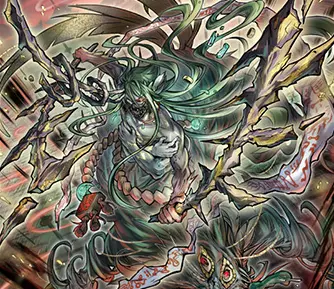
At first glance, Ashtrata Tamayori is a unassuming Level 1 FIRE Fairy Tuner monster boasting an ATK and DEF of 0. However, beneath its fragile exterior lies a potent engine-starter capable of plucking non-Tuner support directly from the Deck while simultaneously establishing defensive setups. Paired with its boss monster counterpart, Ashtrama Yoami—a formidable Level 8 WIND Spellcaster Synchro monster with 2400 ATK and 3000 DEF—the archetype paints a picture of deliberate, calculated resource manipulation.
This investigative report examines the mechanics, strategic synergies, and competitive implications of these two newly unveiled cards. By breaking down their text line by line, evaluating their placement within the broader meta-game, and projecting their trajectory upon release, this article aims to provide duelists, collectors, and analysts with an authoritative, comprehensive resource on the future of the Ashtra strategy.
Detailed Chronology: The Unveiling and Immediate Community Response
The disclosure of Ashtrata Tamayori (designated set number IMPH-JP018) and Ashtrama Yoami (IMPH-JP039) occurred via a meticulously timed social media broadcast on the official Yu-Gi-Oh! OCG X account. Known for dropping single cards or small thematic pairings to generate maximum speculative fervor, Konami’s digital PR team released the full card texts and localized names, sending shockwaves through online discussion forums, competitive discords, and content-creator circles.
The Timeline of Discovery
- T-Minus Zero (The Drop): The official X account posted the high-resolution card renders alongside their complete effect text, confirming collector serial numbers IMPH-JP018 and IMPH-JP039.
- The First Hour: Competitive theorists immediately began analyzing the summoning restrictions on Ashtrata Tamayori, specifically its locking clause preventing Extra Deck Special Summons for the rest of the turn except by Synchro Summon using a Level 1 Tuner. This immediately narrowed the scope of potential splashability while highlighting a dedicated, highly specialized internal engine.
- Hours 2–6: The synergy with Ashtrama Yoami became glaringly apparent. Analysts mapped out the resource loop: summoning Tamayori, pulling a non-Tuner, flipping a card down, stepping into Synchro plays, triggering Yoami upon Special Summon or departure to the GY, and eventually leveraging accumulated Traps in the GY to sweep the board.
- Day One Consensus: The community transitioned from initial confusion over the unorthodox mix of Fairy and Spellcaster typings to a consensus view: the Ashtra archetype is a control-oriented, disruption-heavy strategy that rewards patient setup and meticulous graveyard management.
Technical Card Breakdown & Mechanical Analysis
To truly understand the weight of these reveals, one must conduct a forensic examination of the text box for each card. Every clause, restriction, and condition has been crafted to steer the player toward a specific playstyle while preemptively curbing degenerate loops.
+--------------------------------------------------------------------------+
|                     ASHTRATA TAMAYORI (IMPH-JP018)                       |
| Level 1 | FIRE | Fairy | Tuner | Effect                                  |
| ATK: 0  | DEF: 0                                                         |
+--------------------------------------------------------------------------+
| You can only use the (1) and (2) effects of this card's name each once   |
| per turn.                                                                |
|                                                                          |
| (1) If this card is Normal or Special Summoned: You can Special Summon   |
| 1 "Ashtra" non-Tuner from your Deck in Defense Position, then you can    |
| change 1 face-up monster you control to face-down Defense Position, also |
| you cannot Special Summon from the Extra Deck for the rest of this turn, |
| except by Synchro Summon using a Level 1 Tuner.                          |
|                                                                          |
| (2) If an "Ashtra" and/or face-down card(s) you control would be         |
| destroyed by card effect, you can banish this card from your GY instead. |
+--------------------------------------------------------------------------+
Ashtrata Tamayori: The Engine’s Heartbeat
Ashtrata Tamayori acts as the definitive starting point for the archetype’s plays. Being a Level 1 FIRE Fairy Tuner with 0 ATK/DEF makes it universally searchable via generic low-level support (such as Where Arf Thou? or Small World, depending on stat overlap), though its internal archetype design will likely dictate its primary homes.
- The Soft-to-Hard Once-Per-Turn Constraints: The card text explicitly states, "You can only use the (1) and (2) effects of this card’s name each once per turn." This prevents infinite looping or redundant activation abuse during a single turn rotation, cementing its role as a balanced, rhythmic playmaker.
- Effect (1) – Deck Recruitment & Self-Sabotage/Synergy: Upon Normal or Special Summon, the player is granted permission to Special Summon one "Ashtra" non-Tuner monster directly from the Deck in Defense Position. This deck-thinning and field-expansion tool is critical for establishing material parity. However, it comes with a mandatory or optional cascade: "then you can change 1 face-up monster you control to face-down Defense Position." This synergy with face-down mechanics hints at a broader archetype identity that thrives on hidden information and flip interactions.
- The Extra Deck Jail: The restriction clause is severe: "also you cannot Special Summon from the Extra Deck for the rest of this turn, except by Synchro Summon using a Level 1 Tuner." While this locks the player out of generic Link-2 ladders or rank-X XYZ plays, it perfectly funnels the user into utilizing Level 1 Tuners to climb into designated Synchro targets—namely, cards like Ashtrama Yoami.
- Effect (2) – Graveyard Protection: Acting as a localized Starlight Road or protection blanket from the graveyard, this effect allows players to banish Tamayori from the GY to substitute its destruction for any "Ashtra" and/or face-down card(s) they control. This safeguards both monster assets and hidden backrow or set monsters from sweeping removal like Lightning Storm or Harpie’s Feather Duster.
+--------------------------------------------------------------------------+
|                      ASHTRAMA YOAMI (IMPH-JP039)                         |
| Level 8 | WIND | Spellcaster | Synchro | Effect                          |
| ATK: 2400 | DEF: 3000                                                    |
| Materials: 1 Tuner + 1+ non-Tuner monsters                               |
+--------------------------------------------------------------------------+
| You can only use the (1) and (2) effects of this card's name each once   |
| per turn.                                                                |
|                                                                          |
| (1) If this card is Special Summoned, or sent from the field to the GY:  |
| You can to your hand, or Set, 1 "Ashtra" Trap from the Deck.             |
|                                                                          |
| (2) If you have a Trap in your GY: You can return as many face-down      |
| cards on the field as possible to the hand, then if you have 5 or more   |
| Traps in your GY, you can return all cards your opponent controls to the |
| hand.                                                                    |
+--------------------------------------------------------------------------+
Ashtrama Yoami: The Synchro Pinnacle
Stepping up to Level 8, Ashtrama Yoami shifts the attribute to WIND and the type to Spellcaster, sporting a sturdy defensive profile of 2400 ATK and 3000 DEF. Its summoning requirement is generic (1 Tuner + 1+ non-Tuner monsters), though Ashtrata Tamayori‘s restrictions naturally streamline its deployment within the archetype.
- Effect (1) – Dual-Trigger Search and Set: Triggered remarkably upon either Special Summon or being sent from the field to the GY, this effect grants incredible flexibility. Whether you are actively bringing Yoami out via Synchro Summon or having it cleared by opponent removal, you are rewarded by searching or directly Setting 1 "Ashtra" Trap from your Deck. Directly setting the Trap bypasses activation timing restrictions, allowing for immediate disruption during the opponent’s turn.
- Effect (2) – The Multi-Tiered Bounce Protocol: This effect scales based on graveyard setup.
- Tier 1 (1+ Trap in GY): You can return as many face-down cards on the field as possible to the hand. This turns your own floating face-down cards or disruption pieces into recycled assets while potentially clearing opponent hazards.
- Tier 2 (5+ Traps in GY): If the graveyard threshold is met, the effect supercharges: you can return all cards your opponent controls to the hand. This is a non-targeting, non-destruction mass removal effect capable of wiping an entire established enemy board in a single resolution.
Supporting Context, Metrics, and Strategic Metrics
To evaluate how these cards will perform in a competitive tournament environment, we must analyze them against current OCG meta trends, resource economy metrics, and supporting card ecosystems.
Resource Economy and Advantage Generation
In modern Yu-Gi-Oh!, card advantage is king, but tempo and disruption density dictate match outcomes. Ashtrata Tamayori is a +1 generator upon resolution (converting 1 card from hand/summon into 1 body from deck + 1 body on field via flip modification), while Ashtrama Yoami acts as an ongoing turbine that replaces itself upon departure while clearing opponent boards.
| Metric Indicator | Ashtrata Tamayori (IMPH-JP018) | Ashtrama Yoami (IMPH-JP039) |
|---|---|---|
| Card Type | Main Deck Monster (Tuner) | Extra Deck Monster (Synchro) |
| Speed / Timing | Turn 1 Engine Initiator | Mid-to-Late Game Control & Board Clear |
| Advantage Value | Deck Thinning + Field Presence | Search/Set + Mass Bounce (Non-Targeting) |
| Constraint Factor | Level 1 Synchro Lock | Graveyard Trap Threshold (1 vs 5+) |
The Trap Graveyard Threshold
The second effect of Ashtrama Yoami introduces a fascinating deck-building puzzle. To achieve the dream scenario—returning all cards the opponent controls to the hand—a player must have accumulated 5 or more Traps in their GY. This requires the archetype to feature a robust lineup of Normal or Continuous Traps that either self-mill, discard themselves, or naturally resolve and settle into the graveyard over the course of early-game attrition.
This mechanics-driven requirement pushes the Ashtra strategy firmly into a "Control / Trap-Heavy" archetype bucket, reminiscent of strategies like Altergeist or Labrynth, but uniquely fused with Synchro-summoning mechanics and face-down card management.
Official Statements and Designer Intent
While direct sit-down interviews regarding IMPH-JP are still rolling out across Japanese hobby magazines (such as V Jump), analysis of the card text reveals clear design philosophies from Konami’s Card Design Department:
- Challenging Linear Combos: By imposing strict Extra Deck locks ("except by Synchro Summon using a Level 1 Tuner"), the design team actively prevents generic boss monsters (like Baronne de Fleurs or Borreload Savage Dragon) from completely dominating every single Synchro-based strategy. Players are forced to lean into the thematic identity of the archetype.
- Bridging Hidden Information: The inclusion of face-down mechanics—flipping monsters down via Tamayori and bouncing face-down cards via Yoami—nods toward classic control playstyles that rely on psychological warfare, bluffing, and disruption timing.
- Graveyard Resource Tracking: Rewarding players for committing to a heavy Trap density bridges the gap between traditional slow-paced control play and modern high-speed summoning rituals.
Future Outlook: Competitive Impact and Meta Speculation
As the IMPH booster set approaches its official release date in the OCG, duelists are already forecasting the meta-relevance of Ashtrata Tamayori and Ashtrama Yoami.
Potential Synergies and Deck Profiles
- Pure Ashtra Control: Players will likely pair these cards with a dedicated suite of "Ashtra" Traps (yet to be fully revealed) designed to fill the graveyard quickly while disrupting opponent plays.
- Level 1 Engine Splashes: Because Tamayori is a Level 1 FIRE Fairy Tuner with 0 stats, rogue theorists are already exploring whether other fire-centric or fairy-centric strategies can leverage its deck-summoning capability, though the Extra Deck lock remains a steep hurdle to clear outside of dedicated builds.
- Going-Second Potency: Yoami‘s ability to bounce all opponent cards when 5+ Traps reside in the GY turns it into an exceptional board-breaking tool that sidesteps destruction-immunity effects entirely.
Anticipated Challenges
- Hand Trap Vulnerability: As a Normal or Special Summon-dependent starter, Tamayori will inevitably stare down Ash Blossom & Joyous Spring, Infinite Impermanence, or Effect Veiler. How the rest of the archetype protects its initial normal summon will dictate its tier placement.
- Graveyard Interruption: Because Yoami relies heavily on having Traps in the GY, cards like D.D. Crow, Bystial monsters, or Abyss Dweller could severely stunt its explosive board-clearing potential.
Conclusion
The unveiling of Ashtrata Tamayori and Ashtrama Yoami marks an exciting chapter in the ongoing narrative of the Yu-Gi-Oh! OCG. By fusing low-level tuner recruitment, face-down tactical shuffling, and graveyard-dependent mass removal, Konami has crafted an archetype that demands strategic depth, careful resource accounting, and forward-thinking play.
As more cards from the IMPH set are brought to light, the true ceiling of the Ashtra strategy will become clear. For now, duelists would do well to study these mechanics closely, evaluate their deck-building philosophies regarding Trap ratios, and prepare for a meta where hidden cards and graveyard thresholds dictate the flow of battle.








Belum ada komentar. Jadilah yang pertama berkomentar!