

When Timothée Chalamet materialized inside a hospital room fever dream on Saturday Night Live, dressed in a singlet and contorting his limbs to parodied choreography, mainstream culture finally assimilated Troye Sivan. As the bewildered patient registered her delirium—gasping, "A gay guy!"—the dancing apparition crisply corrected her: "Not just any gay guy… an Australian YouTube twink turned indie pop star."
This pop-cultural coronation arrived on the heels of Something to Give Each Other, an uninhibited, reference-heavy dance-pop record that projected a sex-positive soundtrack squarely back onto the demographic that had once spurned his early online virality. Yet, the decidedly subdued follow-up, She’s the Best, finds Sivan languishing in the afterglow, reckoning with the quietude that settles when the adrenaline rush of arena-sized success wears off.
Far from a simple victory lap, She’s the Best is a complex, often contradictory navigation of domesticity, aging, and the persistent ghost of gay loneliness. Through a mix of Y2K sonic pastiche, spoken-word vignettes, and defensive production choices, Sivan’s fourth major release captures an artist retreating from the flashbulbs to find safety in the domestic idyll—even if the safety feels heavily fortified.
Detailed Chronology: From Suburban Vlogger to Introspective Architect
The YouTube Origin and the Adolescent Panic
Troye Sivan’s journey into music has played out entirely in the public eye. Long before he was charting globally, he was a fixture of the early-YouTube vlogging ecosystem, broadcasting his adolescence from an Australian bedroom. That foundational intimacy has never truly left his creative DNA; he still approaches music-making with the casual, confessional candor of a webcam diary.
On his debut album, Blue Neighbourhood, tracks like "Cool" exposed an adolescent panic driven by deep-seated imposter syndrome. As his career progressed through Bloom and into the hedonistic heights of Something to Give Each Other, Sivan publicly chartered his sexuality in a manner that previous generations of teen idols could only fantasize about. He transitioned from a suburban curiosity into a global cipher for modern queer youth culture.
The Domestic Retreat of She’s the Best
She’s the Best, however, marks a deliberate pivot away from the stadium-sized exposure of his previous era. The promotional strategizing surrounding the record has been notably idiosyncratic. Sivan dedicated the project—and the shoegazey lead single of the same name—to the women in his life, including high-profile figures like Nicole Kidman, applauding their constancy and allyship.
Yet, applying a female-affirming title to a record thoroughly consumed by men feels like a stretch. The title track establishes an atmospheric, sensory moodboard: verses summon the parlé-chanté style of Serge Gainsbourg, with Sivan dryly reciting his admiration atop a smoke-stained drum loop. But it sets up an internal tension between public posturing and private reality.
Navigating the Tracklist: From Sonic Missteps to Masterclasses
This conversational delivery is also weaponized on "Party," a track so slight that even borrowed hooks from Madonna’s "Music" fail to give it substantial weight. Accompanied by a high-concept, expensive-looking short film—a bizarrely campy premise asking what Emerald Fennell might do with a medieval tea dance—the song rescinds the experimental promise of the title track. Troye’s singular, repeated verse never gathers momentum, resulting in a sweatless call-to-arms that feels prematurely exhausted.
Conversely, "Canada Dry" serves as a far superior votive offering to the Queen of Pop. A libidinous, salt-lick of a track, it ingests the electronic swirl of Madonna’s "Impressive Instant" and transmutes it into something fresh. Sivan proves himself an astute student of pop history, dousing "I Do This for You" in the same loping trip-hop beats found on Erotica while soliciting a late-night hookup, only to instantly regret it: "Sit around, talk, and sink deep into my sofa / … wake me when it’s over."
Supporting Context & Metrics: The Architecture of Queer Loneliness
The Anatomy of Modern Isolation
For all his hedonistic signifiers, emotional intimacy remains Troye Sivan’s white whale. On the drum ‘n’ bass-inflected "Troye Meets World," he proclaims, "I just wanna play, any boy, any girl," yet in this fragmented universe of flashing lights and silhouettes, genuine connection perpetually eludes him. His romantic prospects on the album are almost entirely hypothetical—invented, remembered, or floating somewhere in the digital ether.
This thematic focus mirrors broader cultural conversations. In recent interviews, including a candid profile with Rolling Stone, Sivan admitted to "feeling deeply lonely a lot of the time." This confession echoes Michael Hobbes’ seminal Huffington Post investigation into the gay loneliness epidemic, illuminating the emotional detachment that often accompanies life in the public eye.
Production Fortifications and Armor
Paradoxically, on an album explicitly pining for connection, Sivan’s collaborators often erect thick ramparts around him. Producers like Jack Antonoff, Oscar Görres, and George Daniel build sonic fortresses—ranging from the grungy guitars of "Le Boy" to the heavy vocal manipulation on "FF."
While these choices yield compelling textures, they occasionally cost the tracks their gut-punch emotional sentiment. Buried beneath layers of vocal processing and meticulous production, Sivan sometimes risks becoming an amber-preserved witness to his life rather than its visceral epicenter.
The Weight of Physical Economy
Nowhere is this vulnerability more acute than on "Sex Star." Despite its swaggering title, the track quickly undercuts its bravado by itemizing the exhausting pressures embedded within the gay community’s physical economy. Cloaked in romantic softness, Sivan catalogs the concessions he has made—fake tans, six-packs, meticulously curated selfies—solely in the hope that a partner will "like that kind of thing."
Later, he wrestles with academic insecurities when sparring with an educated partner, proving that the imposter syndrome of his youth has matured right alongside him.
Official Statements & Creative Insights
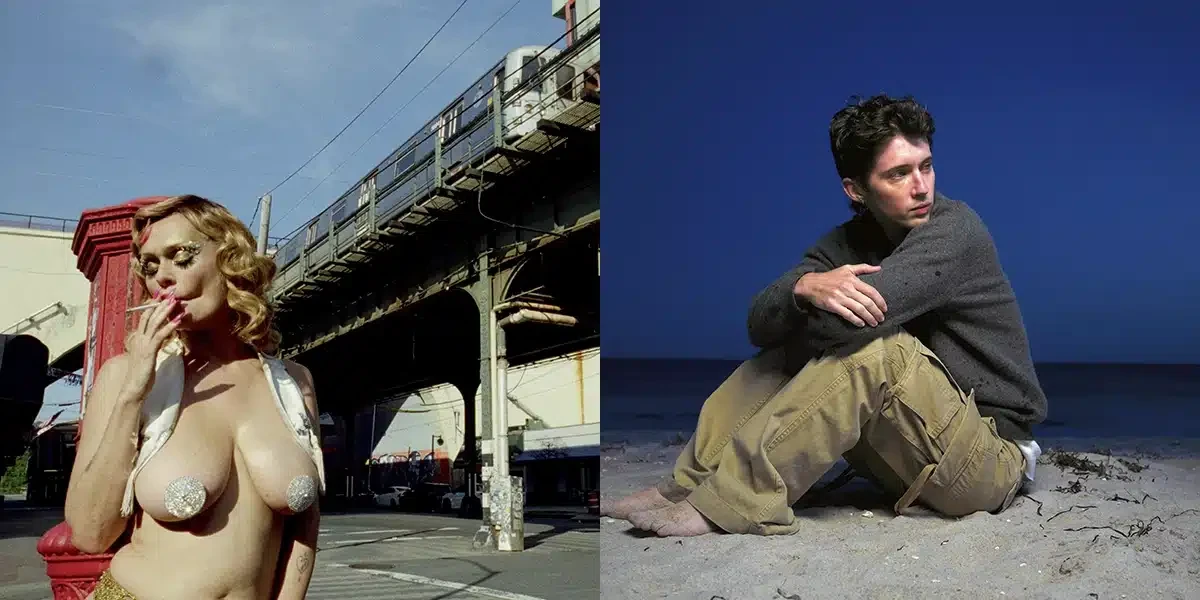
The rollout of She’s the Best has been defined by a tug-of-war between complete transparency and protective distance. By choosing to omit his own face from the album cover and appearing in drag once again for the "She’s the Best" video, Sivan signals a complex relationship with his own iconography.
Much of the album was written alongside longtime creative collaborator Leland, functioning effectively as a vlog of Sivan’s past few years with the camera selectively switched off. In interviews regarding the project, Sivan has emphasized the therapeutic necessity of scaling back:
"You spend so much time chasing the biggest room, the loudest drop, the brightest lights," Sivan reflected during his press cycle. "At a certain point, you realize the noise is just drowning out the very things you started writing songs to figure out in the first place. This record isn’t about being the life of the party; it’s about what happens when you finally go home, close the door, and have to sit with yourself."
This conscious retreat to domesticity is mirrored in the lyrics. Half of the album’s tracks explicitly reference homes and houses, or take place entirely within them. Even when indulging his horniest impulses, Sivan’s wordplay craves structural permanence, describing his relationship with his partner as "concrete and steel, like some real architecture."
Future Outlook: What’s Next for the Indie Pop Icon?
As Troye Sivan enters his second decade in the contemporary pop canon, She’s the Best proves that his artistic instincts remain sharp, even when his conceptual choices occasionally stumble.
When the album breaks free from conventional pop formulas, it soars as a vibrant bricolage of Y2K sonics. It is a world where midtempo textures mingle effortlessly—where Troye Sivan’s distinct Australian drawl sits comfortably beside a French monologue delivered by Lily-Rose Depp.
The rollout may have confounded critics expecting a direct sequel to his last commercial peak, but She’s the Best ultimately succeeds by doing what Sivan does best: inviting listeners past the velvet rope and back into his bedroom. Whether he is wrestling with the ghosts of gay loneliness, critiquing the exhausting metrics of modern dating, or seeking sanctuary in the quiet architecture of domestic life, Sivan remains an essential architect of modern pop. He may be keeping us slightly more at arm’s length this time around, but his ability to translate private vulnerability into lasting cultural artifacts remains entirely undiminished.


Belum ada komentar. Jadilah yang pertama berkomentar!