Published by CINRA Editorial Team | October 21, 2026 Featured Program: NHK’s "Close-Up Gendai" (Aired October 27, 2026)
Executive Overview
For centuries, humanity has stood apart from the rest of the natural world, operating under the comforting assumption that sophisticated, complex language is an exclusively human trait. While philosophers, poets, and early scientists debated the limits of animal communication, the prevailing scientific consensus maintained a rigid boundary: animals may express emotion, signal danger, or coordinate basic survival tasks, but they do not possess a true, structured syntax.
Now, that foundational barrier is crumbling.
In a world increasingly shaped by advanced artificial intelligence, machine learning, and rapid technological decoding of non-human signals, cognitive ethology is undergoing a quiet revolution. At the epicenter of this paradigm shift is Dr. Toshitaka Suzuki, a pioneering animal linguist who has achieved what was once thought impossible: decoding the grammatical rules and compositional syntax embedded within bird calls.
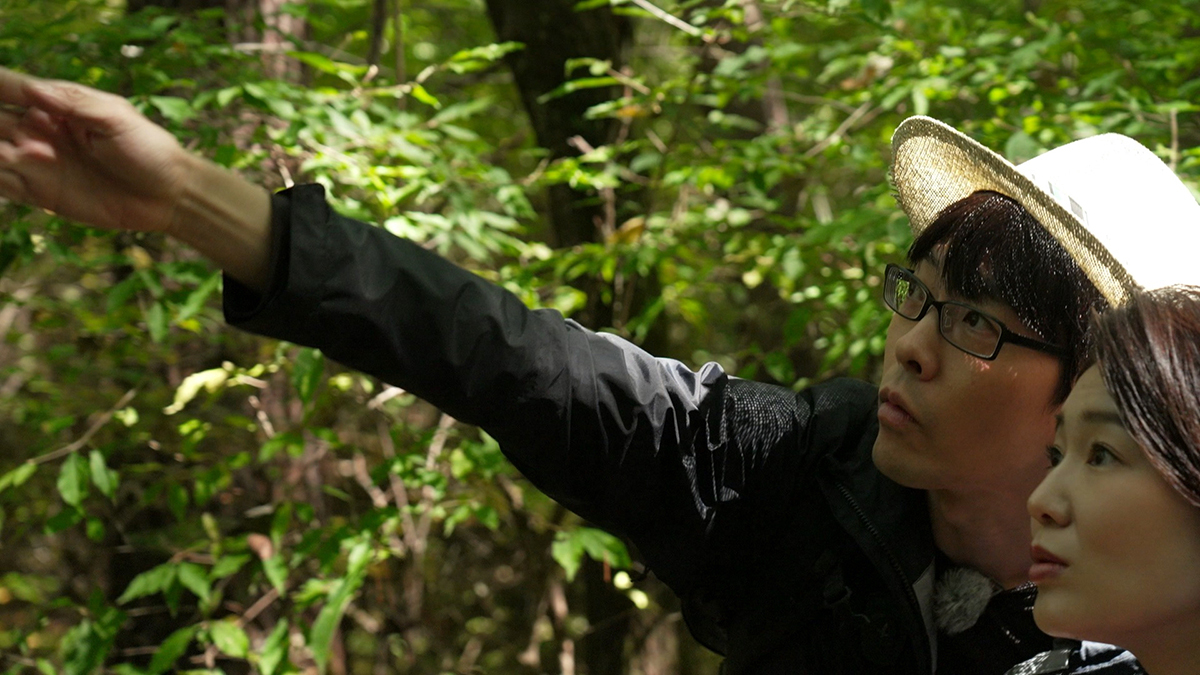
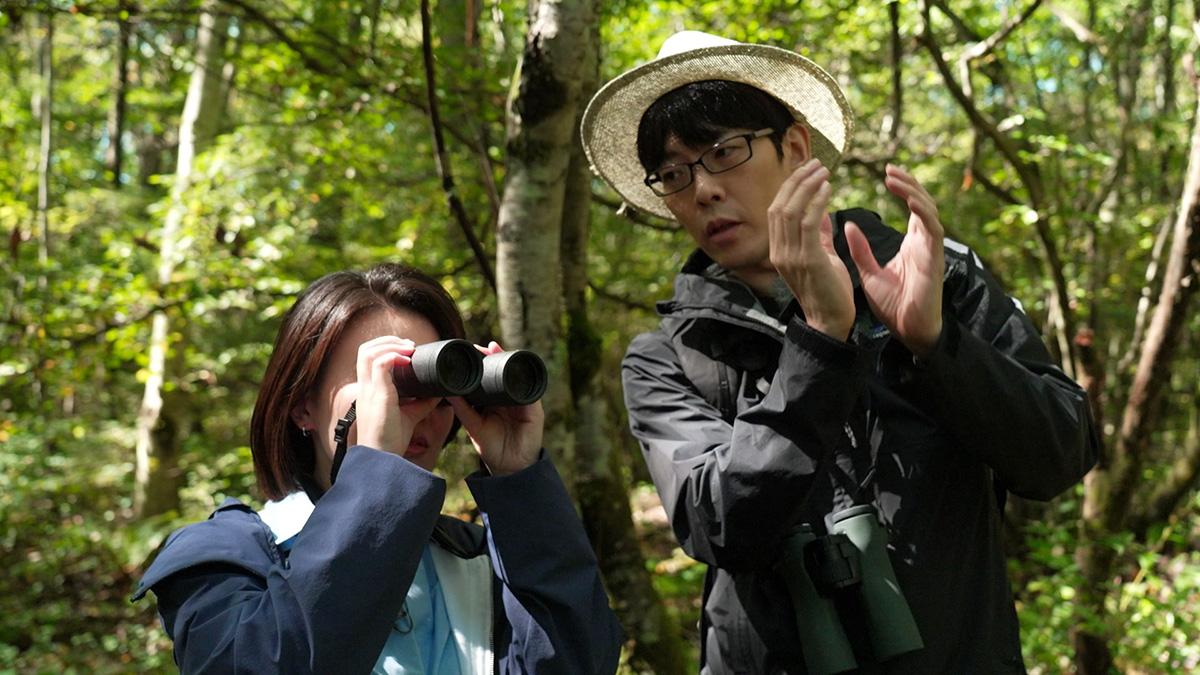
On October 27, 2026, NHK’s acclaimed investigative current affairs program, Close-Up Gendai, dedicated a major broadcast to Dr. Suzuki’s revolutionary research. The episode explores how birds utilize sophisticated combinations of distinct vocalizations, effectively "talking" and conveying contextual information in ways that mirror human language architecture. This article provides an in-depth look at Dr. Suzuki’s methodologies, the broader implications of animal linguistics in the twenty-first century, and what these discoveries mean for our understanding of evolution and animal sentience.
The Paradigm Shift: From Simple Signaling to Complex Syntax
To understand the magnitude of Dr. Toshitaka Suzuki’s work, one must first grasp the historical limitations of animal communication research. Traditionally, behavioral biologists categorized animal sounds—such as the warning cries of vervet monkeys or the alarm calls of various ground-nesting birds—as holistic signals. These were viewed as emotional readouts of immediate internal states: “Danger from above” or “Danger from below.”
While these signals effectively convey urgency, they were not traditionally considered "language" because they lacked compositionality—the principle that smaller units of meaning (words or morphemes) can be combined in rule-bound ways to generate entirely new, complex meanings (sentences).
Dr. Suzuki’s research completely shatters this traditional dichotomy. By closely observing and experimentally manipulating the vocalizations of specific avian species—most notably the Japanese tit (Parus minor)—he and his team discovered that birds do not merely emit random strings of alarm notes. Instead, they arrange different vocal elements in a precise, rule-governed sequence.
When a Japanese tit encounters a predator, it combines a note meaning “look” with another note meaning “approach.” When heard in this specific sequential order, other members of the flock instantly understand the instruction: they look for the predator and approach the caller, effectively orchestrating a coordinated defensive maneuver. If the notes are experimentally scrambled, the birds fail to react in the same coordinated fashion, proving that the syntax—the order of the "words"—carries the semantic weight.
Detailed Chronology: How Dr. Suzuki Decoded "Bird Language"
The journey to decoding the avian lexicon was neither quick nor straightforward. It required decades of meticulous field observations, controlled playback experiments, and rigorous linguistic analysis.
1. The Early Years of Observation
Long before mainstream media caught up to his discoveries, Dr. Suzuki spent countless hours in dense forests, recording the subtle vocal nuances of passerine birds. While working alongside international evolutionary biologists, he noticed a recurring pattern: birds did not react uniformly to all predator alarms. A snake sighting elicited a vastly different behavioral response than an aerial predator like a hawk or a shrike.
2. Formulating the Hypothesis of Compositional Syntax
By the mid-2010s, Dr. Suzuki hypothesized that avian vocalizations were far more modular than previously assumed. He suspected that individual notes functioned analogously to human phonemes or lexical roots. To test this, he designed a series of innovative playback experiments in natural habitats.
3. The Controlled Playback Experiments
Dr. Suzuki broadcasted artificially manipulated bird calls through hidden speakers to wild flocks of Japanese tits. By altering the sequence of the notes—reversing elements that naturally occurred as [Note A] + [Note B] into [Note B] + [Note A]—he observed the immediate downstream effects on flock behavior.
Correct Sequence ([A] + [B]): Flocks exhibited dual-action behavior, scanning the environment while simultaneously gathering around the caller.
Scrambled Sequence ([B] + [A]): Flocks showed confusion or ignored the broadcast entirely.
These empirical results provided the first definitive proof of syntax in non-human animals, establishing that birds possess a rudimentary form of grammar.
4. The NHK Close-Up Gendai Special (October 2026)
Culminating years of academic peer review and international acclaim, NHK’s Close-Up Gendai broadcasted a dedicated feature on October 27, 2026. The program brought Dr. Suzuki’s field techniques into millions of living rooms, demonstrating how modern technological audio analysis allows researchers to visualize sound waves, isolate specific morphemes, and map out the cognitive architecture of avian minds.
Supporting Context & Metrics: The Intersection of Biology and AI
The timing of Dr. Suzuki’s breakthroughs is deeply intertwined with broader technological trends in the mid-2020s. As artificial intelligence models become increasingly adept at pattern recognition, bioacoustics researchers are leveraging machine learning to process massive datasets of animal vocalizations.
Research Dimension
Traditional Ethology (Pre-2010s)
Modern Animal Linguistics (2026)
Core Assumption
Animal sounds are emotional reflexes or fixed action patterns.
Animal sounds can possess compositional syntax and rule-based grammar.
Analysis Method
Manual spectrogram reading and direct field observation.
Passerine birds (e.g., Japanese tits), rodents, and various avian families.
Semantic Depth
Single-variable warnings (e.g., "Run!").
Multi-variable instructions (e.g., "Look and approach").
As noted in recent scientific literature highlighted by Close-Up Gendai, the integration of AI into bioacoustics has reduced the time required to analyze complex vocal repertoires from years to mere weeks. Automated microphone arrays placed deep within forests now capture continuous audio streams, allowing algorithms to flag novel syntactical combinations that human researchers might otherwise miss.
Official Statements and Academic Implications
The academic community has widely praised Dr. Suzuki’s findings, viewing them as a vital bridge between linguistics, evolutionary psychology, and animal welfare science.
During the NHK broadcast, participating ethologists emphasized that understanding animal language forces a profound ethical reckoning. If birds and other animals possess sophisticated mental representations, intentional communication, and grammatical structures, our legal, moral, and ecological frameworks must evolve accordingly.
"We are no longer asking whether animals communicate," noted one leading bioacoustics expert during the program’s roundtable discussion. "We are now forced to ask how much of their internal mental landscape we have been blind to simply because we lacked the tools—and the humility—to listen properly."
Furthermore, evolutionary biologists are revisiting long-held theories regarding the origins of human language. For decades, human language was treated as a sudden evolutionary mutation—a miraculous cognitive leap with no precursors in the animal kingdom. Dr. Suzuki’s work suggests an alternative narrative: the foundational building blocks of syntax—combining distinct vocal units to create novel meanings—may have ancient evolutionary roots that predate the divergence of humans and birds by hundreds of millions of years.
Future Outlook: What Lies Ahead for Animal Linguistics?
As the research moves past its initial exploratory phase, the field of animal linguistics stands on the brink of commercial and scientific transformation.
Decoding Other Species: Buoyed by the success of avian linguistics, researchers are currently deploying similar AI-driven playback methodologies to study cetaceans (whales and dolphins), bats, and non-human primates.
Conservation Impact: Understanding the specific communication networks of endangered species offers profound conservation benefits. By monitoring vocal stress, territorial disputes, and mating dialects through automated acoustic sensors, wildlife managers can assess ecosystem health in real-time without disrupting natural habitats.
Redefining Sentience and Ethics: As science continues to dismantle the intellectual wall separating humanity from the animal kingdom, society is prompted to re-evaluate industrial farming, wildlife management, and urban expansion. Recognizing that the creatures outside our windows possess rich inner lives and structured languages transforms our relationship with nature from one of detached observation to one of empathetic coexistence.
The broadcast of Close-Up Gendai on October 27, 2026, served as a cultural watershed. Dr. Toshitaka Suzuki has not only rewritten textbooks on animal behavior; he has forever changed how humanity listens to the world around us. The next time you hear a chorus of birds outside your window, remember: they aren’t just making noise—they are talking.















Belum ada komentar. Jadilah yang pertama berkomentar!