

Executive Overview
As the global race to electrify the future collides with the exponential energy demands of artificial intelligence, data centers, and advanced manufacturing, the energy transition has reached a critical inflection point. While Big Tech and grid operators have historically leaned on natural gas and intermittent renewables to power their soaring computing footprints, a new contender is rapidly emerging from the shadows: enhanced geothermal systems (EGS). Leading this charge is Mazama Energy, an advanced geothermal startup that has just announced a massive $135 million oversubscribed Series B financing round.
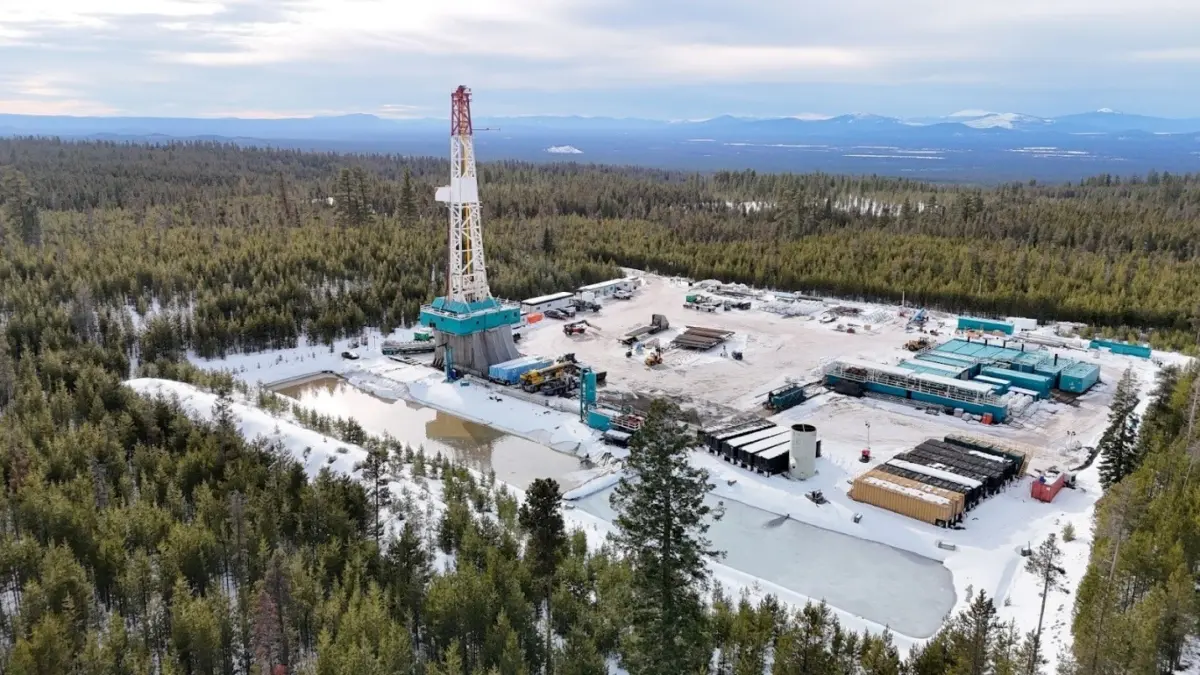
This fresh capital infusion is not merely a milestone for a venture-backed enterprise; it represents a profound vote of confidence in a technological paradigm shift. Mazama is pioneering the commercialization of horizontal drilling techniques engineered to penetrate super-hot rock formations deep beneath the Earth’s crust. By accessing extreme subterranean temperatures—reaching up to 750°F (400°C)—the company aims to generate 15 megawatts (MW) of electricity from a single well. This is an order of magnitude higher than the output of traditional geothermal assets.
The implications for the grid are staggering. With its flagship site in Oregon now projected to hold an astonishing 10 gigawatts (GW) of total generation potential—a sharp upward revision from previous estimates of 5 GW—Mazama is positioning itself as a primary supplier of continuous, 24/7 carbon-free baseload power. Backed by an elite syndicate of traditional energy giants, climate-focused venture capitalists, and prominent institutional investors, Mazama’s recent funding underscores a broader industrial realization: if society is to power the next generation of computing without destabilizing the climate, the solution may lie not in the sky, but thousands of feet beneath our feet.
Detailed Chronology & Financial Evolution
The trajectory of Mazama Energy mirrors the rapid maturation of the next-generation geothermal sector, transitioning from academic concept and stealth-mode incubation to a heavily capitalized industrial player.
Incubation and Early Validation
Mazama was originally incubated within the halls of Khosla Ventures, one of Silicon Valley’s most aggressive backers of transformative climate technologies. From its inception, the startup focused on overcoming the historical limitations of geothermal energy. Traditional geothermal plants have long been geographically constrained to locations where hot water naturally pools near the surface, often near volcanic fault lines. This geographic bottleneck limited geothermal to a niche energy source, unable to scale globally.
Mazama’s founders realized that by borrowing sophisticated drilling and fracturing techniques from the oil and gas industry—specifically directional and horizontal drilling—they could unlock heat virtually anywhere on Earth if they went deep enough. Last year, the startup made headlines when venture capitalist Vinod Khosla highlighted its premier Oregon development site as holding the potential to generate 5 gigawatts of electricity. At the time, the claim was viewed by traditional energy analysts as audacious, yet it laid the groundwork for the company’s subsequent technological validation and aggressive land-acquisition strategy.
The Oversubscribed Series B Milestone
Building on its early drilling successes, Mazama formally announced its $135 million Series B funding round on Thursday. The round was co-led by Centaurus Capital and Doerr Capital, signaling strong financial backing from institutional investors with deep expertise in energy markets.
Crucially, the round also attracted strategic investments from oil and gas titans ConocoPhillips and Shell Ventures. The participation of legacy fossil-fuel majors highlights a growing industry consensus: the subsurface engineering, drilling logistics, and reservoir management expertise perfected by the petroleum sector are directly transferable to super-hot rock geothermal development.
Furthermore, the round saw robust participation from existing investors, including Khosla Ventures and Gates Frontier, alongside a cohort of new financial backers such as SiteGround Capital, H. Barton Asset Management, and the Jeffrey and Marieke Rothschild Foundation. This diverse capitalization table illustrates a rare convergence of Silicon Valley tech wealth, climate philanthropy, and traditional energy capital, all galvanized behind a single technological thesis.
The Technology: Tapping Supercritical Fluids in Super-Hot Rocks
To understand why investors are pouring hundreds of millions of dollars into Mazama Energy, one must examine the physics of super-hot rock (SHR) geothermal and the engineering breakthroughs that make it possible.
Drilling Deeper, Faster, and Hotter
Traditional geothermal energy relies on hydrothermal resources, tapping naturally occurring underground reservoirs of hot water and steam. Enhanced Geothermal Systems (EGS) go a step further by artificially creating permeable reservoirs in hot, dry rock where fluids can be injected, heated, and pumped back to the surface.
Mazama, however, is pushing past standard EGS thresholds into the realm of super-hot rock. While standard geothermal wells typically target depths of 5,000 to 8,000 feet, Mazama’s engineering teams are pushing past 10,000 feet with remarkable velocity—completing that depth in just 15 days on their way to terminal targets of approximately 15,000 feet.
At these extreme depths, temperatures soar to 750°F (400°C) or higher. Under the immense pressure found at 15,000 feet, water injected into these formations undergoes a phase transition, entering a "supercritical" state.
The Supercritical Advantage
A supercritical fluid is neither entirely liquid nor entirely gas; it exhibits properties of both. In this state, the fluid possesses an immensely high thermal energy density—enabling it to absorb far more heat energy than ordinary steam or liquid water.
According to technical models validated by Mazama and independent researchers, this supercritical state allows each individual well to produce up to ten times more power than wells deployed using traditional geothermal technologies. Instead of fractional megawatts, a single Mazama well is engineered to yield a staggering 15 megawatts of electricity.
The global potential of this resource is practically boundless. Research conducted by the University of Twente and the Clean Air Task Force indicates that if humanity were to successfully tap into a mere 1% of the super-hot rock located worldwide, it could unlock more than 63 terawatts of continuous electricity—vastly exceeding total global energy demand.
Supporting Context & Metrics: Powering the AI Boom
The surge in interest surrounding advanced geothermal is not occurring in a vacuum. It is being violently accelerated by the structural power deficits facing modern electrical grids.
The Data Center Energy Crisis
The explosive growth of generative artificial intelligence, cloud computing, and hyperscale data centers has created an unprecedented surge in electricity demand. Tech giants who once prided themselves on 100% renewable energy commitments are finding themselves forced to reckon with the intermittency of wind and solar. Because data centers require relentless, 24/7 baseload power to train large language models and process server transactions, many tech companies have pivoted toward natural gas as an interim bridge solution.
However, natural gas creates carbon emissions that run counter to corporate climate targets. Nuclear energy is viewed as a long-term alternative, but regulatory hurdles, long construction timelines, and complex supply chains have stymied rapid deployment.
This is where enhanced geothermal enters as the ultimate "dark horse" of the energy transition. Unlike solar or wind, geothermal energy is entirely decoupled from weather patterns and the sun’s diurnal cycle. It runs continuously, rain or shine, day or night. And unlike traditional geothermal, which is geographically restricted, super-hot rock technology theoretically allows geothermal power plants to be built anywhere on the planet, provided engineers can drill deep enough.
Scaling the Infrastructure
Mazama’s strategic roadmap reflects the urgency of meeting this demand. While development at its primary Oregon site remains in its early, high-precision phases, the startup has already moved to secure land for a secondary development site to de-risk its portfolio.
The company has outlined a clear timeline for commercial scaling:
- 2026: Mazama plans to begin initial electricity generation at its flagship Oregon location.
- 2030: The company aims to complete the full buildout of its first site, scaling generation capacity to 200 megawatts of clean baseload power.
- Long-Term Outlook: With the site’s total potential now estimated at a massive 10 gigawatts—doubling initial estimates from just a year ago—the Oregon location alone could eventually power millions of homes or dozens of hyperscale AI data center campuses.
Official Statements & Industry Perspectives
The convergence of venture capital, heavy industry, and climate advocacy around Mazama’s latest funding round underscores the cross-sector importance of the technology.
Industry analysts and participating investors have increasingly pointed to the synergy between oil and gas drilling innovations and geothermal extraction. By leveraging directional drilling rigs, high-temperature downhole sensors, and advanced seismic imaging developed over decades by petroleum engineers, startups like Mazama are bypassing the protracted R&D cycles that typically plague hard-tech startups.
Furthermore, advocacy groups such as the Clean Air Task Force have championed super-hot rock geothermal as the sleeping giant of global decarbonization. By treating the Earth’s crust as an infinite, rechargeable thermal battery, humanity can fundamentally alter its relationship with energy extraction.
While Mazama’s leadership and its roster of blue-chip investors—ranging from Khosla Ventures and Gates Frontier to Shell Ventures and ConocoPhillips—have maintained a focused operational posture, the message from the market is clear: the technology works on paper, and capital markets are eager to see it proven in the field.
Future Outlook: The Road Ahead for Super-Hot Rock
As Mazama Energy deploys its newly secured $135 million Series B war chest, the company faces both immense opportunity and formidable engineering challenges.
Overcoming Subsurface Hurdles
Drilling through 15,000 feet of hard, crystalline rock at 750°F is an extreme test of materials science and mechanical engineering. Drill bits wear down rapidly at those temperatures, electronic measurement-while-drilling (MWD) tools fail in intense heat, and managing the fluid dynamics of supercritical fluids requires surgical precision.
However, the participation of heavyweights like ConocoPhillips and Shell in the funding round brings invaluable operational expertise to the table. These corporations have spent decades mastering the art of extreme subsurface extraction; applying that institutional knowledge to geothermal reservoirs could compress timelines significantly.
A Paradigm Shift for the Grid
If Mazama successfully hits its milestones—beginning electricity generation next year and scaling its Oregon asset toward its 200 MW medium-term and 10 GW long-term targets—it will validate super-hot rock geothermal as a commercially viable, scalable asset class.
For a power grid straining under the weight of electrification, industrial reshoring, and the insatiable energy demands of artificial intelligence, Mazama Energy’s subterranean ambitions offer a compelling glimpse into the future. By plumbing the deepest reaches of the Earth’s thermal engine, the startup is not just chasing venture returns—it is helping lay the foundation for a truly resilient, 24/7 carbon-free energy economy.








Belum ada komentar. Jadilah yang pertama berkomentar!