As the crisp autumn winds sweep across the Kansai and Chubu regions of Japan, a dramatic seasonal transformation unfolds high above Mie Prefecture. At Mount Gozaisho (Mt. Gozaisho), towering 1,212 meters above sea level, autumn does not merely arrive—it cascades down the slopes in a vivid, rolling wave of crimson, amber, and gold. Because of its significant elevation, the mountain experiences an accelerated seasonal shift, welcoming its premier fall foliage as early as late October, well ahead of the lowland urban centers of Nagoya and Osaka.
Easily accessible as a day trip or an extended weekend getaway from Japan’s major metropolitan hubs, Mt. Gozaisho has long cemented its status as a premier leaf-peeping destination. However, the modern visitor experience extends far beyond traditional foliage viewing. Recent infrastructural additions, such as the newly inaugurated "COCORRU Terrace"—complete with a high-altitude thrill swing—alongside comprehensive culinary offerings at the summit, have elevated Mt. Gozaisho into a multifaceted alpine resort.
This comprehensive report examines the chronological progression of the mountain’s autumn foliage, the underlying botanical and meteorological catalysts driving the phenomenon, logistical strategies to navigate peak-season congestion, and the broader economic and tourism impacts of recent developments on the region.
Detailed Chronology of the Autumn Foliage Front
The progression of autumn colors on Mt. Gozaisho is a dynamic, multi-stage event that spans from mid-October through late November. Understanding this precise timeline is essential for travelers seeking to capture the landscape at its absolute visual zenith.
Phase 1: The Summit Ignition (Mid-to-Late October)
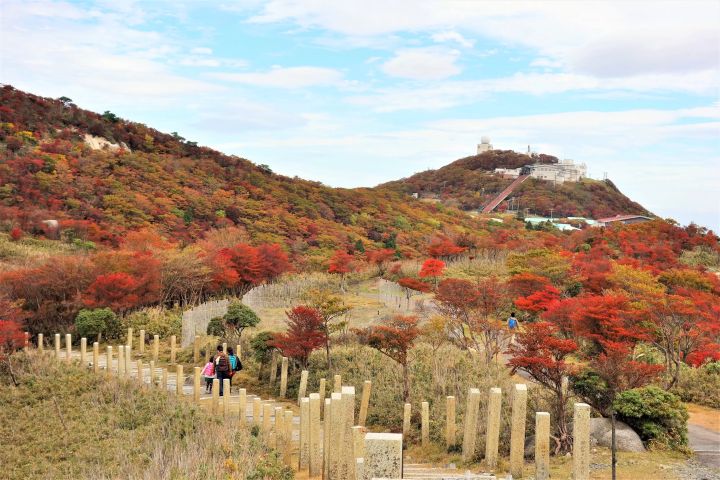
The seasonal transition initiates at the highest altitudes of Summit Park around October 20th. At this elevation, the vanguard of the autumn color front is led by the mountain’s prolific Ericaceae (heath) family of plants. Red azaleas, white azaleas, and Enkianthus campanulata (weigela/redvein enkianthus) blanket the alpine park, shifting the native flora into a deep, saturated crimson.
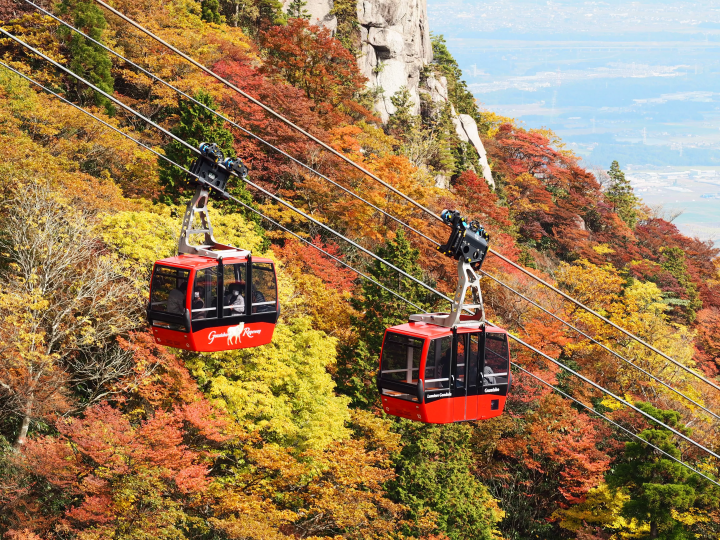
Visitors utilizing the Gozaisho Ropeway during this window are greeted by sweeping vistas of Mie Prefecture’s urban grid stretching toward the distant Japanese Alps. The high-altitude air is remarkably crisp, offering exceptional visibility that accentuates the contrast between the green lowlands and the burning reds of the peak.
Phase 2: The Lift-Line Corridor and Rocky Slopes (Late October)
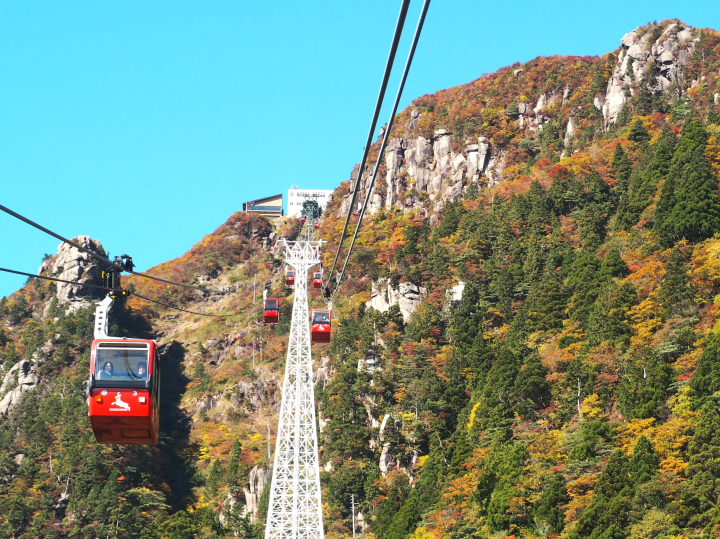
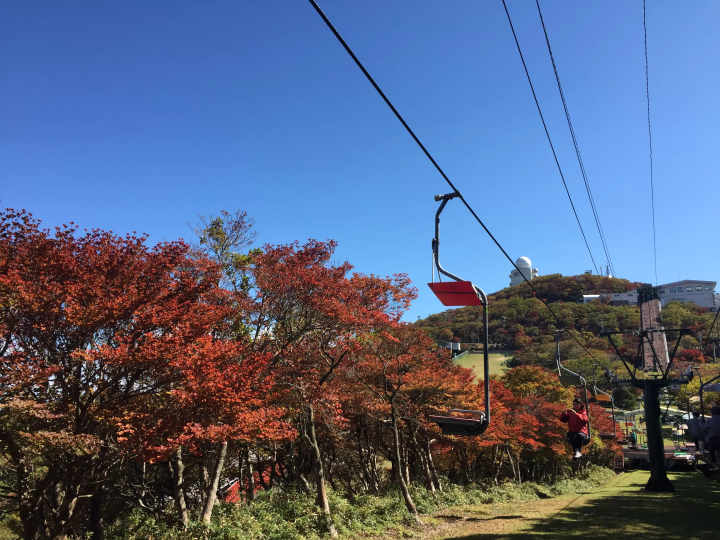
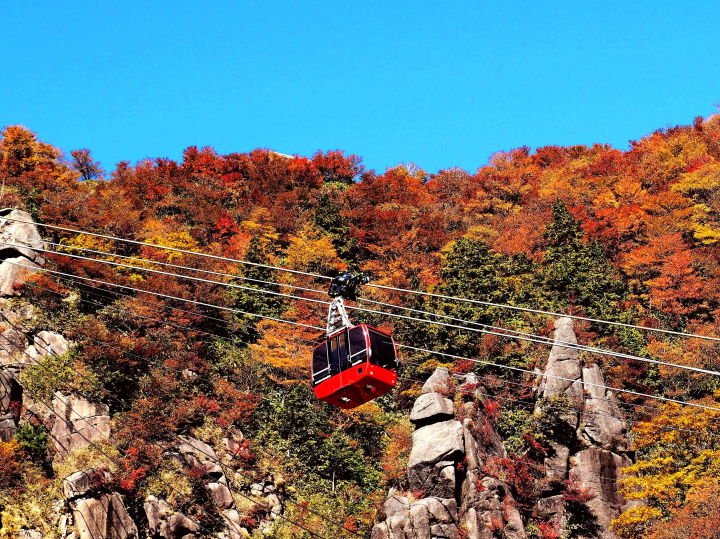
By late October, the color front begins its descent toward the mid-mountain zones. The rocky slopes surrounding the ropeway’s mountaintop park station burst into a dynamic palette of ochre and rust.
During this phase, the sightseeing lift—a single-seater cabin system traversing a 500-meter span in approximately eight minutes—becomes an essential vantage point. The lift line cuts directly through dense colonies of native azaleas, offering passengers an immersive, low-speed glide just inches above a sea of turning leaves.
Phase 3: The Tapestry of Tower No. 6 (Early-to-Mid November)
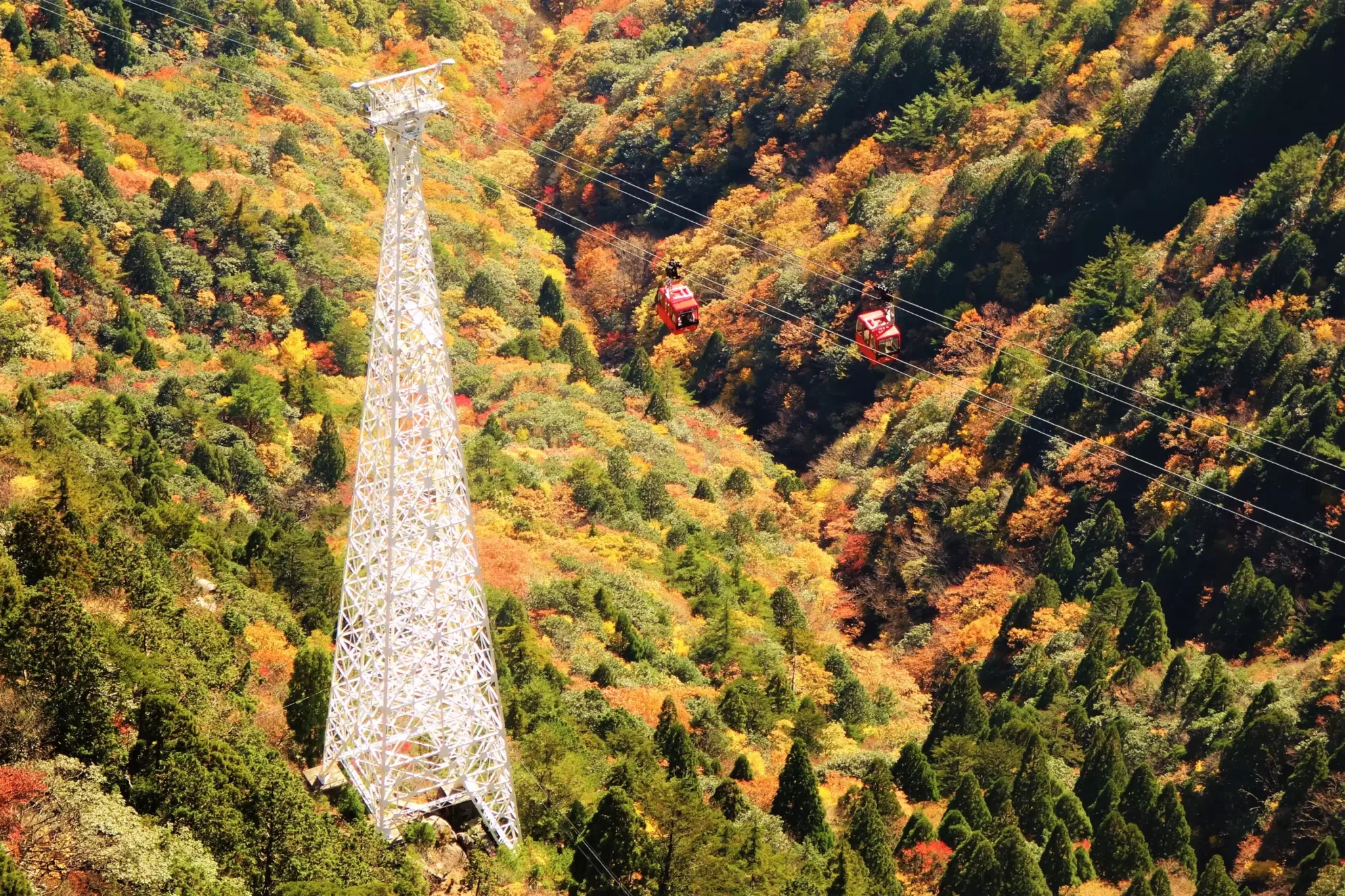
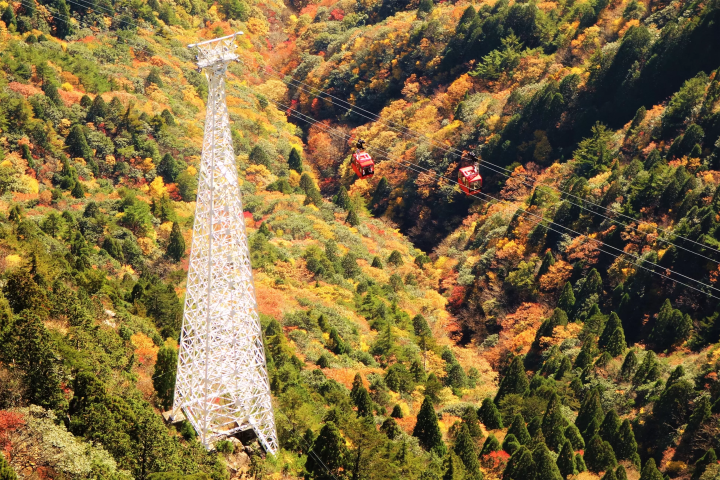
Entering November, the foliage front marches further down the mountain flanks, enveloping the deep ravines and valleys. A focal point of this period is the area surrounding "Tower No. 6," the iconic symbol tower of the Gozaisho Ropeway.
Here, the complex topography of the valley creates a natural mixing ground for maples, beeches, and various deciduous species. The resulting landscape resembles a woven brocade or tapestry, with contrasting patches of golden yellow, burnt orange, and deep scarlet clinging to the steep cliff faces and ravines.
Phase 4: The Lowland Finale at Yunoyama Onsen (Late November)
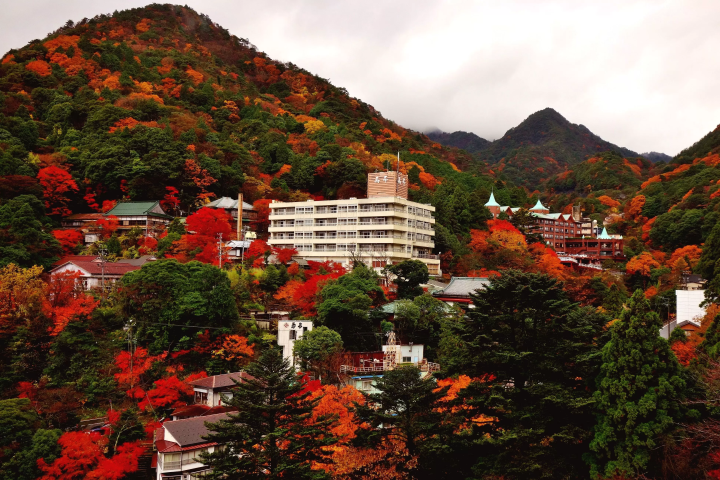
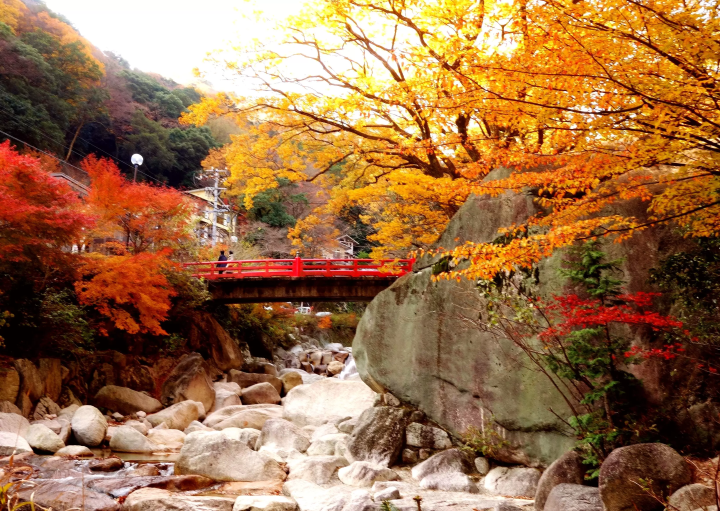
The seasonal cycle culminates in late November at the base of the mountain within the historic hot spring town of Yunoyama Onsen. Fed by clear mountain streams, the avenue of mature maple trees lining the riverbanks ignites in brilliant shades of red and amber. This final phase transforms the rustic onsen town into a magical, illuminated evening retreat, offering visitors the quintessential Japanese autumn experience of soaking in outdoor hot springs (onsen) while surrounded by falling leaves.
Supporting Context, Botanical Science, and Metrics
The early and intense coloration of Mt. Gozaisho’s foliage is not merely a scenic luxury; it is the direct result of specific alpine botany and regional meteorology.
The Science of Alpine Anthocyanin Production
The vivid crimson tones dominant at the summit are primarily driven by the production of anthocyanin pigments. Botanically, these pigments are synthesized in the leaves during autumn as a protective mechanism. When daytime temperatures remain relatively cool and nighttime temperatures drop precipitously—a common meteorological pattern at 1,212 meters—trees begin to restrict the flow of nutrients to the leaves.
As the tree reabsorbs valuable sugars and chlorophyll breaks down, trapped sugars react with sunlight and cold temperatures to synthesize anthocyanins. Because Mt. Gozaisho’s summit experiences a significantly more aggressive thermal drop at night compared to the surrounding plains, this chemical reaction occurs weeks earlier, producing an intensity of red that lowland maples rarely match.
Operational Metrics and Pricing Framework
For travelers planning an ascent, understanding the logistical capacities and fee structures of the mountain’s transit systems is vital:
Fares: 400 yen one-way / 700 yen round-trip (Unified flat rate for all passengers aged 4 and older; infants under 4 are generally restricted or subject to specific safety guidelines).
Official Statements, Recommendations, and Visitor Protocols
Given the extreme popularity of the foliage season, local transit authorities and tourism boards emphasize strict logistical planning to mitigate overcrowding and ensure public safety.
Congestion Mitigation and Transportation Advisory
In official advisory statements issued by regional tourism operators, visitors are heavily cautioned regarding weekend vehicular congestion:
"The autumn foliage season brings a massive influx of visitors to the Yunoyama Onsen and Gozaisho corridors. We strongly recommend visiting on weekdays if schedule flexibility permits. For those arriving on weekends and national holidays, utilizing public rail and bus networks is not merely a convenience—it is an essential strategy to bypass severe traffic bottlenecks and parking lot gridlocks."
Navigating the Transit Network
To ensure a seamless journey from the major commercial centers of Nagoya or Osaka, travelers must adhere to specific routing protocols:
Trunk Line Transit: Whether departing from Nagoya Station or Osaka-Namba/Umeda, passengers must travel via the Kintetsu Railway network, routing directly to Kintetsu Yokkaichi Station. (Travelers are explicitly warned to avoid booking tickets to JR Yokkaichi Station, which is geographically isolated and located a considerable distance from the Kintetsu terminal).
Regional Line Transfer: From Kintetsu Yokkaichi, passengers transfer immediately to the Kintetsu Yunoyama Line, riding it to its western terminus: Yunoyama Onsen Station (a 26-minute journey). The Kintetsu Rail Pass provides an economical, multi-day ticketing option for this segment.
Final Ascent Bus: Upon exiting Yunoyama Onsen Station, transfer immediately to the Mie Kotsu Bus bound for "Yunoyama Onsen Gozaisho Ropeway Mae." The bus transit takes approximately 10 minutes, dropping passengers directly at the ropeway base station. Total transit time from Kintetsu Yokkaichi to the ropeway entrance is roughly 40 minutes under normal operating schedules.
Future Outlook: Modern Enhancements and Hospitality Integration
Mt. Gozaisho is actively redefining its tourism ecosystem to balance natural preservation with modern traveler expectations. The introduction of new infrastructure signals a strategic shift toward experiential, photogenic alpine tourism.
The COCORRU Terrace and Summit Innovations
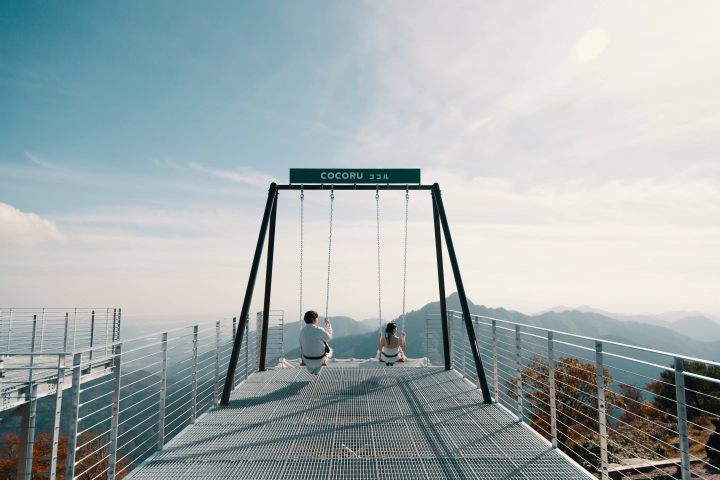
Opened on October 31, 2025, the "COCORRU Terrace" at the Gozaisho-dake Mountain Park represents a major milestone in the destination’s modern evolution. Designed as an observation and lifestyle hub, the terrace frames sweeping vistas of the Ise-Shima region, bridging the gap between alpine elevations and coastal horizons.
A primary draw of the terrace is its integrated high-altitude swing, engineered to provide visitors with a controlled sense of flight over the steep mountain drops. This installation has rapidly become a viral fixture across social media platforms, driving a younger demographic of domestic and international travelers to the peak.
Culinary Tourism: The "Nature" Restaurant
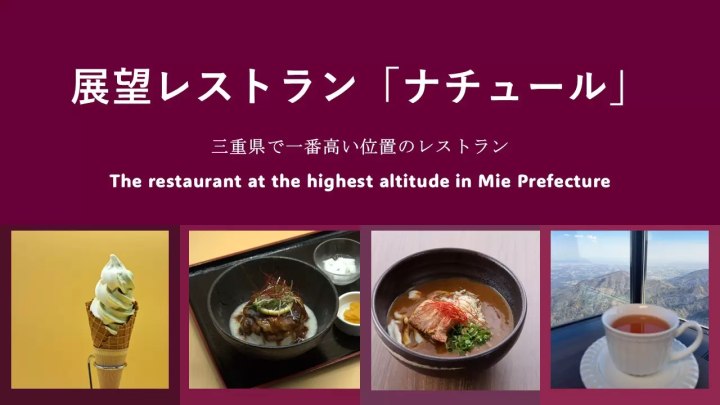
Complementing the visual and physical thrills of the mountain is the summit restaurant, "Nature." Moving beyond standard cafeteria fare, Nature offers a curated menu featuring regional specialties—most notably the celebrated Gozaisho Curry Udon, a rich, warming noodle dish specifically formulated to combat high-altitude mountain chills. Seasonal sweets and locally sourced café menus further anchor the restaurant as an essential resting point for hikers and casual sightseers alike.
Accommodation and Regional Base Camps
To accommodate extended stays and multi-day explorations of Mie Prefecture, hospitality infrastructure at the base has likewise adapted. Properties such as the Sanko Inn Yokkaichi Ekimae, located directly adjacent to Kintetsu Yokkaichi Station, serve as strategic staging grounds. By offering immediate rail connectivity not only to the Gozaisho Ropeway but also onward to Nagoya, Ise Grand Shrine, and Toba, such hotels facilitate a comprehensive regional itinerary.
As Mt. Gozaisho continues to blend its century-old natural legacy with contemporary visitor amenities, it remains an indispensable jewel in Japan’s autumn tourism landscape—proving that the pursuit of the ultimate fall foliage can be as exhilarating as the destination itself.











Belum ada komentar. Jadilah yang pertama berkomentar!