

Executive Overview
The ecosystem for Apple’s spatial computing headset is undergoing a massive evolutionary leap. While the Apple Vision Pro has firmly established itself as a premier device for media consumption—buoyed by the rapid expansion of Apple Immersive Video and iterative software updates—its gaming library has historically remained constrained by native visionOS availability. That paradigm is shifting dramatically. Valve has officially announced the rollout of a native Steam Link application for visionOS, entering public beta testing via TestFlight.
This development bridges the gap between Apple’s high-end hardware and PC gaming’s most dominant digital distribution platform. Users can now stream titles directly from their host PC or Mac into a sprawling, adjustable virtual display inside the Vision Pro environment. While the initial release focuses strictly on 2D gaming rather than native virtual reality (VR) streaming, the integration marks a watershed moment for the headset’s utility. By unlocking access to vast desktop game libraries, Valve and Apple are providing a powerful new incentive for gamers to integrate the Vision Pro into their daily entertainment routines. This report examines the mechanics of the new beta, technical specifications, user implications, and the broader strategic outlook for gaming in the spatial era.
Detailed Chronology
To understand how Steam Link arrived on visionOS, it is essential to trace the recent timeline of spatial computing upgrades and Valve’s cross-platform expansion strategy.
The Foundation: Vision Pro and visionOS Iterations
Since its high-profile launch, the Apple Vision Pro has received continuous software refinement. Apple recognized early on that for a mixed-reality headset to transcend the "productivity-only" label, it needed robust entertainment capabilities.
- Early 2024–2025: The platform gained traction primarily through streaming apps, remote desktop solutions, and native casual games. However, hardcore gamers desired deeper integration with traditional desktop ecosystems.
- March 2026: Apple released visionOS 26.4, introducing critical performance optimizations, improved Bluetooth peripheral handling, and lower-latency graphics rendering pipelines. These under-the-hood updates laid the groundwork for high-framerate streaming applications. Simultaneously, Apple Immersive Video expanded its catalog—most notably with high-profile projects like NASA’s Artemis II launch coverage—proving the hardware’s capability to handle massive, high-bandwidth media streams seamlessly.
Valve’s Multi-Platform Push
Valve has spent years expanding the reach of Steam Link beyond traditional desktop environments. Initially launched as a hardware streaming box, Steam Link transitioned into a software-based solution available across smart TVs, mobile phones, tablets, and media streaming devices like Apple TV and Mac.
- April 2026: Valve turned its attention to spatial computing. Recognizing the immersive potential of virtual displays inside headsets like the Vision Pro, Valve developers engineered a dedicated, native visionOS client.
- Current Status: The application has bypassed internal testing and is now publicly accessible via Apple’s TestFlight program, allowing early adopters and enthusiasts to stress-test the streaming architecture under real-world network conditions.
Supporting Context & Metrics: Technical Specifications and Limitations
The integration of Steam Link into visionOS is not merely a port of an existing app; it has been optimized to leverage the unique hardware and software architecture of the Apple Vision Pro.
Performance and Display Enhancements
According to official release notes from Valve’s development team, the native visionOS client introduces several advanced streaming capabilities designed specifically for high-end spatial displays:
- Up to 4K Resolution Streaming: The app supports ultra-high-definition streaming, ensuring that text-heavy UI elements in strategy games and intricate textures in modern action titles remain razor-sharp when scaled across a massive virtual monitor.
- Enhanced Network Performance: Utilizing low-latency networking protocols, the client minimizes input lag—a critical factor for competitive or fast-paced gaming where milliseconds matter.
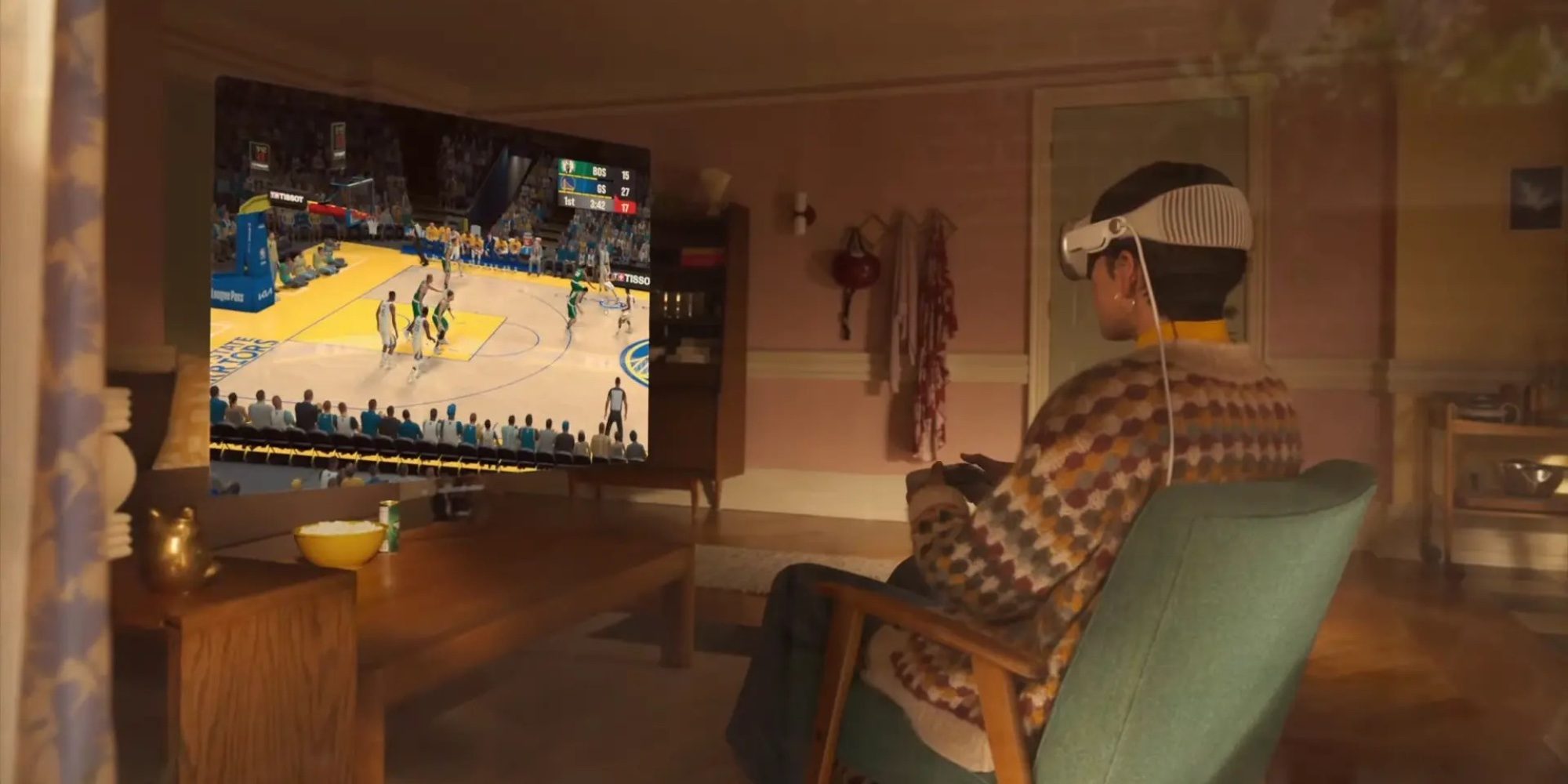
- Dynamic Curved Displays: One of the standout features of the visionOS implementation is the ability to dynamically adjust the curvature of the display in panoramic mode. Users can wrap their virtual gaming monitor around their field of view, creating an IMAX-style theater experience for traditional flat-screen titles.
The 2D Streaming Constraint
A vital detail for prospective users is the current boundary of the application’s capabilities. The Steam Link visionOS client is strictly engineered for 2D streaming.
- It does not support native SteamVR headsets or stereoscopic 3D VR games out of the box.
- Users cannot play titles designed natively for PC VR headsets (such as Half-Life: Alyx or Beat Saber) through this specific app iteration.
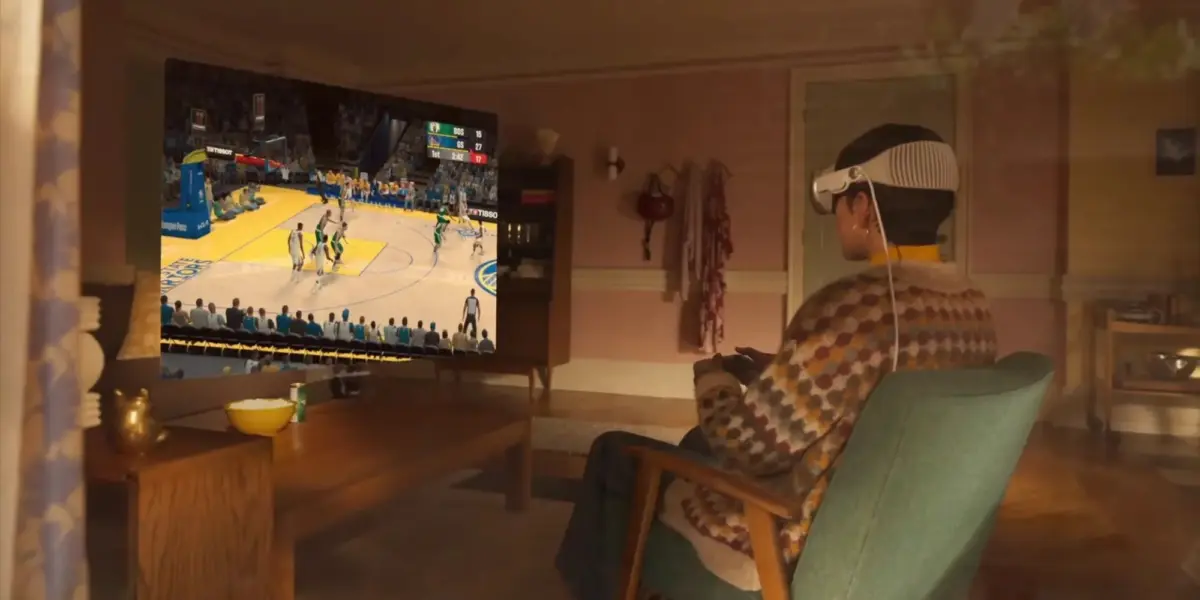
Despite this limitation, the utility of playing standard PC and Mac games on a resizable, floating virtual screen of virtually limitless proportions offers a compelling alternative to traditional physical monitors or televisions. Players can sit on a couch, airplane, or office chair and game on a screen that feels as large as a movie theater projection, all while utilizing standard Bluetooth controllers like the Xbox Wireless Controller, PlayStation DualSense, or keyboard and mouse setups paired to their host computer.

Official Statements and Access Guide
Valve and Apple communities have responded enthusiastically to the announcement. While Apple has largely positioned the Vision Pro as a productivity and spatial media device, third-party developers continue to unlock its entertainment potential.
How to Access the Steam Link Beta on Vision Pro
For users eager to test the boundaries of spatial gaming, Valve has made the beta application available via Apple’s developer distribution platform.
- Prerequisites: Ensure your Apple Vision Pro is updated to the latest version of visionOS, and verify that your host PC or Mac has Steam installed and is running on the same local network (or a stable remote connection).
- TestFlight Enrollment: Users can join the official public beta by accessing the Steam Link TestFlight invitation link directly from their Vision Pro.
- Pairing: Once installed, launch the app inside visionOS, follow the on-screen prompts to pair the headset with your desktop Steam account, and configure your preferred resolution and bitrate settings based on your home network’s Wi-Fi bandwidth.
Future Outlook: What This Means for Spatial Gaming
The arrival of Steam Link on visionOS represents a significant stepping stone for the Apple Vision Pro. While mixed-reality gaming has largely been defined by standalone ecosystems like the Meta Quest store, Apple’s approach relies heavily on high-performance passthrough, massive virtual desktops, and cloud- or local-streamed computing power.

Bridging Traditional and Spatial Platforms
By tapping into the multi-million-user Steam ecosystem, the Vision Pro instantly gains access to an unrivaled backlog of games without requiring developers to build custom, platform-native spatial ports from scratch. This strategy mirrors how the iPad and Mac leverage existing game libraries through compatibility layers and remote streaming.
Looking Ahead
Industry analysts predict that as spatial computing hardware evolves, the boundaries between 2D flat-screen gaming and immersive 3D environments will continue to blur. While today’s Steam Link update is limited to 2D displays, it establishes the network architecture and user-base required for more advanced interactive features down the line. Whether Valve or third-party developers eventually introduce native VR streaming solutions to visionOS remains to be seen, but for now, the ability to stream high-end PC games into a massive, portable virtual theater transforms the Apple Vision Pro into an exponentially more versatile entertainment machine.







Belum ada komentar. Jadilah yang pertama berkomentar!