

Executive Overview
As artificial intelligence continues its relentless march across creative industries, generating fierce debates over authorship, originality, and the sanctity of human expression, the art world stands at a critical juncture. The rapid proliferation of generative models—capable of producing intricate illustrations, photorealistic compositions, and complex conceptual designs within seconds—has fundamentally altered the creative landscape. While some creators view these technologies as an existential threat to traditional craftsmanship, others see an unprecedented catalyst for collaboration, experimentation, and paradigm shifts in artistic dialogue.
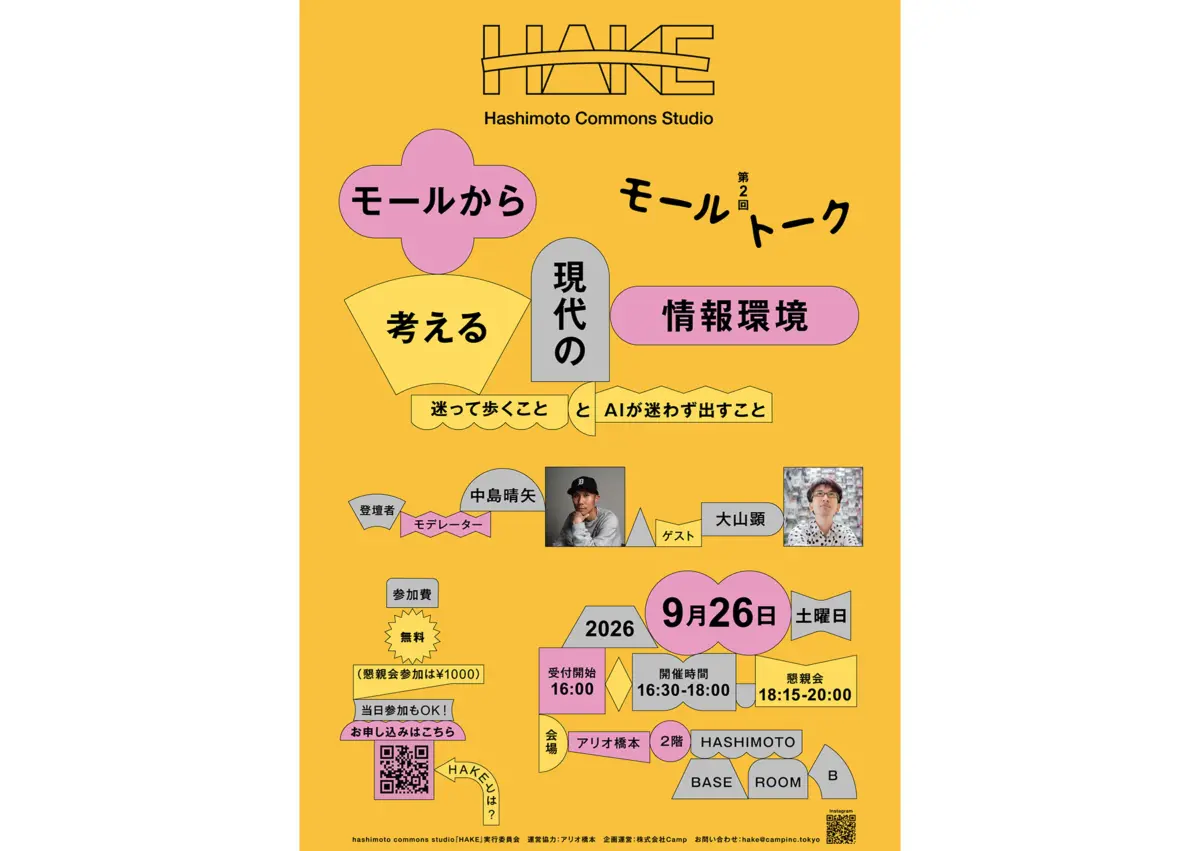
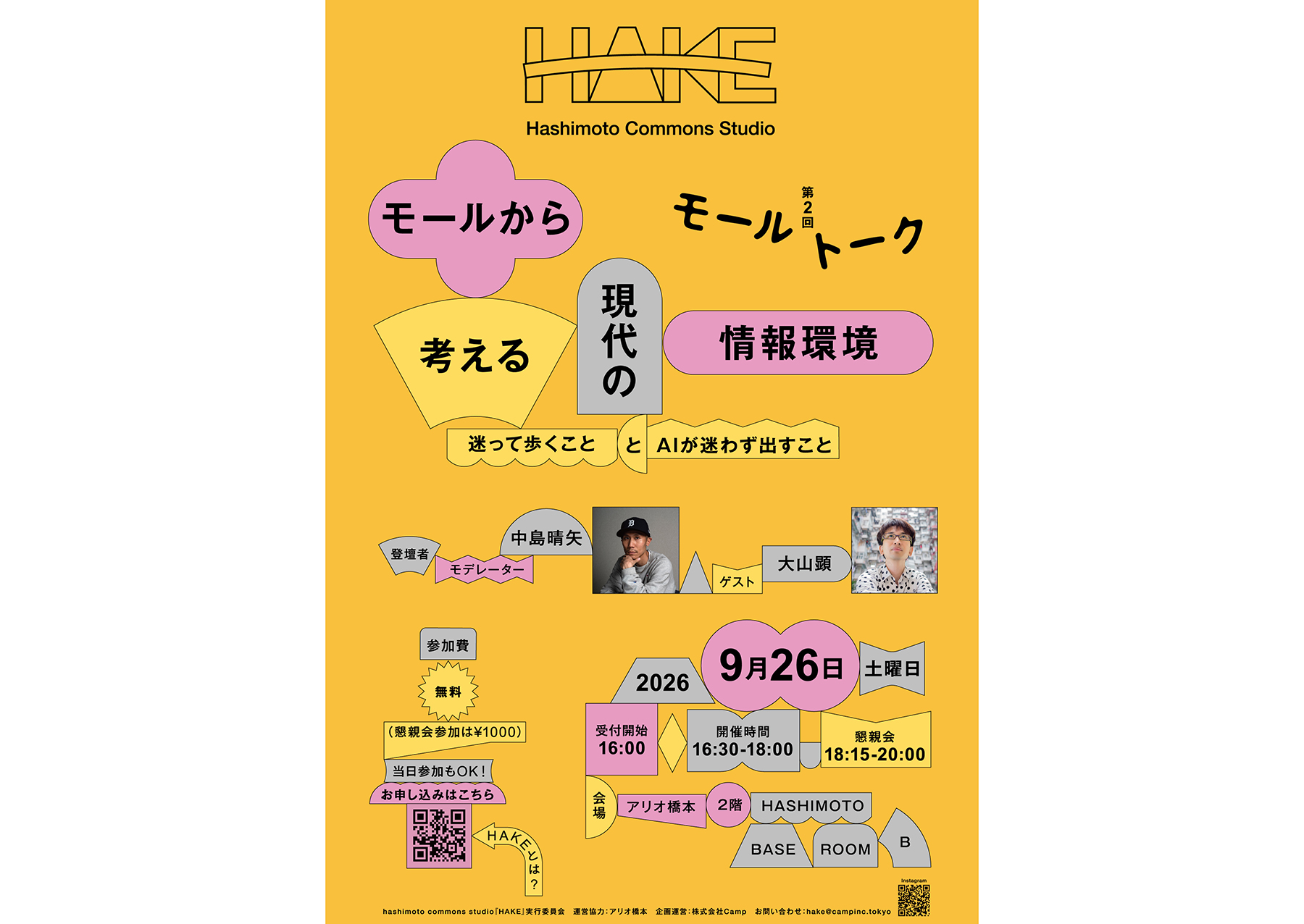
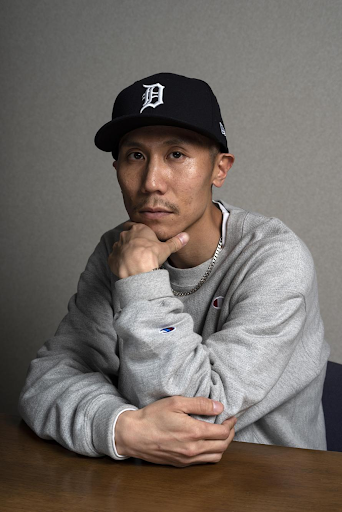
To dissect these profound tensions, a landmark symposium titled "HAKE Vol. 2" is set to convene in Tokyo. Headlined by renowned media artist Seiji Nakajima and visionary creator Hisao Oyama, the event poses a provocative and timely question: "What are the possibilities for art and community in the age of AI?"
Scheduled for September 26, 2026, at HASHIMOTO BASE ROOM B in Hashimoto, Kanagawa Prefecture, this high-profile gathering aims to move beyond polarized anxieties. Instead, it offers a nuanced, multi-disciplinary exploration of how human artists and machine intelligence can coexist, challenge one another, and collectively forge new paradigms of cultural and social connection.
Detailed Chronology and Event Framework
The Genesis of the HAKE Initiative
The HAKE project was founded as an incubator for experimental cross-pollination, bridging the gaps between regional arts communities, emerging technologies, and critical contemporary theory. Conceived as a mobile platform that traverses various cultural nodes across Kanagawa and greater Tokyo, HAKE aims to decentralize the discourse surrounding digital culture. Rather than confining high-level theoretical debates to elite metropolitan institutions, the initiative brings forward-thinking panels directly into local creative ecosystems, empowering regional creators to engage with global technological shifts.
Vol. 2: The Core Program
Building upon the conceptual groundwork laid by its inaugural session, HAKE Vol. 2 shifts its primary focus squarely onto the collision between human agency and algorithmic generation. The scheduled programming is meticulously structured to deconstruct the anxieties currently gripping the creative sectors:
- 16:00 JST: Doors Open / Networking and Preliminary Installation Viewing
- 16:30 – 18:30 JST: Key Dialogue Session featuring Seiji Nakajima and Hisao Oyama, followed by an open-floor Q&A and collaborative ideation workshop.
- 18:30 – 20:00 JST: Post-Event Community Mixer and Interactive Showcase, allowing attendees to engage directly with the speakers and experience experimental mixed-media installations.
The venue, HASHIMOTO BASE ROOM B, has been specifically curated for the event, featuring immersive projection mapping and modular acoustic zoning designed to reflect the fluid boundaries between physical and digital spaces.
Supporting Context & Metrics: The AI Creative Landscape in 2026
The urgency of the HAKE Vol. 2 symposium is underscored by unprecedented shifts in the global creative economy. Recent industry analyses and cultural barometers highlight a series of critical data points defining the contemporary relationship between artists and artificial intelligence:
- Massive Adoption vs. Deep Polarization: According to recent creative industry censuses, over 74% of commercial designers and digital artists actively utilize generative AI tools in their workflows—primarily for mood-boarding, rapid prototyping, and background asset generation. However, nearly 60% of fine artists express acute anxiety regarding long-term career viability, copyright protection, and the erosion of human-centric artistic value.
- The Shift from Tool to Collaborator: The dialogue around AI has matured significantly. While 2023–2024 was characterized by defensive protectionism and widespread litigation over training data, the 2025–2026 landscape is seeing a surge in "hybrid practices." Artists are increasingly treating neural networks not merely as rendering engines, but as synthetic collaborators capable of introducing serendipity, systemic bias, and alien perspectives into the creative process.
- The Renaissance of Physicality: Ironically, as digital generation becomes frictionless and ubiquitous, there has been a measurable counter-movement. Galleries, independent project spaces, and community-driven initiatives like HAKE report a dramatic surge in demand for physical presence, tangible materiality, and localized, in-person discourse. Communities are seeking spaces where art cannot be replicated by a prompt, but must be experienced collectively in real time.
Official Perspectives: Nakajima and Oyama on the Algorithmic Frontier
The pairing of Seiji Nakajima and Hisao Oyama brings together two distinct yet complementary vantage points on the intersection of media art, technology, and social cohesion.
Seiji Nakajima: Code as Medium and Mirror
Seiji Nakajima, celebrated for his pioneering work in computational aesthetics and interactive media installations, has long interrogated the porous boundary between human intention and machine execution. In his previous writings and exhibitions, Nakajima has argued that generative AI is not a replacement for human imagination, but rather an "externalized mirror of collective cultural memory."
"When we prompt an AI, we are not commanding a tool; we are unearthing strata of visual history accumulated by humanity," Nakajima notes. "The danger is not that machines will begin to think like humans, but that humans will begin to curate their thoughts to match the predictable outputs of machines. Our challenge in this era is to use computation to disrupt our own cognitive loops, rather than reinforce them."
At HAKE Vol. 2, Nakajima is expected to present case studies from his recent kinetic and algorithmic projects, demonstrating how real-time data streams can be harnessed to create unstable, living artworks that resist commodification and demand active viewer participation.
Hisao Oyama: Community, Craft, and the Post-Digital Commons
Hisao Oyama approaches the technological shift from the perspective of community architecture and structural design. Oyama’s work investigates how physical spaces can be re-engineered to foster resilient, creative subcultures in an era dominated by hyper-individualized digital consumption.
Oyama has frequently cautioned against the atomization of artistic communities. While global platforms allow for instantaneous sharing of AI-generated content, they often fail to cultivate deep, localized trust and critical dialogue.
"The digital commons is fast becoming a corporate-owned algorithmic feed," Oyama asserts. "If artists retreat entirely behind their screens, interacting only through the mediation of generative models and social media algorithms, we lose the friction that true community requires. Events like HAKE are vital because they force us back into the physical room—breathing the same air, debating the same dilemmas, and negotiating the messy reality of what it means to create today."
Future Outlook: Reimagining Art and Community
As HAKE Vol. 2 prepares to open its doors in Hashimoto, its implications stretch far beyond a single afternoon of panel discussions. The event serves as a microcosm of a broader cultural necessity: the construction of new vocabularies for an age where the definition of "creator" is expanding, fracturing, and reforming.
The conversations between Nakajima and Oyama point toward several key trajectories for the future of art and community:
- Redefining Authorship: The romantic notion of the solitary genius working in isolation is rapidly giving way to collaborative networks comprising human creators, curators, and algorithmic models. Future art ecosystems will likely measure value not by the purity of individual execution, but by the conceptual rigor and ethical awareness behind the curation of human-machine workflows.
- The Hyper-Local Counter-Trend: Paradoxically, the more powerful and accessible global AI tools become, the more valuable hyper-local, physical art communities will be. Spaces that prioritize embodied experiences, tactile material exploration, and face-to-face debate will function as sanctuaries against algorithmic fatigue.
- Active Resistance and Critical Play: Artists in the AI era are discovering that the most potent creative acts involve subverting the intended uses of technology. By introducing noise, tactical errors, and deeply personal narratives into automated pipelines, creators can reclaim agency and transform generative systems into instruments of critical inquiry.
Ultimately, HAKE Vol. 2 offers a vital reminder: technology changes the tools of expression, but the fundamental human desire for connection, meaning, and shared wonder remains immutable. Through dialogues spearheaded by thinkers like Seiji Nakajima and Hisao Oyama, the creative community is taking active steps not merely to survive the AI age, but to consciously author its next chapter.
Event Summary & Registration Details
- Event HAKE Vol. 2: Media Art × Regional Strategy — What Are the Possibilities for Art and Community in the Age of AI?
- Date & Time: September 26, 2026 (Doors open at 16:00; Program runs from 16:30 to 18:30 JST, followed by networking).
- Venue: HASHIMOTO BASE ROOM B (Kanagawa Prefecture)
- Speakers: Seiji Nakajima, Hisao Oyama
- Ticketing & Information: Registration and further details are available via the official Peatix Event Page.

Belum ada komentar. Jadilah yang pertama berkomentar!