

Executive Overview
In an era dominated by instant digital reproduction and automated media, the ancient art of Japanese woodblock printing—known historically as mokuhanga—stands as a testament to the profound synergy between human patience, natural materials, and meticulous craftsmanship. Central to this enduring legacy is ukiyo-e ("pictures of the floating world"), an artistic medium that once served as the vibrant visual pulse of Edo-period Japan. Today, keeping this centuries-old tradition alive in the hyper-modern metropolis of Tokyo requires a delicate balance of heritage preservation and modern cultural tourism.
Through an exclusive cultural excursion arranged by Wabunka, a premier platform dedicated to immersive Japanese traditional arts, travelers are granted rare access to this well-guarded craft. Wabunka’s curated programs bridge the gap between historic artisans and curious global travelers, offering hands-on experiences that transcend standard tourism. Recently, a reporting team embedded itself within Takahashi Kobo—Tokyo’s oldest surviving woodblock printing studio, boasting an unbroken lineage spanning more than 165 years.
This deep-dive feature examines the historical weight of ukiyo-e, analyzes the multi-tiered collaborative ecosystem required to produce these masterpieces, and documents a firsthand journey through Takahashi Kobo’s signature woodblock printing and fan-making workshop.
Detailed Chronology: Step-by-Step into the World of Mokuhanga
The journey into Takahashi Kobo begins long before ink touches paper. It starts with an educational masterclass led by the studio’s master practitioners, designed to ground modern participants in the socio-historical reality of Edo-period printmaking.
Phase 1: Historical Context and the Mechanics of Access
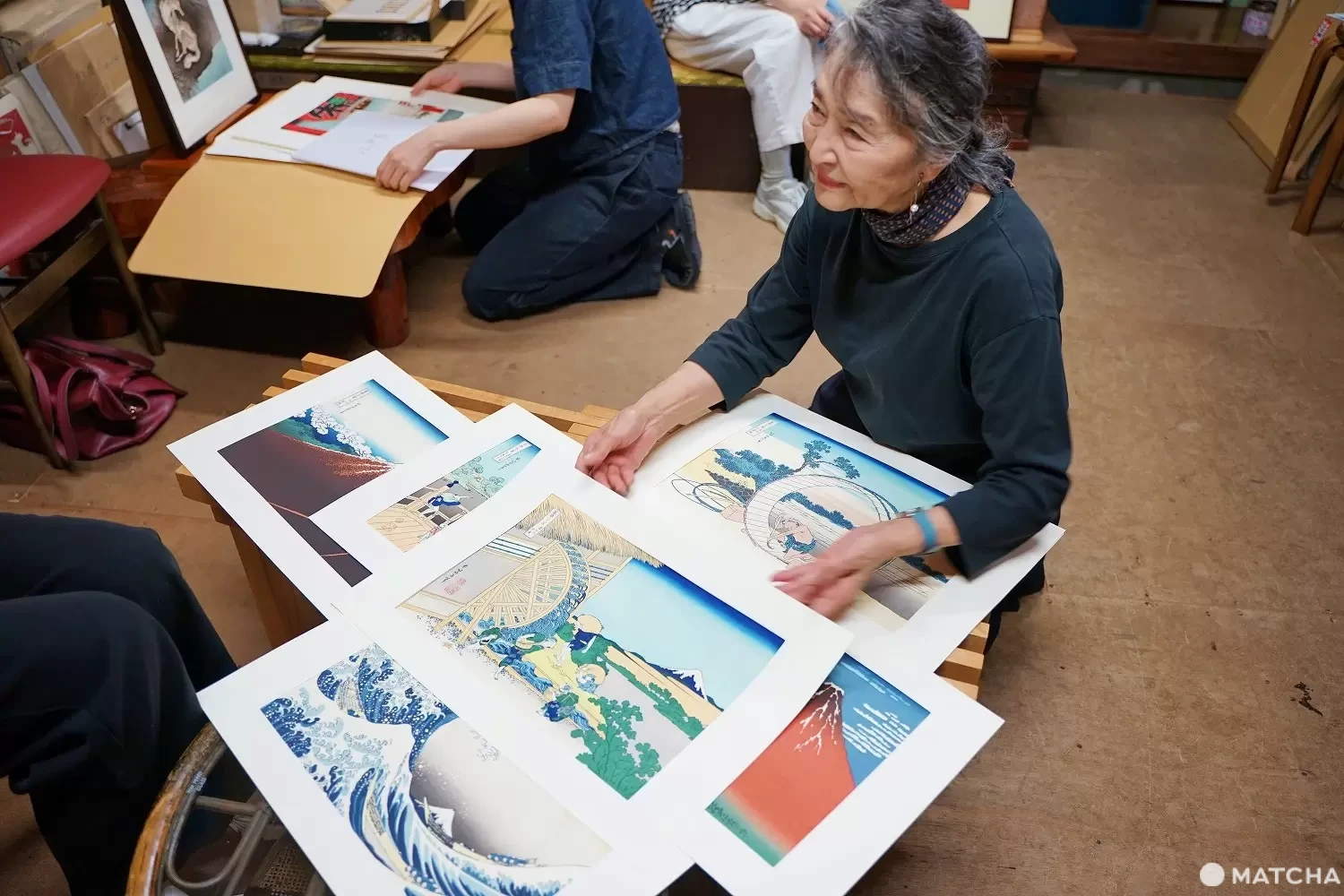
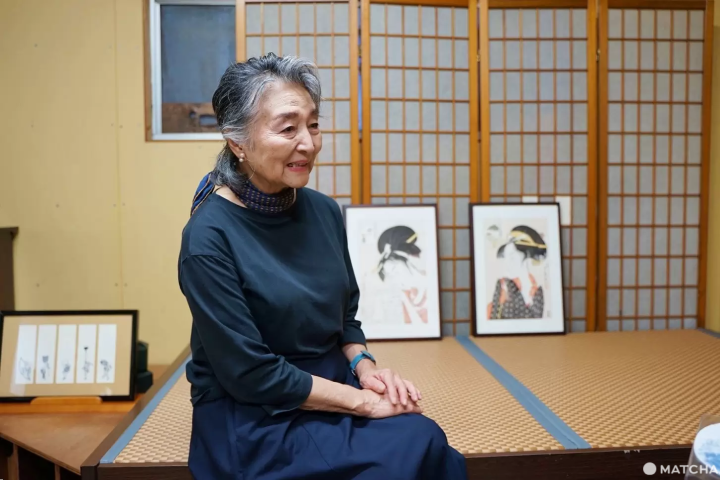
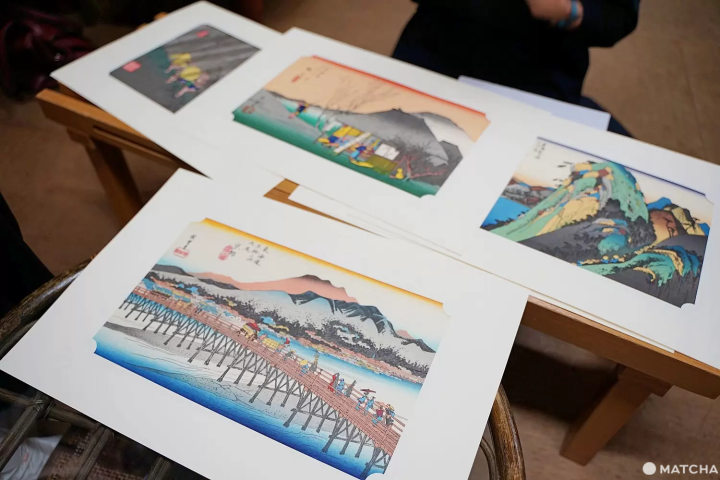
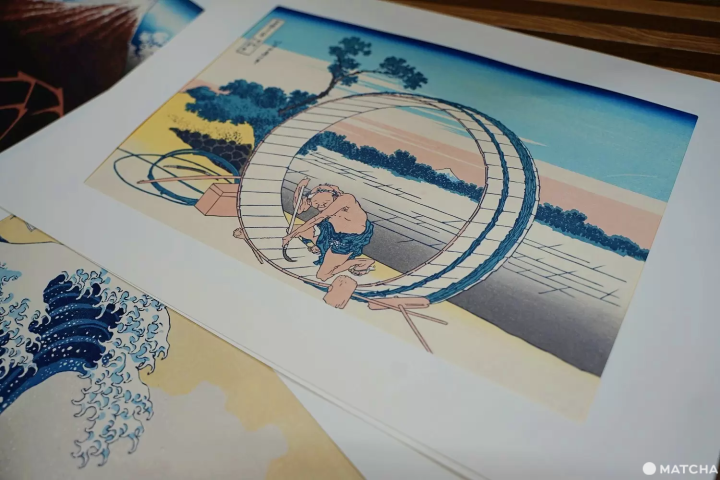
The workshop commences with a sit-down introduction led by Takahashi-sensei. During the peaceful Edo period (1603–1868), Japan experienced an unprecedented rise in urban culture. Art and entertainment, previously locked away within the rigid confines of the aristocratic and samurai classes, spilled over into the daily lives of ordinary citizens.
Ukiyo-e emerged as the mass media of its time. Functioning much like modern magazines, illustrated novels, and high-end posters, these prints captured the zeitgeist of popular culture. For a mere 16 mon—roughly equivalent to 500 yen ($3.50 USD) today—an ordinary citizen could purchase a vivid print depicting scenic travel destinations, celebrated Kabuki actors, idealized beauties (bijin-ga), or slices of everyday urban life.
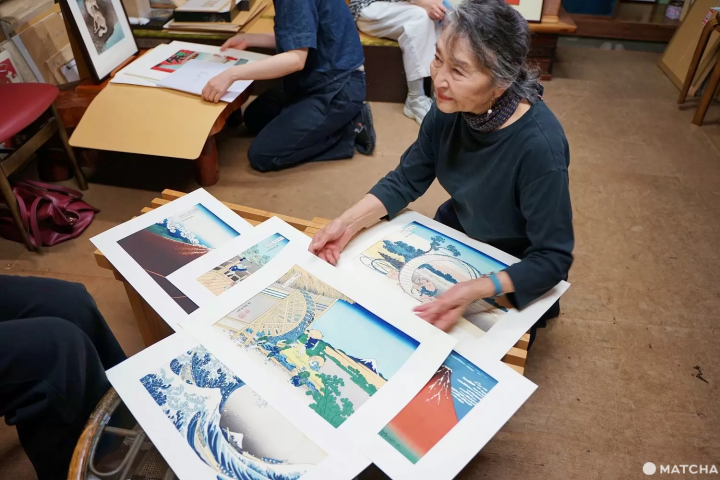
Furthermore, Takahashi-sensei drew attention to the tactile nature of ukiyo-e, aspects frequently lost in flat digital reproductions. Viewers in the Edo period interacted with prints through touch as well as sight. They marveled at silver-infused inks that shimmered like falling rain and blind embossing (karazuri)—a technique utilizing pressure without ink to give physical texture to falling snow or the delicate petals of cherry blossoms.
Phase 2: The Four-Pillar Production Ecosystem
One of the most eye-opening revelations of the introductory lecture is that creating a traditional ukiyo-e print was never the solitary work of a single artist. Instead, it was an industrialized, highly collaborative division of labor involving four distinct specialists:
- The Illustrator (Eshi): The creative visionary who drafted the original ink drawing on paper.
- The Carver (Hokoshi): The meticulous artisan who transferred the illustration onto durable mountain cherry woodblocks, carving away negative space with microscopic precision.
- The Printer (Surishi): The master craftsman responsible for mixing natural pigments, balancing moisture levels, and applying the final impressions to paper—the exact role undertaken during the workshop.
- The Publisher (Tsutomoto): The commercial strategist who organized the production team, funded the project, and dictated the thematic direction of each print series.
While Takahashi Kobo originated primarily as a publisher and printer over a century and a half ago, the studio has evolved to encompass all facets of the craft, preserving the holistic expertise required to keep authentic hanga printing alive in the 21st century.
Phase 3: The Hands-On Printing Process
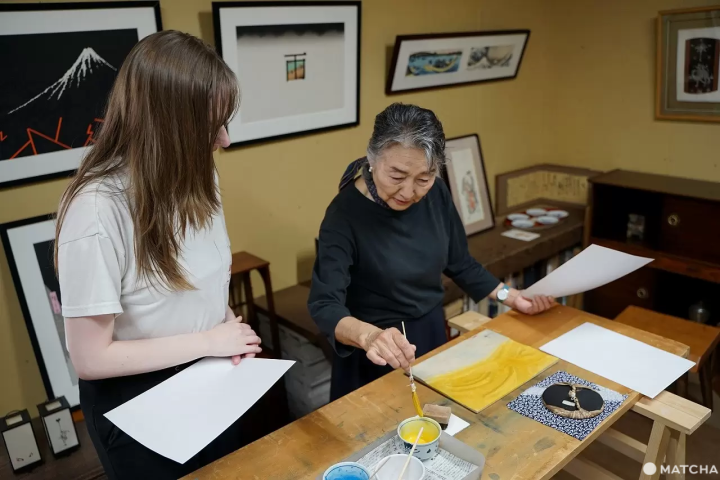
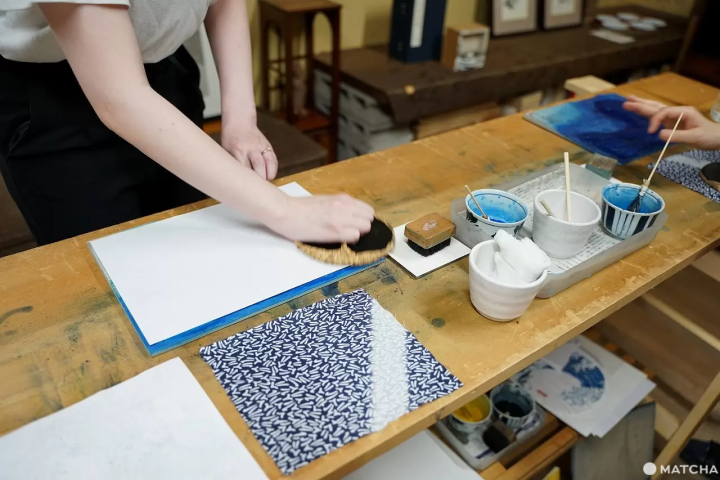
Transitioning from theory to practice, participants step up to individual printing stations equipped with traditional wooden blocks, mineral-based pigments, rice-starch glue, and handmade washi paper.
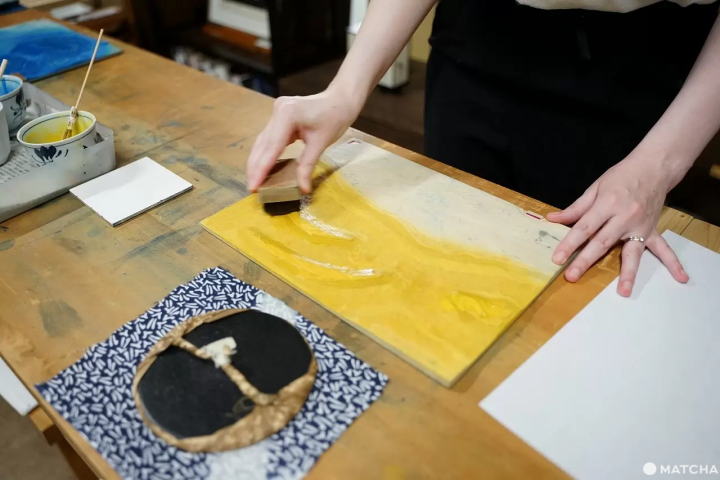
The printing process follows a strict logistical hierarchy: artisans must always work from the lightest colors to the darkest, culminating in the defining black outline.
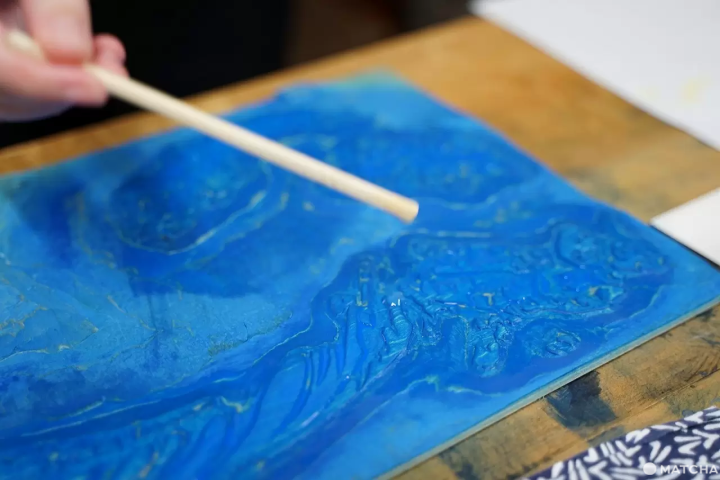
- The Yellow Base: The process begins by brushing a vibrant yellow mineral pigment across the raised portions of the cherry wood block. A single drop of glue is added to the mixture—a critical step that binds the pigment to the paper fibers and prevents flaking over time.
- Paper Alignment: Holding a sheet of washi paper delicately with both hands, the participant must align it perfectly against registration guides (kagi and hikitsuke). This is widely considered the most high-stakes moment of the workshop, as even a millimeter of misalignment will distort the multi-layered composition.
- The Baren (Baren Application): Once the paper is secured, pressure is applied using a baren, a traditional circular hand-tool constructed from woven bamboo sheath coils and cardboard backing. Takahashi Kobo utilizes various types of barens, each calibrated to deliver distinct levels of friction and pressure depending on the density of the ink and paper.
- Layering Waves and Outlines: After successfully pulling the yellow base layer, participants progress to the blue pigment block to render dynamic waves. Finally, the tension peaks with the application of the black outline block. Despite initial anxieties over potential human error, the resulting impressions emerge crisp, vibrant, and structurally cohesive.
Phase 4: Crafting the Bamboo-Handled Fan
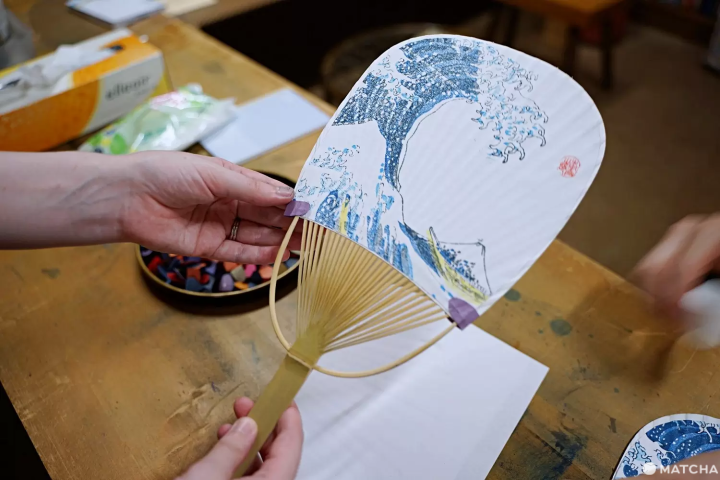
Rather than leaving the printed washi as a flat sheet, Takahashi Kobo integrates a functional craft element: transforming the fresh print into a traditional Japanese summer fan (uchiwa).
Participants carefully trace the silhouette of the fan template onto their printed paper, cut it to size, and apply an even layer of adhesive to the reverse side. With expert guidance from the studio staff, the paper is smoothed meticulously over a bamboo-ribbed frame. Colorful decorative paper strips are then wrapped and glued along the outer edges to secure the structure. The result is a fully functional, highly personalized artifact of Japanese material culture.
Supporting Context & Metrics: The Economics of Heritage Preservation
To fully appreciate experiences like those provided by Wabunka at Takahashi Kobo, one must examine the broader economic and cultural landscape of traditional Japanese crafts (dento kogei).
| Metric Category | Historical Context (Edo Period) | Contemporary Reality (Modern Tokyo) |
|---|---|---|
| Primary Audience | Urban commoners, merchants, travelers | Global cultural tourists, art historians, domestic learners |
| Cost of Production | Mass-produced consumer media (16 mon / ~500 yen) | Premium cultural education & heritage preservation workshops |
| Labor Structure | Four-tier specialized division of labor | Integrated master studios teaching holistic multi-disciplinary skills |
| Core Materials | Mountain cherry wood, mineral pigments, handmade washi | Artisanal sustainably-sourced regional inputs |
The preservation of studios like Takahashi Kobo addresses a critical vulnerability in Japan’s cultural sector. In recent decades, industrial modernization and shifting consumer habits have led to a decline in demand for traditional handicrafts, threatening the generational transfer of tacit knowledge. By integrating high-value experiential tourism through platforms like Wabunka, legacy studios secure an alternative revenue stream while actively educating the global public. This direct engagement fosters a passionate international community of advocates who understand the immense labor behind tangible heritage.
Official Statements & Expert Perspectives
Reflecting on the philosophy driving these cultural interventions, industry leaders and master artisans emphasize the importance of active participation over passive observation.
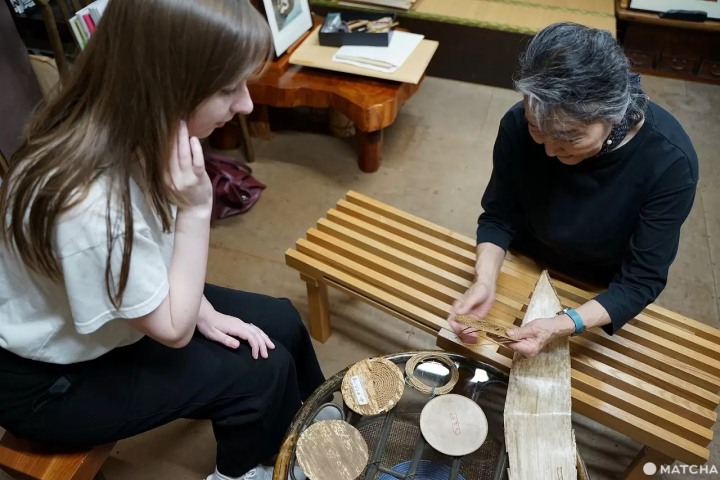
"When travelers simply look at art through a glass museum case, they see an object of the past," notes a Wabunka cultural program coordinator. "When they physically mix the mineral pigments, feel the resistance of the mountain cherry wood, and pull their own baren across handmade washi paper, the past becomes a living, breathing reality. They are no longer just tourists; they become temporary practitioners of an unbroken tradition."
Takahashi-sensei echoes this sentiment regarding the accessibility of ukiyo-e design:
"Ukiyo-e was never meant to be exclusive. It was art for the people, created by commoners to celebrate the beauty of everyday life. By opening our doors to international guests, we are simply returning to the democratic spirit of the Edo period—sharing our passion with anyone willing to hold a brush."
Future Outlook: The Evolution of Immersive Cultural Tourism in Japan
As international travel to Japan reaches historic highs, the demand for meaningful, sustainable, and educational tourism experiences is shifting away from superficial sightseeing toward deep cultural immersion.
Wabunka’s expansive catalog—featuring not only woodblock printing in Tokyo, but also traditional sweet (wagashi) making, tea ceremonies, lucky cat painting, and kintsugi (gold-repair) workshops across cultural hubs like Kyoto, Osaka, Kanazawa, and the Mt. Fuji region—illustrates a scalable model for heritage preservation through tourism.
Looking forward, the integration of hands-on artisanal workshops into mainstream travel itineraries serves a dual purpose. Economically, it provides vital financial support to multi-generational family-run studios facing demographic contraction. Culturally, it ensures that intangible heritage techniques are documented, practiced, and celebrated by a diverse global audience. For travelers seeking more than a standard vacation, stepping into Tokyo’s oldest woodblock printing studio offers a rare opportunity to leave a permanent imprint on history—while letting history leave an equally indelible mark on them.





Belum ada komentar. Jadilah yang pertama berkomentar!