

Executive Overview
In a massive validation of an unconventional care-delivery model, Indian health-tech startup Even Healthcare has successfully closed a $50 million Series B funding round. Led by Silicon Valley heavyweight Khosla Ventures—with additional participation from Alpha Wave—the all-equity round values the company at $300 million. This marks a staggering threefold valuation jump in just 18 months and brings Even’s total capital raised since its 2021 inception to over $120 million.
Founded by Mayank Banerjee, Matilde Giglio, and Alessandro Ialongo, Even is taking direct aim at a systemic structural flaw plaguing the healthcare industry in the world’s most populous nation: the perverse financial incentives of traditional hospitals. Across India, legacy medical institutions routinely operate on a volume-based model, profiting heavily when patients undergo extended hospital stays, redundant diagnostic tests, and unnecessary surgical procedures.
Even is radically flipping this script. By vertically integrating care—building and operating its own hospitals—and discarding traditional fee-for-service compensation for physicians and management alike, the startup is pioneering an outcome-driven healthcare ecosystem. Backed by marquee global investors who believe this model can scale far beyond South Asia, Even is betting that aligning financial rewards with genuine patient wellness is the future of modern medicine.
Detailed Chronology: From Digital Health Network to Hospital Operator
The 2021 Genesis: A Focus on Primary Care and Insurance Gaps
When Even Healthcare burst onto the scene in 2021, its initial ambition was to bridge the glaring gaps left by standard health insurance policies in India. Securing a $5 million seed round led prominently by Khosla Ventures, the founders sought to offer comprehensive health coverage that integrated primary care delivery, doctor consultations, and diagnostics under a single, transparent membership plan.
For the first few years of its operational lifecycle, Even relied on a network of third-party partner hospitals to treat its members. However, cracks in this outsourced delivery model quickly surfaced. As the company scaled and managed thousands of patient cases, leadership noticed an alarming trend: partner hospitals routinely recommended treatments, surgical interventions, and high-cost diagnostic panels that Even’s clinical team deemed clinically unnecessary.
The Pivot to Vertical Integration: Building Bengaluru’s New Infrastructure
Recognizing that the traditional hospital-partner model placed patients at risk of exploitation and insurers at a severe economic disadvantage, Even’s founders made a bold, capital-intensive pivot. They decided to bypass third-party networks entirely and build their own physical healthcare infrastructure.
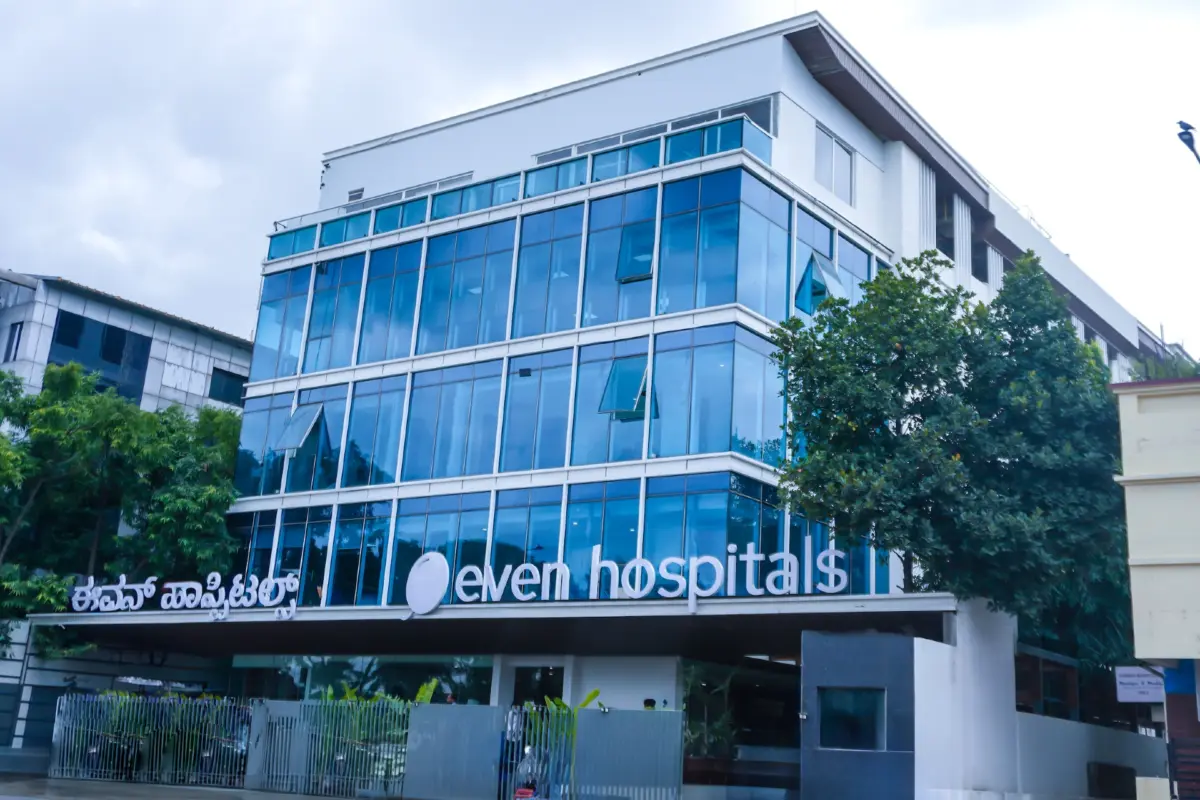
Under this new strategy, Even began leasing hospital buildings on long-term 20-year agreements, pouring capital into state-of-the-art fit-outs and cutting-edge medical equipment. The gamble paid off rapidly. Even opened its first two hospitals in Bengaluru, both of which achieved operational profitability (excluding depreciation) within a single year of opening their doors.
Buoyed by this operational success and fueled by the newly injected Series B capital, the startup has outlined an aggressive expansion roadmap: it plans to open five additional hospitals across Bengaluru over the next six months.
Restructuring and Resilience
Rapid physical expansion and technological scaling rarely happen without friction. In August 2025, the startup made headlines when it restructured its operations, laying off approximately 350 employees.
Addressing the restructuring transparently, CEO Mayank Banerjee acknowledged that the decision was difficult. However, the company moved to cushion the blow for affected workers by providing robust severance packages, extended health insurance coverage, and accelerated equity vesting. Today, Even employs approximately 650 people, including a dedicated cadre of 300 full-time physicians. To date, the startup has amassed roughly 250,000 members and logged more than 750,000 patient interactions—ranging from routine doctor consultations and diagnostic panels to complex surgeries.
Supporting Context & Metrics: Challenging the Fee-for-Service Status Quo
Aligning Incentives: How Even’s Compensation Model Works
The cornerstone of Even’s disruptive model lies in how it structures human capital and financial incentives. In conventional hospitals, doctors often operate under volume-driven quotas or direct financial incentives tied to the number of procedures, scans, and surgeries they order.
Even completely dismantles this approach:
- Fixed Salaries for Physicians: The startup pays its approximately 300 full-time doctors fixed salaries. Their compensation is entirely decoupled from the volume of medical services they order or perform.
- Outcome-Based Bonuses: While base pay is secure, doctors are eligible for financial bonuses determined strictly by patient-reported clinical outcomes, ensuring care quality remains paramount.
- Decoupled Management and Marketing: Hospital management and administrative teams receive standard salaries paired with company-wide incentives. Marketing teams are evaluated on patient acquisition and engagement rather than the sheer volume of medical bills generated by incoming patients.
- Universal Employee Ownership: Every single employee at Even—from senior surgeons and hospital managers down to floor staff—receives equity in the startup. This ensures that the entire organization shares a unified, long-term stake in the company’s clinical and financial success.
Financial Realities and Unit Economics
While Even’s clinical model has won immense praise from investors, building physical hospitals is an inherently capital-intensive endeavor. Regulatory filings indicate that Even posted a net loss of ₹902 million (approximately $9.50 million) in fiscal 2025, marking an increase of roughly 25% over the previous year on revenues of ₹272 million (approximately $2.86 million).
Despite these losses, CEO Mayank Banerjee maintains that profitability is entirely within reach. He noted that the startup could easily achieve profitability within a matter of months if it chose to freeze its physical expansion. Instead, management has consciously chosen to prioritize aggressive growth, infrastructure development, and patient acquisition over near-term bottom-line surpluses.
Measurable Clinical Outcomes and Economic Impact
Even’s value proposition rests heavily on data-backed proof that its approach delivers superior patient outcomes at a fraction of the cost. The startup utilizes established medical scoring systems to track recovery trajectories meticulously. For instance, when treating knee replacements, Even deploys the Oxford Knee Score to objectively measure post-operative pain and mobility improvements, publicly publishing these metrics on its website alongside comparative benchmarks from competing healthcare systems.
The results thus far have been striking:
- Unplanned Readmissions: Even’s hospitals report an unplanned readmission rate of less than 1%, dramatically outperforming the broader industry benchmark of 8% to 15%.
- Shorter Hospital Stays: Patients treated within Even’s ecosystem spend 40% less time admitted to the hospital compared to traditional Indian medical facilities.
- Insurer Savings: By eliminating redundant interventions and optimizing care pathways, Even’s model has reportedly saved partner insurers more than ₹500 million (roughly $5.27 million).
- Preventative Payouts: Beyond traditional treatment revenue, Even is actively pioneering innovative agreements with insurance partners—exploring models where Even is financially compensated for hospitalizations it successfully prevents, rather than simply for services rendered.
Official Statements and Industry Perspectives
The convergence of clinical rigor, technological integration, and systemic financial redesign has earned Even Healthcare rare and enthusiastic backing from Silicon Valley venture capital royalty.
Vinod Khosla, founder of Khosla Ventures and a legendary Silicon Valley tech investor, highlighted the unique scope of Even’s disruption in a prepared statement:
"Even’s approach goes beyond fixing individual parts of a fragmented healthcare system by bringing financing, technology, and care delivery together. The goal is to reward better health outcomes rather than greater use of healthcare services. The clinical and economic results so far give us conviction that this can become an important new model for healthcare in India and beyond."
Echoing this sentiment, Jai Sajnani, a partner at Khosla Ventures who closely oversees the investment, pointed to the early operational performance of Even’s Bengaluru facilities as the primary catalyst for leading the Series B round:
"We look forward to helping the Even team put quality care within reach of every family in Bengaluru and across India."
From the ground level, CEO and co-founder Mayank Banerjee remains fiercely committed to rectifying what he views as a fundamentally broken medical marketplace. Reflecting on why the startup abandoned the asset-light, third-party hospital model, Banerjee stated in an interview with TechCrunch:
"We think patients are getting not only a bad experience, but insurers are getting a bad economic deal. And as a result, we decided to fix it by building our own hospitals… Right now, we’re investing in growth and serving more patients."
Future Outlook
As Even Healthcare channels its newly secured $50 million Series B capital toward opening five new hospitals across Bengaluru, the startup stands at a critical crossroads in its corporate evolution.
The next 12 to 18 months will test whether a vertically integrated, outcome-driven healthcare model can achieve large-scale commercial viability in a complex, developing market like India. By proving that hospitals can remain operationally profitable without relying on unnecessary medical procedures, Even is attempting to rewrite the foundational rules of hospital economics.
If the startup can successfully scale its footprint beyond Bengaluru while maintaining its sub-1% readmission rates, lower average length of stay, and rigorous clinical outcome tracking, it may well establish a blueprint for healthcare delivery that disrupts legacy systems not just across India, but globally. For now, Even’s leadership is keeping its collective eye firmly on the horizon—trading immediate profitability for the long-term transformation of how human health and medical financing intersect.








Belum ada komentar. Jadilah yang pertama berkomentar!