

Executive Overview
Konami Digital Entertainment has officially announced the upcoming deployment of a brand-new, highly anticipated event within its flagship digital card game, Yu-Gi-Oh! Master Duel: the Tryout Duel: Time Travel 2006. Designed to cater to both veteran duelists seeking a profound wave of nostalgia and contemporary players eager to experience the roots of modern card game design, this limited-time event locks the format’s card pool to a historical milestone: November 16th, 2006.
The implementation of this event goes far beyond a casual rules tweak. By strictly enforcing the September 2006 OCG (Official Card Game) Forbidden and Limited List, Konami is re-creating a fascinating transitional era in competitive Yu-Gi-Oh! history. This was a period defined by raw, high-impact power cards, distinct mechanical paradigms, and a meta game utterly distinct from the hyper-accelerated, extra-deck-centric modern landscape. The most recent set legal for this format is Strike of Neos, meaning players will have access to early Element Heroes, Neo-Spacians, and powerful foundational staples, while remaining entirely insulated from the complexities of Synchro, Xyz, Pendulum, and Link Summoning mechanics.
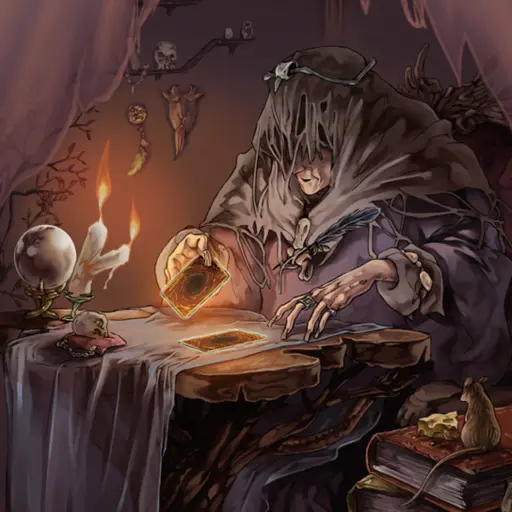
In tandem with the competitive event, Konami has introduced a time-sensitive cosmetic collectible available through the in-game shop: a specialized card protector themed after Yu-Gi-Oh! CARD GAME THE CHRONICLES, showcasing the "Seeker of the Sinful Spoils" visual narrative. Priced at 100 gems and available until December 4th at 12:59 JST, this item bridges the gap between modern digital presentation and retro gameplay.
This report provides a comprehensive breakdown of the Tryout Duel, an exhaustive examination of the legal card pool and the September 2006 Banlist, contextual analysis of the historical meta, and a forward-looking perspective on how this event fits into Master Duel’s ongoing live-service strategy.
Detailed Chronology & Mechanics of Time Travel 2006
To fully understand the weight of the Tryout Duel: Time Travel 2006 event, duelists must first understand the strict structural parameters established by the development team.
The November 16, 2006 Cutoff
The event’s legal card pool is strictly bound to releases in the OCG up to November 16th, 2006. The absolute ceiling for card legality is marked by the Strike of Neos booster set. Released in late November 2006 in Japan, Strike of Neos introduced iconic archetypes and cards that would shape the late-GX era, though the core of competitive deck-building during this window still heavily relied on the powerful foundations laid throughout Cybernetic Revolution, Elemental Energy, Shadow of Infinity, and Enemy of Justice.
The September 2006 Forbidden and Limited List
The governance of this event relies entirely on the September 2006 Banlist. This list is legendary among historical format enthusiasts, representing an aggressive balancing era where Konami attempted to rein in the chaotic remnants of the "Chaos" dominance era while grappling with newly emerging engine designs.
The regulatory framework is divided into three stringent tiers:
- The Forbidden List (Total Exclusion): The most devastating power cards of early-to-mid Yu-Gi-Oh! history are entirely locked out. This includes the infamous "Chaos" boss monsters (Black Luster Soldier – Envoy of the Beginning, Chaos Emperor Dragon – Envoy of the End, and Chaos Sorcerer), devastating removal spells (Raigeki, Dark Hole, Harpie’s Feather Duster, Monster Reborn), and hand-control engines like The Forceful Sentry, Delinquent Duo, and Confiscation (noted separately regarding current Master Duel implementation issues).
- The Limited List (Max 1 Copy): Iconic disruption, searchers, and utility spells are restricted to a single copy. This list features foundational monsters like Breaker the Magical Warrior, Jinzo, and Sangan, alongside high-impact spells such as Graceful Charity, Heavy Storm, and Mystical Space Typhoon.
- The Semi-Limited List (Max 2 Copies): Strategic flex cards such as Exiled Force, Apprentice Magician, Reinforcement of the Army, and Giant Trunade sit comfortably at two copies, offering players nuanced choices in resource management and offensive pacing.
Implementation Discrepancies in Master Duel
A notable technical nuance detailed in the event parameters involves specific legacy cards that should theoretically be legal under the 2006 OCG guidelines, but are currently unattainable or functionally unavailable within the proprietary architecture of Master Duel. These cards include:
- Monsters: Amazoness Archer, Cannon Soldier, Toon Cannon Soldier.
- Spells: Confiscation, Last Will, Mass Driver.
- Traps: Life Equalizer, Magical Explosion, Royal Oppression.
While their omission slightly alters the theoretical vacuum of the 2006 format, the overarching meta-game remains remarkably faithful to its historical counterpart.
Supporting Context & Metrics: The 2006 Meta Landscape
Examining the September 2006 list reveals a game caught in the crossfire of aggressive evolution. By late 2006, the absolute dominance of Chaos strategies—which had terrorized formats throughout 2004 and 2005—had been systematically dismantled through aggressive banlist updates. However, the vacuum left behind was quickly filled by resilient, highly technical alternative strategies.
The Demise of Chaos and the Rise of Control
With Black Luster Soldier – Envoy of the Beginning and Chaos Emperor Dragon safely sealed away on the Forbidden list, duelists pivoted toward resource-neutral control decks, Monarch variants, and Graveyard-recursion strategies.
- Monarch Control: Featuring powerhouse tributes like Mobius the Frost Monarch and Thestalos the Firestorm Monarch, supported by stall elements like Treeborn Frog (then Limited) and Scapegoat, Monarch decks dominated the mid-2000s competitive circuit. The ability to generate continuous tribute fodder via Treeborn Frog during the Standby Phase revolutionized how players viewed resource economy.
- Good Stuff / Goat-Adjacent Control: Although the iconic Goat Control format (centered around Scapegoat and Metamorphosis) had evolved by late 2006, the remnants of defensive, card-advantage-oriented play remained dominant. Players relied heavily on versatile removal tools like D.D. Warrior Lady, D.D. Assailant, and Breaker the Magical Warrior to dictate the tempo of the board.
- Combo and Burn Strategies: Despite heavy restrictions, combo-oriented lists still found footholds. Cards like Card Destruction, Premature Burial, and Limiter Removal allowed aggressive machine and flip-flop strategies to secure sudden, explosive OTKs (One-Turn Kills).
Statistical Breakdown of the September 2006 Banlist
To understand the severity of the regulatory climate during this period, consider the distribution of restrictions across card types:
| Category | Approximate Card Count | Core Focus / Strategic Intent |
|---|---|---|
| Forbidden | 31 Cards | Complete eradication of generic game-enders, hand destruction loops, universal searchers (Witch of the Black Forest), and unconditional mass removal (Raigeki, Dark Hole). |
| Limited | 34 Cards | Strict rationing of versatile utility, high-impact floodgates, and defining boss monsters (Jinzo, Sacred Phoenix of Nephthys). |
| Semi-Limited | 11 Cards | Fine-tuning consistency engines (Reinforcement of the Army) and targeted removal (Exiled Force). |
This heavy-handed approach to card legality forced a complete shift in player psychology. Rather than relying on broken individual cards to bail them out of disadvantageous board states, duelists in late 2006 had to master incremental card advantage, careful positioning, and precise mathematical management of life points and resources.
Official Statements and Developer Philosophy
Konami’s introduction of the Tryout Duel: Time Travel 2006 event reflects a broader, highly successful philosophy regarding the longevity of Yu-Gi-Oh! Master Duel. Since the game’s launch, the development team has continually sought ways to diversify the digital experience beyond the ultra-fast, modern competitive ladder, which is frequently characterized by extensive combo turn durations and complex negation boards.
Industry analysts and community liaisons have frequently pointed out that legacy formats—often referred to by fans as "Time Wizard" formats—possess massive grassroots appeal. By officially sanctioning a digital implementation of a 2006 format, Konami is acknowledging this passionate sub-community while lowering the barrier to entry. Players do not need to hunt down physical, out-of-print cards or organize private Discord matches; the Master Duel client handles rule enforcement, deck-building constraints, and matchmaking seamlessly.
Furthermore, the simultaneous release of the Yu-Gi-Oh! CARD GAME THE CHRONICLES card protector ("Seeker of the Sinful Spoils") for 100 gems demonstrates Konami’s dedication to tying modern franchise marketing directly into celebratory in-game events. This cosmetic integration ensures that even players who prefer modern competitive play have a tangible, collectible incentive to engage with the client during the Tryout Duel window.
Future Outlook: The Evolution of Legacy Formats in Master Duel
The deployment of Tryout Duel: Time Travel 2006 serves as a crucial bellwether for the future trajectory of Yu-Gi-Oh! Master Duel. As the game matures, keeping the player base engaged requires constant innovation that extends beyond the release of standard modern booster packs.
Expanding the Time Travel Initiative
Given the positive historical reception to retro formats, industry observers anticipate that Konami may utilize the "Tryout Duel" framework to test various historical milestones. Following the success of a 2006-era format, future iterations could explore:
- The 2005 Goat Format: A universally beloved period that predates the Strike of Neos era, focusing intensely on Scapegoat, Metamorphosis, and Thousand-Eyes Restrict interactions.
- Early Synchro Eras (2008–2010): Introducing players to the dawn of the Extra Deck revolution with the arrival of Stardust Dragon and Goyo Guardian.
Impact on Modern Game Design
Paradoxically, diving deep into the 2006 meta often informs how players view modern Yu-Gi-Oh!. By experiencing an era where card economy was painstakingly slow and every single activation of Mystical Space Typhoon or Book of Moon carried immense psychological weight, modern duelists gain a deeper appreciation for fundamental game theory, bluffing, and resource preservation.
As the Tryout Duel: Time Travel 2006 event approaches its active window, competitive and casual players alike are encouraged to dust off their historical rulebooks, re-examine the legal card pool, and prepare for a masterclass in tactical, mid-2000s card combat. Whether you are returning to relive the glory days of Mobius the Frost Monarch or stepping into 2006 for the very first time, this event promises to be one of the most engaging structural diversions in Master Duel’s operational history.








Belum ada komentar. Jadilah yang pertama berkomentar!