

Executive Overview
As the crisp winds of winter sweep across Japan’s Pacific coast, the Fuji Five Lakes region—anchored by the iconic Lake Kawaguchiko—undergoes a breathtaking metamorphosis. While the season brings crisp, dry air and a high frequency of brilliantly clear sunny days, it also ushers in sub-zero temperatures, frost-draped landscapes, and occasional blankets of pristine snow. Far from being a dormant offseason, January and February represent a golden window for travelers seeking the quintessential Japanese winter experience.

Boasting crisp blue skies that offer unobstructed, razor-sharp views of Mount Fuji from base to peak, this seasonal destination combines world-class winter sports, therapeutic hot springs (onsen), spectacular nighttime illuminations, and unique cultural celebrations. However, thriving in this alpine environment requires careful preparation. Sitting at an altitude of approximately 800 meters, Lake Kawaguchiko experiences temperatures nearly 5°C lower than surrounding plains, demanding robust cold-weather gear and vehicular winterization.

This comprehensive guide breaks down everything travelers need to know to navigate, explore, and deeply appreciate the Fuji Five Lakes region during its most visually striking months, complete with meteorological metrics, top-tier sightseeing locations, and essential travel logistics.

Detailed Chronology & Seasonal Highlights
Understanding the rhythm of winter in the Fuji Five Lakes region allows travelers to time their itineraries perfectly, aligning their visits with rare natural phenomena, vibrant cultural festivals, and optimal viewing conditions.

Early to Mid-December: The Season Awakens
Winter activities officially kick off as the alpine ski season gets underway. Fujiten Snow Resort, located just 90 minutes from Tokyo on the slopes of Mount Fuji, typically opens its lifts in mid-December. Simultaneously, Lake Yamanakako plays host to the "Winter Sparkling Illumination Fantasia," bathing the shores in warm, festive lights against the backdrop of an exceptionally clear evening sky.

Mid-January: Fireworks and Peak Visibility
By mid-January, the winter air reaches peak clarity, providing the sharpest contours of Mount Fuji’s majestic slopes. This period marks the commencement of the famous Kawaguchiko Winter Fireworks, held every weekend and holiday through mid-February. Set off against the freezing night air, these colorful bursts illuminate the snow-dusted shores of Lake Kawaguchiko and Oishi Park, creating a dramatic interplay of light and shadow. This window also marks the beginning of the coveted "Diamond Fuji" phenomenon at Lake Yamanakako, where the setting sun aligns precisely with the mountain’s peak, causing it to sparkle like a gemstone.

Late January to Mid-February: Ice Festivals and Deep Winter Magic
As winter deepens, regional festivals celebrating ice and snow take center stage. The Lake Saiko Ice Festival (held at the Wild Bird Forest Park) showcases towering 5-meter-high frost-covered trees and surreal ice formations that are dramatically illuminated after dark. Meanwhile, early to mid-February is officially designated as "Diamond Fuji Weeks" at Lake Yamanakako, culminating in the Ice Candle Festival and Sky Lantern Festival on February 10th and 11th, where glowing ice candles, floating lanterns, and fireworks merge to form an unforgettable alpine spectacle.

Supporting Context & Metrics: Weather, Climate, and Logistics
Navigating the Fuji Five Lakes region in January and February requires a thorough understanding of local microclimates. Because dry air flows in from the Pacific Ocean, the region enjoys a remarkably high rate of clear, sunny days during these winter months. However, the combination of high altitude and local topography creates severe temperature drops, particularly during dawn and dusk.

Temperature Breakdown (Japan Meteorological Agency Data)
To help travelers pack and prepare appropriately, the historical temperature averages for the Kawaguchiko area are detailed below:

| Month | Average Temperature | Average Maximum Temperature | Average Minimum Temperature |
|---|---|---|---|
| December | 2.3°C | 8.5°C | -2.9°C |
| January | -0.4°C | 5.5°C | -5.7°C |
| February | 0.6°C | 6.6°C | -4.8°C |
| March | 4.2°C | 10.5°C | -1.3°C |
Note: Lake Kawaguchiko sits at an altitude of approximately 800m. Because temperatures drop by roughly 0.6°C for every 100m increase in elevation, the local climate is significantly harsher than nearby urban plains.

Essential Transportation and Driving Protocols
Driving in the Fuji Five Lakes region during January and February requires strict adherence to winter road safety standards:

- Studless Tires: If you are renting a car, you must verify that the vehicle is equipped with studless winter tires. Morning and evening temperatures routinely plunge below freezing, creating hidden black ice even on clear days.
- Snow Chains: If rain or snow is forecasted, carrying tire chains is strongly recommended, as heavy snowfalls typically occur in earnest between January and February.
- Luggage Management: Snowy ground conditions and slush can make dragging heavy suitcases through transit hubs and sightseeing spots difficult. Travelers are advised to utilize coin lockers or luggage storage facilities at Kawaguchiko Station ahead of time.
Wardrobe and Cold-Weather Layering Strategy
A single heavy coat is insufficient for surviving sub-zero alpine mornings. Experts recommend a three-tier dressing strategy:

- Base Layer: Moisture-wicking, quick-drying thermal wear that stays in close contact with the skin to retain core body heat.
- Mid-Layer: Multiple thin layers of clothing—such as fleece, knitwear, and sweatshirts—that can be easily added or removed to regulate body temperature.
- Outerwear: Windproof and waterproof jackets to shield against biting alpine gusts.
- Accessories: Essential cold-weather gear must include insulated gloves, a sturdy scarf, a warm hat, and waterproof snow boots with deep treads.
Top Seasonal Attractions and Recommended Spots
The Fuji Five Lakes region offers a rich tapestry of cultural heritage sites, natural wonders, and recreational hubs tailored for the winter season.
1. Fujiten Snow Resort
Perched directly on the slopes of Mount Fuji and accessible via a 30-minute drive from Kawaguchiko Station (or a 90-minute drive from Tokyo), Fujiten is a premier winter sports destination. Visitors can ski, snowboard, and sled against the backdrop of Japan’s most famous peak. Thanks to extensive equipment rental services, visitors can arrive completely empty-handed. Non-skiers can ride the Mount Fuji Observation Lift to the summit observation deck for breathtaking panoramic vistas of Lake Kawaguchiko and the surrounding valleys.

2. Fuji Yurari Onsen
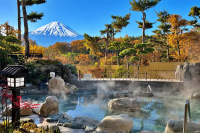
After a day on the ski slopes or walking through the snow, soaking in a natural hot spring is an essential ritual. Fuji Yurari Onsen features 16 distinct therapeutic baths, including two open-air baths situated close to Mount Fuji and a unique cave bath modeled after the regional wind caves. Visitors can also relax in private dining rooms serving Yamanashi Prefecture’s signature local noodle dish, Houtou, or enjoy restorative massages. A free shuttle bus service runs from Kawaguchiko Station (advance reservations required).

3. Oishi Park (Lake Kawaguchiko)
Famous for its lavender fields in summer and vibrant red kochia in autumn, Oishi Park transforms into a serene viewing platform in winter. Because the air is exceptionally crisp, the gentle, sweeping ridges of Mount Fuji can be clearly admired all the way down to its base. Furthermore, the park provides an unobstructed front-row view of the weekend Kawaguchiko Winter Fireworks lighting up the night sky from mid-January to mid-February.

4. Saiko Iyashi-no-Sato Nenba (Healing Village)
Located along the shores of Lake Saiko, this traditional thatched-roof village was meticulously restored to recreate the region’s historic landscape following a devastating typhoon in 1966. Featuring roughly 20 authentic thatched houses, the village invites visitors to experience traditional Japanese arts—such as pottery, painting, and incense making—while framing magnificent views of Mount Fuji. A 5-minute drive away, the Lake Saiko Wild Bird Forest Park hosts the annual Lake Saiko Festival and its famous ice tree illuminations in late January and early February.

5. Lake Yamanakako Hanano Miyako Park (Flower Park)
While outdoor fields bloom seasonally, the park’s indoor Floral Dome houses a dazzling array of rare winter flora. Lake Yamanakako is also world-renowned as a premier viewing spot for Diamond Fuji from mid-November to mid-January. Coupled with the "Winter Sparkling Illumination Fantasia," the park offers a magical nightscape framed by sparkling lights and Japan’s highest peak.

6. Oshino Hakkai
Comprising eight crystal-clear spring-fed ponds, Oshino Hakkai is fed by the melting snow of Mount Fuji. Over the course of several decades, this snowmelt percolates through subterranean layers of volcanic lava, emerging as pure, mineral-rich spring water. Designated as a component part of the Mount Fuji UNESCO World Heritage Site, this ancient sacred spot carries centuries of history as a ritual purification ground for Fuji mountain climbers and pilgrims.

7. Kitaguchi Hongu Fuji Sengen-jinja Shrine
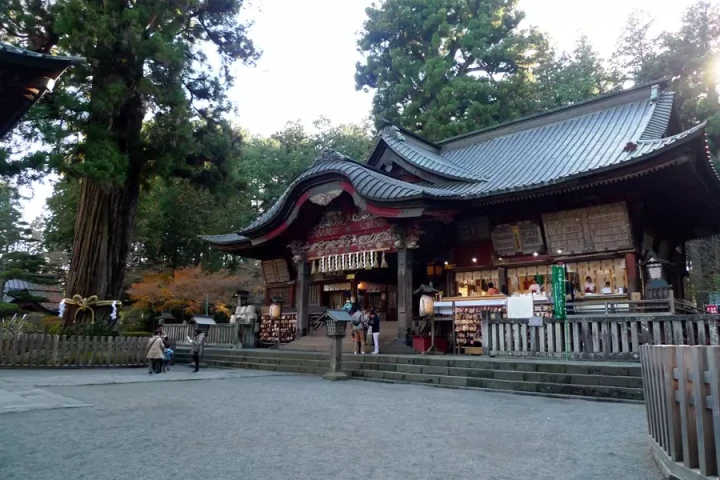
With a history spanning over 1,900 years, this sprawling Shinto shrine serves as the traditional gateway for climbers ascending Mount Fuji’s northern trails. Entering the sacred grounds reveals a deeply spiritual atmosphere, anchored by towering, moss-draped cedar trees that have stood for over a millennium, offering visitors a profound connection to Japan’s ancient spiritual traditions.

Future Outlook
As tourism trends evolve toward immersive, year-round, and off-peak travel, the Fuji Five Lakes region is increasingly positioning itself as a premier global winter destination. Local municipal authorities and tourism boards are actively investing in improved winter infrastructure, enhanced multilingual transportation guides, and sustainable snow-management practices to ensure that international travelers can safely navigate the region.

Initiatives to promote eco-friendly shuttle services, digital real-time road condition tracking, and crowd-dispersal strategies at key viewing platforms like Oishi Park and Lake Yamanakako are already underway. By balancing preservation with modern hospitality, Fuji Kawaguchiko and its surrounding municipalities are setting a new standard for sustainable alpine tourism. For travelers willing to bundle up and embrace the crisp alpine air, the winter months promise an uncrowded, deeply reflective, and visually unmatched encounter with Japan’s most sacred and iconic landscape.





Belum ada komentar. Jadilah yang pertama berkomentar!