October 9, 2026 By Yamada, Fukui Prefecture Regional Revitalization Cooperation Team
Marking my one-year anniversary since relocating from the bustling metropolis of Tokyo to historic Obama City, Fukui Prefecture, in October 2025, my immersion into the cultural tapestry of the Tsuruga and Wakasa regions has been nothing short of transformative. Among the myriad cultural touchstones that define this coastal enclave, none commands the sheer scale, historical gravity, and emotional resonance of the annual Obama Hojo Festival (Obama Hojo-sai).
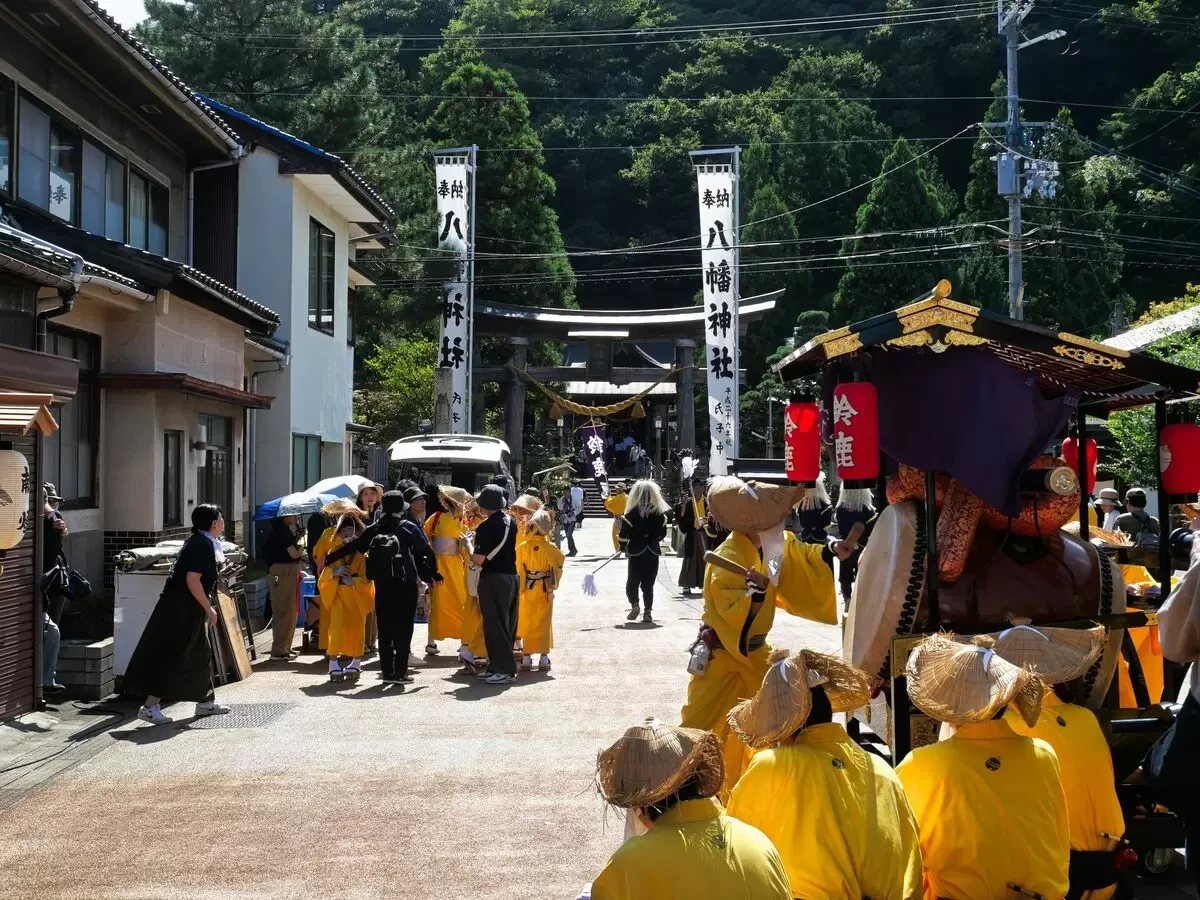
Held annually on the Saturday and Sunday immediately preceding the third Monday of September (Respect for the Aged Day)—this year spanning September 19th and 20th, 2026—the Hojo Festival is the grand annual rite of Yawata Shrine. Boasting a documented history spanning over 380 years, it stands undisputed as the largest autumn festival in the Wakasa region. Designated as an Intangible Folk Cultural Property of Fukui Prefecture, the event serves as a living museum of early modern Japanese performance arts, incorporating ornate festival floats, thunderous large drums, sacred Kagura dances, hypnotic lion dances, and solemn portable shrines (mikoshi).
For first-time attendees, navigating a festival of this magnitude can prove daunting. However, recent logistical innovations—including real-time GPS tracking for roaming performance troupes and bespoke, beginner-friendly tourism packages such as the "Rest Area Viewing Plan"—have transformed this deeply traditional community event into an accessible, immersive experience for global and domestic travelers alike. This report examines the historical underpinnings, community-driven mechanics, and modern tourist integration strategies of the 2026 Obama Hojo Festival.
Detailed Chronology and Structural Mechanics of the Festival
Origins and Cultural Lineage
The roots of the Hojo Festival trace back over three centuries, tied intrinsically to the religious and civic identity of the 24 central districts comprising the former Obama town. Historically influenced by the famed Gion Festival of Kyoto, the Hojo Festival inherits a conceptual framework rooted in the pacification and expulsion of goryo—pestilence-spreading plague gods and malevolent spirits that threatened agrarian and mercantile communities alike.
The festival operates as a grand, multi-tiered musical and theatrical offering (shinzen or hono) dedicated to the deities of Yawata Shrine. What distinguishes the Obama Hojo Festival from other regional celebrations is its hyper-local decentralization combined with absolute collective coordination.
The 24 Districts and the Alternating Performance System
The logistical orchestration of the festival is a marvel of civic engineering. The participating 24 districts—whose names historically derive from local guardian shrines—are split into two operational halves on an alternating basis: one group takes active duty during the festival cycle, while the other steps down to support or prepare for future rotations.
For those on active duty, preparations begin nearly a month in advance. Local residents balance their daytime vocations with rigorous nighttime rehearsals, while former residents living outside Obama City frequently take leave to return home, injecting generational continuity into the proceedings.
The festival’s core artistic expressions are categorized into four distinct classical performance genres, distributed uniquely across the districts:
Large Drums (Daiko): Executed across five designated districts, including Hirohime, characterized by earth-shaking, synchronized percussion designed to resonate through narrow historical alleyways.
Kagura Sacred Dances: Performed in five districts, such as Kanda, offering solemn, ritualistic movements intended to commune directly with local deities.
Festival Floats (Dashi): Deployed across nine districts, including Kiyotaki. These ornate, heavy-timbered structures are hand-pulled through the town, serving as mobile stages for musical accompaniments.
Lion Dances (Shishimai): Executed across four districts, including Tamasaki, featuring intricate choreographies that symbolize warding off evil.
While these categories provide a structural overview, each district maintains localized stylistic variations in its musical arrangements, choreography, and performance instruments. Documenting these nuanced differences is widely regarded by cultural anthropologists and enthusiasts as one of the primary joys of the festival.
The Sacred Mikoshi Tradition
In addition to the district-led performances, the festival features a grand portable shrine (mikoshi). Originally, the mikoshi served to transport the primary object of worship (shintai) from Yawata Shrine. Over time, ownership and custodial duties shifted to the Katori district, which integrated the artifact into the modern Hojo Festival repertoire. Once every two years, the sacred spirit of Yawata Shrine is formally transferred into the mikoshi and paraded through the parish districts in a solemn display of divine sanction.
Supporting Context, Logistics, and Modern Innovations
The Navigation Challenge and Real-Time GPS Integration
Because each of the active districts plots its own distinct parade route—stopping to perform at 25 designated district headquarters (honjin) and various street corners—crafting a predictable itinerary for tourists has historically been nearly impossible. Aside from scheduled entries into the Yawata Shrine grounds, spontaneous performances could easily be missed.
To resolve this informational bottleneck, local tourism authorities deployed a real-time GPS tracking service for the 2026 festival. By accessing a smartphone-optimized digital portal, visitors could track the exact geographical coordinates of individual district floats and drum troupes in real time, shifting the festival experience from one of passive waiting to active, informed pursuit.
The "Evening Gathering" (Yomiya)
On the evening of the first day, the festival reaches its emotional and sensory climax. Troupes from all participating districts converge around the Obama "Town Station" for the Yomiya (Evening Gathering). Here, the independent district performances merge into a unified, thunderous spectacle. As thousands of spectators, performers, and townsfolk pack the illuminated streets, the collective passion of Obama City crystallizes into an unforgettable night of communal revelry.
Tailored Tourism: The Beginner-Friendly Experience Plans
Recognizing that the festival’s sheer physical expanse—spanning sweltering mid-September days and requiring immense stamina—can intimidate first-time visitors, regional planners introduced two specialized, paid tourism packages for the 2026 event:
The Rest Area Viewing Plan: Headquartered within the air-conditioned confines of the Obama Townscape Preservation Museum, this all-day pass (10:00 AM to 5:00 PM) provided a climate-controlled sanctuary complete with complimentary soft drinks, luggage storage, and an on-site cultural concierge. Participants enjoyed close-up access to private rehearsal sessions right outside the facility, alongside a locally sourced, high-end bento lunch box prepared by Tobaya Vinegar Shop, a centuries-old Obama culinary institution.
The Float Pulling Participation Experience Plan: Deployed on the second day, this hands-on program allowed visitors to step beyond the barrier of observation and physically join local residents in hauling the heavy district floats through the historic streets, bridging the gap between spectator and participant.
These initiatives successfully mitigated the traditional barriers of entry for outsiders, ensuring that tourism directly supports cultural preservation while offering visitors a comfortable, deeply engaging introduction to Wakasa traditions.
Official Statements and Community Reflections
Reflecting on his inaugural experience covering the festival, writer Yamada noted:
"The Obama Hojo Festival is a masterclass in community resilience. Coming from Tokyo, the level of synchronization, multi-generational dedication, and raw emotional investment required to pull off an event of this scale over two days is staggering. It is not merely an entertainment spectacle; it is the beating heart of Obama City’s cultural identity."
Local tourism boards emphasized that the introduction of digital tools like GPS tracking alongside high-touch hospitality packages (such as the Rest Area Viewing Plan) represents a sustainable blueprint for regional revitalization. By lowering the friction of travel logistics, Obama City aims to attract sustainable cultural tourism without diluting the authentic, community-led spirit of the 380-year-old rite.
Future Outlook
As the dust settles on the September 2026 celebrations, preparations for future iterations of the Hojo Festival are already underway. Regional planners have confirmed that both the Rest Area Viewing Plan and the Float Pulling Participation Experience Plan will return for subsequent years, with expanded capacity and enhanced digital integration.
However, prospective travelers are urged to plan well in advance. Accommodations within Obama City and the broader Wakasa-Tsuruga corridor routinely reach maximum occupancy months prior to the mid-September dates due to the festival’s surging popularity.
For those seeking to witness living Japanese heritage untainted by commercialized staging, the Obama Hojo Festival offers an unmatched window into the soul of regional Japan—where past and present walk hand-in-hand down the historic corridors of Fukui Prefecture.
Note: All event details, schedules, and logistical frameworks referenced in this report reflect the operational status of the Obama Hojo Festival held on September 19th and 20th, 2026.


![[Obama City] The first Obama Hojo Festival](https://resources.matcha-jp.com/resize/720x2000/2026/10/09-272230.webp)
![[Obama City] The first Obama Hojo Festival](https://resources.matcha-jp.com/resize/720x2000/2026/10/09-272231.webp)
![[Obama City] The first Obama Hojo Festival](https://resources.matcha-jp.com/resize/720x2000/2026/10/09-272232.webp)
![[Obama City] The first Obama Hojo Festival](https://resources.matcha-jp.com/resize/720x2000/2026/10/09-272233.webp)
![[Obama City] The first Obama Hojo Festival](https://resources.matcha-jp.com/resize/720x2000/2026/10/09-272234.webp)
![[Obama City] The first Obama Hojo Festival](https://resources.matcha-jp.com/resize/720x2000/2026/10/09-272235.webp)
![[Obama City] The first Obama Hojo Festival](https://resources.matcha-jp.com/resize/720x2000/2026/10/09-272236.webp)
![[Obama City] The first Obama Hojo Festival](https://resources.matcha-jp.com/resize/720x2000/2026/10/09-272237.webp)
![[Obama City] The first Obama Hojo Festival](https://resources.matcha-jp.com/resize/720x2000/2026/10/09-272238.webp)
![[Obama City] The first Obama Hojo Festival](https://resources.matcha-jp.com/resize/720x2000/2026/10/09-272239.webp)
![[Obama City] The first Obama Hojo Festival](https://resources.matcha-jp.com/resize/720x2000/2026/10/09-272240.webp)




Belum ada komentar. Jadilah yang pertama berkomentar!