

Executive Overview
Nestled in the heart of Mie Prefecture, flanked by the historical and cultural heavyweights of Kyoto and Nara, lies Matsusaka City—a destination where the vibrant pulse of modern Japan gracefully intersects with the preserved architecture and traditions of the Edo period (1603–1867). While global travelers frequently flock to Japan’s premier metropolitan centers, discerning explorers seeking an authentic, unhurried encounter with Japan’s mercantile heritage often find their way to Matsusaka. Historically renowned as a thriving stronghold of affluent merchants who financed and shaped the nation’s commercial landscape, the city today serves as a living museum.
This comprehensive travel and historical feature explores Matsusaka’s multifaceted identity. Beyond its meticulously conserved merchant mansions, ancestral roots of colossal financial conglomerates, and historic textile traditions, the city offers a sensory-rich journey encompassing indigo-dyed fabrics and world-class culinary excellence. Designed for travelers, cultural anthropologists, and history enthusiasts alike, this guide provides an in-depth itinerary and structural analysis of Matsusaka’s premier historical sites, interactive heritage workshops, and legendary gastronomy centered around the world-famous Matsusaka beef.

Detailed Chronology: The Evolution of a Mercantile Powerhouse
To fully appreciate the architectural and cultural landmarks of modern Matsusaka, one must examine the chronological development that transformed a regional hub into an empire of wealth and influence.
[1603] ──> Establishment of the Edo Period; Rise of Matsusaka as a regional merchant center.
[1622] ──> Birth of Mitsui Takatoshi, founder of the legendary Mitsui Zaibatsu.
[17th-19th Century] ──> Peak of the Ozu and Hasegawa merchant houses; mass distribution of Matsusaka Momen cotton.
[Modern Era] ──> Preservation of tangible cultural properties, museums, and promotion of heritage tourism.
The Ozu Seizaemon Family: Pioneers of the Edo Paper Trade
The historical narrative of Matsusaka’s merchant class is vividly embodied in the former mansion of Ozu Seizaemon. During the height of the Edo period, Ozu Seizaemon operated the largest paper-wholesaling enterprise connecting regional producers directly to the bustling consumer markets of Edo (modern-day Tokyo).

Today, this sprawling estate is open to the public as a dedicated museum. Spanning a primary residential building, a sprawling storehouse, and a front storehouse constructed in the classic machiya (townhouse) architectural style, the property offers an unvarnished look at the domestic and professional lives of early-modern Japan’s economic elite. Designated as a tangible cultural property by Mie Prefecture and an official historic site by Matsusaka City, the estate showcases ingenious spatial organization, fire-resistant architectural techniques, and artifacts detailing cross-regional trade networks.
- Address: 2195 Matsusaka City, Mie Prefecture, 515-0081
- Operating Hours: 9:00 – 17:00 (Final entry at 16:30)
- Closed: Wednesdays (or the following weekday if Wednesday falls on a national holiday); New Year holiday period
- Admission: Adults: ¥200 | Children (Ages 6–18): ¥100
- Access: Approximately a 10-minute walk from JR/Kintetsu Matsusaka Station
The Mitsui Dynasty and the Roots of Global Finance
Few families have exerted as profound an impact on Japan’s industrial and economic trajectory as the Mitsui family, founders of the historic Mitsui Zaibatsu and predecessors to the modern Mitsui Group. The patriarch of this financial empire, Mitsui Takatoshi, was born in Matsusaka in 1622.

Though the physical birthplace of the Mitsui family is generally closed to general visitors, the site remains an essential historical landmark. It features the original well utilized for Takatoshi’s first bath (ubuyu) alongside a commemorative monument marking the cradle of an economic dynasty that would eventually revolutionize Japanese retail and banking.
Directly adjacent to the ancestral birthplace stands the Wealthy Merchant Pocket Park, distinguished by a striking bronze lion statue. The presence of this sculpture bridges Matsusaka’s local history with one of Japan’s most famous modern retail institutions: Mitsukoshi Department Store. Takatoshi’s early retail venture, Echigoya, opened in Edo during the seventeenth century and evolved into the iconic department store chain known today.

Modeled explicitly after the celebrated lions guarding Nelson’s Column in London’s Trafalgar Square, the Matsusaka Pocket Park lion has become a beloved local touchstone. Folklore suggests that sitting upon the statue’s back will bring good fortune and ensure that one’s earnest wishes are granted, making it a popular stop for cultural tourists seeking both history and a touch of whimsy.
- Address (Pocket Park): 2176-10 Matsusaka City, Mie Prefecture, 515-0081
- Access: Approximately a 10-minute walk from JR/Kintetsu Matsusaka Station
The Hasegawa Family and the Cotton Empire
Alongside the Mitsui and Ozu lineages, the Hasegawa family stood as one of Matsusaka’s premier merchant dynasties, amassing vast fortunes through their cotton-wholesaling enterprise, "Tamba." The Hasegawa family residence is an extraordinary architectural and archival treasure. Unlike sites that retain only their structural shells, the Hasegawa estate preserves an immense repository of primary documents, including commercial ledgers, trade agreements, and ancient manuscripts that provide researchers and visitors with granular insight into early-modern Japanese commerce.

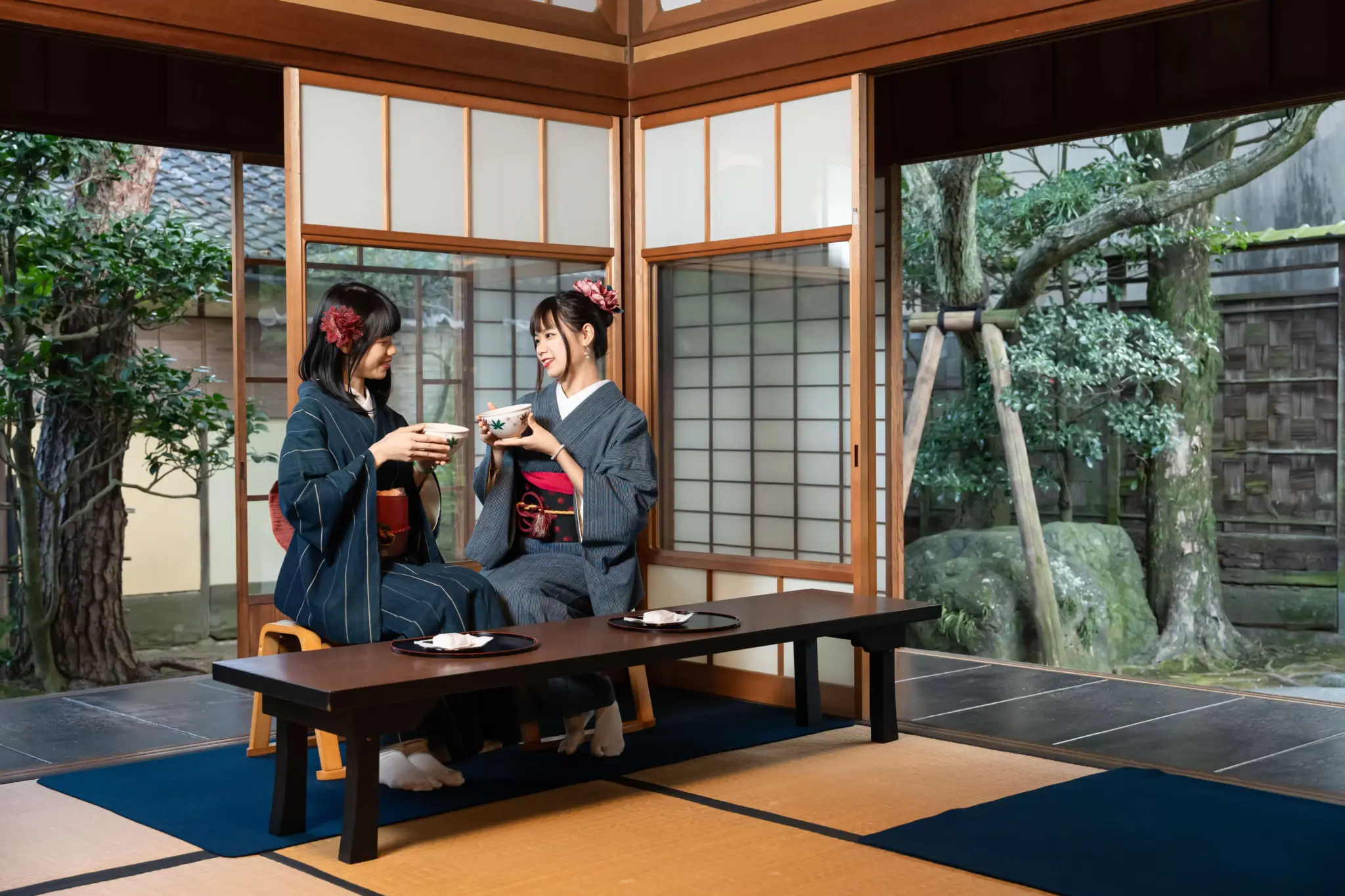
Visitors touring the residence can step into traditionally elevated tatami rooms and pause to enjoy authentic whisked matcha while gazing out upon a meticulously landscaped, serene Japanese garden. This natural sanctuary transforms dramatically between late November and early December, when the foliage erupts into vibrant autumn hues. Officially recognized as a Nationally Designated Important Cultural Property as well as a Mie Prefecture Designated Historic Site and Scenic Spot, the estate is an unmissable destination for landscape and architecture enthusiasts.
- Address: 1653 Matsusaka City, Mie Prefecture, 515-0082
- Operating Hours: 9:00 – 17:00 (Final entry at 16:30)
- Closed: Wednesdays (or the following weekday if Wednesday is a public holiday); New Year holiday period
- Admission: Adults: ¥400 | Children (Ages 6–18): ¥200
- Access: Approximately a 10-minute walk from JR/Kintetsu Matsusaka Station
Supporting Context & Metrics: The Cultural Legacy of Matsusaka Momen
The economic dominance of merchants like the Hasegawa family was deeply intertwined with regional manufacturing prowess, most notably the production of Matsusaka Momen (Matsusaka cotton).

The Textile Phenomenon of Edo
During the Edo period, when the population of the shogunate capital hovered around one million residents, Matsusaka Momen captured the fashion sensibility of the urban populace. The fabric is characterized by yarn dyed with natural indigo, woven into distinct striped patterns known as Matsusakajima.
From a distance, garments crafted from Matsusaka Momen appear deceptively plain and understated, aligning with sumptuary laws and the aesthetic preference for subtle elegance (iki). However, upon closer inspection, the intricate interplay of varied indigo stripes reveals a sophisticated and stylish design. At the height of its popularity, over 500,000 bolts of this durable cotton fabric were shipped annually from Matsusaka to Edo, cementing the region’s status as a textile titan.

Hands-On Heritage: The Matsusaka Cotton Hand-Weaving Center
Today, travelers eager to engage directly with this living craft can visit the Matsusaka Cotton Hand-Weaving Center, located on the first floor of the Matsusaka City Industrial Promotion Center. The facility offers visitors the opportunity to purchase handmade textile products and participate in hands-on weaving workshops where they can operate traditional wooden looms under the guidance of expert artisans.
- Address: 1F Matsusaka City Industrial Promotion Center, 2176 Honmachi, Matsusaka City, Mie Prefecture, 515-0081
- Operating Hours: 9:00 – 17:00
- Closed: Tuesdays
- Access: Approximately a 10-minute walk from JR/Kintetsu Matsusaka Station
Immersive Time Travel: Kimono Rental Program
To further enhance the historical immersion, travelers can rent authentic Matsusaka Momen kimonos through the local tourism association’s Machiaruki program. Donning these indigo-striped garments and strolling down the preserved residential and merchant streets creates an uncanny sense of temporal displacement.

Adding an incentive for cultural exploration, visitors wearing Matsusaka Momen kimonos are granted free admission to several of the city’s premier cultural institutions, including:
- Motoori Norinaga Memorial Museum
- Matsusaka City Cultural Properties Center
- Matsusaka City History and Folklore Museum
- Matsuura Takeshiro Memorial Museum
Official Statements & Gastronomic Excellence: The Legend of Wadakin
No journey to Matsusaka is complete without addressing its world-renowned culinary ambassador: Matsusaka beef, universally celebrated as one of Japan’s elite Sandai Gyū (Three Great Wagyu Beef varieties), alongside Kobe beef and Yonezawa beef.

Renowned for its exceptional marbling, melt-in-the-mouth texture, and rich, sweet aroma derived from specialized grain feeding and meticulous animal husbandry, Matsusaka beef represents the pinnacle of Japanese culinary craftsmanship. While numerous establishments throughout the city serve this delicacy, cultural pilgrims and culinary connoisseurs frequently direct their steps toward Wadakin, a legendary, long-established sukiyaki institution that has drawn diners from across the Japanese archipelago and beyond for generations.
+-------------------------------------------------------------+
|                     WADAKIN DINING PROFILE                  |
+-------------------------------------------------------------+
| Specialty    : Premium Thick-Sliced Matsusaka Beef Sukiyaki |
| Weekdays     : 11:30 – 19:00 (L.O. 20:00 / Close 21:00)     |
| Weekends/Hol : 11:00 – 19:00 (L.O. 20:00 / Close 21:00)     |
| Location     : 1878 Matsusaka City, Mie Prefecture          |
| Access       : 10-min walk from JR/Kintetsu Matsusaka Sta.  |
+-------------------------------------------------------------+
Dining at Wadakin offers a masterclass in culinary heritage. The restaurant prepares thickly sliced cuts of Matsusaka beef tableside using traditional sukiyaki techniques, balancing rich, savory-sweet tare broths with the buttery unctuousness of top-tier wagyu marbling. It is an experience that engages all five senses and provides a fitting finale to a day spent exploring the estates of the city’s historic merchants.

Future Outlook: Preserving Heritage in the 21st Century
As global tourism dynamics shift toward sustainable, regional, and heritage-focused travel, Matsusaka City stands as a model for how secondary destinations can leverage their unique historical assets. By meticulously preserving tangible cultural properties—such as the Ozu and Hasegawa residences—while actively revitalizing intangible heritage like Matsusaka Momen weaving, local authorities and community organizations have created a resilient tourism ecosystem.
Initiatives such as kimono-rental programs and free-admission incentives encourage slow travel, compelling visitors to linger longer, support local artisans, and gain a profound understanding of Japan’s socio-economic foundations. Moving forward, Matsusaka is poised to expand its international outreach, welcoming travelers who seek an alternative to congested metropolitan hubs in favor of genuine cultural immersion, architectural splendor, and world-class gastronomy.

For further information regarding travel planning, seasonal events, and regional guides, visitors are encouraged to consult official resources:






Belum ada komentar. Jadilah yang pertama berkomentar!