

Executive Overview: Bridging International Gateways and Edo-Era Heritage
For international travelers charting a course through Japan’s intricate rail networks, destinations rich in cultural heritage and culinary renown often pose complex navigational challenges. Yet, nestled within Mie Prefecture lies Matsusaka City—a storied municipality globally celebrated for its eponymous Wagyu beef and pristine Edo-period architecture—which remains remarkably accessible. Far from being an isolated enclave, Matsusaka functions as a hidden gem within seamless reach of Kansai International Airport (KIX), the primary international aviation hub for Western Japan.
Operating on a streamlined logistical corridor that requires just a single, subterranean transfer in Osaka, the journey from KIX to Matsusaka spans approximately two and a half hours. This comprehensive investigative guide provides a meticulous, step-by-step operational blueprint for navigating regional transit arteries, acquiring precise ticketing variants, executing seamless inter-station transfers, and transitioning from an international flight terminal to the historic heartland of Japanese gastronomy.
Whether motivated by the pursuit of world-class culinary excellence or the architectural echoes of Japan’s merchant history, this transit framework demystifies the mechanics of Japanese rail travel for both first-time visitors and seasoned explorers.
Detailed Chronology: A Step-by-Step Transit Blueprint from KIX to Matsusaka
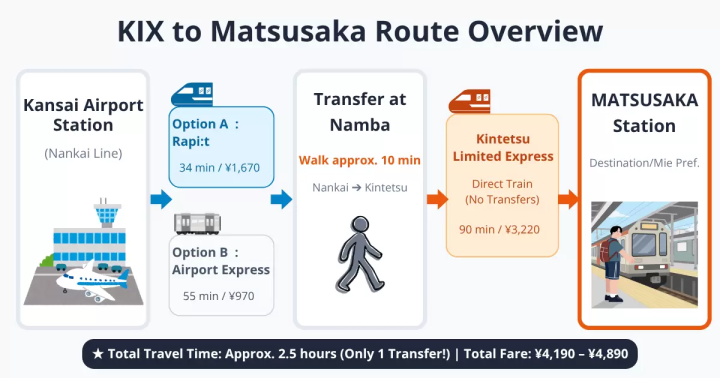
Executing a journey from the tarmac of Kansai International Airport to the platform of Matsusaka Station requires a synchronized sequence of decisions regarding speed, budgeting, and physical navigation. The route is bifurcated into two primary operational legs: the initial transit from KIX to Namba via Nankai Electric Railway, followed by the direct trunk-line connection from Osaka-Namba to Matsusaka via the Kintetsu Railway network.
[Kansai International Airport (KIX)]
             │
             ├─ Option A: Nankai Limited Express "Rapi:t" (34 mins, ¥1,670)
             └─ Option B: Nankai Airport Express (55 mins, ¥970)
             ▼
[Nankai Namba Station]
             │
             └─ 10-Minute Indoor/Underground Transfer
             ▼
[Kintetsu Osaka-Namba Station]
             │
             └─ Kintetsu Limited Express (Direct, ~90 mins, ¥3,220)
             ▼
[Matsusaka Station (Mie Prefecture)]
Phase 1: Exiting KIX and Accessing the Rail Terminal
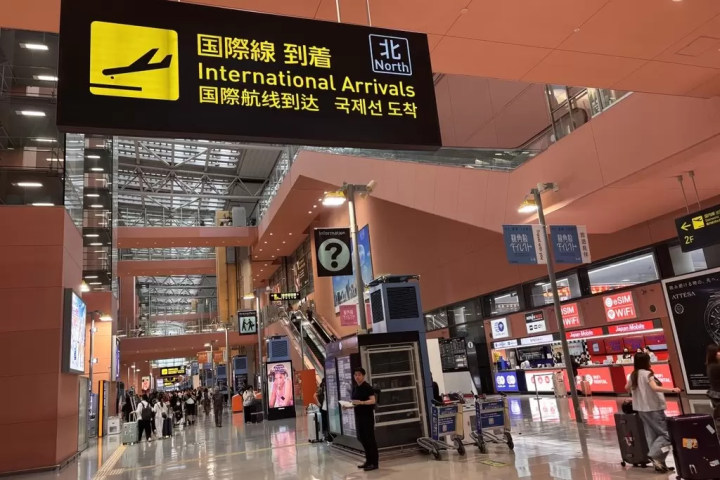
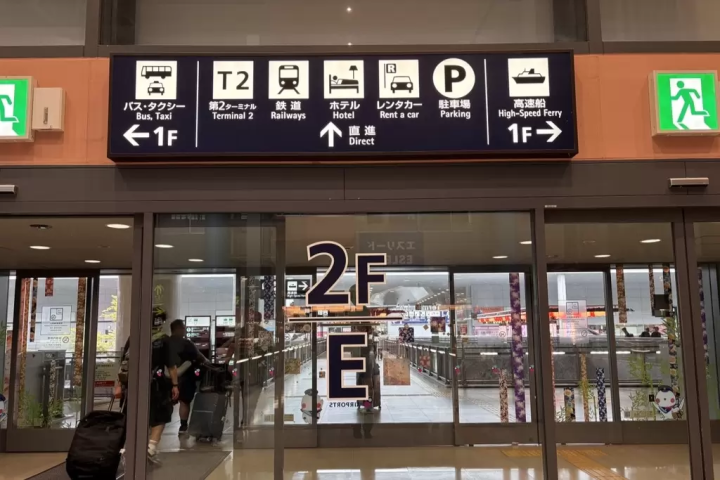
Upon clearing international arrivals on the first floor (1F) of Kansai International Airport, travelers must immediately orient themselves toward the dedicated transport infrastructure.
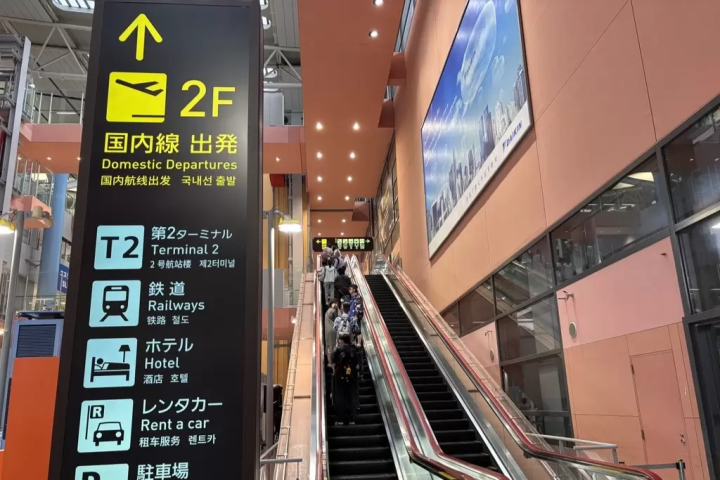
- Vertical Transition: Locate the primary directional signage indicating "Railways" and ascend via elevator or escalator to the second floor (2F).
- Pedestrian Concourse: Proceed through the automated glass sliding doors to access the climate-controlled pedestrian bridge spanning the gap between the terminal building and the airport railway station.
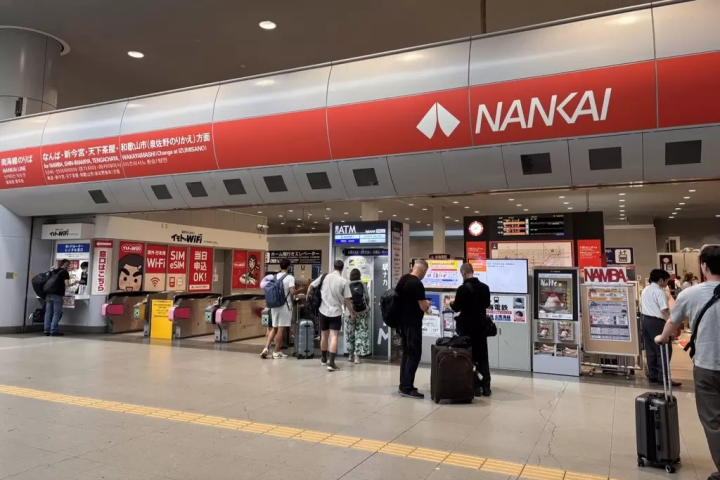
- Station Concourse Entry: Enter the unified station concourse where the ticket gates and customer service counters for both West Japan Railway (JR West) and Nankai Electric Railway sit adjacent to one another. Travelers must direct their attention specifically to the Nankai Railway infrastructure.
Phase 2: Leg One — Nankai Electric Railway (Kansai-Airport to Nankai Namba)
Travelers face an immediate tactical choice upon reaching the Nankai gates: prioritize velocity and comfort via the iconic Limited Express, or optimize expenditure via the standard commuter express.
Option A: The Limited Express "Rapi:t"
Characterized by its retro-futuristic, bullet-train-adjacent industrial design, the Rapi:t is engineered for travelers carrying substantial luggage or those prioritizing accelerated transit schedules.
- Travel Time: Fastest recorded at 34 to 40 minutes.
- Financial Investment: ¥1,670 total (comprising a ¥970 base fare and a ¥700 limited express ticket surcharge).
- Onboard Amenities: Fully guaranteed seat reservations, dedicated luggage storage compartments, and expedited acceleration curves.
Option B: The Airport Express
Operating as a standard commuter service, this option bypasses surcharges entirely at the expense of reserved seating arrangements.
- Travel Time: Approximately 55 minutes.
- Financial Investment: ¥970 total (base fare only; no supplementary tickets required).
- Onboard Amenities: Standard longitudinal commuter seating; unreserved capacity.
Ticketing Mechanics for Leg One
- Automated Vending (Method 1): Access multilingual touch-screen terminals. Select the preferred language, navigate to "Purchase Limited Express Ticket," define Namba as the terminal destination, select a departure slot, designate passenger volume, and consolidate the transaction by selecting the combined base-fare option. Payment is accepted via cash or major credit cards.
- Digital Integration & Contactless Tap (Method 2): Secure reserved seating digitally via the official Nankai Ticketless Service portal prior to arrival. For the base fare, bypass ticket machines entirely by utilizing contactless credit cards (Visa, Mastercard, etc.) or enabled smartphones at the dedicated contactless ticket barriers.
- Manned Counter Assistance (Method 3): Engage personnel at the physical Nankai Ticket Counter to verbally specify destination parameters, passenger manifests, and scheduling preferences.
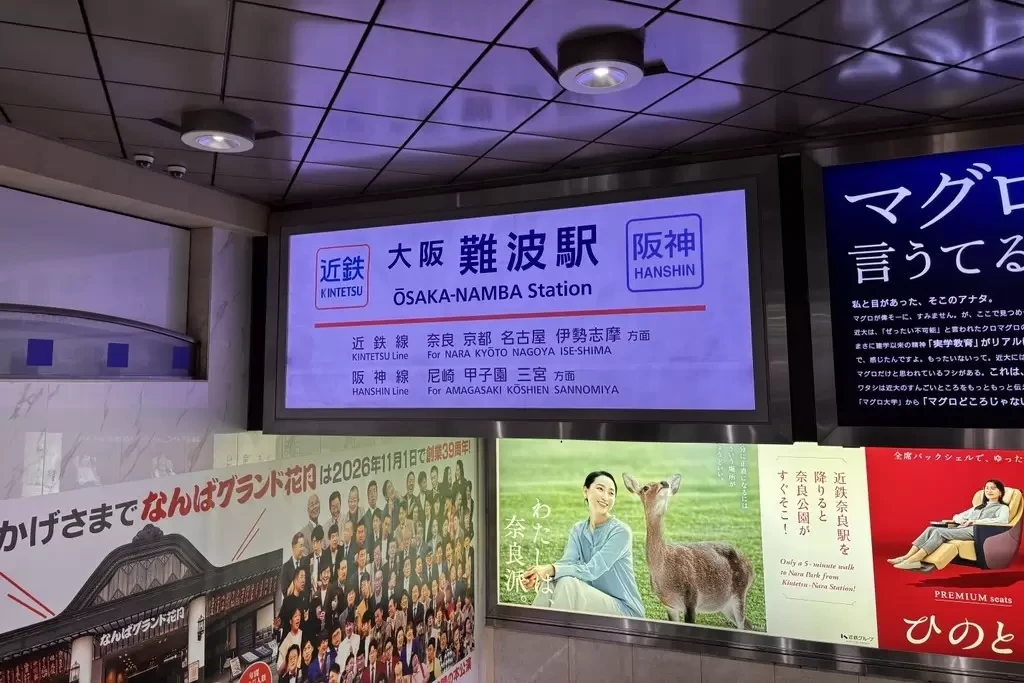
Phase 3: The Inter-Station Transfer (Nankai Namba to Kintetsu Osaka-Namba)
Transitioning between the Nankai and Kintetsu networks requires traversing a subterranean pedestrian artery beneath the urban sprawl of Osaka’s Namba district. This entire 10-minute walk is completely sheltered from surface weather patterns.
- Disembarkation & Exit: Upon arriving at the Nankai Namba terminal platforms (3F), follow overhead signage directing passengers toward the Kintetsu Line. Exit via the North Ticket Gates.
- Descent to Level 1: Immediately post-gate, utilize the descending escalators to reach the ground level (1F).
- Subterranean Descent: Follow subsequent overhead signage indicating the Kintetsu and Hanshin railway networks, descending via stairs or escalators to the basement level (B1F).
- The Underground Artery: Navigate straight through the expansive, illuminated underground concourse, maintaining a steady pace while adhering to continuous directional wayfinding cues for the Kintetsu Line.
- Arrival at Kintetsu Osaka-Namba: Emerge directly at the Kintetsu Osaka-Namba Station concourse, characterized by its distinct ticketing windows and automated barriers.
Phase 4: Leg Two — Kintetsu Limited Express (Osaka-Namba to Matsusaka)
The final leg of the rail journey utilizes the Kintetsu Limited Express network, providing a direct, single-seat ride straight into the heart of Mie Prefecture.
- Travel Time: Approximately 90 minutes.
- Financial Investment: ¥3,220 total (comprising a ¥1,880 base fare and a ¥1,340 limited express surcharge).
- Seating Policy: 100% reserved seating configuration.
Ticketing Protocols for the Kintetsu Line
- Automated Kiosks (Method 1): Interact with multilingual Kintetsu ticketing terminals. Choose "Purchase Limited Express Ticket," designate Matsusaka as the arrival station, select preferred train schedules, and ensure the prompt to bundle both the base fare and express supplement into a single transaction is executed.
- Digital Advance Booking & Tap (Method 2): Secure seats online via the Kintetsu Internet Reservation and Sales Service. Upon arrival at the station, utilize contactless payment cards or mobile wallets at the dedicated contactless ticket gates for the base fare, pairing this with the digitally downloaded express ticket on a mobile device.
- Counter Procurement (Method 3): Interact directly with ticketing agents at the manned Kintetsu service desk to secure physical documentation.
Supporting Context & Metrics: Financial and Temporal Summaries
To assist independent travel planners and corporate itinerary architects in budgeting time and capital, the quantitative parameters of the KIX-to-Matsusaka transit corridor are consolidated below:
| Leg & Service Tier | Primary Mode | Travel Duration | Financial Range (JPY) | Seating & Reservation Status |
|---|---|---|---|---|
| Leg 1 (Option A) | Nankai Rapi:t | 34–40 Minutes | ¥1,670 | Reserved Seating Mandatory |
| Leg 1 (Option B) | Nankai Airport Express | ~55 Minutes | ¥970 | Unreserved Commuter Seating |
| Transfer Phase | Pedestrian Walk | 10 Minutes | ¥0 | Indoor Subterranean Route |
| Leg 2 (Trunk) | Kintetsu Limited Express | ~90 Minutes | ¥3,220 | Reserved Seating Mandatory |
| Total Aggregate | Combined Rail Transit | ~2.5 Hours | ¥4,190 – ¥4,890 | Optimized Through-Routing |
Note: Financial valuations reflect published operational tariffs as of September 2026. Currency fluctuations and future regulatory adjustments by private railway operators may induce minor variances.
Official Statements and Regional Tourism Context
Municipal authorities and regional tourism boards have heavily emphasized infrastructural clarity to encourage international visitors to venture beyond major metropolitan circuits like Kyoto and Tokyo.
In a recent policy briefing issued by regional transit liaisons, municipal representatives underscored the strategic importance of integrating contactless payment gateways: "The integration of tap-and-go contactless entry points across private regional railways like Nankai and Kintetsu represents a paradigm shift for inbound tourism. By bridging international banking standards with traditional Japanese rail infrastructure, we remove the historic friction points of currency exchange and ticket-machine complexity."
Furthermore, tourism directors emphasize that the geographical insulation of Matsusaka is largely a historical misnomer. By collapsing a multi-step transit challenge into a coherent, two-hour-and-thirty-minute corridor, travelers gain immediate access to an impeccably preserved slice of Japanese antiquity.
Future Outlook: Infrastructure Development and Regional Accessibility
Looking ahead, municipal planning frameworks in Matsusaka and broader Mie Prefecture are aggressively modernizing visitor reception capabilities to accommodate an anticipated surge in independent international travelers.
- Digital Wayfinding Expansion: Plans are currently underway to augment subterranean transfer corridors between Nankai Namba and Kintetsu Osaka-Namba with real-time, multilingual augmented reality (AR) wayfinding beacons, designed to eliminate navigational hesitation for transit novices.
- Contactless Expansion: Following the successful deployment of tap-and-go infrastructure at major interchange nodes, Kintetsu Railway has signaled intentions to expand unreserved contactless tap capabilities across its entire regional secondary network by the close of the decade.
- Sustainable Tourism Integration: As urban overcrowding plagues primary Tier-1 Japanese destinations, targeted regional marketing campaigns aim to channel transit-savvy travelers directly from KIX into secondary heritage corridors like Matsusaka, balancing regional economic vitality with sustainable visitor distribution.
By mastering the streamlined transit architecture connecting Kansai International Airport to Matsusaka Station, travelers unlock a premier intersection of world-class culinary heritage and living Edo-period history—proving that deep cultural immersion remains effortlessly within reach.







Belum ada komentar. Jadilah yang pertama berkomentar!