

Executive Overview
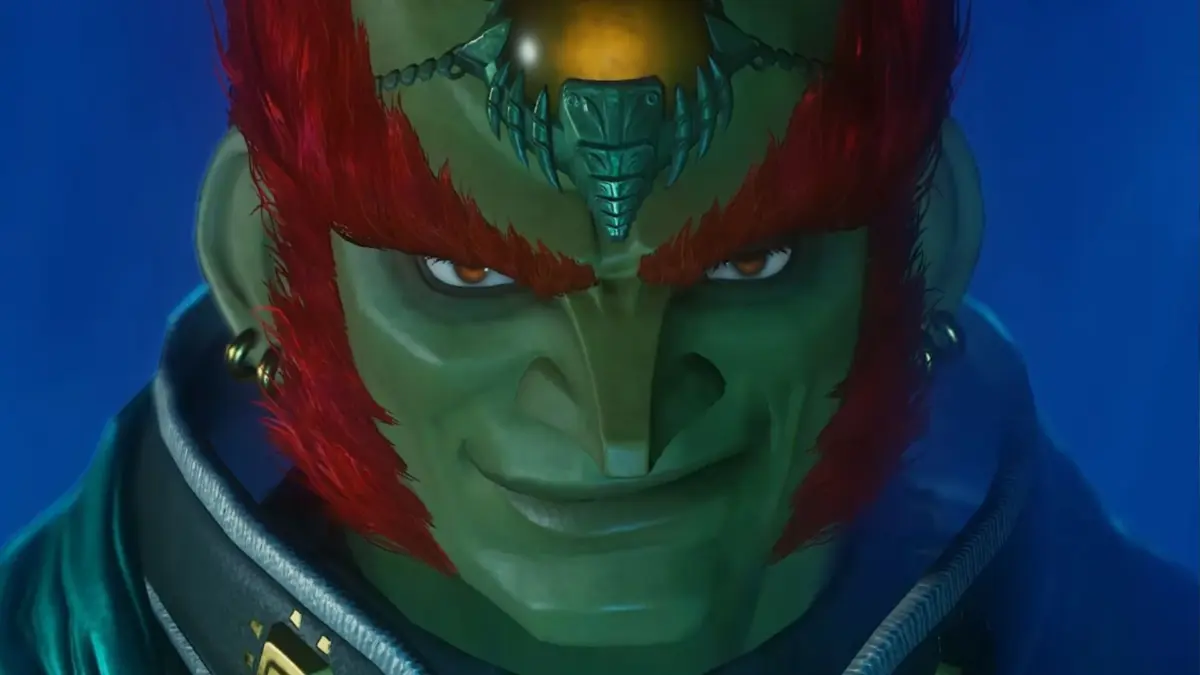
In an unexpected development that has captivated the global interactive entertainment industry, a promotional video recently surfaced on Nintendo’s official Japanese YouTube channel. The unannounced asset provides an initial glance at what appears to be a ground-up remake of The Legend of Zelda: Ocarina of Time, tailored for Nintendo’s unannounced next-generation hardware platform, tentatively designated by market analysts as the "Nintendo Switch 2."
The 30-second teaser reel—quietly published without prior press advisories—offers a concentrated look at real-time render passes, modernized environmental fidelity, and significant mechanical adjustments to core gameplay systems. Among the visual updates are fully realized character redesigns for key figures such as Sheik and Saria, enhanced scale perspective during early-game sequences, and a fundamental overhaul of mounted combat mechanics.
While regional Nintendo entities, including Nintendo of America and Nintendo of Europe, have maintained strict media blackouts without mirroring the video asset, industry observers and digital analysts have begun disassembling the footage frame-by-frame. The emergence of this material highlights Nintendo’s strategic positioning of legacy intellectual property as anchor content for its upcoming hardware generation, signaling a bridge between nostalgic linear game design and modern visual processing standards.
Detailed Chronology of the Japanese Teaser Drop
The release of the footage unfolded without typical corporate pre-announcements or social media teasers. At approximately 09:00 JST, the video asset was indexed on the Nintendo Official Channel (Japan) YouTube page. The following breakdown categorizes the key sequences revealed across the 30-second runtime.
+-------------------------------------------------------------------------------+
|                      TEASER RUNTIME BREAKDOWN & ANALYSIS                      |
+--------------------+----------------------------------------------------------+
| TIMECODE          | VISUAL FOCUS & TECHNICAL OBSERVATION                     |
+--------------------+----------------------------------------------------------+
| 0:00 - 0:05        | - Ganondorf playing the pipe organ inside his citadel.   |
|                    | - Real-time volumetric fog & dynamic shadow mapping.      |
+--------------------+----------------------------------------------------------+
| 0:06 - 0:11        | - Child Link gazing up at the Great Deku Tree.           |
|                    | - Photorealistic foliage & enhanced atmospheric depth.  |
|                    | - Visual design reveal for Saria.                       |
+--------------------+----------------------------------------------------------+
| 0:12 - 0:17        | - Reveal of Sheik featuring updated model physics.       |
|                    | - Introduction of long, physics-enabled ponytail model.  |
|                    | - Frame 412: Single-frame appearance of Dark Link in the |
|                    |   reflective chambers of the Water Temple.                |
+--------------------+----------------------------------------------------------+
| 0:18 - 0:23        | - Montage of mid-game boss encounters.                   |
|                    | - Multi-arena dynamic lighting setups and AI interactions.|
+--------------------+----------------------------------------------------------+
| 0:24 - 0:30        | - Overhauled mounted combat sequence featuring Link and  |
|                    |   Epona. Full 3rd-person camera positioning for archery. |
+--------------------+----------------------------------------------------------+
0:00 – 0:05: The Pipe Organ Sequence
The teaser opens on an ominous, atmospheric note: Ganondorf seated at a massive organ within his castle tower. The framing echoes the climactic pre-boss sequence of the 1998 Nintendo 64 original, yet it displays striking lighting improvements. Volumetric fog cascades across the stone floor while dynamic, light-casting shadow maps align with the flickering candles ornamenting the hall. Sound design in this opening segment relies on a fidelity re-recording of the classic pipe organ theme, featuring distinct reverb characteristics indicative of real-time environmental audio acoustics.
[N64 Original: Fixed Camera / Low-Poly Architectural Assets]
       │
       ▼
[Switch 2 Remake Engine: Volumetric Fog / Real-Time Shadowing / Dynamic Acoustics]
0:06 – 0:11: Kokiri Forest and the Great Deku Tree
The perspective transitions rapidly to the game’s opening act. A young Link stands at the root threshold of the Great Deku Tree, looking up at the entity. The camera orientation highlights the massive scale of the ancient tree, leveraging a wide field-of-view enabled by next-generation hardware pipelines.
                                  ▲ (Scale Ceiling Expansion)
                                 /
                                /
                               /
    [Great Deku Tree Canopy]  /         <-- Advanced Foliage Physics
                             /_________
                                 | |
                                 | |
 [Child Link Perspective] -------> o
During this sequence, viewers are given a brief glimpse of Saria. Her design retains the classic Kokiri aesthetic—green tunic and short green hair—refreshed with detailed cloth shaders and subtle facial animations that go beyond the static expressions of earlier iterations.
0:12 – 0:17: Character Designs and the Dark Link Sub-Frame
The second quarter of the trailer presents a sequence of major character reveals. Sheik appears atop a rain-swept ledge, exhibiting a subtle design change: a fluidly animated, full-length ponytail that moves naturally with wind and character motion.
Hiding within this montage—specifically around the 14-second mark—is a single-frame glimpse of Dark Link.
[Frame 411: Normal Environment Rendering]
       │
       ▼
[Frame 412: Sub-Frame Reveal] ---> Dark Link Model rendered in Water Temple
       │                          Reflective Water Plane Architecture
       ▼
[Frame 413: Sequence Cut to Boss Montage]
The mirror-matched antagonist is positioned within the central chamber of the Water Temple, surrounded by water planes that reflect both character models in real time.
0:18 – 0:23: Boss Encounters and Structural Combat
A rapid montage showcases Link engaging several iconic bosses across diverse environments. Highlights include combat within volcanic chambers and subterranean aquatic arenas. The trailer emphasizes responsive collision animations, enemy telegraphing, and spatial lighting effects, such as the glow of fire-based attacks illuminating Link’s Hylian Shield.
0:24 – 0:30: Mounted Combat Engine Overhaul
The final sequence presents a significant change to core gameplay mechanics: horseback combat featuring Link atop Epona. In the 1998 release and its 2011 Nintendo 3DS counterpart, archery on horseback was largely restricted to fixed aim angles or a locked first-person perspective (most notably during the Gerudo Archery Training mini-game).
TRADITIONAL HORSEBACK ARCHERY (N64 / 3DS)
[Player Input] ---> [Locks First-Person Camera] ---> [Static Aiming Reticle]

OVERHAULED HORSEBACK COMBAT (SWITCH 2 REVEAL)
[Player Input] ---> [Dynamic 3rd-Person Orbit] ---> [Full Free-Look Aiming + Physics-Driven Motion]
The new footage demonstrates a fluid, dynamic third-person camera system that orbits Link as he draws his bow while riding across Hyrule Field. The camera remains agile, allowing players to aim, charge arrows, and track moving targets without snapping into an immersive-breaking first-person view.

Supporting Context, Technical Analysis & Historical Metrics
To understand the impact of this unannounced teaser, one must examine Ocarina of Time within both its historical release context and modern technical parameters. Originally published in November 1998, the title set fundamental standards for 3D action-adventure games, pioneering features such as contextual target-locking (Z-targeting) and dynamic day-night environmental cycles.
+-------------------------------------------------------------------------------+
|               HISTORICAL RELEASES & COMMERCIAL METRICS                        |
+-----------------------+-------------------+-----------------------------------+
| PLATFORM RELEASE      | LAUNCH YEAR       | GLOBAL UNITS SHIPPED / SOLD       |
+-----------------------+-------------------+-----------------------------------+
| Nintendo 64 (Original)| 1998              | 7.60 Million Units                |
| Nintendo GameCube     | 2002 / 2003       | Included in Master Quest Bundles  |
| Virtual Console (Wii) | 2007              | Digital Distribution Milestone    |
| Nintendo 3DS (3D Edit)| 2011              | 6.44 Million Units                |
+-----------------------+-------------------+-----------------------------------+
Technical Paradigm Comparison
The structural leap represented in the leaked Japanese trailer highlights decades of hardware iteration. While the 2011 Nintendo 3DS edition improved geometry counts and texture resolutions, it was constrained by handheld hardware limits. The footage for the Switch 2 build indicates a move toward modern rendering techniques:
N64 (1998)                     3DS (2011)                     Switch 2 Remake (TBD)
├─ 320x240 Resolution          ├─ 400x240 (3D Mode) Resolution ├─ Target 1080p/4K Scaled
├─ Dynamic Poly Limits (~500)  ├─ Enhanced Asset Fidelity     ├─ High-Density Geometry
└─ Fixed Lighting Pass └─ Pre-Baked Shadow Maps └─ Real-Time Volumetric Lighting- Geometry Density: Character models feature organic curvature and skeletal physics rigging, eliminating the sharp polygon edges present in earlier generations.
- Surface Shaders and PBR: Materials such as leather, metal, stone, and water utilize physically based rendering (PBR) pipelines to interact realistically with environmental light sources.
- Camera Systems: The shift from rigid, rail-bound third-person tracking to dynamic, high-orbit third-person systems suggests an overhaul of the underlying game loop. This approach prioritizes situational awareness during chaotic encounters, such as mounted archery combat.
Official Statements & Regional Marketing Discrepancies
As of this writing, Nintendo Corporate Headquarters in Kyoto has not issued a formal global press release regarding the video asset. The media strategy surrounding this release has created a distinct regional variance across Nintendo’s primary distribution markets.
                    ┌────────────────────────┐
                    │ Nintendo Co., Ltd.     │
                    │ (Kyoto Headquarters)   │
                    └───────────┬────────────┘
                                │
         ┌──────────────────────┼──────────────────────┐
         ▼                      ▼                      ▼
┌──────────────────┐  ┌──────────────────┐  ┌──────────────────┐
│ Nintendo Japan   │  │ Nintendo America │  │ Nintendo Europe  │
├──────────────────┤  ├──────────────────┤  ├──────────────────┤
│ - Asset Uploaded │  │ - Asset Omitted  │  │ - Asset Omitted  │
│ - No Press Note  │  │ - No Press Note  │  │ - No Press Note  │
└──────────────────┘  └──────────────────┘  └──────────────────┘
When queried by industry journalists regarding the uneven distribution of the video, representatives from Western divisions reiterated standard corporate protocol:
"Nintendo does not comment on rumor, speculation, or unannounced global marketing schedules."
Industry analysts suggest that the asymmetrical deployment of promotional materials often points to localized testing or staggered marketing campaigns. Tokyo-based media analyst Dr. Kenji Ito noted:
"Staggered regional releases on digital channels frequently precede major hardware platform announcements. By deploying localized assets without simultaneous Western translations, publisher networks can evaluate consumer engagement, monitor frame-by-frame asset teardowns, and manage audience expectations prior to formal earnings reports or global hardware showcases."
Future Outlook & Market Implications
The revelation of a modernized Ocarina of Time build tailored for Nintendo’s next-generation platform carries substantial strategic weight for the gaming landscape.
+-------------------------------------------------------------------------------+
|                    PROJECTED ROADMAP & INDUSTRY IMPACT                        |
+-------------------------------------------------------------------------------+
|  Phase 1: Regional Asset Indexing & Media Dissemination (CURRENT PHASE)      |
|  - Frame-by-frame technical teardowns by digital analysis groups.             |
|  - Aggregation of community feedback regarding mechanical changes.           |
+-------------------------------------------------------------------------------+
                                       │
                                       ▼
+-------------------------------------------------------------------------------+
|  Phase 2: Formal Hardware / Software Synchronized Showcase                    |
|  - Expected integration into upcoming global Nintendo Direct briefings.       |
|  - Clarification on cross-generational support or platform exclusivity.       |
+-------------------------------------------------------------------------------+
                                       │
                                       ▼
+-------------------------------------------------------------------------------+
|  Phase 3: Market Deployment & Genre Position                                  |
|  - Serving as a launch anchor bridging classic dungeon-focused design with    |
|    the open-world engine standards set by recent franchise entries.           |
+-------------------------------------------------------------------------------+
Strategic Integration with Next-Gen Hardware
With the Nintendo Switch approaching the end of its active lifecycle, securing a strong launch lineup for its successor is essential. Re-introducing Ocarina of Time—universally regarded as a foundational landmark in gaming—serves as an anchor strategy for early adopters, balancing nostalgia with visual upgrades.
Reconciling Design Eras
The recent Zelda titles (Breath of the Wild and Tears of the Kingdom) redefined open-world design, but a audience segment continues to express interest in the structured, dungeon-focused progression of classic entries. A rebuilt Ocarina of Time offers a way to bridge this gap:
[Classic Linear Structure]
(Structured Dungeons)         ___ [Switch 2 Ocarina Remake]
                              /    (Classic Progression + Modern Engine/PBR)
[Modern Open-World Engine]   /
(Freeform Exploration)      /
By presenting a classic linear adventure powered by a modern rendering engine, Nintendo can cater to traditional fans while delivering the visual standards modern players expect.
As media channels continue to dissect the Japanese video release, global audiences await official confirmation from Western PR outlets. Whether this trailer represents a standalone launch title or a broader initiative to showcase next-generation hardware capabilities, the return to Hyrule’s most iconic period marks an important milestone for the industry’s ongoing hardware generation shift.







Belum ada komentar. Jadilah yang pertama berkomentar!