On Tuesday, November 3, 2026—commemorating Japan’s National Culture Day—the historic city of Matsusaka in Mie Prefecture will host its milestone 65th Ujisato Festival. This signature annual event transforms the ancient castle town into a living museum, paying homage to the legendary regional lord, Gamo Ujisato (1556–1595), who laid the architectural, economic, and cultural foundation for modern Matsusaka.
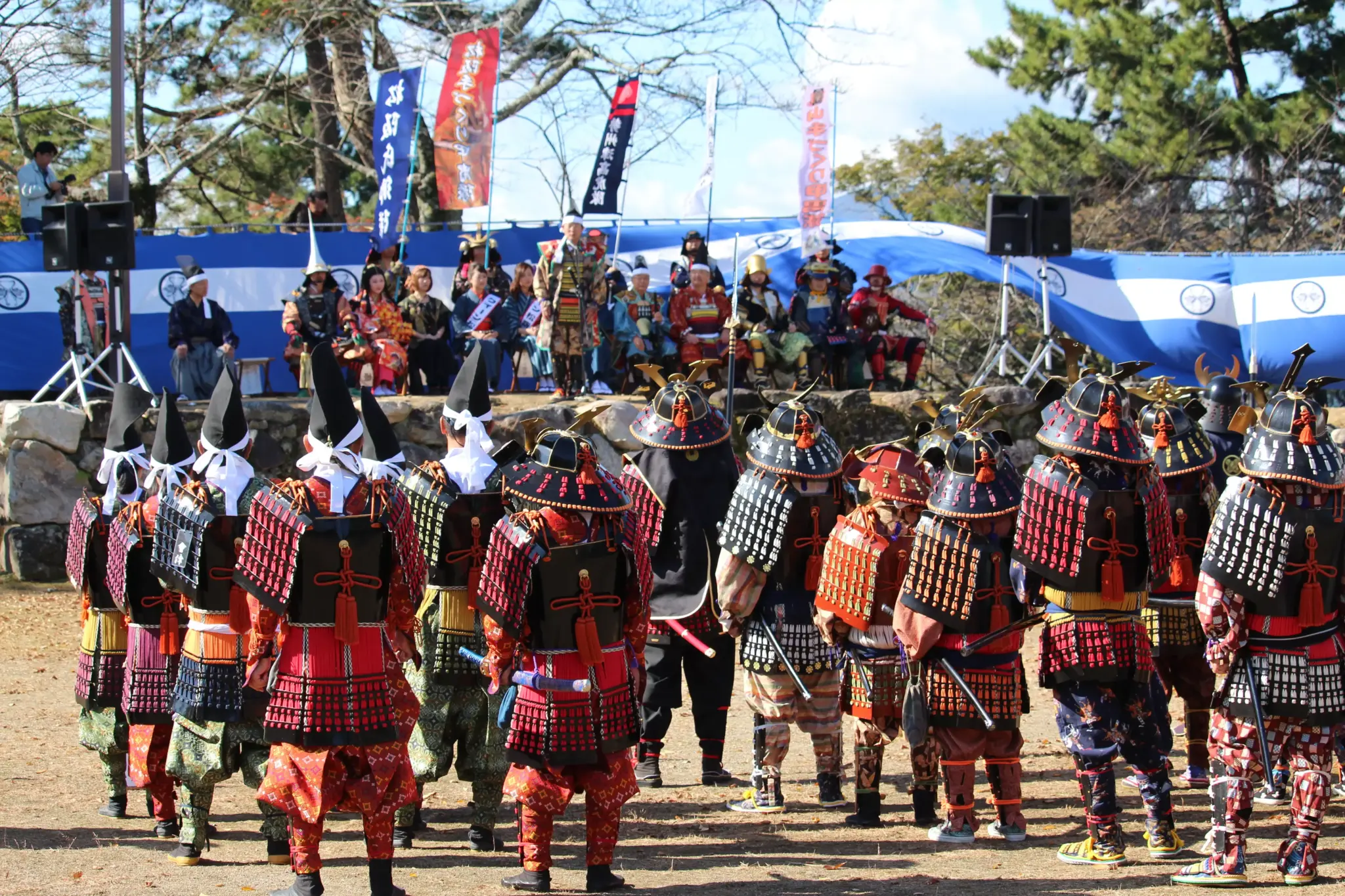
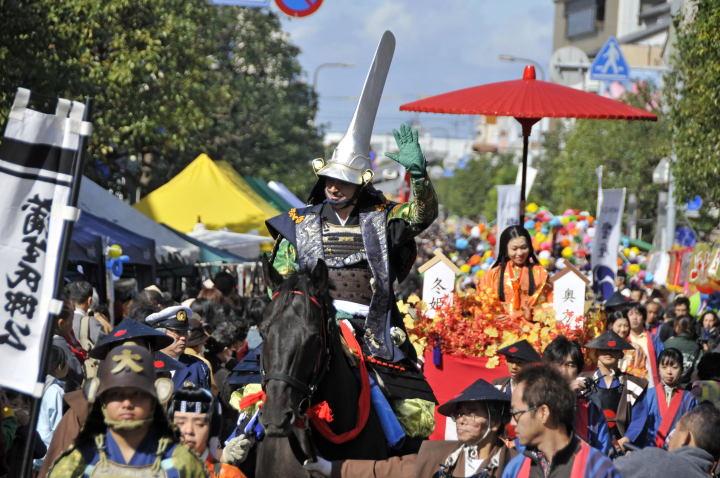
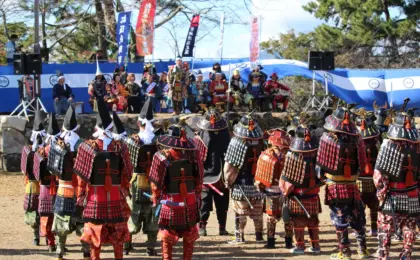
At the core of the celebrations is a majestic warrior procession featuring over 200 volunteer participants clad in authentic, meticulously crafted Sengoku-era armor. Accompanied by the resounding beat of traditional war drums, the flash of weapon replicas, and the flutter of streaming clan banners, the parade cuts through the centuries-old townscape. For its 65th anniversary, the festival introduces a rare historical expansion: alongside the iconic depiction of Gamo Ujisato—riding proudly on horseback in his signature helmet—and his wife, Fuyuhime, in a vibrant, period-accurate kimono carriage, three additional historical lords of Matsusaka will debut in full armor.
Beyond the grand military procession, the festival offers an immersive dive into regional heritage. Visitors can experience traditional archery ceremonies at the Matsusaka Castle Ruins, witness dynamic regional folk dances like the Shongai Solan, sample local delicacies such as Matsusaka-style chicken yakiniku in savory miso sauce, and step inside the opulent, centuries-old estates of the city’s legendary merchant dynasties. Blending historical pageantry with community celebration, the 65th Ujisato Festival stands as a premier cultural destination for travelers and history enthusiasts alike.
Detailed Chronology of the Festival Day
The day’s itinerary is meticulously structured to guide spectators through a narrative of military history, civic celebration, and Edo-period merchant wealth.
[09:00] Opening Ceremony & Traditional Archery (Matsusaka Castle Ruins)
   │
   ├──> [09:30 - 11:30] Grand Warrior Procession (Passing Castle Guard Residences & Merchant District)
   │         │
   │         └──> Featured Highlights: 200+ Armored Warriors, Gamo Ujisato, Fuyuhime, & 3 New Historic Lords
   │
   ├──> [11:30 - 16:00] Stage Performances, Folk Dances & Cultural Exhibitions
   │         │
   │         └──> Shongai Solan, Matsusaka Suzu Odori, Hip-Hop, Hula, & Live Music
   │
   ├──> [10:00 - 16:00] Ujisato Citizens' Tea Experience (Former Hasegawa & Ozu Residences)
   │
   └──> [All Day] Food Stalls, Chicken Yakiniku, Festival Games & Limited Castle Stamps
Morning: The Opening Shot and the Grand Procession
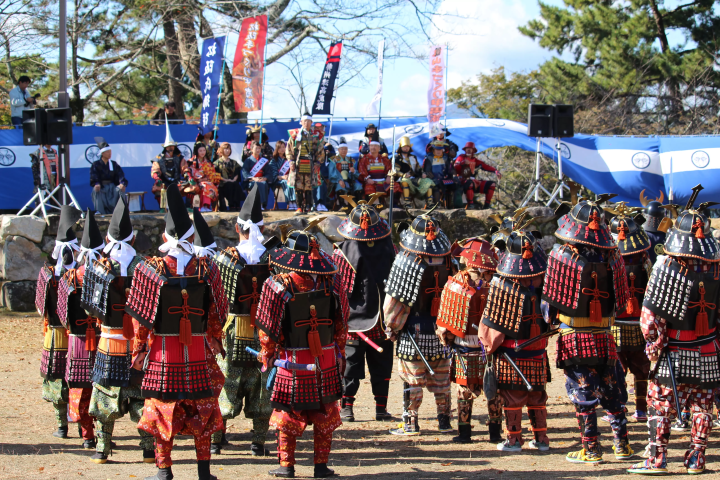
The festivities officially commence at 9:00 AM atop the stone ramparts of the Matsusaka Castle Ruins. The crisp autumn air of a November morning is pierced by the sharp snap of a ceremonial arrow sailing over the heads of more than 200 assembled samurai. This symbolic archery ritual acts as a spiritual declaration, signaling the official departure of the troops for battle and setting the stage for the day’s events.
Led by a commander portraying Gamo Ujisato, the grand procession steps off from the castle grounds. The route weaves past the historic Castle Guard Residences—one of the few remaining national cultural properties in Japan where descendants still reside in homes originally built for samurai guards.
As the column winds its way toward the Matsusaka Central Shopping District, spectators are treated to a living tableau of 16th-century Japan. Infantrymen carrying long spears, matchlock gunners, flag-bearers, and drummers move in disciplined unison. A key highlight for the 65th anniversary is the special inclusion of three additional historical lords of Matsusaka, each outfitted in custom armor, marching alongside Ujisato and Fuyuhime.
Midday to Afternoon: Cultural Performances and Culinary Exploration
By late morning, the focus shifts toward the heart of the city, where multiple stages host an eclectic mix of traditional and contemporary performances. The schedule features the rhythmic energy of the Shongai Solan and Shongai song-and-dance troupes, alongside the lively footwork of the Matsusaka Suzu Odori (bell dance). To appeal to contemporary audiences, the entertainment roster also expands to include energetic hip-hop routines, hula dance showcases, and live acoustic music.
Simultaneously, the air across the central district fills with the rich, savory aromas of local culinary traditions. Food stalls line the streets, offering regional specialties headlined by Matsusaka’s unique variation of chicken yakiniku—tender poultry grilled to perfection and slathered in a rich, house-made red miso paste.
For those seeking a quieter, more contemplative experience, the Ujisato Citizens’ Tea Experience opens the doors of the city’s iconic merchant estates. Visitors can sit for a traditional bowl of matcha within the historic tatami rooms of the Former Hasegawa and Former Ozu Residences, peering out over manicured stroll gardens that have survived largely unchanged since the Edo period.
Supporting Context & Historical Metrics
To fully appreciate the Ujisato Festival, one must examine the profound historical impact of its namesake and the unique socioeconomic ecosystem he engineered in Mie Prefecture.
Gamo Ujisato: The Visionary Lord of Matsusaka
Born in 1556, Gamo Ujisato was a brilliant military commander under two of Japan’s great unifiers, Oda Nobunaga and Toyotomi Hideyoshi. Recognized not only for his battlefield prowess but also for his deep appreciation of the arts—including the Way of Tea under Sen no Rikyu—Ujisato was appointed to the Matsusaka region in 1588.
Tasked with establishing a secure political and economic foothold, Ujisato accomplished a feat of engineering and urban planning by constructing Matsusaka Castle in a remarkably short span of just three years. Recognizing that a secure castle needed a thriving economic engine, Ujisato instituted progressive policies that broke with feudal monopolies. He invited powerful merchants from neighboring provinces to settle in his new domain, offering tax exemptions and commercial freedoms.
The City of Rich Merchants
Ujisato’s gamble paid off exponentially. The merchants who settled in Matsusaka built commercial empires spanning textiles, paper, and finance, with operations stretching all the way to the shogunal capital of Edo (modern-day Tokyo). Families such as the Hasegawa and the Ozu amassed fortunes so vast that Matsusaka earned the enduring moniker "The City of Rich Merchants."
Historical Asset / Estate
Key Figures Associated
Primary Architectural & Cultural Significance
Matsusaka Castle Ruins
Gamo Ujisato (Founder)
Constructed between 1588–1591; features impressive dry-stone ishigaki walls and serves as the festival’s operational core.
Castle Guard Residences
Samurai Guards & Descendants
Rare surviving Edo-period quarters where families still reside, preserving the original urban layout of the samurai district.
Former Hasegawa Residence
Hasegawa Jirobei
A sprawling 30-room merchant estate featuring a main house, detached storehouses, a stroll-style garden, and an authentic teahouse.
Former Ozu Residence
Ozu Seizaemon
Historic center of cotton and paper trade wealth, famously housing the Manryo-bako—a giant money chest symbolizing Edo-period mercantile opulence.
Official Statements and Civic Perspectives
In statements released ahead of the 65th-anniversary milestone, local tourism authorities and municipal cultural boards underscored the festival’s dual role in preserving heritage and driving regional revitalization.
"The Ujisato Festival is far more than a historical reenactment; it is the heartbeat of Matsusaka’s collective identity," noted a representative from the Matsusaka Executive Tourism Committee. "When Gamo Ujisato laid the foundation stones of our castle over four centuries ago, he built a city that balanced martial discipline with mercantile innovation. For 65 years, this festival has allowed generations of residents and visitors to walk those exact same paths, wearing the armor of our ancestors while celebrating the vibrant, living culture of modern Mie Prefecture."
Cultural preservationists have equally lauded the event’s evolution. By introducing new historical figures for the 2026 anniversary—such as the expanded council of regional lords—the festival continually updates its narrative scope without compromising historical integrity. Furthermore, the active participation of local citizens as volunteer armor-bearers, tea servers, and dance troupe members highlights a rare intergenerational transmission of intangible cultural heritage.
Future Outlook: Preserving Heritage for the Next Generation
As the Ujisato Festival celebrates its 65th year, city planners and tourism boards are looking toward sustainable futures that honor Matsusaka’s rich past while embracing global audiences.
Digital Preservation and Augmented Tourism: Recent initiatives have introduced digital stamp rallies across the Matsusaka Castle Ruins and merchant houses, merging physical exploration with smartphone-based engagement to attract younger demographics and international tourists.
Infrastructure and Accessibility: Located within a convenient 15-minute walk from Matsusaka Station, the festival zone continues to improve pedestrian navigation, multilingual signage, and universal accessibility around primary historic sites like the Former Hasegawa and Ozu Residences.
Deepening Cultural Exchanges: Plans are underway to expand international outreach, highlighting Matsusaka’s unique intersections of samurai architecture, merchant history, and culinary prestige (including world-famous Matsusaka beef and regional chicken yakiniku) on the global stage.
By maintaining a delicate balance between rigorous historical authenticity and dynamic community celebration, the Ujisato Festival secures its place as one of the Chubu region’s most enduring and anticipated cultural traditions.
Visitor Information
Event Name: The 65th Ujisato Festival
Date: Tuesday, November 3, 2026 (Culture Day)
Time: Beginning at 9:00 AM
Location: Matsusaka Castle Ruins and Matsusaka Central Shopping District, Mie Prefecture (All venues within a 15-minute walk from Matsusaka Station)
Key Highlights: Opening archery ceremony, 200+ samurai warrior procession, traditional Shongai Solan dances, merchant house tea experiences, and local food stalls.









Belum ada komentar. Jadilah yang pertama berkomentar!