

Executive Overview
For international travelers and domestic adventurers alike, traversing Japan’s breathtaking Northern Alps has historically required meticulous logistical planning, multiple vehicle transfers, and complex ticket reservations. However, an upcoming travel initiative launching in the autumn of 2026 aims to completely transform this paradigm. A newly announced, fully inclusive direct bus tour departing from Nagoya offers seamless access to the legendary Tateyama Kurobe Alpine Route—often hailed as the "Roof of Japan."
Scheduled for key autumn foliage departure dates in September and October 2026, this comprehensive day-trip package eliminates the traditional pain points of alpine travel. Because private vehicles are strictly prohibited along the Alpine Route to preserve its pristine ecology, visitors must normally navigate a dizzying array of six distinct transportation modes, including cable cars, tunnel electric buses, ropeways, and highland buses. This new guided excursion bundles all transit tickets, highway tolls, professional multilingual guidance, and meals into a single, effortless itinerary. Designed to accommodate both Japanese nationals and international tourists through synchronized interpretation systems, the tour bridges the gap between urban convenience and high-altitude wilderness. This report provides an exhaustive breakdown of the itinerary, logistical metrics, scenic highlights, and the broader economic and tourism implications of this premier alpine transit offering.
Detailed Chronology: The 2026 Day-Trip Itinerary
The meticulously engineered schedule is built to maximize daylight hours, offering participants an immersive mountain experience while maintaining a strict timeframe to ensure a safe return to Nagoya by late evening.
Morning Departure: Leaving the Urban Metopolis
- 06:50 AM — Departure from Nagoya Station: The journey begins in the heart of Nagoya. Participants gather for check-in and board a comfortable, air-conditioned highway coach. Multilingual tour guides—equipped with English and Chinese translation support and digital apps—welcome travelers and distribute the day’s first provision: a carefully curated bento box lunch designed to be enjoyed during the transit phase.
- 06:50 AM to 12:00 PM — Highway Transit & Mountain Approach: The coach travels northward through the Chubu region, transitioning from urban sprawl to the dramatic, rising topography of the Gifu and Toyama prefectures. During this time, travelers receive a comprehensive safety and route briefing, preparing them for the multi-modal transit system awaiting them at the gates of the Northern Alps.
Midday to Afternoon: Traversing the Tateyama Kurobe Alpine Route
Arriving at the threshold of the mountain corridor at approximately 12:00 PM, the tour initiates a seamless, pre-booked transit chain across the spine of the mountains, moving from the Toyama Prefecture side to the Nagano Prefecture side (or vice versa, depending on seasonal scheduling).
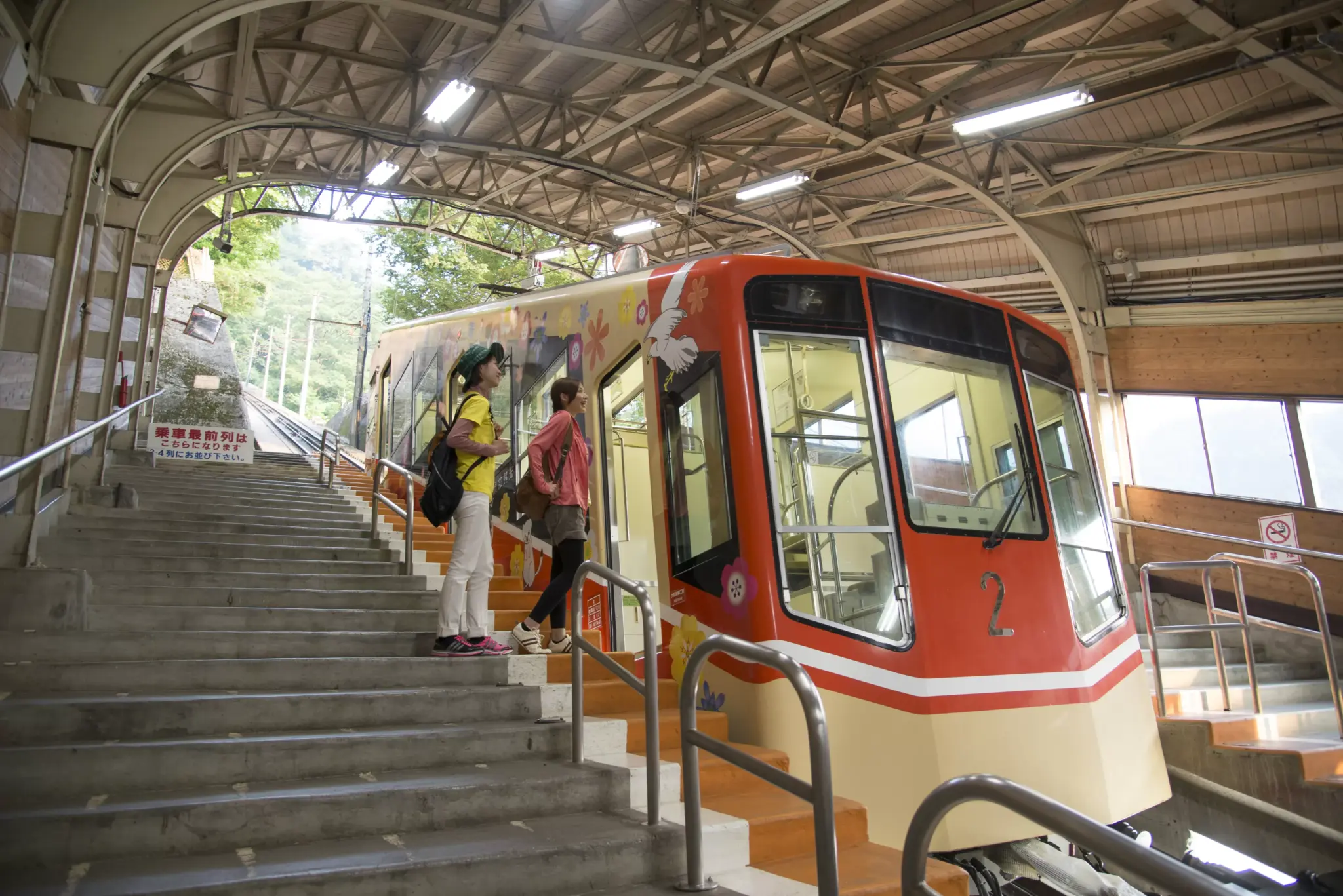
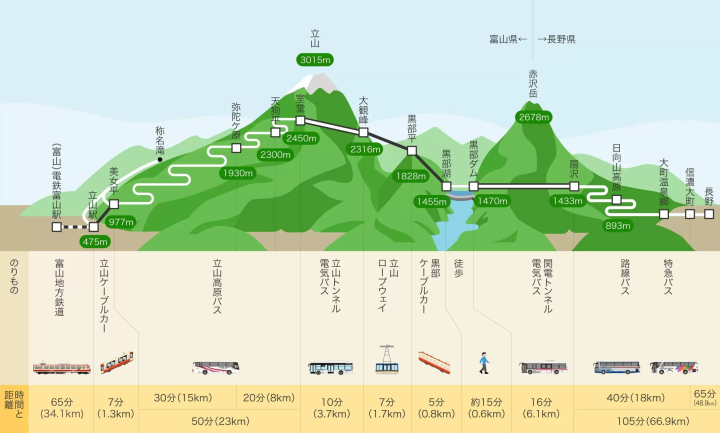
- Tateyama Station to Bijodaira Station (Tateyama Cable Car): The journey opens with a steep ascent aboard the classic cable car, which climbs approximately 500 vertical meters in just seven minutes. This rapid elevation gain serves as the gateway to the upper mountain ecosystem.
- Bijodaira to Murodo Station (Tateyama Highland Bus): Passengers transfer to a high-altitude bus that winds its way up the mountain slopes. As the vegetation transitions from dense beech forests to alpine scrublands, travelers are treated to expansive views of the surrounding peaks.
- Murodo Station (The High-Altitude Hub at 2,450 Meters): As the highest station along the route, Murodo serves as the primary base camp for exploration. Here, visitors are given free time to explore iconic sights on foot:
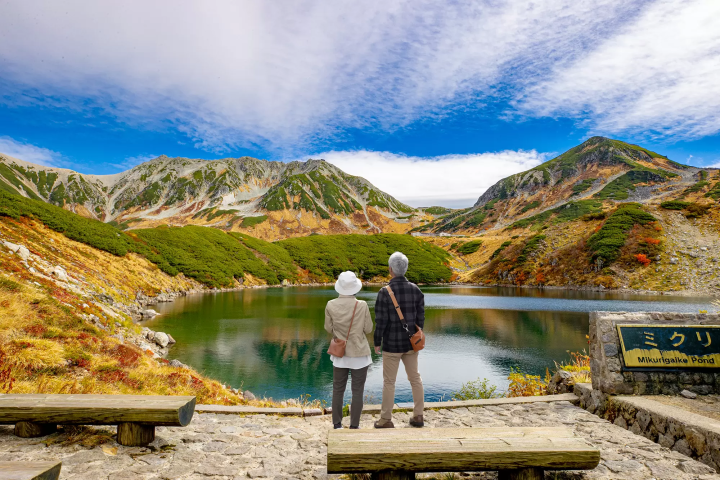
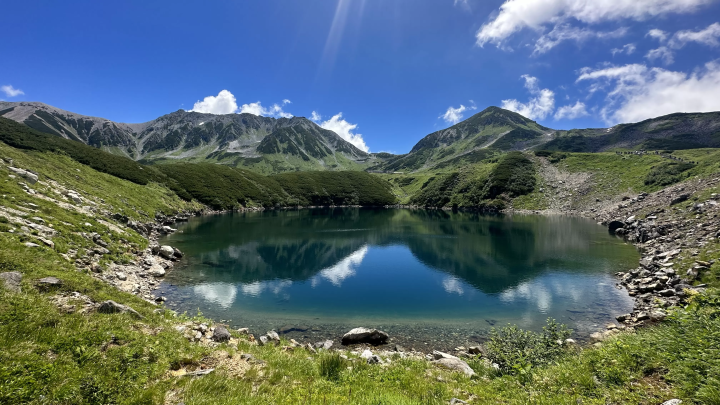
- Mikurigaike Pond: A striking volcanic crater lake formed roughly 10,000 years ago. On clear autumn days, the pristine blue waters mirror the surrounding peaks, framed by vibrant red and yellow alpine foliage.
- Alpine Wildlife Spotting: Murodo is a noted habitat for the rock (Nichiryo), a national special natural monument and the prefectural bird of Toyama. These remarkably resilient creatures adapt to high altitudes by changing their plumage from brown in summer to pure white in winter, occasionally allowing visitors a rare, respectful glimpse of alpine wildlife up close.
- Murodo to Mount Taikanbo (Tateyama Tunnel Electric Bus): Traveling completely underground through the heart of Mount Tateyama, zero-emission electric buses transport guests swiftly to the eastern ridge.
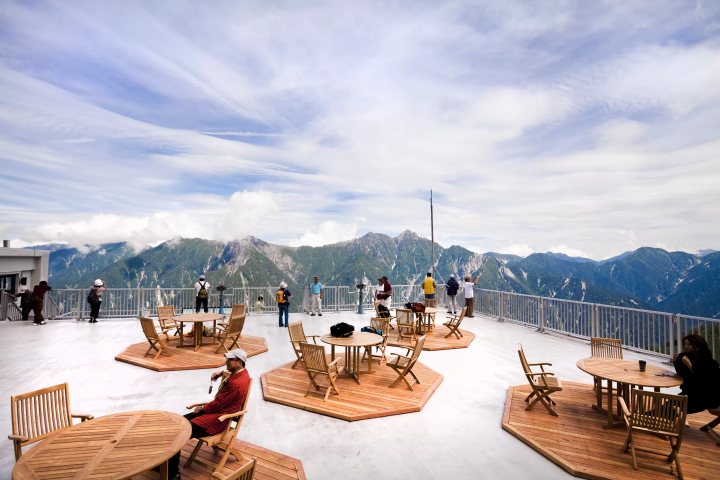
- Mount Taikanbo & The Cloud Terrace: Perched at an elevation of 2,316 meters, Mount Taikanbo features the "Cloud Terrace" observation deck. This expansive viewing area offers sweeping, unobstructed panoramas of the deep Kurobe Gorge and the jagged spires of the Tateyama mountain range.
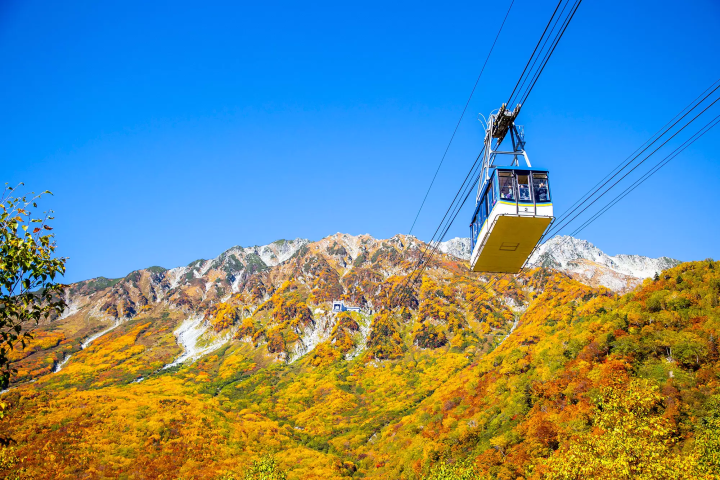
- Mount Taikanbo to Kurobedaira (Tateyama Ropeway): Spanning the valley without a single support pillar, this "single-span" aerial tramway provides a thrilling, bird’s-eye view of the multi-colored autumn canopy sweeping across the mountain faces. Large panoramic windows ensure every passenger enjoys an unobstructed visual feast.
- Kurobedaira to Kurobe Dam (Kurobe Cable Car & Underground Electric Bus): The descent continues via an underground cable car—built entirely underground to protect the natural environment from heavy winter avalanches—followed by a final electric bus transit through the Kansai Electric Power Tunnel.
Afternoon to Late Evening: The Return Journey
- Kurobe Dam Exploration: Emerging at Japan’s tallest dam (standing at an awe-inspiring height of 186 meters, completed in 1963), travelers witness the monumental engineering marvel nestled at an altitude of 1,454 meters. Depending on the operational season, visitors can witness the thunderous discharge of water cascading down the spillway—a roaring, mist-filled spectacle visible from multiple observation platforms. The surrounding artificial lake, Kurobe Lake, reflects the immense cliffs of the Northern Alps.
- Ogizawa Station to Nagoya Bus Depature: Upon exiting the alpine corridor at Ogizawa, travelers reunite with their charter bus. A light dinner (consisting of a traditional Japanese rice ball bento) is served onboard as the vehicle initiates the return highway journey.
- 22:40 PM — Arrival at Nagoya Station: The tour concludes back at the point of origin in Nagoya, successfully executing a cross-alpine traverse within a single calendar day. (Note: Return schedules remain subject to minor adjustments based on real-time traffic conditions and transit queue times within the mountain corridor).
Supporting Context & Metrics: Logistics, Pricing, and Engineering
To fully appreciate the value of this structured bus tour, one must understand the complex logistical architecture underpinning the Tateyama Kurobe Alpine Route.
Key Tour Metrics & Specifications
- Designated Departure Dates: September 22, October 17, and October 25, 2026. These dates have been strategically chosen to coincide with the peak of the autumn foliage (koyo) season, when the alpine zones transition into brilliant tapestries of crimson, gold, and amber.
- Pricing Structure: Pricing is dynamically managed and tied to partner booking platforms (such as Klook); prospective travelers are advised to verify real-time rates and availability via official reservation links.
- All-Inclusive Package Inclusions:
- Round-trip highway bus fare and associated tolls departing directly from Nagoya.
- Comprehensive Tateyama Kurobe Alpine Route multi-modal transit tickets.
- Professional guide services with English and Chinese digital/human interpretation support.
- Meals: One packed bento lunch served during the morning transit and a light rice ball bento dinner served on the return coach.
Environmental Regulations & The Multi-Modal Matrix
The necessity of a guided tour format becomes clear when examining the strict environmental covenants protecting Chubu-Sangaku National Park. To prevent carbon congestion and safeguard vulnerable alpine flora and fauna, private automobiles are barred from entering the route.
Coordinating individual tickets across six different operators—ranging from municipal cable car lines to private electric bus syndicates—frequently results in sold-out time slots, missed connections, and linguistic barriers for foreign visitors. By consolidating these bookings into a unified institutional group allocation, the 2026 Nagoya departure model bypasses individual ticketing bottlenecks entirely.

Official Statements and Industry Insights
Tourism board analysts and regional transit planners have lauded the integration of Nagoya as a primary launchpad for alpine exploration. While traditional entry points have historically focused on Toyama and Nagano prefectures via local rail networks, expanding direct highway access from a major economic hub like Nagoya opens up the Chubu region to a broader demographic of international business travelers and metropolitan tourists.
"The challenge of the Northern Alps has never been a lack of beauty; it has always been the friction of transit," notes a regional tourism logistics consultant. "By packaging the complex web of cable cars, tunnels, and ropeways into a single-ticket, guided day-trip departing from a major shinkansen hub like Nagoya, operators are effectively democratizing access to Japan’s premier mountain wilderness. International visitors who only have a few days to spare can now experience world-class alpine scenery without spending hours decoding transit timetables."
Furthermore, tour operators have emphasized the inclusion of multilingual support infrastructure. Recognizing that international travelers make up a significant portion of alpine visitors, the deployment of synchronized interpretation systems and bilingual guides ensures that historical context—such as the engineering feats behind the construction of the Kurobe Dam in the 1950s and 60s—is fully communicated to a global audience.
Future Outlook: The Evolution of Sustainable Alpine Tourism
As Japan’s inbound tourism numbers continue to scale historic highs, managing visitor flows while maintaining ecological preservation remains paramount. Initiatives like the Nagoya-to-Alpine Route bus tour point toward a future dominated by centralized, low-impact group transit models.
Looking ahead beyond the 2026 autumn season, tour syndicates anticipate expanding departure frequencies if early adoption metrics meet projections. The integration of zero-emission electric buses throughout critical tunnels within the Tateyama and Kurobe segments aligns with national decarbonization goals, ensuring that increased visitor access does not compromise the environmental integrity of the national park.
For travelers seeking to witness the fiery autumn colors sweeping down the slopes of Mount Taikanbo, gaze across the mirror-like expanse of Mikurigaike Pond, or stand in awe before the monumental wall of Kurobe Dam, the autumn 2026 window represents an unprecedented opportunity. By removing the logistical burden of mountain transit, this comprehensive day tour ensures that the sublime majesty of the Northern Alps is closer, more accessible, and more welcoming than ever before.






Belum ada komentar. Jadilah yang pertama berkomentar!