On Friday, September 25, 2026, the southern coastal city of Itoman in Okinawa Prefecture will play host to one of the archipelago’s most thunderous and visually arresting cultural traditions: the Itoman Great Tug-of-War (糸満大綱引, Itoman Ōtsunahiki). Regarded as one of Okinawa’s three major grand tug-of-war events alongside Naha and Yonabaru, this historic celebration coincides with Hachigwachi Juuguya—the 15th day of the 8th month of the lunar calendar, traditionally celebrated as the Mid-Autumn Moon or Jugoya.
Drawing tens of thousands of participants and spectators, the event transcends a simple contest of physical strength. It is a deeply spiritual communal ritual, an elaborate theatrical performance, and a living ancestral bridge connecting modern participants to centuries-old prayers for a bountiful agricultural harvest, a prosperous catch of fish, and enduring public health.
As globalization homogenizes cultural landscapes worldwide, events like the Itoman Great Tug-of-War serve as vital tethers to regional identity. This comprehensive report explores the chronological buildup, the intricate socio-cultural mechanics, logistical frameworks, and the ideal hospitality infrastructure—specifically the nearby Southern Beach Hotel & Resort Okinawa—designed to anchor a traveler’s journey into the heart of Okinawan heritage.
Detailed Chronology of the Event
The unfolding of the Itoman Great Tug-of-War is a carefully orchestrated sequence of events that transforms the urban geography of Itoman City from ordinary streets into a pulsing arena of historic folklore and communal euphoria.
[Early Morning]
   └── Cooperative Weaving of Male (Uuzuna) and Female (Miizuna) Ropes

[Afternoon: 13:00 - 16:00]
   └── The "Michizune" Parade, Flag Bearer Competitions, & Chinku Music

[Late Afternoon: 16:30 - 17:30]
   └── "Michi-nyuchi" Procession & "Shitaku" Historical Battle Reenactments

[Evening: 17:30 - 19:00]
   └── The Grand Tug-of-War: Joining the Kanuchi, Shouts of "Ha-iya!", & Victory
1. The Pre-Dawn Genesis: Weaving the Sacred Ropes
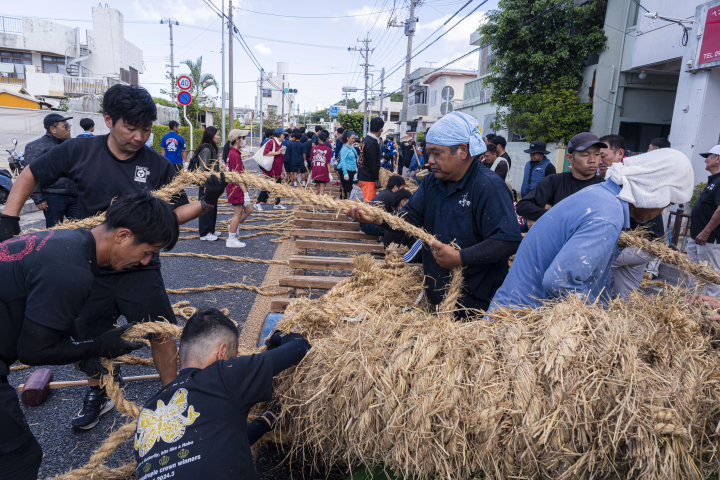
Months before the event, individual districts across Itoman craft specialized "small ropes." On the morning of September 25, 2026, local residents gather in the crisp early hours to merge these components into two colossal monoliths: the female rope (miizuna) and the male rope (uuzuna). This cooperative labor requires immense physical coordination, with hundreds of hands piling straw and braiding heavy hemp-like structures. The physical architecture of the rope symbolizes the union of earth and sky, fertility and community solidarity.
2. The Afternoon Awakening: The Michizune Parade
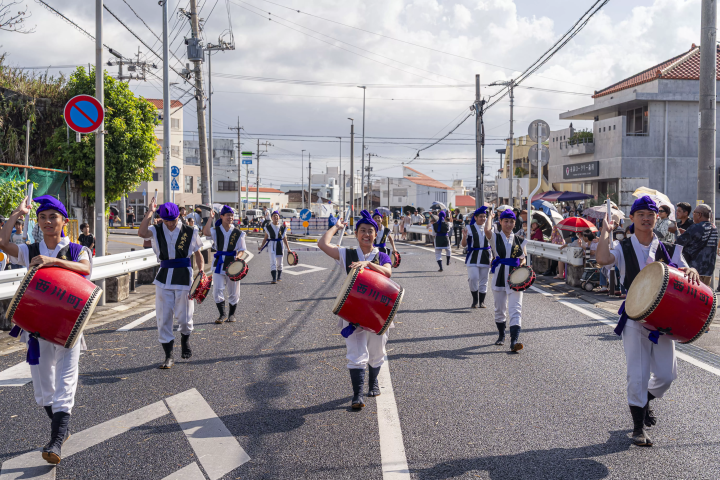
Beginning in the afternoon, the streets erupt with the Michizune celebratory parade, stretching from Itoman Elementary School toward the Itoman Rotary. This procession is designed to cleanse the community pathway and invite spiritual prosperity.
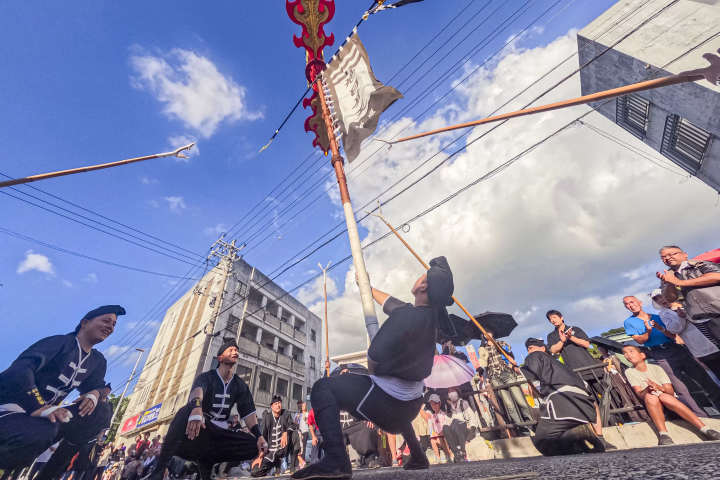
The Flag Bearers (Hatagashira): Proud representatives from various regional neighborhoods hoist towering, ornate banners high into the air, balancing them with remarkable core strength. Just before the main event, these regional representatives engage in a fierce competitive display known as Hatagashira Gae, testing their skill and pride directly in front of the event headquarters.
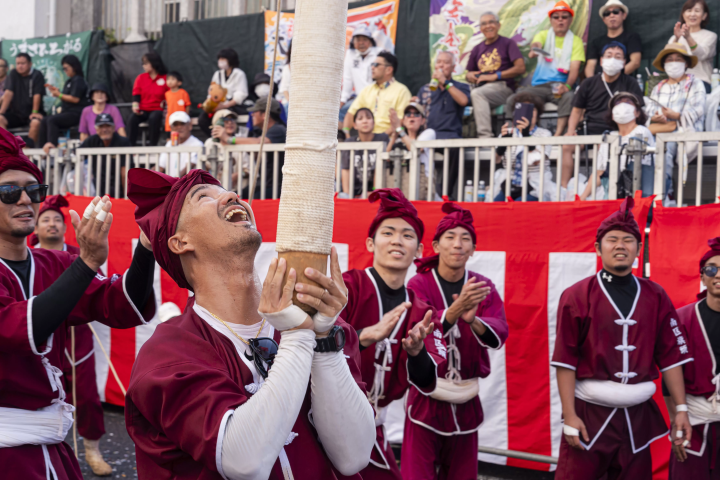
The Chinku Soundscape: Accompanying the flag bearers is the Chinku ensemble, predominantly composed of local toddlers and elementary school children. Their rhythmic drumming and musical accompaniment infuse the air with youthful energy and a festive, generational warmth.
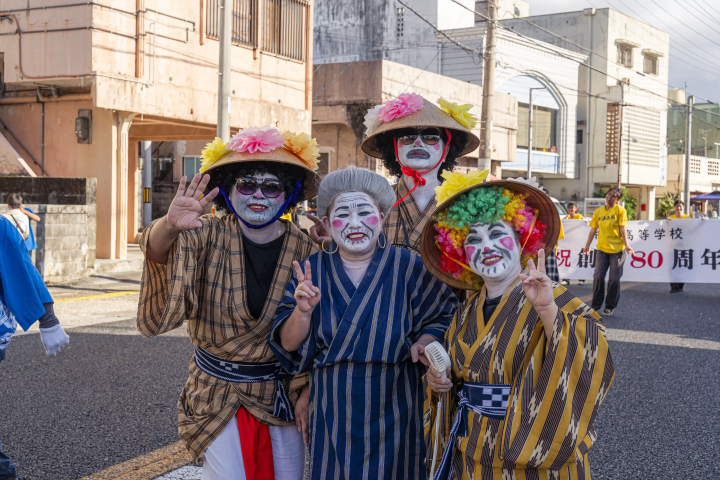
Ryukyu Dancers: Traditional performers clad in brilliantly colored, textile-rich garments thread through the parade route, elevating the festive atmosphere and eliciting cheers from the swelling crowds.
3. The Dramatic Climax: Michi-nyuchi and Shitaku
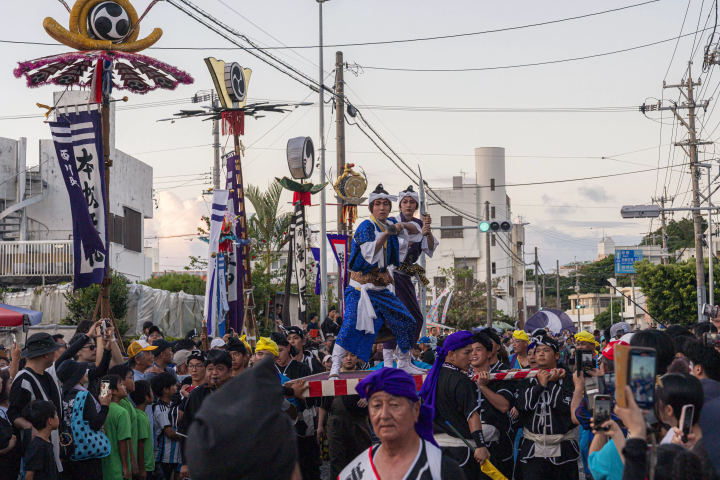
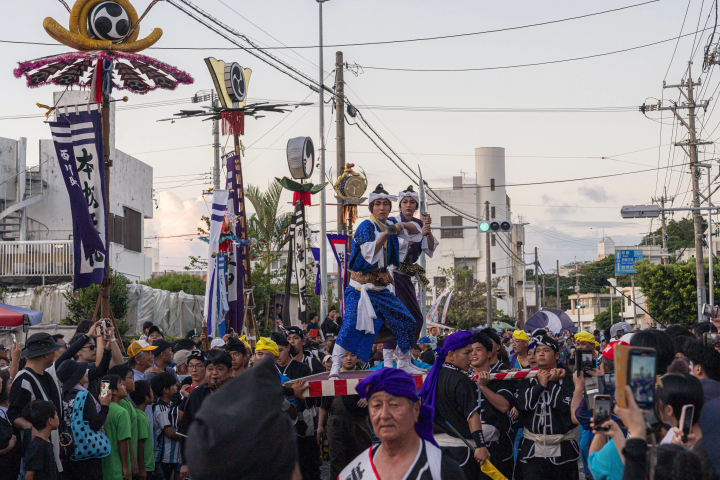
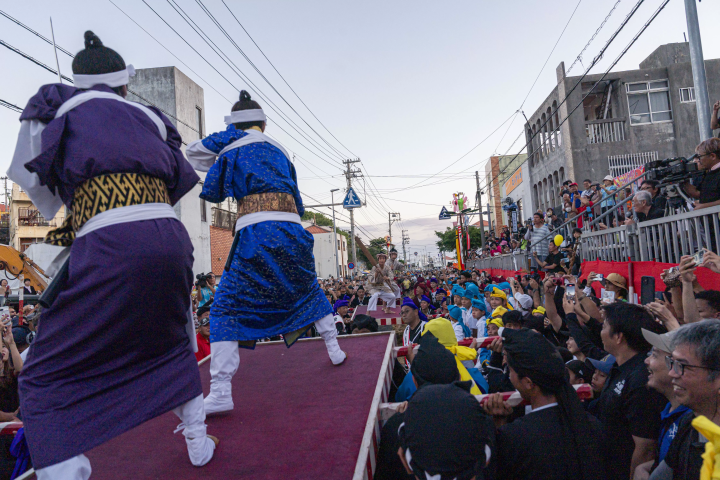
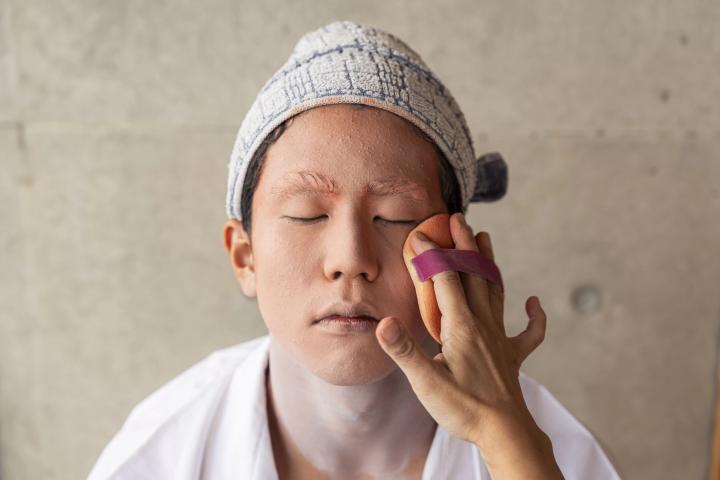
As twilight approaches, the mood shifts from celebratory to theatrical tension. During the Michi-nyuchi (procession) and Shitaku (preparation) phases, individuals dressed as historical heroes and legendary Okinawan figures ascend directly onto the joined section of the ropes (kanuchi). Wielding glittering swords, fans, and fierce expressions, these actors re-enact legendary tales. The visual contrast of elaborate historical costumes against the raw, industrial texture of straw creates a breathtaking scene of fantastical power, instantly transfixing the audience.
4. The Grand Clash: The Tug-of-War
With the kanuchi poles securely locked and the massive ropes connected, the referee drops the signal. Instantly, the air fills with the thunderous roar of "Ha-iya! Ha-iya!", sharp finger whistles (kan-nā), and the relentless pounding of drums.
Tens of thousands of participants—ranging from seasoned local elders to international tourists—interlock their bodies along the northern and southern sides of the rope. The contest is not merely about winning; it is an active meditation on shared human effort. Once the victorious side is declared, the rope is systematically dismantled. Participants slice away and take home portions of the sacred straw, preserving it as an auspicious household talisman believed to ward off evil spirits and guarantee family wellness for the coming year.
Supporting Context & Metrics
Understanding the operational footprint of the Itoman Great Tug-of-War requires examining the logistical realities of hosting a massive traditional festival in a modern municipal setting.
Event Fact Sheet
Official Event Name: Itoman Great Tug-of-War (糸満大綱引)
Date: Friday, September 25, 2026 (15th day of the 8th lunar month / Mid-Autumn Moon / Hachigwachi Juuguya)
Primary Venues:
Michizune Parade: Itoman Elementary School to Itoman Rotary
Main Tug-of-War Arena: Itoman Rotary to Shiroganedo Hotel
Historical Classification: One of Okinawa’s Three Great Tug-of-War Events (alongside Naha and Yonabaru)
Participating Demographics: Local community associations, regional neighborhood councils, domestic tourists, and international travelers.
Logistical & Traffic Management Metrics
Because the venue occupies major urban arteries, municipal authorities enforce strict traffic control measures.
Restricted Zones: Comprehensive traffic restrictions are deployed along Prefectural Road 256 and Prefectural Road 77 surrounding the primary event corridors.
Parking Infrastructure: While several temporary parking lots are established by the city, vehicular capacity is severely constrained. City officials and event planners strongly recommend utilizing public transportation networks or dedicated shuttle bus services from outlying transit hubs to mitigate severe traffic congestion.
Official Statements and Cultural Significance
Municipal authorities and cultural preservationists have repeatedly underscored the socio-economic and psychological value of the Itoman Great Tug-of-War.
In statements released by the Itoman City cultural promotion offices, representatives emphasize that the festival acts as an irreplaceable anchor for intergenerational knowledge transfer:
"The Itoman Great Tug-of-War is more than a spectacle of muscle and sweat; it is the heartbeat of our community. When our children witness the weaving of the straw in the early morning, and when they hear the Chinku rhythms or see the Hatagashira banners soar, they are absorbing an intangible cultural heritage that cannot be taught in a classroom. Every pull of the rope cements our resilience and shared destiny as Okinawans."
Ethnographic researchers studying the Ryukyu Islands note that rituals tied to the lunar calendar—specifically Juuguya—historically served vital ecological and social functions, realigning agrarian and maritime communities after the typhoon season and reinforcing communal solidarity before the winter months. By keeping these traditions active in the 21st century, Itoman City bridges ancient spiritual gratitude with modern tourism and global cultural exchange.
Strategic Hospitality: Staying at Southern Beach Hotel & Resort Okinawa
Attending a high-intensity, physical cultural festival like the Itoman Great Tug-of-War requires strategic planning, particularly regarding accommodation. Because vehicular traffic is restricted and standard hotels in Naha require long transit times, selecting a proximate, high-end resort is paramount for a seamless experience.
The Ultimate Basecamp: Southern Beach Hotel & Resort Okinawa
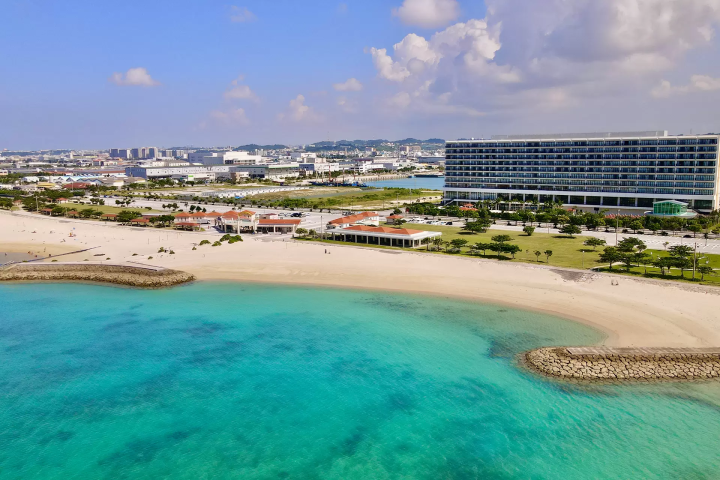
Positioned in the heart of Itoman City at Cape Irizaki, the Southern Beach Hotel & Resort Okinawa stands as the premier hospitality partner for visitors attending the festival.
[Itoman Rotary / Tug Venue]
       │
       ├── (5-7 Minutes by Car / Taxi)
       ▼
[Southern Beach Hotel & Resort Okinawa]
       ├── Ocean-View Rooms (Min. 30 sqm)
       ├── Spacious Garden Pool & Mimi Beach (1-min walk)
       └── Live-Kitchen Breakfast (Okinawan Specialties)
1. Unmatched Proximity and Access
Travel Time: Situated merely 10 kilometers (roughly a 20-minute drive) from Naha Airport, the hotel eliminates grueling cross-island commutes.
Festival Proximity: On the day of the tug-of-war, when surrounding roads experience severe traffic restrictions and parking shortages, the Southern Beach Hotel is located a mere 5 to 7 minutes by car or taxi from the venue corridor (Shiroganedo and Itoman Rotary). This proximity allows guests to bypass the exhaustion of gridlock, shifting seamlessly from high-energy cultural immersion to quiet resort luxury.
2. Comprehensive Resort Amenities
Architectural Scale: Opened in June 2009, this expansive four-star beach resort features 448 well-appointed guest rooms. Every room exceeds 30 square meters, ensuring ample space to unwind.
Coastal Integration: Positioned directly in front of the municipal swimming expanse, Mimi Beach Itoman, guests enjoy direct seaside access within a one-minute walk, allowing for a complete resort holiday even without renting a car.
Culinary Excellence: The hotel’s dining program features an extensive buffet highlighting international standards alongside authentic Okinawan culinary staples—including freshly prepared sata andagi (Okinawan doughnuts), tofu champuru (stir-fried tofu), and local pork preparations. Live-kitchen cooking stations ensure an energized start to every morning.
Recreation & Wellness: Beyond its sophisticated rooms, the property boasts a sprawling outdoor Garden Pool, comprehensive banquet and convention facilities, marine leisure booking desks, and full-service beauty and retail salons.
3. The Perfect Synthesis of Tradition and Modern Comfort
Participating in the Itoman Great Tug-of-War is an intensely physical, dusty, and sweat-drenched experience. Thousands of bodies pulling against thick hemp ropes under the late September Okinawan sun demand immediate post-event recovery.
By basing oneself at the Southern Beach Hotel & Resort Okinawa, travelers can plunge directly into the roaring heart of local tradition, shouting “Ha-iya!” alongside lifelong residents, and within minutes retreat to a private ocean-view sanctuary. Here, modern showers wash away the physical fatigue of the festival, while the gentle waves of the East China Sea provide a tranquil counterpoint to the day’s thunderous celebrations—exemplifying the ultimate harmony of Okinawan heritage and world-class hospitality.
Quick Facts for Travelers
Hotel Name: Southern Beach Hotel & Resort Okinawa
Address: 1-6-1 Itoman, Itoman City, Okinawa Prefecture 901-0306






Belum ada komentar. Jadilah yang pertama berkomentar!