

Executive Overview
For the discerning global traveler, airports are traditionally viewed as places of transit—necessary conduits of logistics separating the excitement of a destination from the realities of the journey home. However, New Chitose Airport in Hokkaido, Japan, fundamentally redefines this paradigm. Operating far beyond the conventional scope of a regional transportation hub, New Chitose Airport functions as a self-sustaining ecosystem of commerce, high-end gastronomy, and immersive cultural attractions.

Spanning an expansive layout across domestic and international terminal buildings, the facility merges world-class retail spaces with an unrivaled culinary landscape. From the legendary artisanal sweets of LeTAO and KINOTOYA to the savory, umami-rich broths of the Hokkaido Ramen Dojo, the airport serves as a comprehensive showcase of Hokkaido’s agricultural and culinary wealth. Furthermore, with integrated entertainment complexes—including the world’s first airport-based chocolate factory, Sanrio-themed attractions, and an aviation museum complete with flight simulators—New Chitose Airport demands to be treated not merely as a departure point, but as a primary itinerary item in its own right.
This comprehensive briefing provides an authoritative guide to navigating the terminal’s complex architecture, uncovers the must-try culinary and retail highlights, details its aviation heritage, and outlines seamless transit routes to Sapporo and Otaru.
Detailed Chronology and Terminal Navigation
Successfully conquering New Chitose Airport requires a strategic understanding of its spatial layout. Comprising a Domestic Terminal Building, an International Terminal Building, and a central Connecting Facility, the airport spans multiple floors optimized for passenger flow, retail exposure, and leisure.
The Spatial Layout: Floor by Floor
Navigating the sprawling terminals can initially disorient first-time visitors. Fortunately, the airport management has deployed extensive multilingual touchscreen information boards and physical directory maps throughout all public zones. The architectural connectivity between the domestic and international terminals on the second and third floors ensures fluid movement across the entire complex.

- B1F (Basement Level): The primary hub for rail connectivity, housing the JR New Chitose Airport Station. This level provides direct, seamless access to high-speed rail lines heading toward Sapporo and Otaru.
- 1F (Ground Level): Dedicated to arrival lobbies, bus terminals, and taxi ranks. Travelers exiting customs or baggage claim will find comprehensive ground transportation infrastructure here.
- 2F (Second Floor): The epicenter of retail commerce and confectionery. This level features the expansive Shopping Area, Sweets Avenue, the domestic and international departure/arrival interfaces, and the whimsical Steiff Discovery Walk.
- 3F (Third Floor): A multi-functional zone divided between aviation history, family entertainment, and heavy dining. Key anchors include the Hokkaido Ramen Dojo, the SKY Museum, the Observation Deck entrance, and cultural attractions such as Doraemon WAKUWAKU SKY PARK, Hello Kitty Happy Flight, and ROYCE’ Chocolate World.
- 4F (Fourth Floor): The leisure and wellness tier. Passengers can access a full-scale movie theater, a natural hot spring (onsen) facility, the Snow Miku Sky Town, and the upper viewing areas of the food court wing.
Supporting Context & Metrics: Culinary Excellence and Retail Architecture
Hokkaido is globally celebrated for its rich dairy, fresh seafood, and robust agricultural output. New Chitose Airport capitalizes on these natural advantages, functioning as a hyper-concentrated showcase of the prefecture’s best culinary offerings.
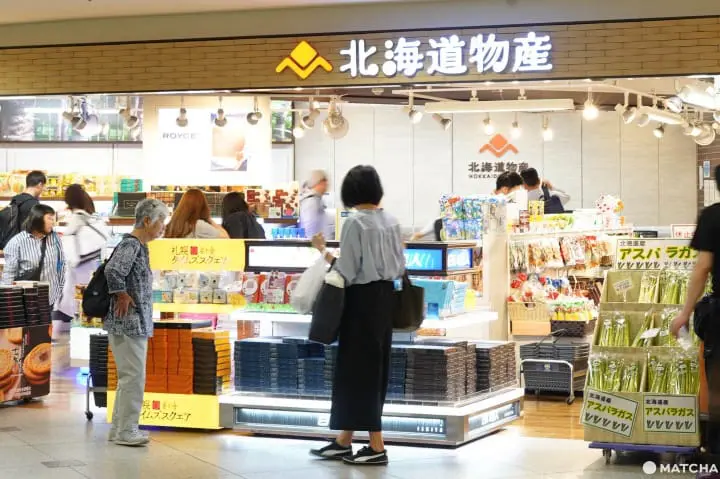
Sweets Avenue and Confectionery Giants (2F)
The second floor is dominated by Sweets Avenue, a retail corridor where travelers can acquire legendary Hokkaido brands such as Rokkatei, Kitakaro, Shiroi Koibito, and Jaga Pokkuru. However, the true draw lies in fresh, perishable treats consumed on-site:
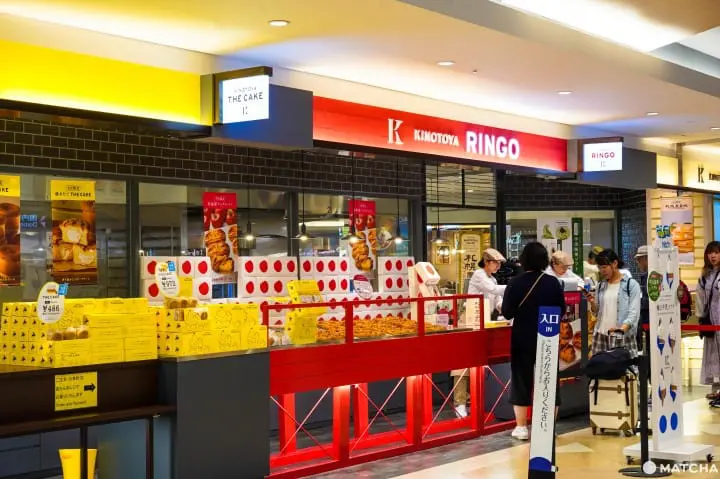
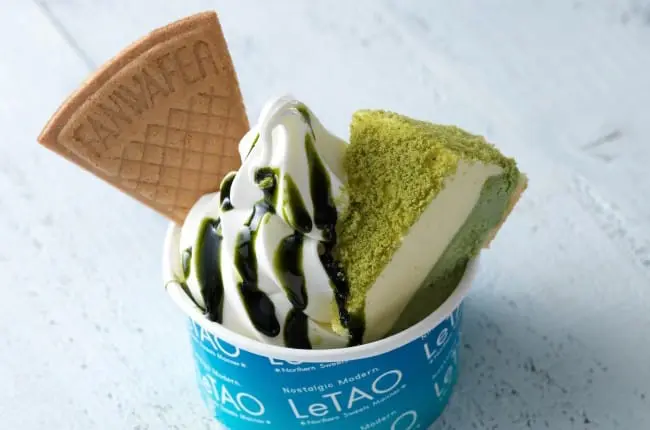
- LeTAO: Renowned globally for its Double Fromage cheesecake, LeTAO offers an airport-exclusive Cheesecake Ice Cream Parfait. By pairing its signature smooth, rich cheesecake with milk-infused soft-serve ice cream sourced directly from local dairy farms, the brand delivers a masterclass in texture and dairy profile. Seasonal limited-time varieties ensure repeat visitors always encounter something novel.
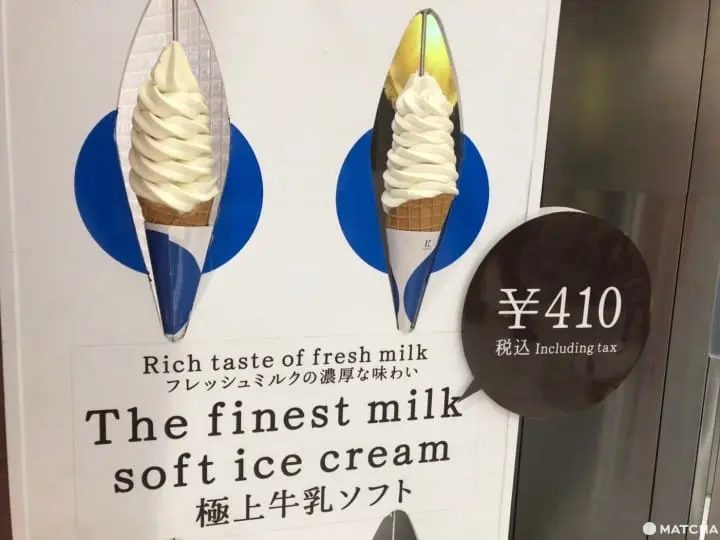
- KINOTOYA: Operating a high-visibility factory store on the second floor, KINOTOYA commands notoriously long queues for valid reasons. Their Premium Milk Soft-Serve is celebrated for its dense, towering swirl and intense, authentic milk flavor. Concurrently, their freshly baked blueberry cheese tarts—featuring a warm blueberry sauce folded into a rich cheese mousse encased in a crisp golden crust—represent the pinnacle of modern Japanese pastry-making.
The Savory Spectrum: Hokkaido Ramen Dojo and Local Specialties (3F)
For heartier meals, the third floor houses some of the most competitive culinary concepts in northern Japan.

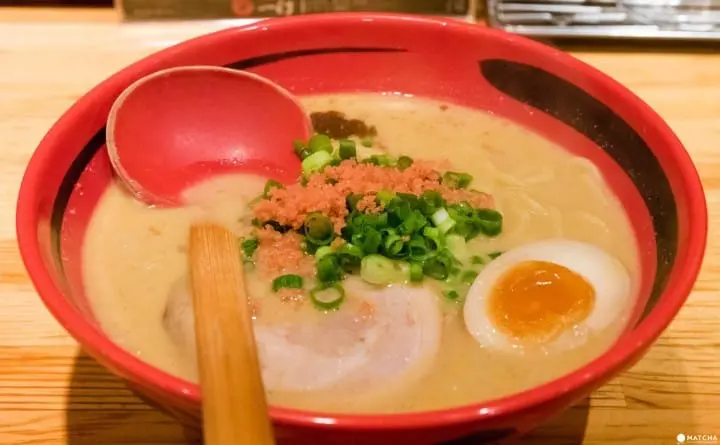
- Hokkaido Ramen Dojo: Situated near an unmistakable landmark map constructed from ramen bowls, this dedicated alleyway brings together top-tier ramen purveyors under one roof. Among them, Ebisoba Ichigen reigns supreme. Specializing in shrimp-infused broths, Ichigen utilizes every part of the crustacean to build a deeply savory, aromatic base. First-time diners are universally directed toward the Sono Mama Ebi Shio, where the pure, unadulterated essence of shrimp permeates every drop of broth and clinging noodle.
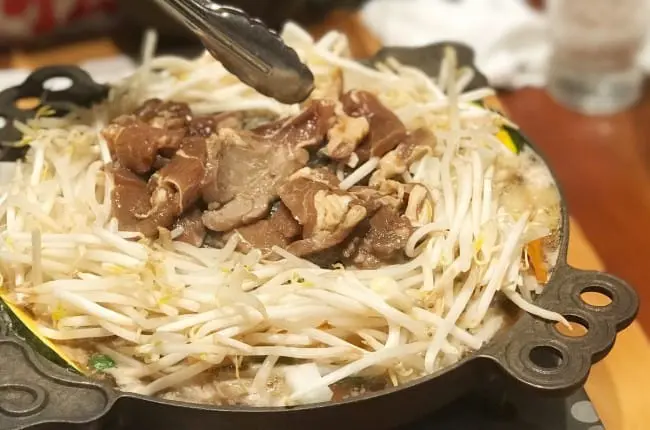
- Matsuo Jingisukan: A tribute to Hokkaido’s iconic regional dish—grilled mutton (Jingisukan)—this establishment has perfected the art of tenderizing and marinating meat. Grilling thinly sliced mutton alongside an abundance of fresh bean sprouts and seasonal vegetables on a dome-shaped skillet, Matsuo neutralizes any gamey flavor, delivering an approachable, highly savory dish that converts even hesitant diners.
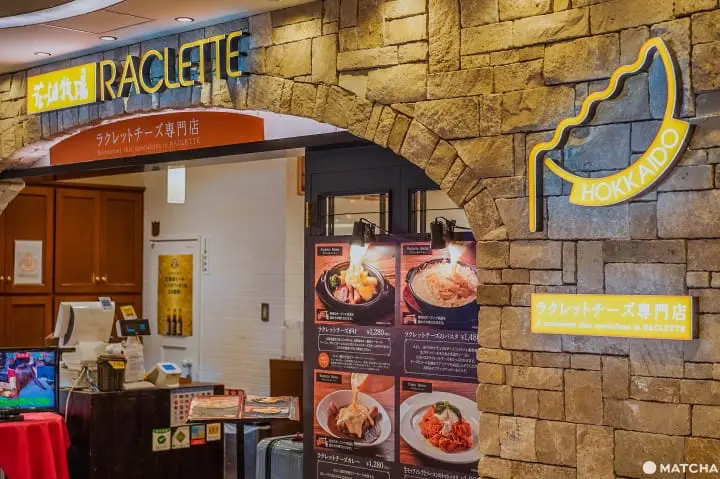
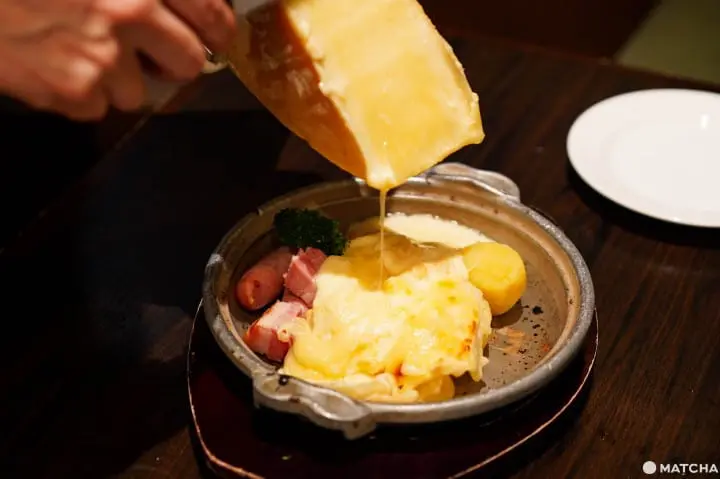
- Hanabatake Farm Raclette Specialty Restaurant: Moving beyond their famous nama caramel and popcorn, Hanabatake Farm operates a dedicated raclette bar. Molten, golden cheese—winner of nationwide Japanese cheese competitions—is scraped directly from heated wheels onto a bed of locally grown potatoes, house-made pork sausages, and bacon. The resulting dish provides a rich, aromatic, and deeply comforting culinary experience.
Official Statements and Cultural Attractions: Beyond the Terminal
New Chitose Airport transcends the definition of a commercial transport hub by embedding immersive cultural and corporate brand experiences directly into its architecture.
Steiff Discovery Walk (2F)
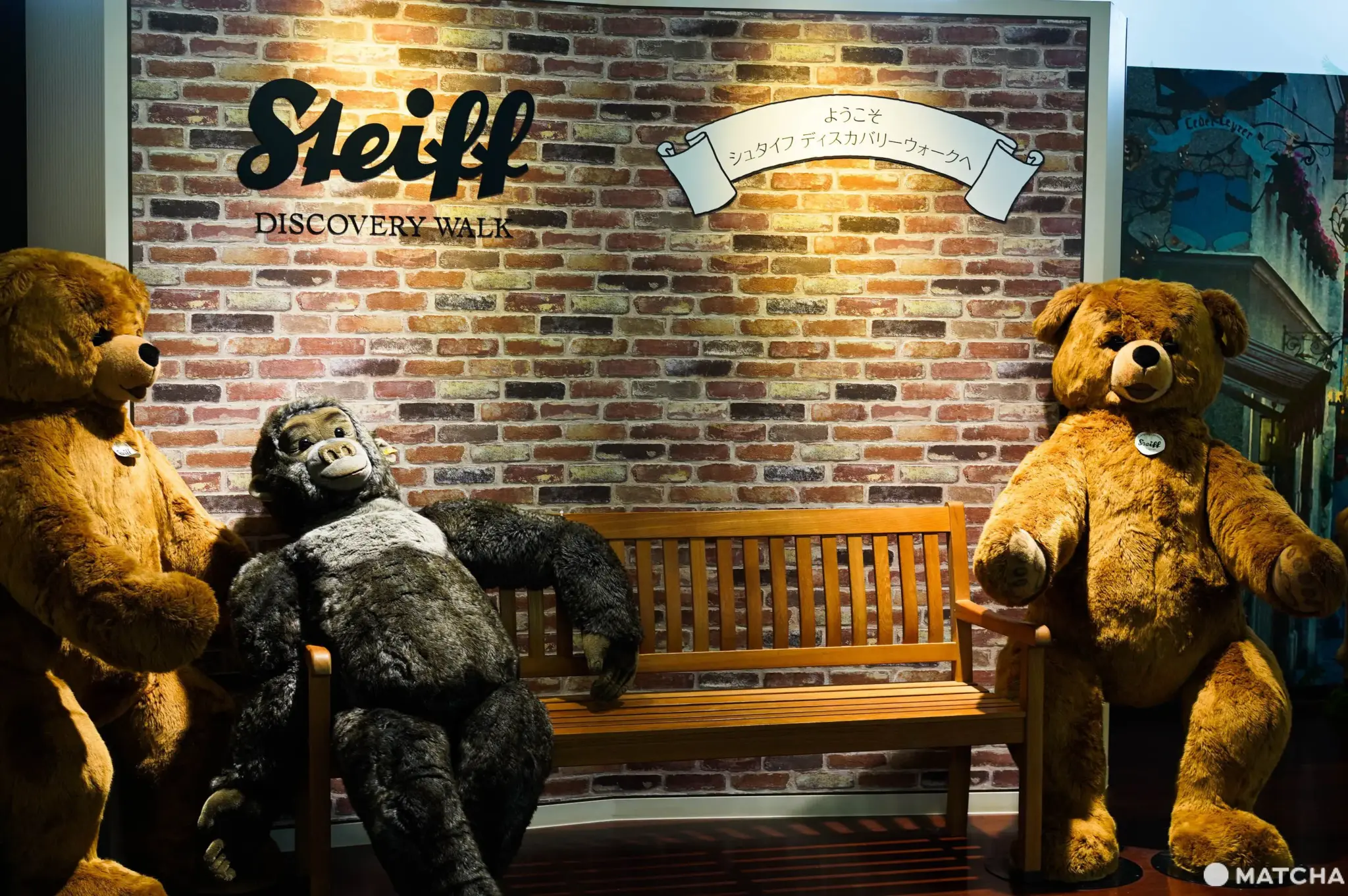
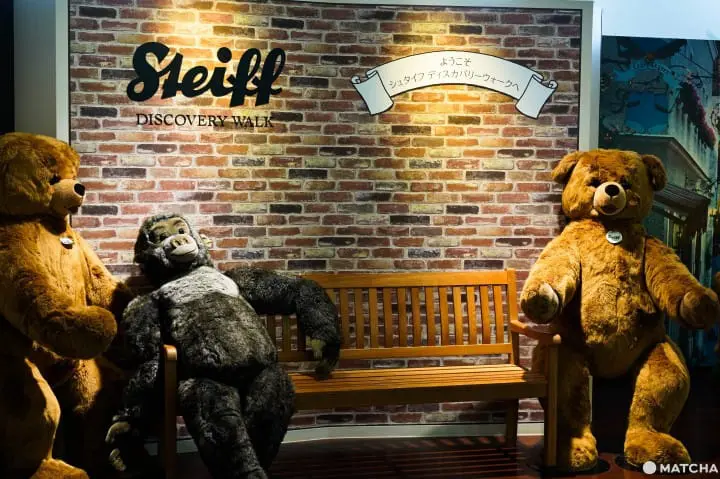
Bridging the domestic and international zones on the second floor is the Steiff Discovery Walk. Dedicated to the legendary German toy brand renowned for crafting the world’s first handcrafted teddy bears, this thematic walkway features intricate plush displays. It serves as an artistic respite for travelers, inviting families and design enthusiasts alike to pause and appreciate generational craftsmanship.
ROYCE’ Chocolate World (3F)
Located in the connecting facility, ROYCE’ Chocolate World is an operational micro-factory and museum dedicated to cacao. Through expansive glass panels, visitors can observe a fascinating synthesis of automated industrial robotics and master confectioners molding, decorating, and packaging artisanal chocolates in real time.

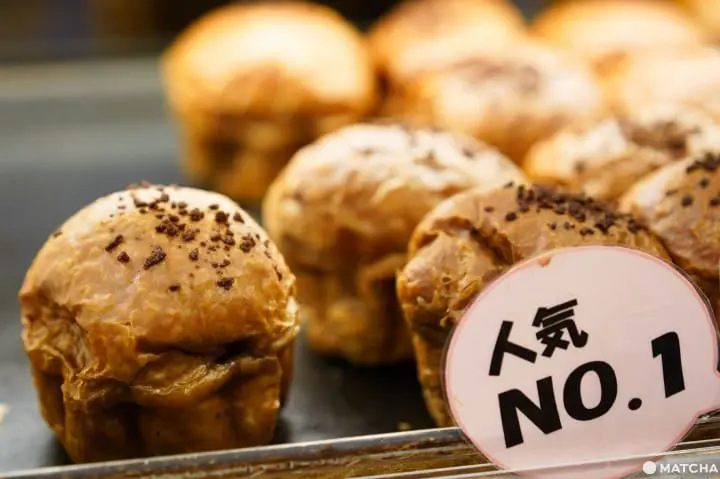
Adjacent to the factory floor is an in-house bakery producing items that routinely draw massive crowds. Standouts include the Nama Chocolate Croissant [Au Lait]—featuring a flaky, butter-rich pastry exterior yielding to a decadent, smooth chocolate center—alongside chocolate-covered potato chips that epitomize the successful culinary fusion of sweet and savory elements.

Hello Kitty Happy Flight and Family Entertainment (3F)
Sanrio’s cultural footprint is firmly established at the Hello Kitty Happy Flight. Transforming the iconic feline character into a whimsical flight attendant, the attraction guides visitors through interactive, global-themed zones alongside characters like Little Twin Stars, Pompompurin, and My Melody. The adjacent Happy Flight Cafe rounds out the experience with themed curries, parfaits, and character-branded dining options.
Aviation Heritage: Observation Deck and Sky Museum (4F)
For aviation enthusiasts, the fourth floor provides a comprehensive window into Japanese flight history. The open-air Observation Deck offers unobstructed, panoramic views of the tarmac, welcoming aviation photographers eager to capture wide-bodied domestic and international aircraft against the backdrop of Hokkaido’s sweeping skies.
Adjacent to the deck, the Sky Museum exhibits historical airline uniforms, archival photographs detailing the evolution of New Chitose Airport, and interactive exhibits. Children can don miniature pilot and flight attendant uniforms for professional photo opportunities, while coin-operated flight simulators and authentic airline meal carts complete an immersive aerospace experience.
Future Outlook: Seamless Ground Transit and Connectivity
As air travel volume continues to rebound globally, New Chitose Airport maintains its competitive edge through robust, multi-modal ground transportation infrastructure designed to whisk passengers rapidly into the urban centers of Sapporo and Otaru.
Rail Transit via JR Hokkaido
The basement level (B1F) houses the JR New Chitose Airport Station, serving as the primary rail artery for the region.

- To Sapporo: Travelers can choose between local trains (approx. 55 minutes) and rapid services (approx. 37 minutes) for a standard flat fare of 1,150 yen. For guaranteed seating during peak travel hours, passengers may opt to purchase an upgraded ticket for the reserved "U-Seat" section.
- To Otaru: Direct rapid rail services connect the airport to the historic port city of Otaru in approximately 76 minutes at a fare of 1,910 yen. In the absence of a direct train, passengers can easily transfer at Sapporo Station.
Comprehensive Bus Networks
For travelers preferring road transit, the ground floor (1F) provides direct access to extensive bus terminals. Express and local bus lines operated by Hokkaido Chuo Bus and Hokuto Kotsu link the airport directly to central Sapporo locations—including Sapporo Station, Odori Park, and the Susukino entertainment district—as well as outlying regional hubs such as Chitose, Muroran, Tomakomai, and Nakajima Park.
Conclusion
New Chitose Airport challenges the modern traveler to recalibrate their schedule. Far from a mere logistical hurdle, it operates as a meticulously designed micro-city celebrating the absolute best of Hokkaido’s gastronomy, manufacturing prowess, and cultural imagination. Whether one is indulging in a fresh milk soft-serve, tracing the industrial art of chocolate-making through glass partitions, or studying aviation history from the fourth-floor observation deck, New Chitose Airport ensures that the journey begins—or concludes—with an unforgettable experience.




Belum ada komentar. Jadilah yang pertama berkomentar!