Nestled within the rugged terrain of Gifu Prefecture lies Gero Onsen, universally acclaimed as one of Japan’s three most legendary hot spring destinations. For centuries, travelers have sought out its alkaline, silky waters for their therapeutic properties. However, this autumn, the historic spa town is introducing a new dimension to its cultural appeal. From September 1st through October 31st, 2026, Gero Onsen will host the "Gero Masu-Zake Walk," an immersive, multi-venue cultural event that marries the soothing rituals of an open-air hot spring retreat with the rich heritage of Japanese brewing.
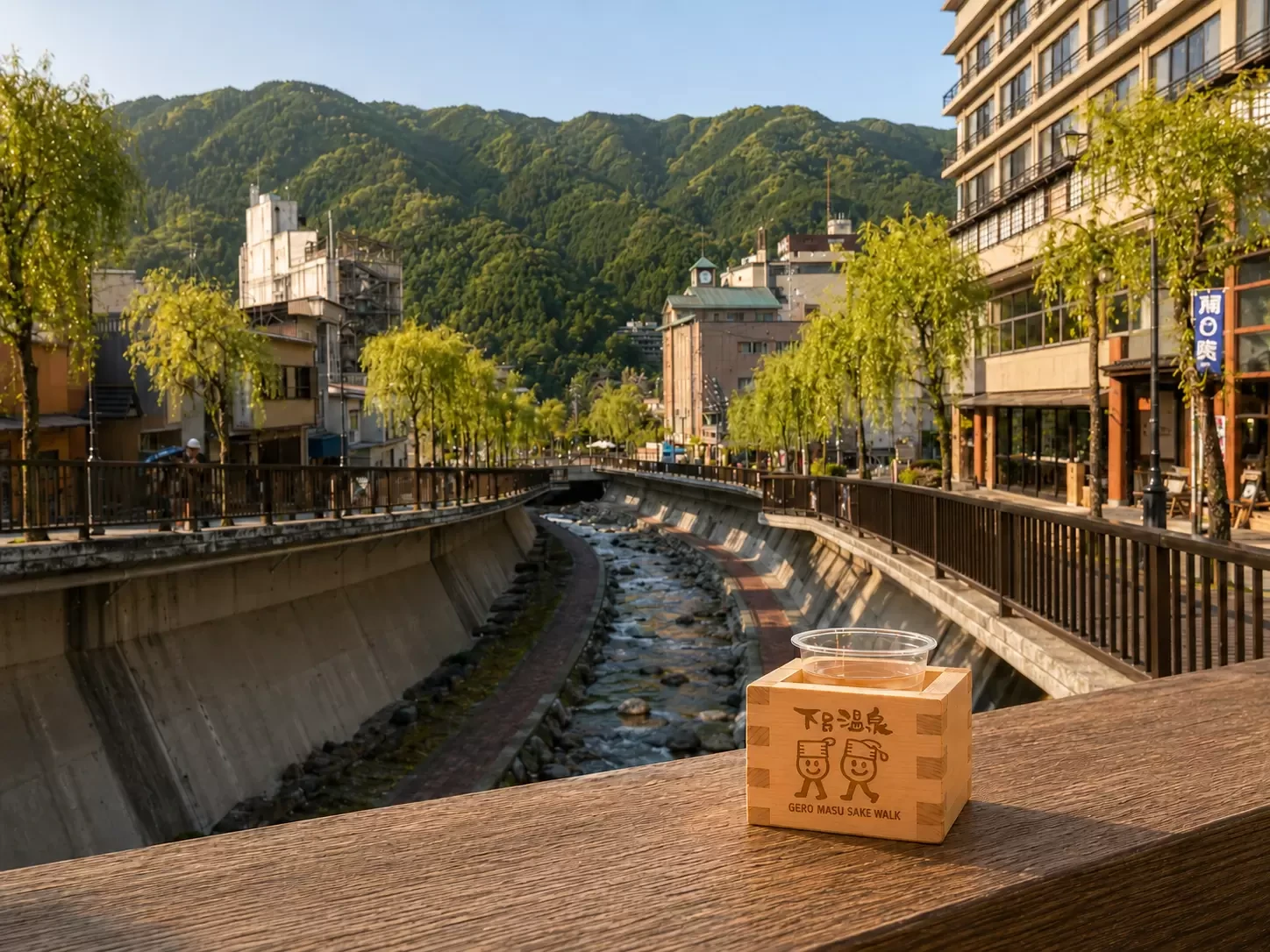
Far from a conventional, single-venue tasting exhibition, the Masu-Zake Walk invites participants to wander through steam-filled alleyways and along the gentle banks of the Hida River at their own pace. Armed with an original, commemorative wooden measuring cup—known as a masu—and a smartphone equipped with digital ticketing, attendees traverse a curated network of ten local establishments. Here, they sample artisanal pours from two of Gero’s historic breweries: Tenryo Sake Brewery, founded in 1680, and Oku Sake Brewery, established in 1720.
This limited-run event, capped at just 500 participation sets, arrives at a momentous time for Japanese culinary arts. Following the 2024 inscription of traditional sake-brewing techniques utilizing koji mold onto the UNESCO Intangible Cultural Heritage list, interest in authentic, regional fermentation culture has reached an all-time high. By merging digital convenience with centuries-old craftsmanship, the Gero Masu-Zake Walk offers both domestic and international travelers an authoritative, engaging masterclass in Japanese hospitality, local terroir, and sustainable culinary tourism.
Detailed Chronology: The Evolution of the Gero Masu-Zake Walk
The Genesis of a Town-Wide Tradition
The conceptualization of the Masu-Zake Walk stems from a desire to decentralize tourism within Gero Onsen, encouraging visitors to venture beyond their respective hot spring ryokan (traditional inns) and engage directly with local merchants, restaurateurs, and liquor purveyors. Historically, visitors to Gero experienced the town’s culinary offerings in isolation—typically confined to the dining rooms of their accommodations.
The 2026 autumn initiative shatters these boundaries. By partnering with ten diverse local businesses—ranging from casual ramen and yakisoba shops to traditional izakayas and dedicated liquor stores—the event transforms the entire hot spring town into an open-air tasting salon. The chronology of the event unfolds daily between 13:00 and 20:00 (with operational hours varying by individual participating venues), allowing travelers to transition seamlessly from a daytime soak in a public footbath (ashiyu) to an evening aperitif under the twilight glow of paper lanterns.
The Digital Integration and Execution Timeline
Executing the Masu-Zake Walk relies on a streamlined, smartphone-integrated infrastructure designed to eliminate physical ticket waste while maximizing visitor autonomy:
On-Site Acquisition: Participants arrive in Gero Onsen and visit any of the ten participating storefronts. There are no online pre-orders; the exclusive pool of 500 masu sets is distributed entirely on a first-come, first-served basis for 3,000 yen per set.
Digital Onboarding: Upon purchasing the set—which includes an original Gero-branded wooden masu, a set of four digital ticketing tokens, and a commemorative wet wipe—the participant scans an on-site QR code using an internet-enabled smartphone.
The Stroll and Sample: Guided by an interactive digital map provided on the official event portal, visitors curate their own routes. Entering a participating shop, they scan a venue-specific user-authentication QR code, redeem one digital ticket, and receive a pristine pour served in a small plastic cup nested snugly inside their wooden masu.
Memento Preservation: Unlike single-use tasting vessels common at modern festivals, the solid wooden masu is retained by the visitor. Constructed using traditional carpentry techniques, the vessel absorbs the subtle, aromatic oils of natural wood, serving as a permanent keepsake that doubles as a home trinket box or interior decor piece long after the journey concludes.
Supporting Context & Metrics: Terroir, Heritage, and Craftsmanship
The Pillars of Gero Brewing: Tenryo and Oku
The integrity of the Gero Masu-Zake Walk rests upon the shoulders of two venerable brewing institutions, each boasting over three centuries of operational history within Gifu Prefecture. Their survival and enduring prestige offer a compelling case study in regional terroir.
Tenryo Sake Brewery (Est. 1680)
Situated in Hida Hagiwara, north of the primary Gero spring resort area, Tenryo Sake Brewery traces its lineage back to the Edo period, deriving its name from the designation of the Hida region as a Tenryo—a territory administered directly by the Tokugawa shogunate.
Water Source: Groundwater drawn from 30 meters beneath the surface, originating from the pristine snowmelt and subterranean aquifers of the Hida Mountains. This water is exceptionally soft, yielding a clean, delicate profile that highlights the inherent qualities of the rice.
Rice Selection: The brewery relies heavily on Hidahomare, an indigenous sake-rice cultivar tailored specifically to the climatic demands of the Hida region.
Featured Pours: Participants can sample expressions ranging from aromatically complex Junmai Daiginjo and gently sweet doburoku (unrefined sake) to long-aged authentic rice shochu and innovative specialty releases like "Andante."
Oku Sake Brewery (Est. 1720)
Located in Gero City’s Kaneyama Town—a historic post town situated at the historical crossroads of the Hida and Mino provinces—Oku Sake Brewery maintains a fierce dedication to manual, labor-intensive craft methods, including traditional koji-making utilizing wooden trays (koji-buta).
Water Source: Sourced from deep wells tapping the purity of the Maze and Hida rivers, drawn from a depth of 50 meters directly beneath the brewery floor.
Rice Selection: Alongside Hidahomare, Oku utilizes Ryu no Hitomi, an ultra-premium, large-grain rice varietal native to Gero known for its dense umami content.
Featured Pours: Oku contributes award-winning selections from the National New Sake Appraisal Competition, alongside experimental offerings that stretch the boundaries of traditional fermentation, such as a remarkably rare, 55% ABV artisanal vodka produced within its sake-brewing facilities.
Comprehensive Venue and Beverage Matrix
To assist travelers in strategizing their four digital tickets, the 2026 Masu-Zake Walk features the following distributed venue lineup:
No.
Participating Establishment
Featured Alcoholic Offering
1
Restaurant & Cafe Fukiya
Oku Tsukiyo no Shirasagi Junmai Daiginjo
2
Ogawaya Liquor Store
Tenryo Andante
3
Gunpachi Gero Onsen Store
Tenryo Rice Shochu Hiten (25%)
4
Shokusaibou Dining Sho
Tenryo Junmai Daiginjo (Award-Winning Selection)
5
Hagi Kei-chan Restaurant
Tenryo Junmai Daiginjo Hidahomare
6
Hoteya
Oku Gold Medal Award-Winning Daiginjo
7
Kashiwaya Liquor Store
Tenryo Doburoku (Unrefined Sake)
8
Dango and Yakisoba Norin-ya
Oku Hatsumidori Junmai Daiginjo
9
Café & Izakaya aube
Oku Craft Vodka (55% ABV)
10
Six
Oku Special Selection Junmai Daiginjo & Tenryo Daiginjo Tenroku Hairyo
11
Meat Broth Shop Shiro
Oku Ryuno Hitomi Junmai Daiginjo
Official Statements and Industry Perspective
Tourism authorities and cultural preservationists have lauded the Gero Masu-Zake Walk as a model for regional revitalization. In statements released by the Gero Gero Tourism Association, organizers emphasize that the event seeks to reframe the consumption of alcohol not as an isolated indulgence, but as an integral component of cultural literacy.
"The Gero Masu-Zake Walk is engineered to dissolve the intimidation often felt by those unfamiliar with the nuances of Japanese sake," notes a representative from the tourism board. "By breaking the tasting experience down into manageable, highly curated single pours distributed across diverse local businesses, we invite our guests to become explorers. Every glass tells the story of our mountains, our rivers, and the unwavering dedication of brewers who have perfected their craft across twelve generations."
Culinary historians point to the timing of the event as an essential milestone following the 2024 UNESCO Intangible Cultural Heritage designation for traditional sake-brewing techniques. Experts assert that initiatives allowing visitors to witness the intersection of local water systems, agricultural products, and micro-climate fermentation directly at the source provide an invaluable bridge between global heritage declarations and ground-level consumer experiences.
Future Outlook and Strategic Logistics for Travelers
As Gero Onsen looks toward the autumn 2026 season, local infrastructure is fully optimized to welcome domestic visitors and international tourists arriving via major transit hubs across Japan.
Transit Connectivity
Gero Station is exceptionally well-connected via the JR Limited Express "Hida" line, making rail travel the premier choice for regional transit:
From Nagoya Station: Direct via the Limited Express "Hida" in approximately 1 hour and 30 minutes. For travelers arriving via Chubu Centrair International Airport, a seamless connection via the Meitetsu Line to Nagoya followed by the Hida express ensures hassle-free transit.
From Osaka Station: Take the Tokaido Shinkansen to Nagoya (approx. 50–60 minutes), then transfer to the Limited Express "Hida" (approx. 1 hour 30 minutes), for a total travel window of roughly 2.5 to 3 hours.
From Tokyo Station: Board the Tokaido Shinkansen to Nagoya Station (approx. 1 hour 40 minutes to 1 hour 50 minutes), followed by the Limited Express "Hida" to Gero (approx. 1 hour 30 minutes), with total transit time averaging 3.5 to 4 hours. This route serves as an ideal anchor for an extended Golden Route itinerary encompassing Tokyo, Kyoto, Osaka, Nagoya, Gero Onsen, and Takayama.
Looking Ahead
With only 500 masu sets allocated for the entire two-month duration, the Gero Masu-Zake Walk positions itself as an exclusive, high-value experiential offering rather than a mass-market tourism campaign. Organizers anticipate that the limited availability will drive early-season travel to the Hida region during the peak autumn foliage window, when the surrounding mountain ridges burst into vibrant shades of amber and crimson.
By successfully synthesizing cutting-edge digital ticketing with the tangible, tactile warmth of wooden craft and deep-rooted brewing traditions, Gero Onsen has established a compelling blueprint for the future of Japanese hot spring tourism—one where every sip honors the past while charting a sustainable path forward.


![[Autumn 2026, Gero Onsen] Sake tasting tour! "Gero Masu Sake Walk" - Visiting 10 local sake shops.](https://resources.matcha-jp.com/resize/720x2000/2026/07/31-268189.webp)
![[Autumn 2026, Gero Onsen] Sake tasting tour! "Gero Masu Sake Walk" - Visiting 10 local sake shops.](https://resources.matcha-jp.com/resize/720x2000/2026/08/23-269463.webp)
![[Autumn 2026, Gero Onsen] Sake tasting tour! "Gero Masu Sake Walk" - Visiting 10 local sake shops.](https://resources.matcha-jp.com/resize/720x2000/2026/08/11-268714.webp)
![[Autumn 2026, Gero Onsen] Sake tasting tour! "Gero Masu Sake Walk" - Visiting 10 local sake shops.](https://resources.matcha-jp.com/resize/720x2000/2026/07/31-268191.webp)
![[Autumn 2026, Gero Onsen] Sake tasting tour! "Gero Masu Sake Walk" - Visiting 10 local sake shops.](https://resources.matcha-jp.com/resize/720x2000/2026/08/11-268715.webp)
![[Autumn 2026, Gero Onsen] Sake tasting tour! "Gero Masu Sake Walk" - Visiting 10 local sake shops.](https://resources.matcha-jp.com/resize/720x2000/2026/07/31-268193.webp)
![[Autumn 2026, Gero Onsen] Sake tasting tour! "Gero Masu Sake Walk" - Visiting 10 local sake shops.](https://resources.matcha-jp.com/resize/720x2000/2026/09/09-270541.webp)
![[Autumn 2026, Gero Onsen] Sake tasting tour! "Gero Masu Sake Walk" - Visiting 10 local sake shops.](https://resources.matcha-jp.com/resize/720x2000/2026/08/11-268716.webp)






Belum ada komentar. Jadilah yang pertama berkomentar!