Just two hours outside the relentless rhythm of Japan’s capital lies Choshi City, a dramatic coastal enclave situated on the easternmost edge of Chiba Prefecture and the wider Kanto region. Flanked by the vast expanse of the Pacific Ocean, Choshi has historically served as a critical nexus for Japan’s maritime industry, sitting at the geographical convergence of cold and warm ocean currents. This unique aquatic intersection fosters a remarkably diverse marine ecosystem, propelling Choshi Fishing Port to the upper echelons of the nation’s total catch volume.
Beyond its economic and culinary dominance in the seafood sector, Choshi is celebrated for its deep cultural touchstones. It is home to the Inubosaki Lighthouse—a century-old architectural marvel marking the easternmost tip of the region—and the nostalgic Choshi Electric Railway, affectionately known as "Choden."
While post-industrial shifts and rural depopulation have historically threatened the fabric of regional Japanese municipalities, Choshi stands as an inspiring case study in community resilience. Through ingenious marketing, quirky monetization strategies like the sale of station naming rights, and an unwavering commitment to local heritage, this coastal municipality has transformed potential financial ruin into a thriving tourism revival. This report provides an exhaustive investigation into Choshi’s geographical significance, its thriving seafood economy, its historic landmarks, the socioeconomic survival of its iconic railway, and its future outlook as a prime rural getaway.
Detailed Chronology and Historical Context
To understand the modern landscape of Choshi, one must examine its historical evolution from a modest fishing settlement into a strategic maritime hub.
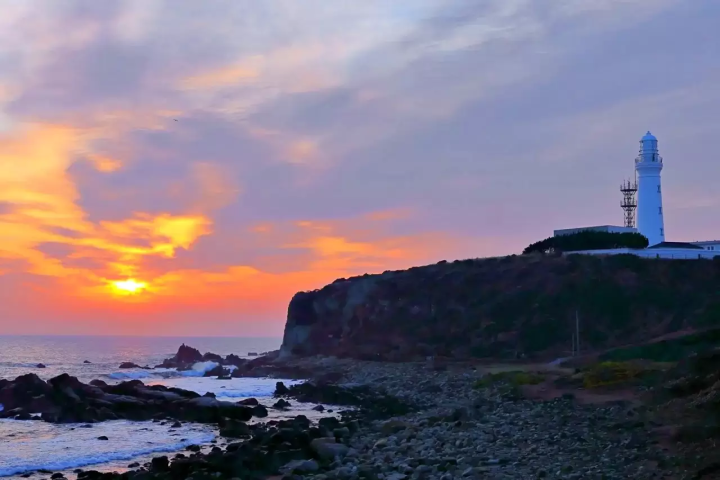
The Meiji Era and the Beacon of Inubosaki (1872–1874): Recognizing the treacherous nature of the Pacific waters off the Boso Peninsula, the Meiji government commissioned British engineer Richard Henry Brunton to design a modern coastal defense. In 1874, the Inubosaki Lighthouse was completed. Built from over 190,000 handmade white bricks, the structure immediately established itself as a critical navigational aid for international and domestic vessels navigating the rough seas of the eastern seaboard.
The Inception of Choden (1922): As Choshi expanded economically, the need for inland transit became paramount. In December 1922, the Choshi Electric Railway was officially established to connect the urban center of Choshi with the outlying fishing community of Tokawa. For nearly a century, the 4.0-mile (6.4-kilometer) line has operated as the literal and figurative heartbeat of the region, carrying generations of commuters, fishermen, and travelers through lush green countryside.
The Post-War Fishing Boom (1950s–1980s): Benefiting from the rich confluence of the Kuroshio (warm) and Oyashio (cold) currents, Choshi Fishing Port experienced exponential growth. It developed into one of Japan’s premier ports, anchoring the local economy and establishing a nationwide reputation for supreme-quality marine products, particularly sardines, mackerel, and bonito.
The Turn-of-the-Century Crisis and Creative Survival (2000s–2016): Like many rural Japanese transit lines, the Choshi Electric Railway faced catastrophic financial deficits due to depopulation and rising operational costs. By the mid-2010s, the line was on the brink of permanent closure. In a historic pivot, management launched desperate yet brilliant survival campaigns, including the monetization of station naming rights, the internet-driven phenomenon of "wet rice crackers" (nure-senbei), and unique linguistic marketing tied to the city’s name.
Supporting Context, Geography, and Economic Metrics
Geographical Isolation and Strategic Advantage
Choshi occupies the northeastern tip of Chiba Prefecture, bordered by the Pacific Ocean to the east and south, and the Tone River to the north. Being the easternmost point of the Kanto plain, it holds the distinction of greeting the earliest mainland sunrise in Japan each New Year, drawing tens of thousands of pilgrims and tourists who brave the winter chill to witness the first light.
The Economic Engine: Choshi Fishing Port
The socioeconomic pulse of the city is undeniably tied to the Choshi Seafood Sales Cooperative and the surrounding port infrastructure.
Catch Volume: Choshi consistently ranks at or near the top of national statistics for annual landed fish volume.
Market Operations: The port hosts intensive morning fish market auctions where buyers vie for the freshest catches of the day. Adjacent eateries and processing houses immediately convert these landings into high-grade sashimi and rice bowls (kaisendon), creating a robust culinary tourism sector.
Marine Tourism: Beyond commercial fishing, the port serves as the departure point for eco-tourism boat excursions. These tours offer visitors a chance to observe marine life, including pods of wild dolphins and migrating whales that traverse the nutrient-rich local waters.
Landmark Attractions and Cultural Heritage
1. Inubosaki Lighthouse
Standing majestically against the turbulent Pacific, the Inubosaki Lighthouse is far more than a functional navigational aid; it is a monument to Meiji-era engineering and international architectural exchange.
Design and Structure: Constructed entirely of exposed white brick—a rarity for Japanese lighthouses of that era—it stands as one of the 100 Historic Lighthouses of the World.
Ascent and Views: Visitors can climb the 99 steps of its interior spiral staircase to reach the observation deck, which commands an unobstructed, 360-degree panorama of the curvature of the Earth over the Pacific Ocean.
Historical Artifacts: Adjacent to the main tower is a historic foghorn station. Though decommissioned, the station features an interactive simulator that allows modern visitors to experience the low, resonant blast once used to guide ships through impenetrable sea fogs. Outside, a rare white postbox provides a whimsical, thematic contrast to the red-and-white motifs common elsewhere in Japan, serving as a popular spot for travelers to mail physical postcards.
2. The Choshi Electric Railway ("Choden")
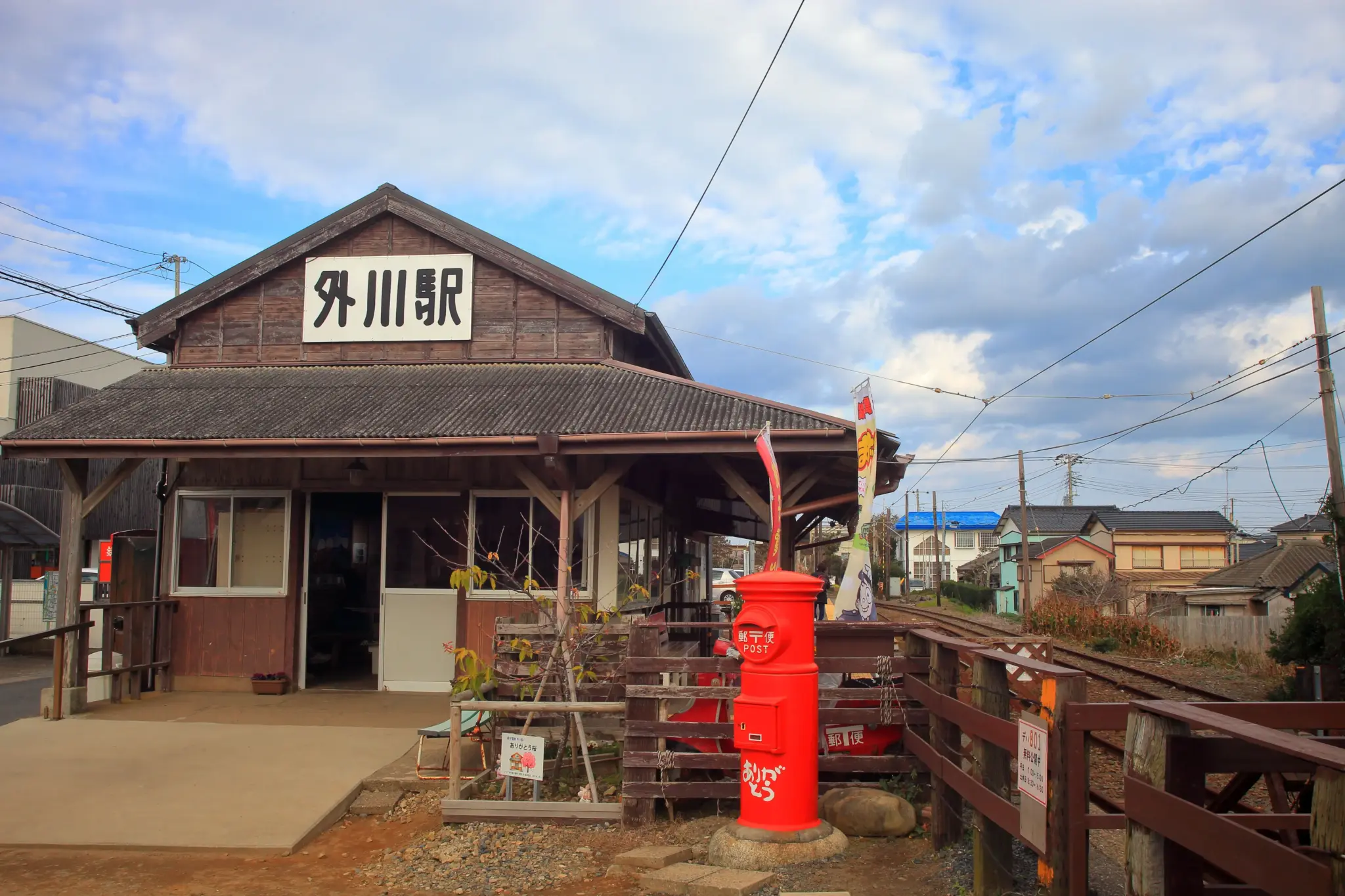
Spanning just 4.0 miles (6.4 kilometers) from JR Choshi Station to Tokawa Station, Choden is a masterclass in nostalgic preservation. Featuring vintage rolling stock and European-inspired wooden stations, the line offers a visual step back in time.
However, Choden’s true legacy lies in its battle for survival. When municipal subsidies and passenger fares proved insufficient to cover track maintenance and operational costs, the railway board turned to unconventional guerrilla marketing:
Station Naming Rights: In 2016, facing insolvency, Choden offered naming rights for its minor stations (excluding the shared JR Choshi terminal) for approximately one million yen per year. Corporations rushed to secure whimsical secondary names. For instance, Kasagami-Kurosei Station was rebranded as "Hair Growth Kurosei" after a deal with a kelp-based hair tonic manufacturer. The company capitalized on the partnership by issuing commemorative tickets printed on actual kelp sheets, creating a viral sensation across Japanese media.
The Nure-Senbei (Wet Rice Cracker) Phenomenon: When funds for critical track repairs vanished overnight, railway employees published an emotional plea online. In response, digital communities mobilized en masse to purchase locally produced wet rice crackers. This accidental product line became a nationwide staple, rescuing the railway from bankruptcy and establishing a secondary culinary export for the city.
Linguistic Good Fortune: In Japanese, "Choshi" shares its pronunciation with a term meaning physical condition or health (chōshi). Capitalizing on this homophone, the railway began marketing round-trip tickets between Choshi Station and Moto-Choshi ("Original Health") Station as talismans for physical well-being, recovery, and academic success. This clever branding turned mundane transit tickets into prized collectibles for students and superstitious tourists alike.
Official Statements and Local Perspectives
Local stakeholders and municipal authorities have increasingly emphasized sustainable tourism as the primary vehicle for Choshi’s future development. In recent municipal briefings, tourism board representatives underscored the necessity of bridging Choshi’s rich industrial heritage with modern experiential travel.
"Choshi is not merely a scenic backdrop for day-trippers from Tokyo; it is a living, breathing ecosystem forged by the sea and sustained by the sheer tenacity of its people," noted a senior official from the Choshi Tourism Association. "Whether it is the daily auction at the fish market, the preservation of our century-old lighthouse, or the creative resilience of the Choshi Electric Railway, our community proves that rural heritage holds immense value in the modern age."
Business owners along the Choshi Fishing Port echo these sentiments, noting a steady post-pandemic resurgence in domestic travelers seeking authentic culinary experiences away from metropolitan density.
Future Outlook and Strategic Development
As Choshi looks toward the coming decades, its trajectory relies on a delicate balance between modernization and the preservation of its rustic charm. Key areas of focus include:
Infrastructure Upgrades for Tourism: Plans are underway to enhance digital accessibility for international travelers along the Choshi Electric Railway, introducing multilingual ticketing systems and improved Wi-Fi connectivity at historic stations like Tokawa and Inubosaki.
Eco-Tourism and Marine Conservation: With whale watching and dolphin spotting gaining traction, local operators are partnering with marine biologists to ensure that wildlife tourism remains strictly regulated and ecologically sound.
Wellness and Hospitality Integration: High-end coastal retreats, such as the Inubosaki Hotel, are expanding their hot spring (onsen) facilities to attract extended-stay visitors. By framing Choshi as a premier wellness destination where guests can soak in thermal waters while overlooking the Pacific horizon, the city aims to transition from a single-day excursion market to an overnight destination economy.
In summary, Choshi, Chiba, transcends its geographical classification as a mere rural getaway. Through a potent mix of abundant marine resources, historical gravitas, and unmatched grassroots entrepreneurial spirit, Choshi secures its place as one of the Kanto region’s most resilient and captivating coastal destinations.










Belum ada komentar. Jadilah yang pertama berkomentar!