

Date: October 21, 2026
Author: Global Travel & Tourism Desk
Executive Overview
As the scorching days of late summer yield to the crisp, invigorating breezes of October, a spectacular meteorological and botanical transformation sweeps across the Kinki and Chubu regions of Japan. Rising 1,212 meters above sea level in Mie Prefecture, Mt. Gozaisho stands as an early harbinger of the nation’s beloved autumn foliage season (koyo). While travelers waiting at the base often experience lingering green canopies, the higher altitudes of Mt. Gozaisho erupt into vivid crimsons, deep ambers, and fiery golds as early as mid-to-late October.
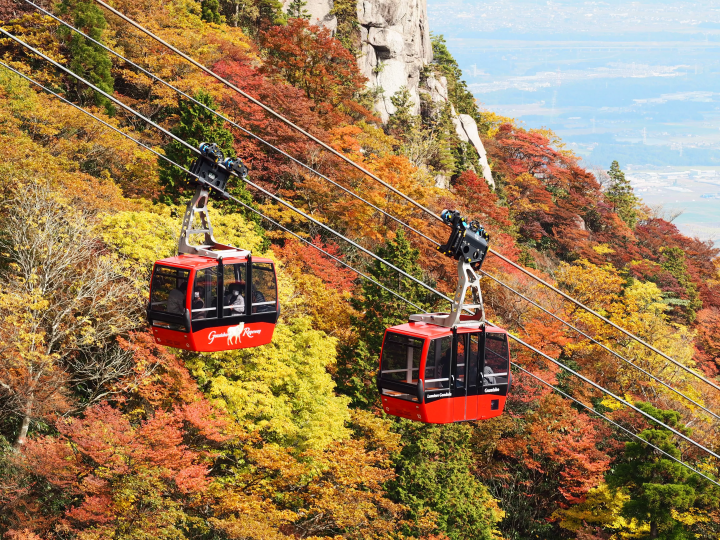
This comprehensive report examines the distinct natural mechanisms driving Mt. Gozaisho’s early autumn arrival, details the structural and scenic highlights of the famed Gozaisho Ropeway, and explores the operational updates—including the newly minted COCORRU Terrace—shaping visitor experiences in late 2026. Furthermore, this feature provides critical logistical analysis, transport navigation warnings, and regional economic insights for domestic and international travelers seeking a seamless day trip or weekend getaway from the major metropolitan hubs of Nagoya and Osaka.
Detailed Chronology of the Autumn Front
The seasonal transition on Mt. Gozaisho follows a precise, downward-moving timeline dictated by sharp temperature gradients and plant biology. Understanding this progression is essential for travelers aiming to witness the peak coloration of the landscape.
Mid-October: The Summit Ignition
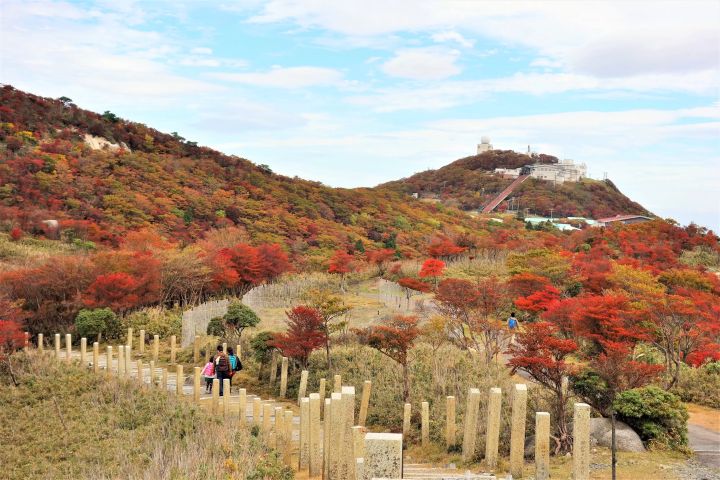
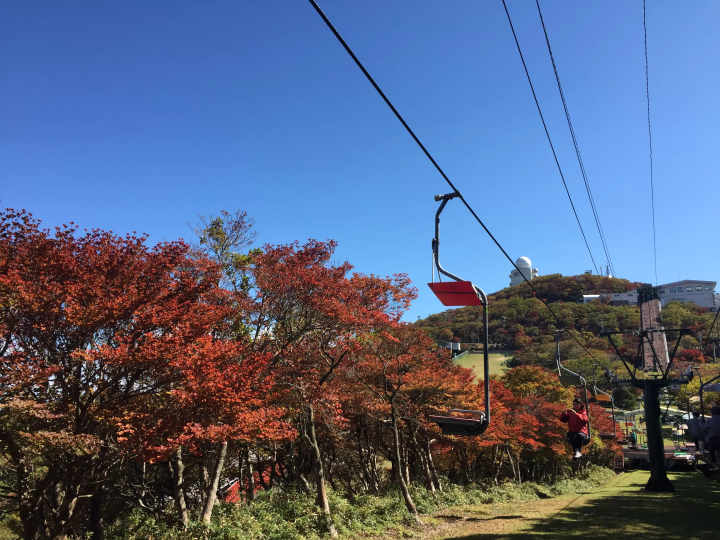
The transformation begins in earnest around October 20th each year at the Summit Park. The mountaintop ecosystem is densely populated by members of the Ericaceae (heath) family, most notably native red azaleas (tsutsuji), white azaleas, and Enkianthus campanulata (known locally as dotsukan).
The scientific catalyst for this high-altitude spectacle is rooted in regional microclimates. As the daytime temperatures at the 1,212-meter summit begin to dip, the nighttime air experiences a sudden, sharp drop. This thermal shock triggers the rapid production of anthocyanin pigments within the leaves, transforming foliage that was once green into a rich, saturated crimson. Because the mountaintop experiences cooler ambient temperatures weeks ahead of the valleys below, visitors taking the aerial tramway step directly into an advanced stage of autumn.
Late October to Early November: The Descent of the Foliage Front
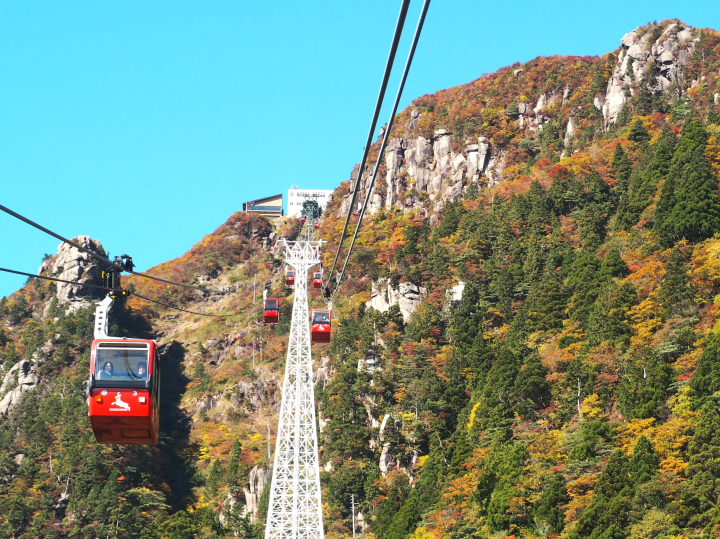
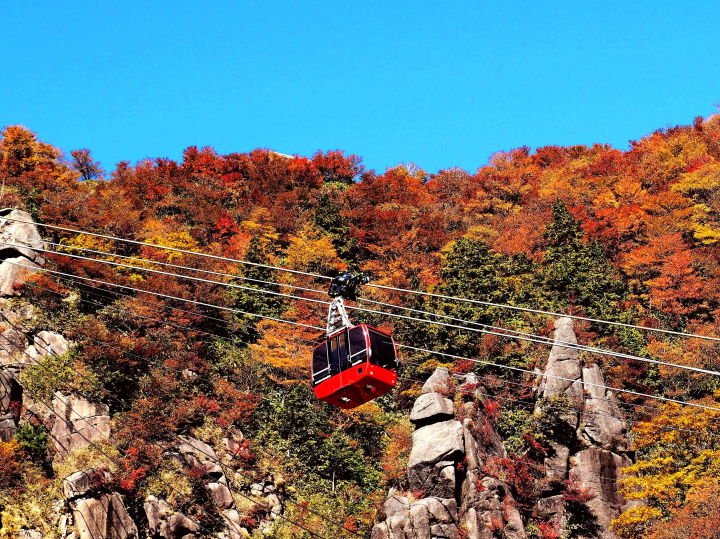
As October draws to a close, the autumn front visibly marches down the mountainside. During this window, the rocky slopes immediately surrounding the ropeway’s mountaintop park station are cloaked in magnificent shades of rust and copper.
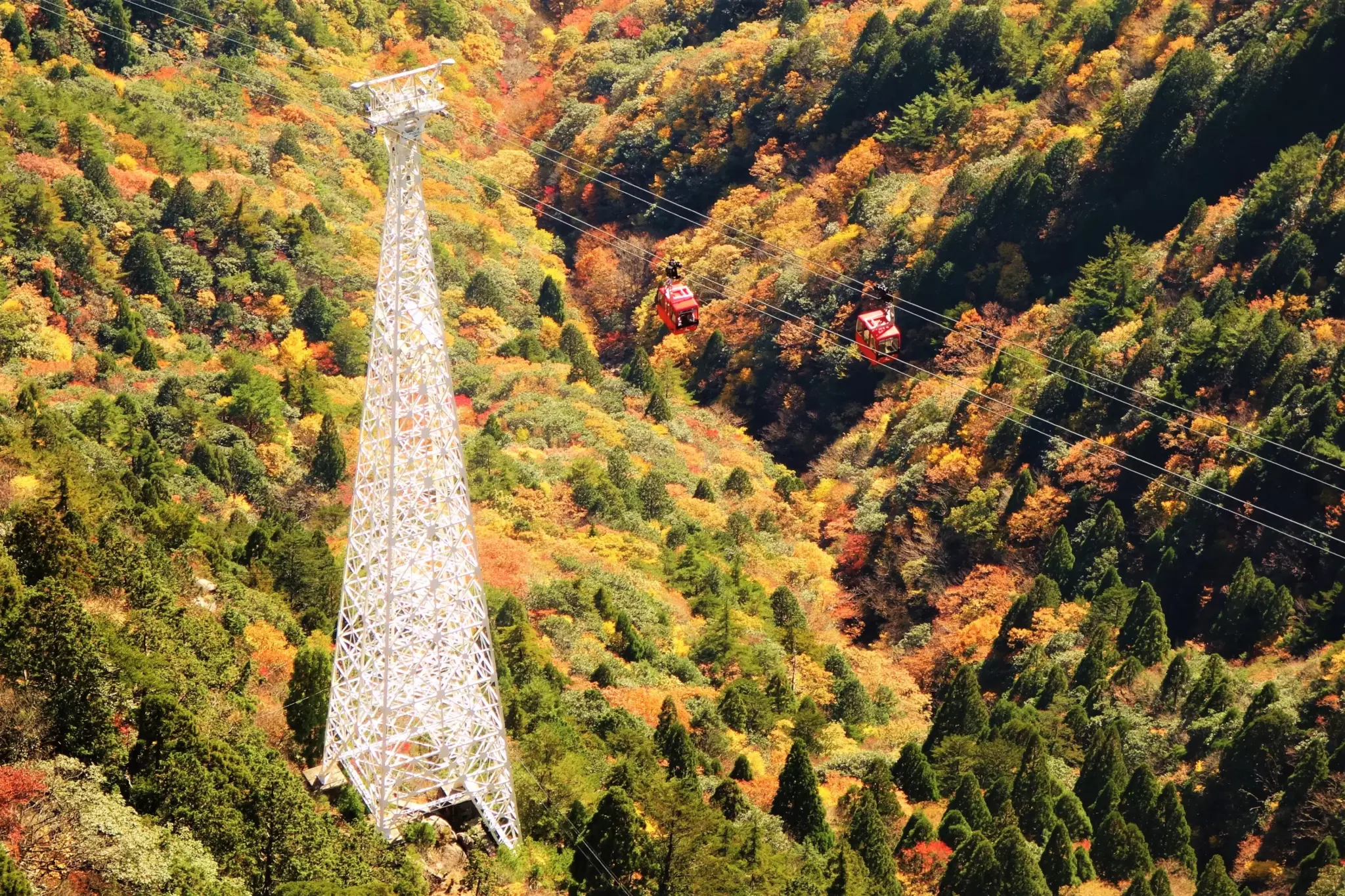
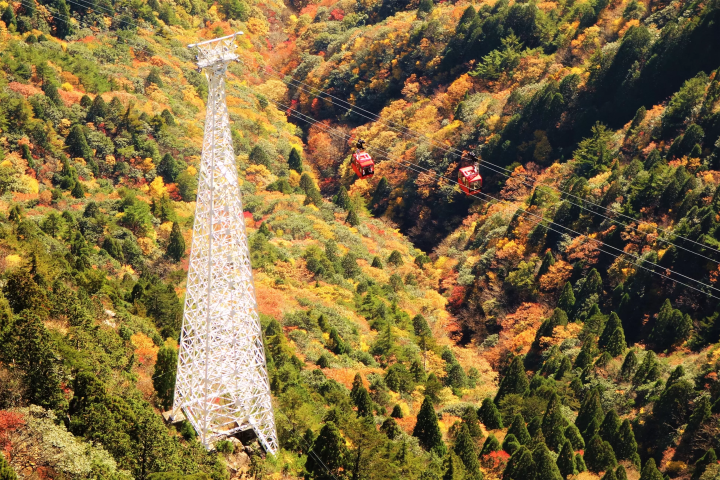
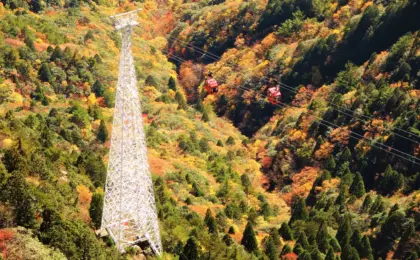
By November, the cascading wave of color reaches the deep ravines and valleys, particularly congregating around the towering engineering marvel known as "Tower No. 6"—the Gozaisho Ropeway’s iconic symbol tower. Here, the diverse mixture of maples, beeches, and evergreens creates a complex, multicolored tapestry that stretches down the rugged cliffs.
Late November: The Yunoyama Onsen Finale
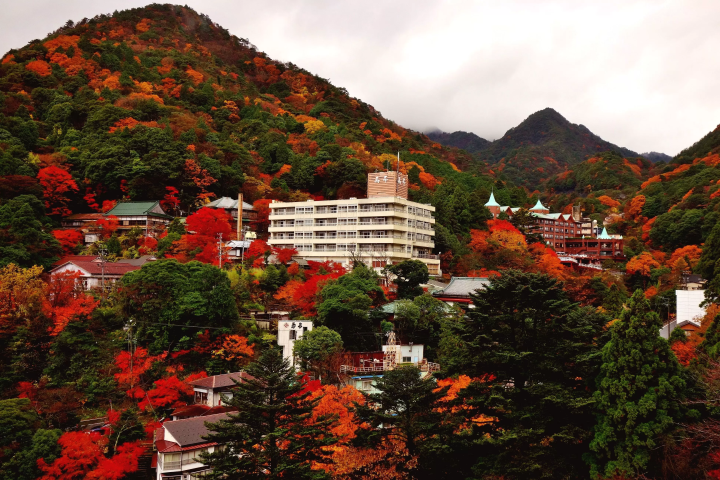
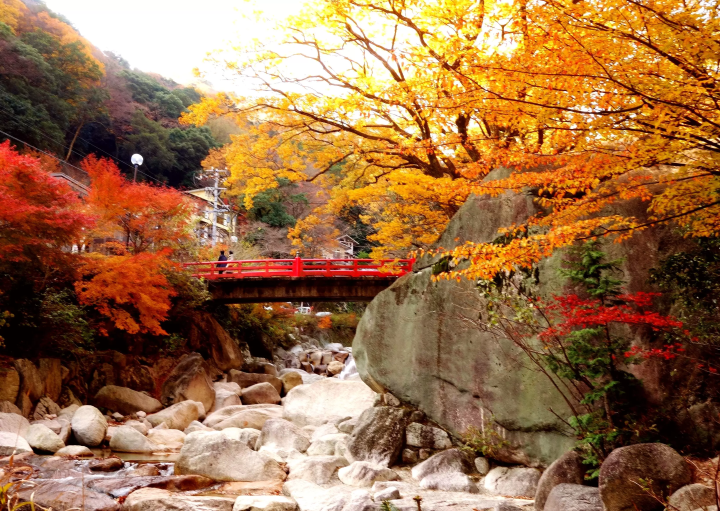
The final chapter of the seasonal narrative unfolds in late November at the base of the mountain within the historic hot spring town of Yunoyama Onsen. Fed by clear, mineral-rich mountain streams, the banks of the valley burst into fiery hues as old-growth maple trees reach their peak. The juxtaposition of steaming hot spring baths against the backdrop of brilliant crimson maples brings a serene, magical conclusion to the region’s autumn cycle.
Supporting Context, Infrastructure, and Metrics
Navigating a vertical ecosystem requires specialized infrastructure. Mt. Gozaisho accommodates thousands of leaf-peepers daily through a well-engineered network of ropeways, open-air lifts, and modern viewing platforms.
The Gozaisho Ropeway System
Operating continuously as the backbone of the mountain’s tourism logistics, the Gozaisho Ropeway spans a remarkable distance, whisking passengers from the base to the precipitous heights of the summit area.
- Standard Fares: Round-trip tickets are priced at 2,600 yen for adults and 1,300 yen for children. Infants aged 1 to 3 ride free of charge. (Note: Travelers aged 13 and older are classified under the adult fare structure).
- The Sightseeing Lift: For visitors wishing to immerse themselves directly in the canopy, the single-seater sightseeing lift connects the Ropeway Sanjo Park Station to the ultimate peak. Spanning 500 meters in approximately 8 minutes, the lift offers unhindered, 360-degree views of the azalea colonies lining the slopes. Fares are standardized at 400 yen one-way and 700 yen round-trip for all passengers aged 4 and above.
Gastronomy and Alpine Amenities
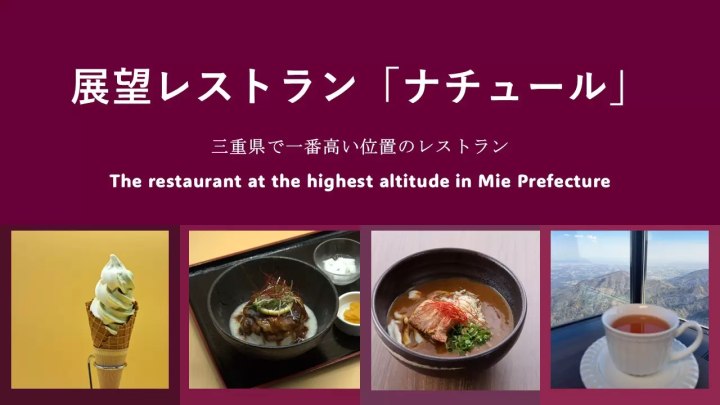
At the summit park, the panoramic "Nature" restaurant serves as the primary culinary hub. Beyond offering expansive views stretching toward the distant Japanese Alps and the urban grid of Mie Prefecture, the establishment is famous for its signature Gozaisho Curry Udon, a warming comfort dish specifically tailored to the brisk mountaintop climate, alongside seasonal menus and artisanal sweets.
Official Statements and Recent Developments
The management and regional tourism bureaus governing Mt. Gozaisho have continuously refined the visitor experience to balance modern aesthetic demands with ecological preservation.
The Debut of COCORRU Terrace
In a strategic effort to enhance the mountain’s appeal as a premier photography destination, park authorities officially unveiled "COCORRU Terrace". Designed as an elevated observation deck, the terrace frames sweeping vistas of the picturesque Ise-Shima region.
The centerpiece of the terrace is an altitude-defying swing that blends mild thrills with high-impact visual framing. According to park officials, the installation was engineered to give visitors an immersive sense of flight above the changing canopy, successfully merging modern interactive tourism with the natural topography of the peak.
Crowd Management and Sustainable Transit Advisories
With regional tourism rebounding to record highs, municipal authorities and the ropeway operating company have issued strict advisory notices regarding seasonal congestion.
"During peak foliage windows in late October and November, vehicular traffic along the base approaches and parking facilities experiences severe bottlenecks," notes a regional transit official. "We strongly advise travelers to opt for weekday visits whenever possible. For those arriving on weekends or national holidays, utilizing integrated rail and bus networks is not merely a recommendation—it is a vital measure to bypass multi-hour highway gridlock."
Future Outlook and Logistical Blueprint
For international and domestic tourists planning an excursion to Mt. Gozaisho from Nagoya or Osaka, a precise navigational protocol ensures a stress-free journey.
Step-by-Step Transit Guide
- Trunk Rail Line: Whether departing from Nagoya or Osaka via the Kintetsu Railway network, passengers must first route their travel toward Kintetsu Yokkaichi Station. (Crucial Warning: Travelers must strictly avoid the separate JR Yokkaichi Station, which is situated at a considerable, inconvenient distance from the Kintetsu hub).
- Local Rail Transfer: From Kintetsu Yokkaichi Station, transfer directly to the Kintetsu Yunoyama Line, riding it to its final destination: Yunoyama Onsen Station (a 26-minute transit segment). Travelers are encouraged to utilize the cost-effective Kintetsu Rail Pass for optimized fare management.
- Bus Connection: Immediately outside Yunoyama Onsen Station, board the Mie Kotsu Bus bound for "Yunoyama Onsen Gozaisho Ropeway Mae." This final leg takes approximately 10 minutes, depositing passengers directly at the ropeway ticketing gates.
Strategic Base Camps for Extended Exploration
Travelers seeking to expand their Mie Prefecture itinerary will find robust hospitality infrastructure in the surrounding districts. Properties such as the Sanko Inn Yokkaichi Ekimae, located adjacent to Yokkaichi Station, serve as ideal regional anchors. Offering seamless transit connections not only to the Gozaisho Ropeway but also to coastal hubs like Toba, Ise, and downtown Nagoya, these hotels facilitate multi-day explorations of central Japan’s rich cultural and natural tapestry.
As climate patterns continue to shift, Mt. Gozaisho remains a steadfast symbol of Japan’s orderly seasonal transitions—a vertical sanctuary where autumn arrives early, lingers vividly, and rewards every traveler willing to look upward.




Belum ada komentar. Jadilah yang pertama berkomentar!