

Executive Overview
For residents of Tokyo seeking a respite from the relentless verticality and kinetic energy of Japan’s capital, southern Chiba offers a compelling geographic and cultural counter-narrative. Bounded by the confluence of the Pacific Ocean and Tokyo Bay, the Boso Peninsula represents a dramatic departure from urban densification. Characterized by ragged topography, steep sea cliffs, microclimatic agricultural zones, and a maritime heritage deeply embedded in regional identity, southern Chiba has evolved into the premier weekend road-trip destination for urbanites.
A mere two-hour drive from central Tokyo brings travelers to a landscape defined by vertical limestone formations, subterranean waterfalls, subterranean marine ecosystems, and culinary traditions that capitalize directly on the rich currents of the Kuroshio Current. Encompassing distinct municipalities such as Kamogawa, Kisarazu, Katsuura, Chikura, and Kyonan Town, this region offers a diverse itinerary that blends eco-tourism, culinary exploration, and historic preservation. This report provides an exhaustive, chronologically structured itinerary and analytical overview of southern Chiba, charting a course through its natural wonders, revitalization projects, and burgeoning tourism infrastructure.
Detailed Chronology: A Three-Day Itinerant Blueprint
Day 1: Transitioning from the Urban Core to Coastal Kamogawa
Given the vehicular logistics of departing central Tokyo and navigating the highway systems leading onto the Boso Peninsula, the initial day of any southern Chiba excursion is intentionally calibrated for a measured transition. The journey itself serves as an atmospheric decompression, with concrete landscapes steadily giving way to undulating green hillsides and expansive marine horizons.
Nomizo Waterfall and the Aesthetics of Ghibli
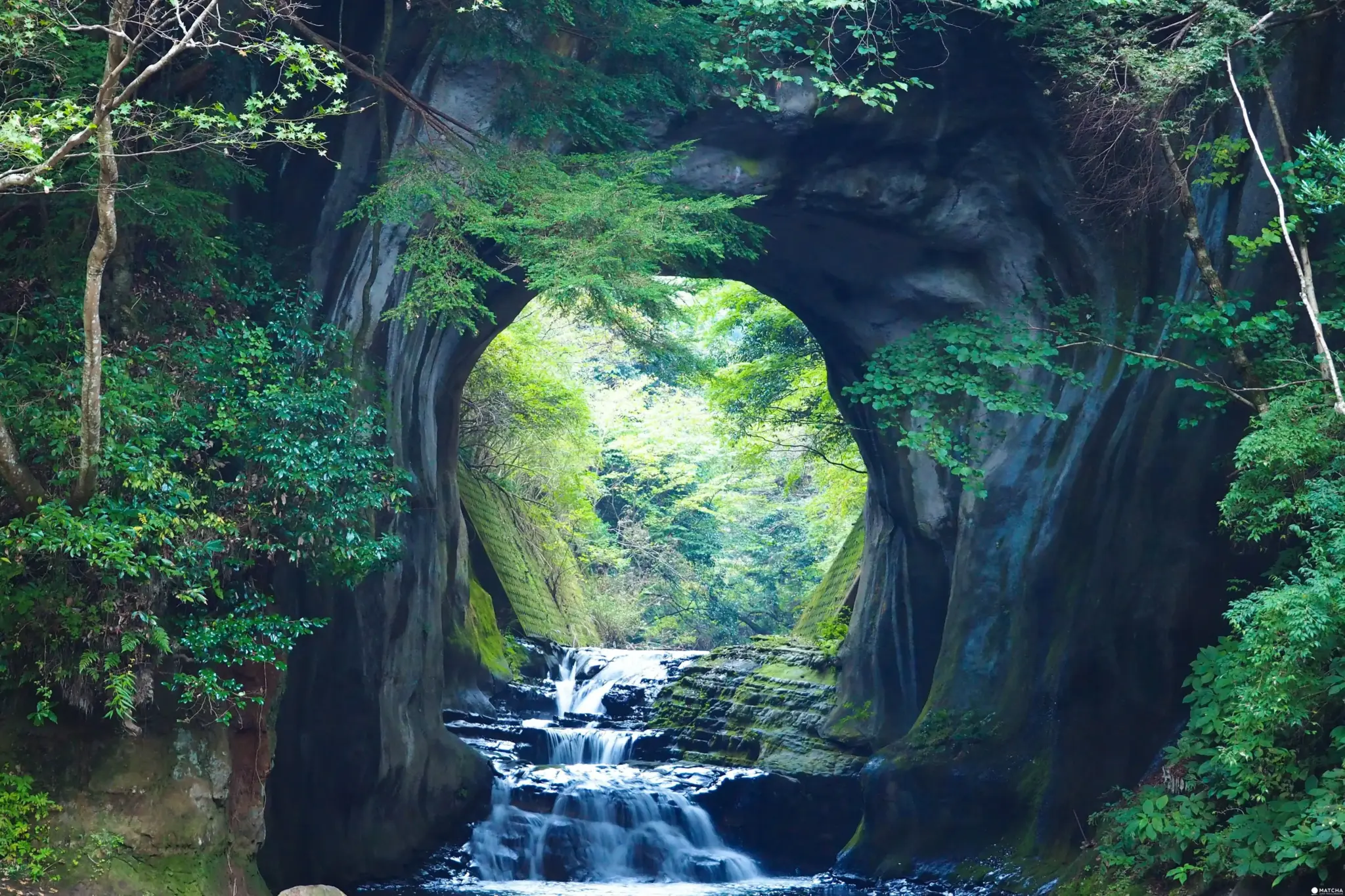
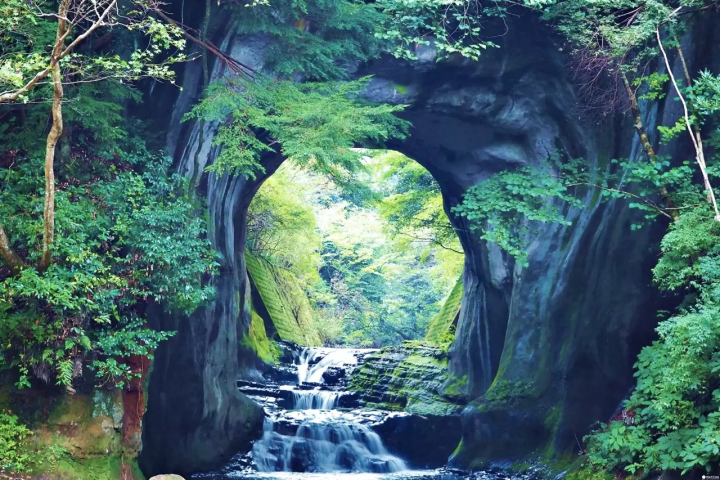
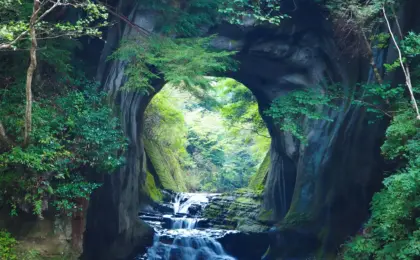
The itinerary commences with a roughly two-hour drive from Tokyo to the interior of Kamogawa, punctuated by a stop at Nomizo Waterfall. Long before its ascension to digital viral prominence via social media platforms, this natural feature remained a quiet geological curiosity. The site features a man-made tunnel carved during the Edo period to reroute a river for agricultural irrigation, which inadvertently created a picturesque waterfall tumbling over moss-covered rock faces.

Under precise meteorological conditions—typically early morning during specific seasonal angles—sunlight penetrates the cave opening, casting a luminous, heart-shaped reflection upon the surface of the pool below. The ethereal quality of the light and foliage has drawn frequent comparisons to the animated worlds of Studio Ghibli. Adjacent hot spring facilities and modest retail spaces provide travelers with an accessible baseline for rest and recuperation before pushing further toward the coast.
The Golden Expanse: Kamogawa’s Spring Canola Fields
Progressing further into Kamogawa during the spring months exposes travelers to one of the prefecture’s premier agricultural spectacles: the annual Nanabatake Road event. Spanning over eight acres of rural countryside, this initiative transforms ordinary agricultural plots into a brilliant, saturated blanket of golden-yellow canola flowers (nanohana).

Local authorities and agricultural cooperatives curate the space to facilitate direct engagement, offering fresh floral sales, interactive flower-picking opportunities, and bicycle rentals that allow visitors to navigate the perimeter tracks. This spatial interaction highlights Chiba’s dual identity as both a natural sanctuary and an active agricultural producer supplying the Kanto megalopolis.
Coastal Reprieve: Oceanfront Gastronomy
Arriving at the Pacific coastline of Kamogawa necessitates a pause at local maritime cafes and surf outposts. Establishments like the Earth Tree Cafe exemplify the architectural and culinary ethos of the region—utilizing reclaimed timber and sustainable building techniques to construct cabin-like interiors that serve locally sourced, health-conscious light meals. Overlooking the shifting swells of the Pacific, these spaces anchor the traveler in the maritime rhythm of the Boso Peninsula.

Thermal Immersion and Ryokan Hospitality
As afternoon transitions into evening, checking into a traditional hot spring (onsen) ryokan provides an essential structural anchor for the journey. Kamogawa’s coastal hot spring hotels leverage the thermal geology of the region to offer mineral-rich baths designed to alleviate travel fatigue.
Culinary programming at these establishments is heavily weighted toward the ocean’s bounty. Evening multi-course kaiseki dinners feature regional marine catches harvested from local ports, prominently showcasing delicacies such as abalone, sea scallops (hotate), and prized spiny lobsters (ise-ebi). This immersive convergence of thermal wellness and hyper-local dining sets a high standard for regional hospitality.

Day 2: Maritime Commerce, Spicy Broths, and Marine Ecosystems
The second day begins well before dawn, leveraging the early-rising traditions of Chiba’s historic fishing ports and coastal communities. Day two requires durable walking footwear and a readiness to engage directly with local commercial hubs.
Morning Harvest at Katsuura Morning Market
Following a breakfast buffet at a Kamogawa ryokan—where traditional Japanese and Western staples are routinely augmented by regional sashimi and seasonal vegetables—travelers journey northward to neighboring Katsuura. Here operates the Katsuura Morning Market, celebrated historically as one of Japan’s top three morning markets and colloquially designated as the culinary "kitchen" of Chiba Prefecture.

Dating back centuries, this vibrant market unfolds near the municipal harbor. It serves as a direct distribution point for daily marine catches, seasonal highland and coastal produce, handmade preserved foods, and artisanal snacks. The market is not merely a commercial exchange but a cultural touchstone; interactions with veteran vendors—many of whom have operated stalls for decades—offer deep insights into regional hospitality (omotenashi). Because vendors traditionally pack up their stalls by late morning, prompt arrival is imperative.
Culinary Resilience: Katsuura Tan-Tan Men
The maritime climate of Katsuura, buffeted by cold ocean winds and maritime fog, historically demanded warming, calorie-dense sustenance for local fishermen and free-diving ama divers. This occupational necessity birthed Katsuura Tan-Tan Men, a localized evolutionary variant of the classic Chinese-derived spicy noodle dish.

Unlike standard sesame-paste-heavy tantanmen, the Katsuura version relies on a fiery, crystal-clear red oil (rayu) and chicken-based broth heavily fortified with sweet chopped onions and minced pork. The resulting flavor profile is aggressively savory, spicy, and deeply warming—a culinary artifact born directly from the physical demands of local marine labor.
Ubara Risokyo: Vertical Coastlines and Secluded Trails
A brief twelve-minute vehicular transition from the morning market brings travelers to Ubara Risokyo, a protected coastal nature reserve carved into sheer sea cliffs. This dramatic landscape features indented rias, wave-cut platforms, and dense pine forests flanking the Pacific.

A well-maintained walking trail invites visitors on a leisurely 30-minute ascent to the apex of the cape. The panoramic vantage point offers uninterrupted views of crashing surf and sweeping ocean horizons, providing a stark, silent counterpoint to the bustling commercial energy of the Katsuura market.
Kamogawa Sea World: Marine Education and Conservation
Returning southward, the afternoon itinerary focuses on Kamogawa Sea World, a premier marine park and educational facility situated directly on the Pacific shoreline. The institution plays a dual role as a family-oriented leisure destination and an active participant in marine life study and conservation.

The facility is globally recognized for its dynamic presentations involving killer whales (orcas), bottlenose dolphins, and California sea lions, alongside expansive indoor and outdoor marine exhibits that replicate diverse aquatic habitats. Visitors are advised to verify daily performance schedules in advance to optimize their navigation of the expansive grounds.
Day 3: Adaptive Reuse, Historic Peak Views, and Retail Scale
The final day of the southern Chiba circuit involves a westward trajectory across the peninsula, moving from Kamogawa toward Chikura, traversing the vertical spine of Kyonan Town, and concluding at the commercial gateway of Kisarazu.

Chikura and the Shiokaze Kingdom
The morning kicks off with a drive toward Chikura, stopping at the Shiokaze Kingdom roadside station (michi-no-eki) situated near the Senda Coast. During low tide, visitors can wade out onto the shallow rock formations of the coast, while the adjacent Senda Flower Garden explodes in color during peak seasonal blooms.
Anchored to the shoreline is a permanent historical monument: the Dai-Ichi Chikura-maru, a decommissioned fishing vessel that pays homage to the Showa era (1926–1989), when large-scale pelagic fishing fleets anchored Chiba’s local economy, harvesting massive quantities of mackerel and Pacific saury. Visitors can board the vessel to survey the Senda Coast from an elevated maritime perspective.

For lunch, the roadside station houses Hanabusa, a dining institution renowned for its ambitious seafood offerings. Menus range from classic raw seafood rice bowls (kaisendon) to massive, cantilevered fried conger eel (anago) and simmered whole fish. The culinary crown jewel of the establishment is the "King Seafood Bowl"—a towering composition featuring over ten distinct varieties of sashimi crowned with a whole spiny lobster. Priced at a premium and strictly limited in daily yield, this dish encapsulates the extravagant scale of Chiba’s coastal dining culture.
Mount Nokogiri: Geological Drama and Historic Statuary
Continuing north into Kyonan, the route leads to Mount Nokogiri (literally "Sawtooth Mountain"), one of the prefecture’s most visually striking geological landmarks. Named for the jagged, serrated profile of its peaks—the result of centuries of intensive industrial quarrying for building stone (Boso sekizai)—the mountain rises sharply above Tokyo Bay.

Travelers can ascend the summit via hiking trails or the Nokogiri-yama Ropeway. The upper cable car station features an observation deck looking out across the expanse of Tokyo Bay, with clear days offering commanding views of Mount Fuji anchoring the distant horizon. Navigating the mountain’s expansive temple grounds (Nihon-ji) reveals monumental stone-carved Buddhas and the vertigo-inducing Jigoku Nozoki ("Hell’s Viewpoint"), a precipitous rock balcony jutting out over a sheer quarry drop.
Adaptive Reuse: Roadside Station Hota Elementary School
A short distance from the base of Mount Nokogiri lies a masterclass in rural architectural preservation: Roadside Station Hota Elementary School. Following the demographic contraction and eventual closure of a century-old rural school, local planners elected to convert the historic campus into a multi-use civic and tourist rest stop while strictly preserving its architectural integrity.

The adaptive reuse project is remarkably thorough:
- Classrooms have been repurposed into boutique retail spaces selling regional crafts.
- Administrative offices now function as commercial dining rooms and bakeries.
- Hallways host community workshops and artisan displays.
- The Gymnasium operates as a bustling local farmers’ market supplying fresh Boso produce.
- On-site Bathhouse facilities provide relaxation options for travelers.
- Overnight Accommodations: Visitors can even book stays inside converted classroom guest rooms, sleeping directly in front of vintage chalkboards.
Seasonal Flora: Yoritomo Kawazu Cherry Blossoms
Adjacent to the former elementary school, the banks of the Hota River support a scenic riparian corridor lined with Yoritomo Sakura. These early-blooming Kawazu cherry blossom trees typically reach peak efflorescence from mid-February to early March, painting the riverbanks in deep pink hues. The simultaneous natural bloom of wild daffodils and golden canola flowers along the same waterway creates a vibrant, multi-layered early spring landscape unique to southern Chiba.

Fishermen’s Cuisine Kanaya and Mitsui Outlet Park Kisarazu
Before departing the peninsula, travelers often make a final culinary stop at Fishermen’s Cuisine Kanaya, situated less than fifteen minutes from Kyonan. Featuring expansive dining rooms overlooking Tokyo Bay, the restaurant specializes in all-you-can-eat grilled shellfish, seasonal sashimi, and tempura rice bowls, complemented by an upper-floor hot spring facility.
The ultimate stop on the return transit toward Tokyo is Mitsui Outlet Park Kisarazu. As the largest outlet mall complex in the Kanto region, this sprawling commercial development houses nearly 250 distinct storefronts. Offering international luxury houses, Japanese domestic fashion labels, technical sportswear, and home goods, the outlet center serves as a high-volume retail bookend to a journey otherwise defined by rural tranquility and maritime tradition.

Supporting Context & Metrics
To contextualize southern Chiba’s appeal and logistical framework, the following operational metrics and geographic data points are essential for prospective visitors:
| Metric / Parameter | Detail / Value |
|---|---|
| Average Transit Time from Tokyo | Approx. 2 hours via highway system (Aqua-Line / Boso Peninsula routes) |
| Key Municipalities Included | Kamogawa, Kisarazu, Katsuura, Chikura, Kyonan Town |
| Primary Peak Floral Seasons | Mid-February to early March (Canola flowers, Kawazu cherry blossoms, Daffodils) |
| Notable Seafood Specialities | Spiny Lobster (Ise-ebi), Abalone, Katsuura Tan-Tan Men, Conger Eel |
| Maximum Retail Scale | Mitsui Outlet Park Kisarazu (~250 stores, largest in Kanto region) |
Official Statements and Industry Insights
Tourism authorities and regional planners have increasingly emphasized the strategic importance of automotive-based tourism in mitigating the demographic and economic pressures facing rural Chiba municipalities.

"The spatial dispersion of southern Chiba’s tourism assets—ranging from the high cliffs of Ubara Risokyo to the agricultural interior of Kamogawa—requires a flexible transit framework," notes a regional tourism promotion official for the Boso Peninsula. "By championing initiatives like the conversion of Hota Elementary School and the preservation of historic morning markets, we are successfully bridging the gap between historical preservation and modern weekend leisure demands from the Tokyo metropolitan area."
Furthermore, culinary associations in Katsuura and Kamogawa continue to leverage hyper-local gastronomy as an economic engine. The formal promotion of regional dishes such as Katsuura Tan-Tan Men has transformed localized culinary heritage into a recognized destination brand, drawing culinary tourists outside of traditional peak summer beach seasons.

Future Outlook
As the Tokyo metropolitan area continues to densify, the value proposition of peripheral sanctuaries like southern Chiba is projected to strengthen. Infrastructure investments targeting the Boso Peninsula are increasingly focused on sustainable tourism, eco-trail maintenance, and the expansion of adaptive-reuse infrastructure similar to the Hota Elementary School model.
Future regional development strategies emphasize the electrification of tourist transit routes, enhanced digital wayfinding for self-drive travelers, and closer integration between agricultural cooperatives and coastal hospitality providers. By maintaining a delicate equilibrium between commercial accessibility and the preservation of rugged, natural coastal landscapes, southern Chiba is well-positioned to retain its status as the definitive weekend escape for the capital region for decades to come.





Belum ada komentar. Jadilah yang pertama berkomentar!