

Executive Overview
For decades, international travelers exploring Japan have relied almost exclusively on the country’s world-class rail networks. While the Shinkansen and extensive municipal subway systems offer unparalleled efficiency for moving between major urban hubs, they inherently bypass the lesser-known, geographically isolated gems tucked away in Japan’s rural prefectures. For adventurous motorists willing to look beyond the train tracks, Chiba Prefecture—situated immediately adjacent to Tokyo—presents an ideal proving ground for an independent driving holiday.
This comprehensive travel dispatch explores the southern reaches of the Boso Peninsula, a scenic maritime wedge defined by dramatic topography, centuries-old Buddhist heritage, pioneering coastal infrastructure, and a thriving culinary ecosystem powered by the nutrient-rich Kuroshio Current. By stepping behind the wheel of a rental car, travelers gain the flexibility to navigate between sheer mountain quarries, offshore engineering marvels, historic feudal landmarks, and transformed civic institutions. Far from the congested neon corridors of the capital, Southern Chiba offers an immersive, slower-paced Japanese road trip that rewards curiosity, spontaneity, and an appetite for local flavors.

Detailed Chronology: A Coastal and Mountain Itinerary
Phase I: Crossing the Tokyo Bay Aqua-Line to Umihotaru
A road trip to Chiba Prefecture from the Tokyo metropolitan area begins long before hitting terra firma on the peninsula. Motorists have the option of driving around the northern perimeter of Tokyo Bay or executing a direct, trans-oceanic crossing via the Tokyo Bay Aqua-Line Expressway.

Engineering marvel meets maritime novelty on this route, which seamlessly fuses a 6-mile (9.6-kilometer) undersea tunnel with a 2.7-mile (4.4-kilometer) elevated bridge, linking Kawasaki City in Kanagawa Prefecture directly with Kisarazu City in Chiba. Emerging from the subterranean depths of the Kawasaki Artificial Island ventilation tower—a striking, sail-shaped structure rising starkly out of the open water—drivers arrive at Umihotaru Parking Area.

Perched entirely on an artificial island in the center of the bay, Umihotaru functions as a multi-story maritime complex complete with observation decks, retail outlets, and regional dining. The facility derives its name from the umihotaru (sea fireflies), bioluminescent ostracods indigenous to the Pacific coast of Japan. When agitated in darkness, these tiny marine organisms emit a striking, luminous blue glow. Although once prolific in Chiba’s coastal waters, environmental shifts have precipitated a notable decline in local populations, prompting ongoing conservation efforts.

For motorists making a quick excursion, Umihotaru features specialized U-turn lanes allowing travelers from either Kawasaki or Kisarazu to visit the rest stop and return without incurring the full transit toll. Visitors are greeted by an array of hyper-local delicacies. A signature offering comprises freshly fried sardines—crispy, juicy, and served in portions of seven to eight pieces for just 400 yen. Additionally, capitalizing on Kisarazu’s renowned clam-harvesting industry, the rest stop serves clam-yaki, a regional variation of traditional takoyaki that substitutes octopus with plump local clams. Priced at 680 yen for an eight-piece order, these savory spheres encapsulate the maritime essence of the Boso Peninsula.

[Kawasaki City] ---> (6-mile Undersea Tunnel) ---> [Umihotaru Parking Area] ---> (2.7-mile Elevated Bridge) ---> [Kisarazu City, Chiba]Phase II: The Jagged Heights and Ancient Legacy of Mount Nokogiri
Pushing further south into the prefecture, the landscape transitions from flat plains to dramatic rocky elevations. Chiba Prefecture is predominantly low-lying, making Mount Nokogiri an anomalous and striking geographic feature. Despite its modest height of 1,080 feet (329.4 meters), the peak towers dramatically over the surrounding terrain.

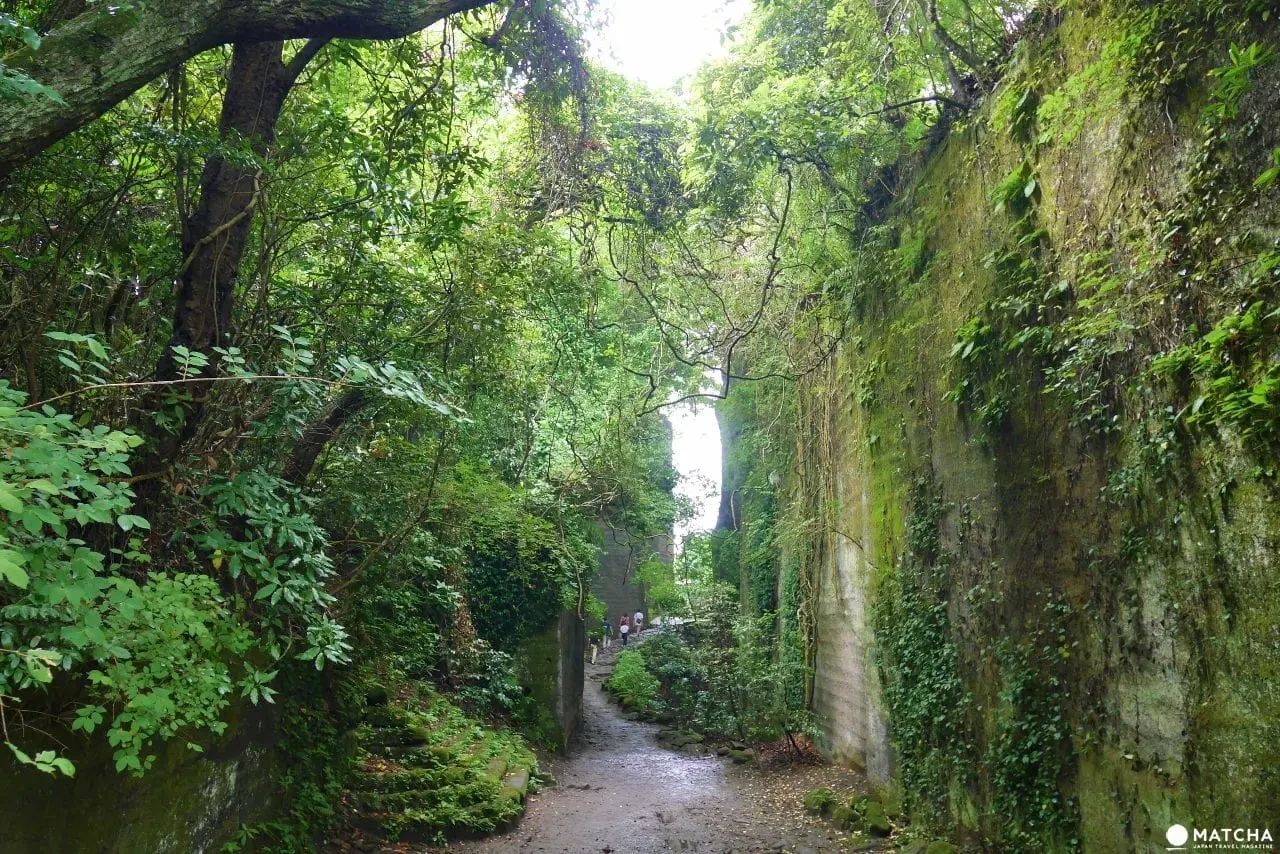
Composed of high-quality tuff—locally celebrated as Boshu stone—Mount Nokogiri was the site of intensive quarrying operations beginning in the Edo period (1603–1868). This durable stone was harvested extensively to construct military fortifications around Tokyo Bay, port facilities in Yokohama and Yokosuka, and iconic metropolitan landmarks such as Yasukuni Shrine and Waseda University. Quarrying activities were permanently halted in 1982 for environmental preservation, leaving behind sheer, vertical rock faces and razor-sharp ridges that inspired the mountain’s name: "Saw Mountain." Today, cascading wild vines drape over the geometric, man-made stone walls, evoking a cinematic aesthetic frequently compared by visitors to the floating fortress in Studio Ghibli’s Castle in the Sky.

Nestled within the slopes of Mount Nokogiri lies Nihonji Temple, the region’s largest complex of cliff-carved Buddhist architecture. Established in the 8th century, the temple historical grounds once encompassed over one hundred sub-temples. Although anti-Buddhist government decrees during the Meiji period (1868–1912) and a devastating fire in 1939 compromised much of the original timber infrastructure, modern restoration—funded largely through modest admission fees—has preserved its monumental artistry.

The complex is anchored by the Great Buddha of Yakushi Nyorai (the Healing Buddha). Standing at an impressive 102 feet (31.05 meters), this colossal relief surpasses the renowned outdoor bronze Buddhas of Kamakura and Todaiji Temple in Nara, securing its status as the tallest carved stone Buddha in Japan. Extensively rehabilitated during the Showa era (1926–1989) following centuries of natural erosion, the statue radiates serenity rather than intimidation, its gentle facial features framed by the rustling canopy of the surrounding forest.

Further along the mountain trails, visitors encounter rows of expressive Arhat (disciple) statues and the Hyakushaku Kannon, a 100-foot relief sculpted into a sheer cliff face as a memorial for victims of war and traffic accidents. The journey culminates at the Jigoku Nozoki (Hell Viewpoint) overlook. This cantilevered platform juts out over an abyss above an abandoned quarry pit, offering a panoramic sweep of Tokyo Bay and the Boso Peninsula that serves as a pulse-pounding test for anyone suffering from vertigo.

Phase III: Adaptive Reuse at Road Station Hota Elementary School
Descending from the heights of Mount Nokogiri, travelers find an exemplary model of rural community revitalization at Road Station Hota Elementary School.

Following its closure due to declining rural enrollment, the campus was skillfully repurposed into a multifunctional rest stop, community market, and day-use hot spring facility. In an innovative stroke of adaptive architecture, former classrooms have been converted into minimalist guest rooms, offering overnight visitors the surreal experience of sleeping within a vintage Japanese school environment complete with modern amenities.

Before 3:00 PM, day-trippers can utilize the public hot spring bathhouse, soaking away the physical exertion of mountain hiking in mineral-rich waters. This creative synthesis of civic heritage and modern tourism highlights Chiba’s proactive approach to depopulation challenges.

Phase IV: Cliffside Sanctuaries and Coastal Ecosystems in Southern Boso
Continuing toward the southern tip of the peninsula, the landscape is punctuated by architectural marvels born of deep-seated maritime faith:

- Daifukuji Temple (Gake Kannon): Clinging tenaciously to a sheer rock face, this temple enshrines a sacred Kannon statue carved directly into the rear cave wall. The vermillion-pillared structure provides a dramatic visual contrast against the pale gray stone of the cliff.
- Naguji Temple (Nako Kannon): Perched midway up a mountain slope, this historic site serves as the concluding station on the prestigious Bando 33 Kannon Pilgrimage route. Designated as a cultural property of Tateyama City, the temple’s main hall features intricate gabled roof carvings depicting protective demons (jaki).
- Okinoshima Island: Originally a detached landmass located 1,600 feet offshore, Okinoshima was permanently tethered to the mainland via a natural sandbar uplifted during the catastrophic Great Kanto Earthquake of the Taisho period (1912–1926). Encompassing a diverse micro-ecosystem of uplifted geological strata, Jomon-period archaeological artifacts, vibrant coral reefs, and coastal forests, the island offers a one-to-two-hour walking circuit. It serves as a popular destination for tide-pooling, snorkeling, and clear-weather vistas of Mount Fuji across the bay.
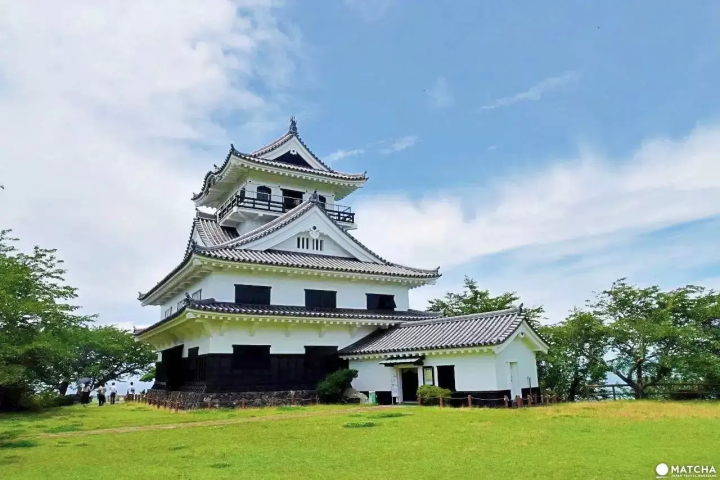
- Tateyama Castle (Hakkenden Museum): Constructed in 1580 by the Satomi clan and decommissioned in 1614, the castle was later reconstructed using Fukui Prefecture’s Maruoka Castle as an architectural reference. Today, the keep functions as a museum dedicated to the Tale of the Eight Dog Warriors (Satomi Hakkenden), a legendary Edo-period epic that has heavily influenced Japanese popular culture. Situated within Shiroyama Park, the elevated grounds offer sweeping vantage points over the urban expanse and harbor of Tateyama.
Supporting Context & Metrics
To contextualize the logistical and structural parameters of a self-drive itinerary through Southern Chiba, the following data metrics highlight the region’s geographical scale and infrastructure:

| Infrastructure / Landmark | Key Metric | Significance |
|---|---|---|
| Tokyo Bay Aqua-Line | 8.7 miles total (6m tunnel + 2.7m bridge) | Direct trans-bay link between Kanagawa and Chiba Prefectures. |
| Umihotaru Parking Area | Multi-level offshore island facility | Engineered rest stop featuring U-turn infrastructure and dining. |
| Mount Nokogiri | 1,080 feet (329.4 meters) elevation | Historical Boshu stone quarry turned scenic hiking destination. |
| Nihonji Great Buddha | 102 feet (31.05 meters) height | Japan’s tallest carved stone Buddha. |
| Okinoshima Island Circuit | 1 to 2 hours walking duration | Geologically uplifted landmass featuring coral reefs and Jomon artifacts. |
| Fried Aji (Horse Mackerel) | Local culinary standard | Renowned for exceptional thickness and juiciness due to the Kuroshio Current. |
Culinary Heritage: The Harvest of the Kuroshio Current
No expedition through the Boso Peninsula is complete without examining its coastal gastronomy. Because the warm, nutrient-dense Kuroshio Current sweeps directly past the southern coastline, local fisheries yield exceptional maritime produce.

While horse mackerel (aji) is a ubiquitous staple across Japanese supermarkets—frequently encountered in diminutive, desiccated portions—the catches brought ashore in Southern Boso redefine the species. Influenced by regional culinary travel programming (such as the celebrated television series Solitary Gourmet), food enthusiasts regularly seek out local preparation of deep-fried horse mackerel (aji-fry). Unlike mass-market counterparts, the regional catch yields thick, succulent fillets that more closely resemble a savory fish steak than a standard fried snack. Combined with local delicacies like Kisarazu clam dishes, the culinary landscape of Southern Chiba operates as an indispensable pillar of the regional road trip experience.

Future Outlook
As Japan continues to manage shifting tourism demographics—witnessing an unprecedented influx of international visitors while simultaneously combating rural depopulation—transportation infrastructure models are undergoing quiet evolution. The heavy reliance on rail networks is increasingly complemented by regional initiatives promoting independent automotive travel.

For Chiba Prefecture, encouraging self-drive tourism represents a vital economic catalyst. By distributing visitor footfall away from congested transit corridors and into rural municipalities like Kyonan and Tateyama, regional stakeholders can better support adaptive reuse projects—such as the Hota Elementary School roadside station—and fund ongoing preservation efforts at historical sites like Nihonji Temple.

As rental car agencies streamline multilingual GPS navigation and international permit processes, the Boso Peninsula stands positioned to become the premier gateway for motorists seeking a deeper, more autonomous encounter with Japanese geography, history, and culinary artistry.





Belum ada komentar. Jadilah yang pertama berkomentar!