

Executive Overview
For travelers and pop-culture enthusiasts navigating the scenic landscapes of western Japan, public transit has traditionally been a utilitarian affair—functional, punctual, and remarkably efficient. However, a major collaborative initiative launched by the Ryobi Group in March 2026 is fundamentally reshaping this paradigm. Transforming ordinary daily commutes and sightseeing excursions into immersive, story-driven adventures, the newly minted Hello Kitty Bus has officially taken to the streets of Okayama Prefecture.
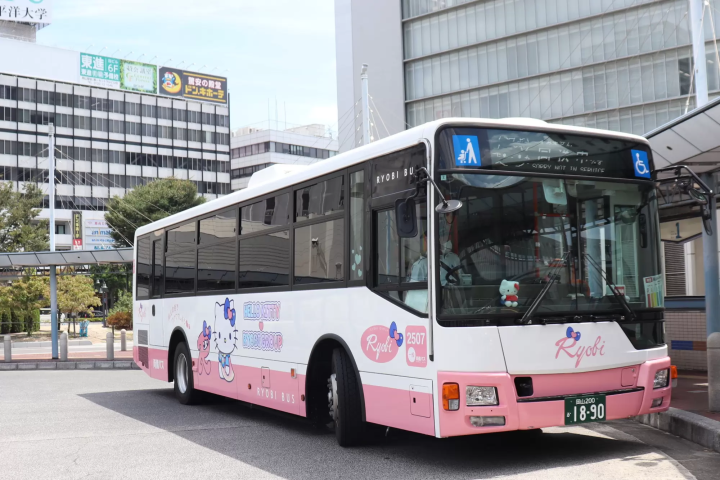
Running through March 1, 2027, this specialized direct transit service connects JR Okayama Station with the coastal Tamano area, including vital transportation hubs like Uno Port, Shibukawa, and regional attractions such as Toy Kingdom. Far more than a simple vehicle wrap, the Hello Kitty Bus is a meticulously curated spatial experience designed around the concept of "KAWAII OKAYAMA."
Born from a partnership that appointed the global icon Hello Kitty as the official "Smile Co-creation Partner" of the Ryobi Group, the project aims to inject joy, whimsy, and community spirit into local public transit. With its soft pink seating, custom heart-shaped handrails, interactive QR-code digital quizzes, and a charming narrative featuring Hello Kitty alongside the Ryobi Group’s mascot, R-chan, the bus turns a routine journey into an unforgettable highlight of any Japanese itinerary. This comprehensive journalistic report explores the operational mechanics, interior design elements, ticketing systems, and broader regional travel packages—including the limited-edition Kamome Bus Skip to Shodoshima—associated with one of Japan’s most delightful mobile attractions.
Detailed Chronology
March 2026: The Genesis of the Collaboration
The groundwork for the Hello Kitty Bus was laid in early March 2026, when the Ryobi Group formally inducted Sanrio’s iconic character into its corporate family as the "Smile Co-creation Partner." The partnership was conceived as a multi-tiered regional revitalization effort, marrying the global appeal of Hello Kitty with the deep-rooted local infrastructure of Okayama’s transit network. According to project planners, the core objective was simple yet ambitious: to introduce as many "happy things" as possible into the everyday lives of local residents while offering tourists an enchanting introduction to the region.
The Launch and Route Integration
By the spring of 2026, the custom-wrapped bus made its inaugural run, integrating seamlessly into the routes operated by the Ryobi Bus Tamano Depot. Designed to serve both commuters and leisure travelers, the vehicle operates primarily as a direct link between JR Okayama Station and the Tamano district.
Passengers initiating their journey at JR Okayama Station board at Platform 2 of the East Exit Bus Station, with arrivals scheduled at Platform 8. The route encompasses critical transit links extending toward Uno Station (gateway to the art islands of the Seto Inland Sea), the coastal resort area of Shibukawa, and family destinations like Toy Kingdom. The operational timeline has been officially locked in through March 1, 2027, giving domestic and international visitors a roughly one-year window to experience the rolling pop-culture installation.
Summer to Autumn 2026: Immersive Features Unveiled
As the operation matured through the summer and autumn of 2026, details regarding the vehicle’s intricate interior customization captured the imagination of travelers across social media platforms. Unlike standard promotional wraps that focus solely on exterior aesthetics, the Ryobi Group ensured that every square inch of the interior passenger cabin reinforced the narrative universe shared by Hello Kitty and R-chan.
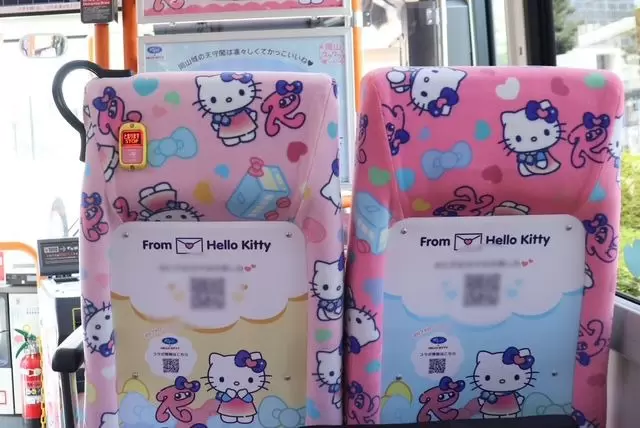
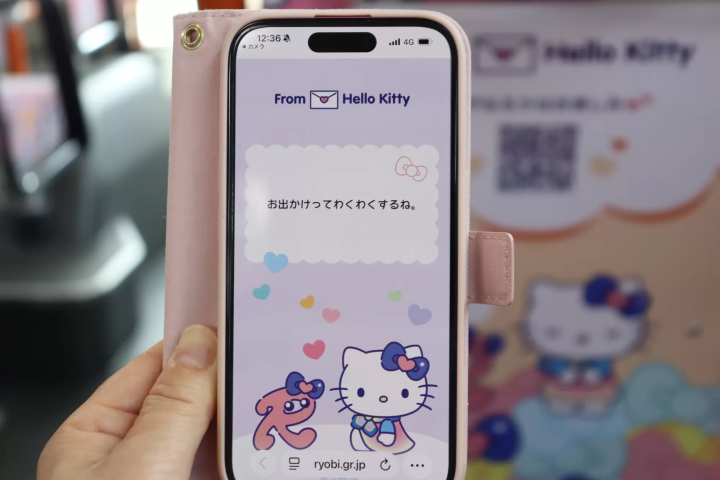
Specialized digital integrations—such as seat-specific QR codes capable of generating 100 unique daily messages and interactive quizzes—turned routine rides into gamified explorations. Concurrently, regional transit authorities introduced complementary ticketing packages, such as the Hello Kitty-themed Kamome Bus Skip, bridging bus and ferry networks to expand the collaborative footprint across the Seto Inland Sea into Kagawa Prefecture’s Shodoshima.
Supporting Context & Metrics
Operational Framework and Specifications
To understand how the Hello Kitty Bus functions within Okayama’s broader transit ecosystem, it is essential to examine its operational parameters, ticketing mechanics, and logistical requirements:
- Operating Period: Now operating continuously through March 1, 2027 (tentative schedule).
- Service Routes: Managed by the Ryobi Bus Tamano Depot, covering routes from JR Okayama Station to Uno Station, Shibukawa, and Toy Kingdom.
- Fare Structure: Standard municipal route bus fares apply; no premium surcharge is levied for riding the themed vehicle.
- Customer Service & Inquiries: Managed via the Tamano Sales Office (TEL: 0863-31-1616; operating hours: Monday–Friday 9:30–17:30, Saturday 10:00–12:00 and 13:00–17:00; closed Sundays and public holidays).
Navigating the Fare and Payment System
For international travelers unaccustomed to regional Japanese bus networks, the boarding and payment procedures on the Ryobi Bus system require careful attention:
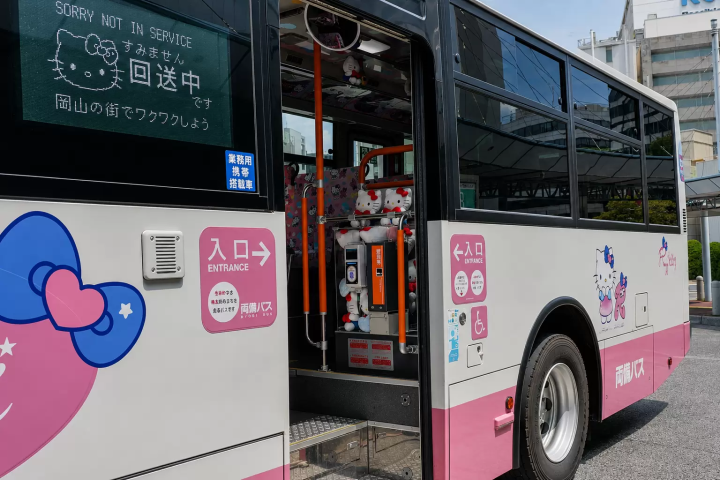
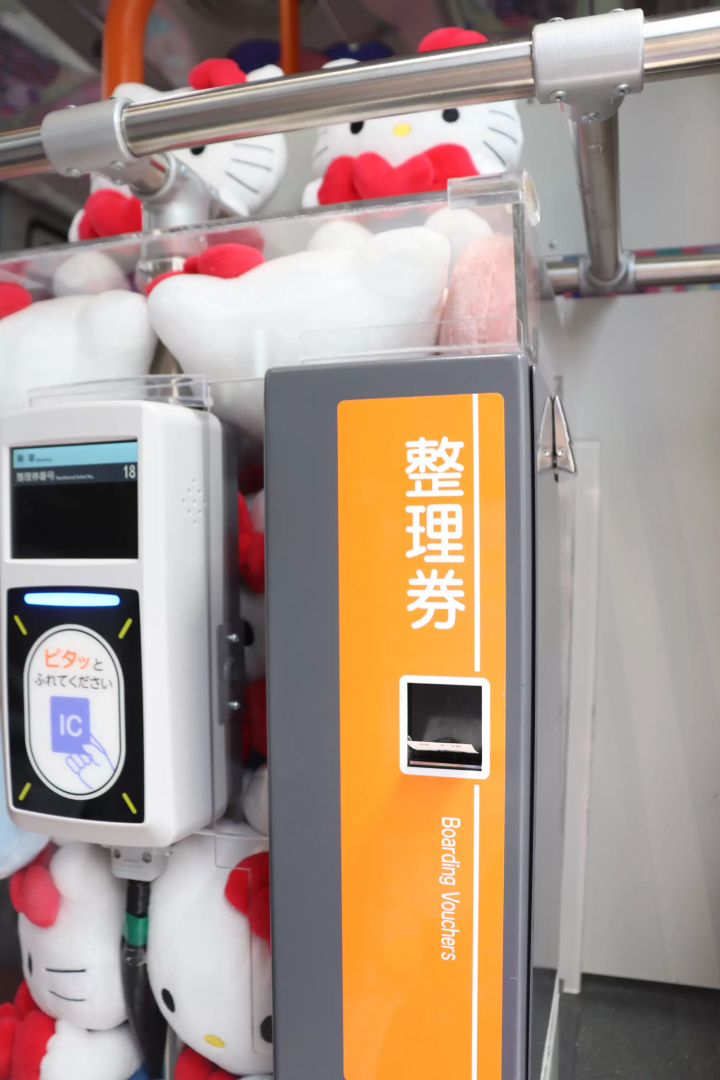
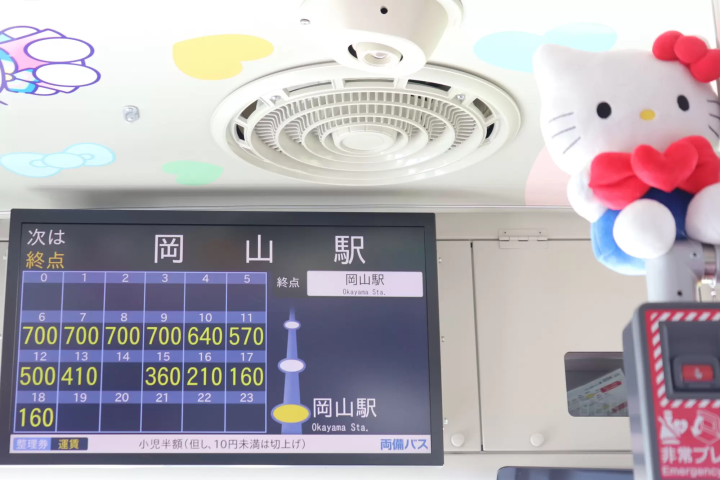
- Boarding Protocol: Passengers board through the center door of the bus. Cash-paying passengers must pull a numbered transit ticket from the orange dispensing box near the entrance. This number corresponds to a dynamic fare chart displayed on an electronic board at the front of the cabin, which updates as the bus traverses distance zones.
- Payment and IC Cards: Cash payments, alongside the regional "Hareca IC Card" (usable on Okayama Prefecture buses and trams), are fully accepted. Notably, Hareca cards can be topped up directly on board. However, nationwide interoperable transportation IC cards (such as Suica, Pasmo, and Icoca) cannot be reloaded while on the vehicle.
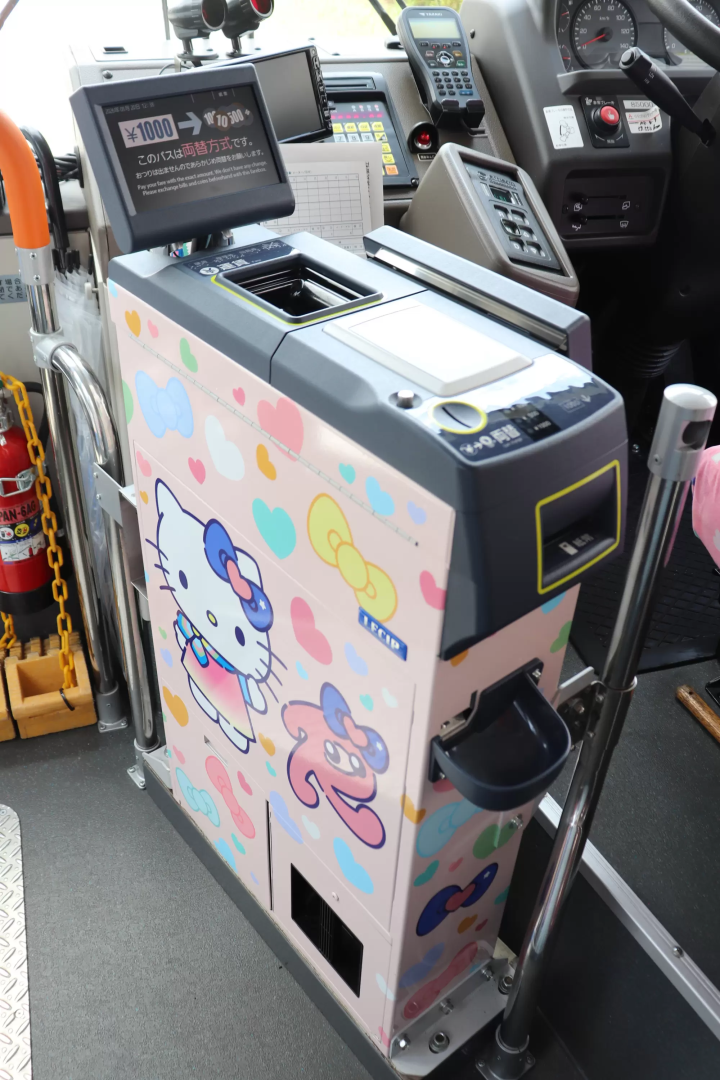
- Money Exchange: To maintain schedule punctuality, currency exchange must be completed while the bus is stationary or immediately upon boarding. On-board change machines are strictly restricted to breaking 1,000-yen bills; higher denomination notes are incompatible with the change units.
- Alighting: Passengers exit via the front door located immediately adjacent to the driver’s seat, depositing their exact cash fare (alongside their numbered ticket) or scanning their IC card upon departure.
Interior Design Elements and Narrative Integration
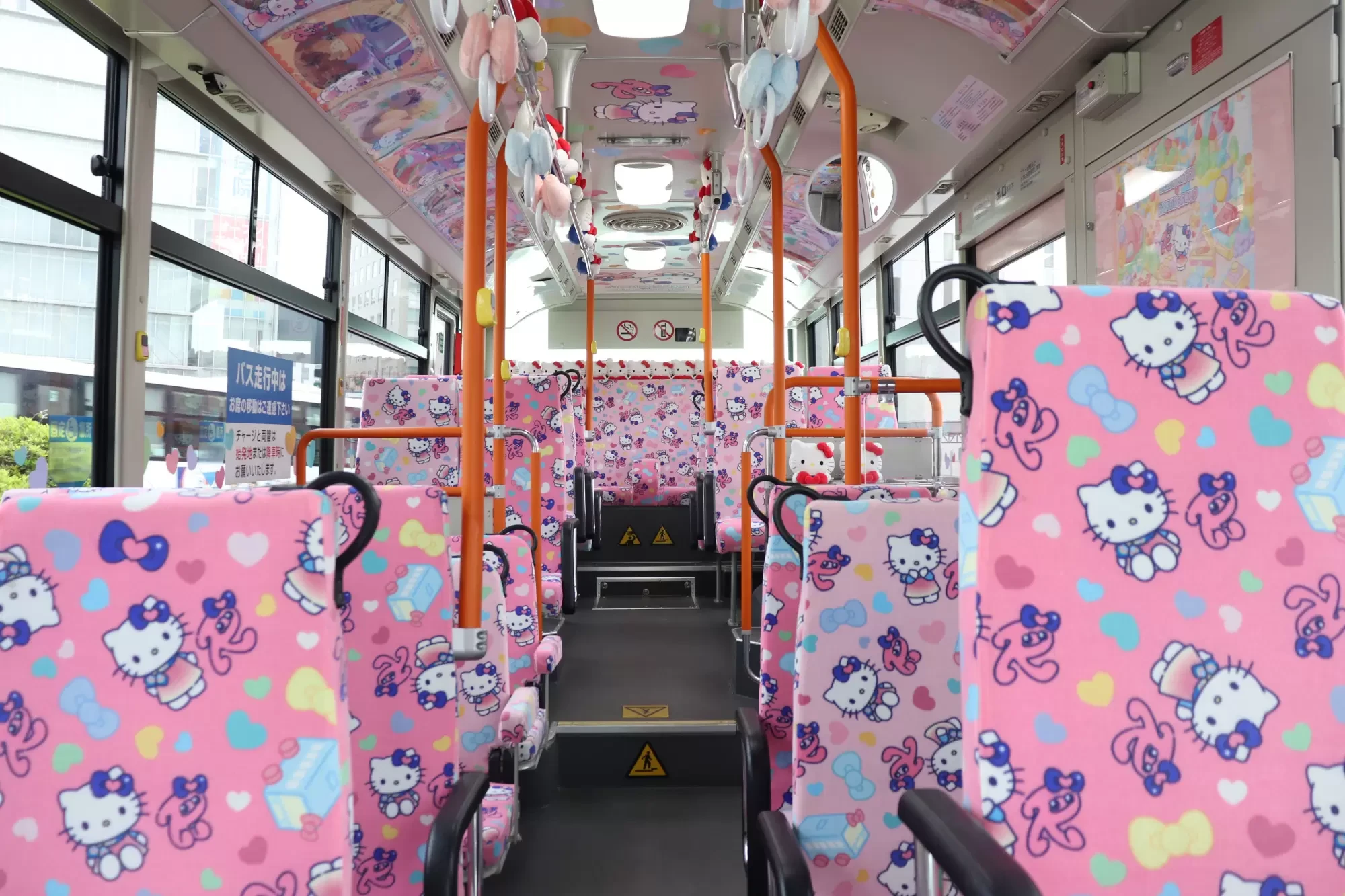
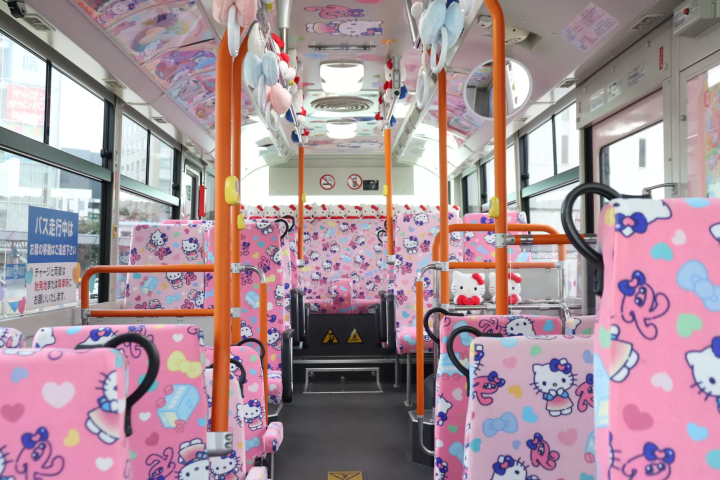
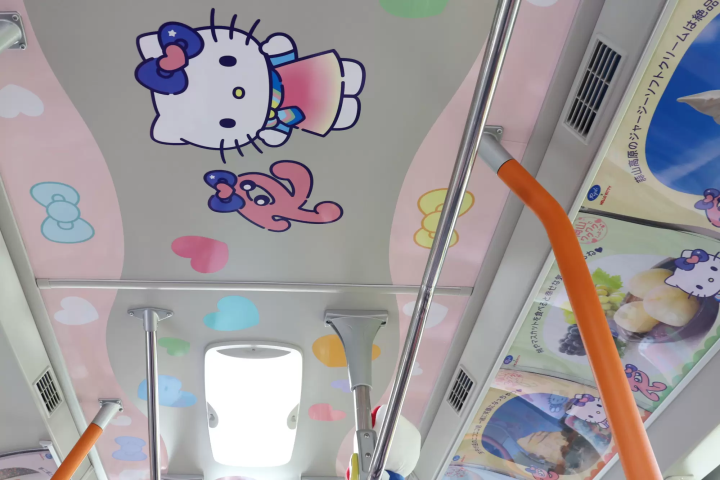
The interior of the Hello Kitty Bus is an exercise in comprehensive environmental storytelling. The narrative framing posits that Hello Kitty has traveled to Okayama, where she encounters R-chan, the official mascot of the Ryobi Group. Finding immediate synergy in their mutual mission to spread joy, the characters utilize motifs of local sweets and toys to decorate the urban landscape.
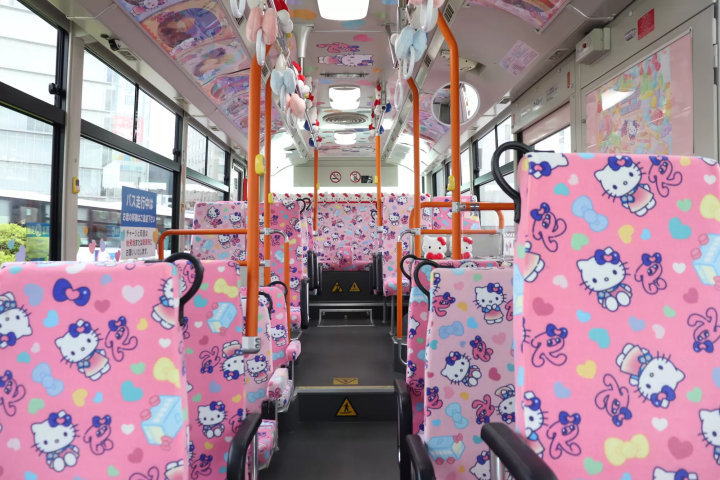
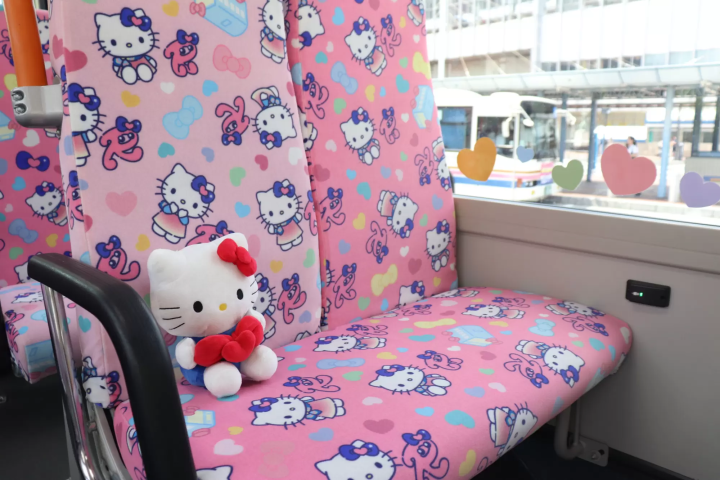
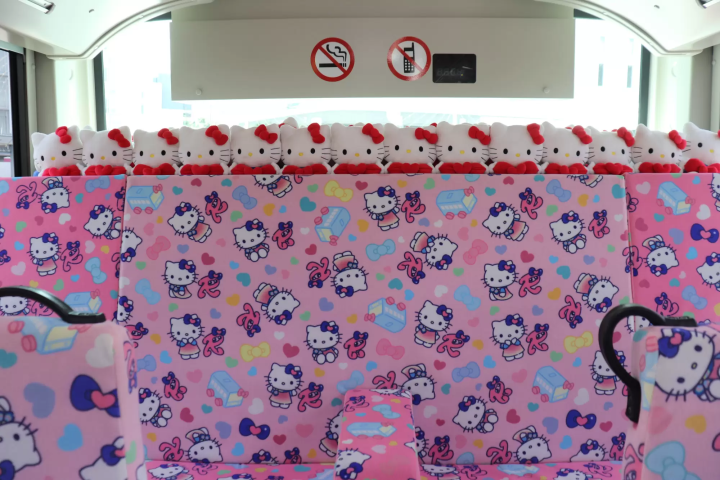
- Color Palette and Seating: The cabin features soft pink upholstery adorned with playful, interwoven illustrations of Hello Kitty and R-chan. The driver’s compartment is similarly styled to maintain immersive continuity.
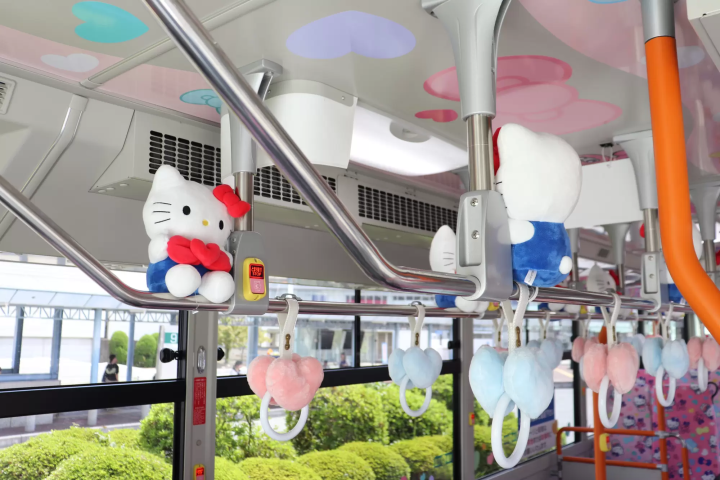
- Tactile Accents: Handrails are fitted with heart-shaped straps framed by fluffy pink and blue decorative fluff, accompanied by miniature Hello Kitty figurines perched alongside the mounting brackets.
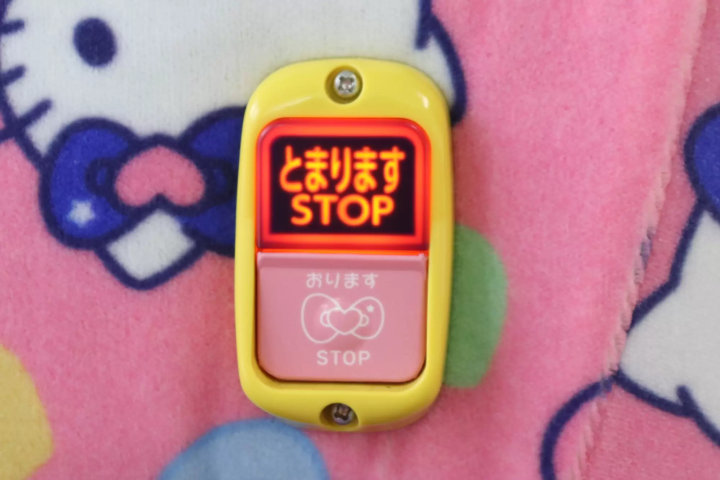
- Plush Displays and Interactive Hardware: Rows of Hello Kitty plush toys line the rear parcel shelf and accent structural handrails throughout the aisle. Furthermore, the stop-request buzzers come in three distinct, collectible designs—Hello Kitty, the signature Ribbon, and R-chan—encouraging passengers to hunt for specific button configurations across the cabin.
- Ceiling and Door Details: Subtle graphic placements on the ceiling panels and doorway interiors ensure that visual discoveries continue from the moment of entry to final departure. Informational posters bilingual in design guide riders through Okayama’s top tourist destinations and local specialties.
Official Statements
While corporate announcements from Sanrio emphasize the emotional resonance of character-driven public spaces, representatives from the Ryobi Group have consistently framed the partnership as an investment in regional vitality and passenger well-being.
In promotional releases surrounding the launch of the "Smile Co-creation Partner" initiative, executive spokespersons for the Ryobi Group noted: "Our public transit networks do not merely transport bodies from point A to point B; they carry the daily lives, aspirations, and memories of the Okayama community. By welcoming Hello Kitty into our operational family, we sought to dismantle the monotony of daily commuting. Whether a local student heading to class or an international tourist journeying toward the art ports of the Seto Inland Sea, every passenger deserves to step onto our vehicles and experience an immediate lift in spirit. The Hello Kitty Bus is our tangible commitment to making Okayama feel welcoming, vibrant, and unabashedly joyful."
Sanrio representatives echoed these sentiments, highlighting the brand’s long-standing philosophy of fostering friendship and happiness through design: "Hello Kitty has always bridged generational and cultural divides. Partnering with the Ryobi Group allows us to embed this philosophy directly into the civic fabric of Okayama, turning an ordinary bus ride into a shared moment of delight."
Future Outlook
As the Hello Kitty Bus continues its scheduled run toward its tentative conclusion on March 1, 2027, its broader impact on Okayama’s tourism infrastructure is already generating valuable data for regional planners. The success of the campaign demonstrates that themed public infrastructure can effectively distribute tourist traffic away from congested urban centers toward coastal and cultural sub-regions like Tamano and Uno Port.
Expanding Horizons: The Kamome Bus Skip
Capitalizing on this momentum, the integration of regional transit passes highlights a promising future for multi-modal tourism in Western Japan. The limited-edition Kamome Bus Skip—featuring a distinct Hello Kitty design—exemplifies this trend. Priced at 1,500 yen for adults (with an adjusted price of 1,600 yen effective October 1, 2026), the ticket bundles a one-way local bus fare from Okayama Station to Shin-Okayama Port with a direct ferry transfer to Tonosho Port on Shodoshima (Kagawa Prefecture). Available for purchase at the Okayama Station East Exit Public Transportation Information Center, Shodoshima Tonosho Port, and Okayama-bound ferry ticket offices through March 1, 2027, the pass creates a frictionless travel corridor across prefectural boundaries.
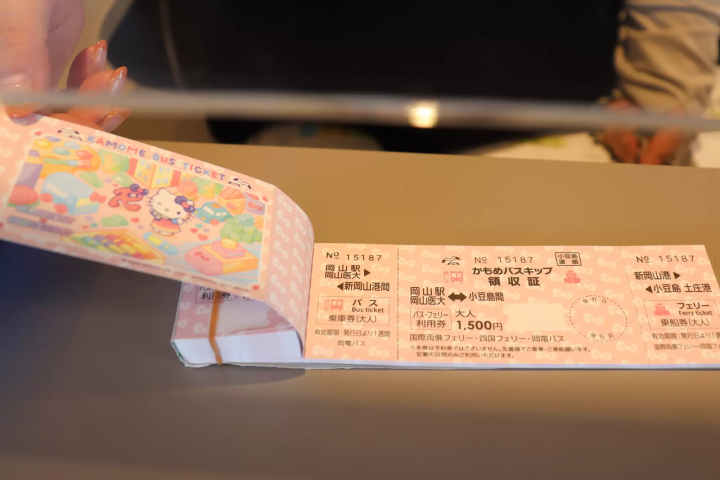
The Okayama Station East Exit Public Transportation Information Center
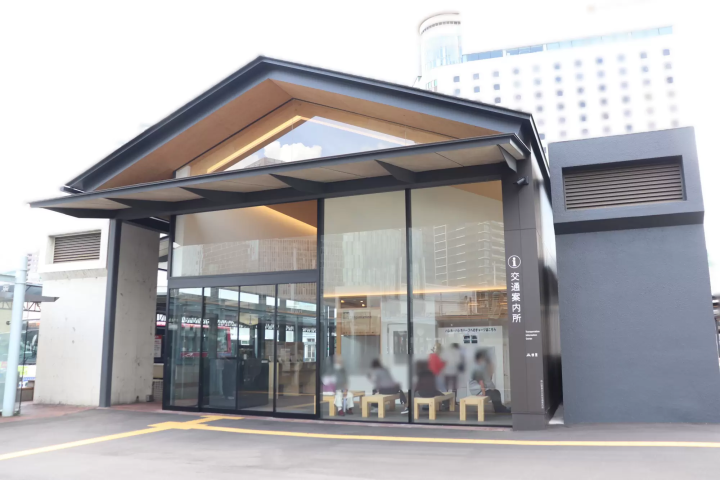
To support incoming visitors utilizing these specialized services, the Okayama Station East Exit Public Transportation Information Center serves as a vital anchor. Architecturally styled after the Enyo-tei House pavilion from Okayama Korakuen Garden—widely recognized as one of Japan’s three great traditional gardens—the facility offers real-time digital schedules, route maps, multilingual assistance for international travelers, restrooms, and complimentary water dispensers.

Conclusion
The Hello Kitty Bus transcends the novelty of standard promotional branding. By thoughtfully integrating character design, interactive digital layers (such as the 100-variant QR-code messaging system), and robust regional transit partnerships, the Ryobi Group has redefined what a local bus journey can achieve. For travelers planning a visit to Okayama before March 2027, securing a seat on Platform 2 of the JR Okayama Station East Exit is no longer just a logistical choice—it is an invitation to participate in a rolling celebration of community, design, and unadulterated "KAWAII" joy.





Belum ada komentar. Jadilah yang pertama berkomentar!