

Executive Overview
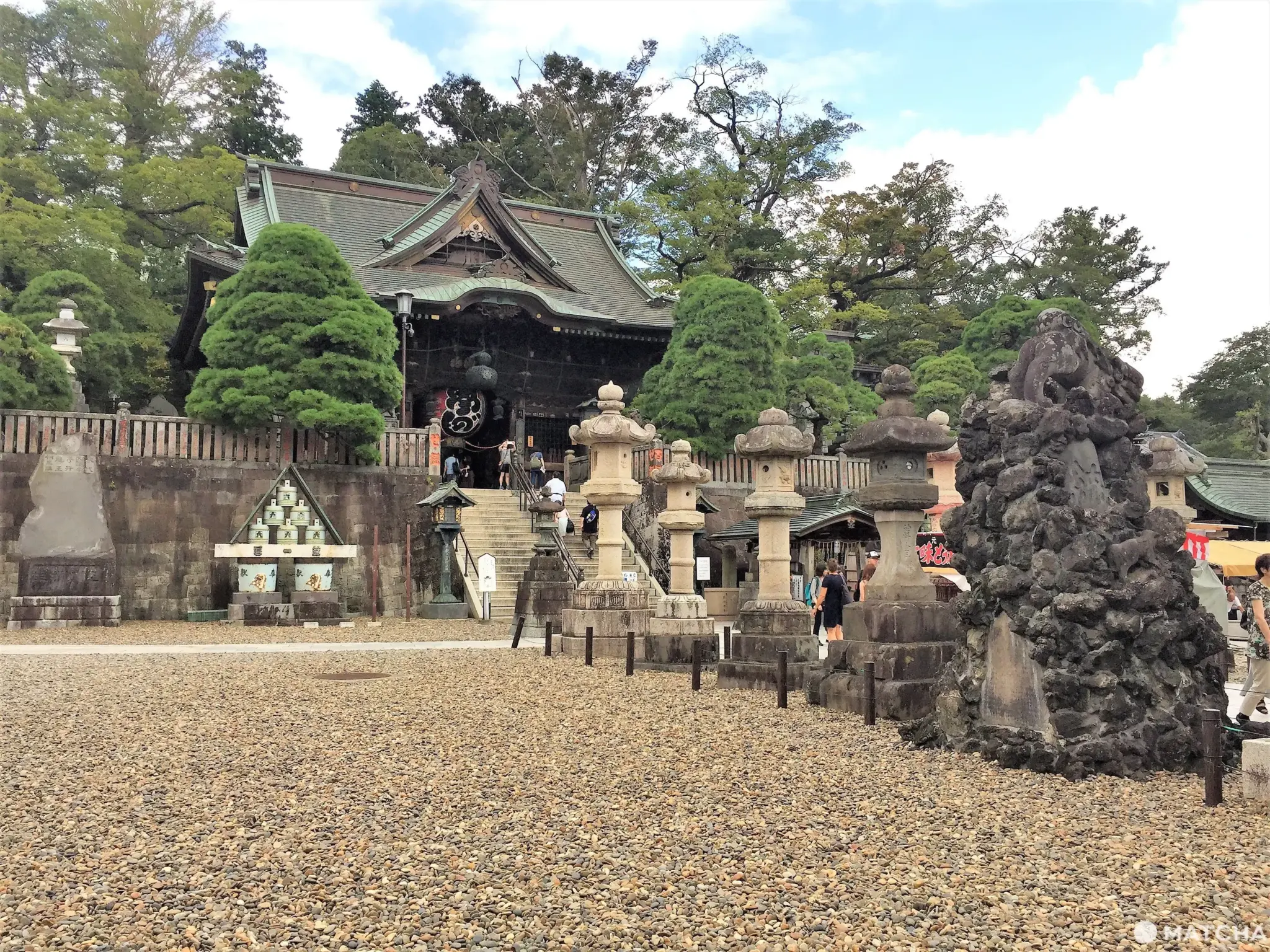
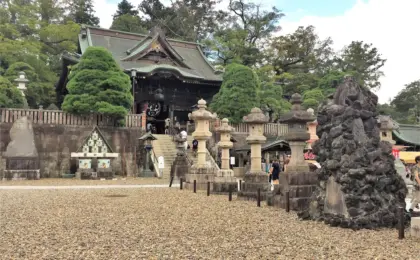
Situated just a short journey from Tokyo in Chiba Prefecture, Naritasan Shinshoji Temple stands as one of Japan’s most majestic, historically resonant, and spiritually vital Buddhist complexes. Welcoming upwards of 10 million worshippers and international travelers annually—including more than 3 million during the frantic, festive days of the New Year period—this sprawling temple grounds blend a millennium of cultural heritage with active, living traditions.
For modern travelers and spiritual seekers alike, a journey to Naritasan Shinshoji offers far more than a simple sightseeing excursion. It presents a comprehensive immersion into Shingon Esoteric Buddhism, ancient Japanese architecture, and the profound cultural practice of hatsumode (the first shrine or temple visit of the New Year). Furthermore, the temple serves as a premier destination for practitioners and collectors of goshuin—hand-brushed calligraphic seals that function as sacred keepsakes of a pilgrim’s journey.
This comprehensive report examines the deep history of Naritasan Shinshoji, details its architectural marvels across six distinct sacred zones, outlines the significance of its unique collection of six individual goshuin seals, and provides practical insights for experiencing this enduring Japanese treasure.
Detailed Chronology: A Thousand-Year History of Naritasan Shinshoji
The origins of Naritasan Shinshoji are deeply intertwined with civil conflict, imperial intervention, and the mystical traditions of early medieval Japan.

The Heian Period Rebellion (940 AD)
The temple’s inception dates back to the Heian period (794–1185), specifically to the tumultuous year of 940 AD. During this era, a powerful samurai lord named Taira no Masakado launched a massive regional rebellion against the central imperial government in Kyoto, threatening the stability and political cohesion of the nation.
Desperate to restore peace and quell the uprising through spiritual means, Emperor Suzaku made a momentous decision. He summoned Kancho, a highly revered high priest of Shingon Esoteric Buddhism residing in Kyoto, and entrusted him with a sacred, highly venerated wooden statue of Fudo Myoo (Acala). This deity is revered in esoteric Buddhism as a fierce protector who converts anger into wisdom and shields humanity from spiritual and physical evil.

The 21-Day Ritual and the Restoration of Peace
Priest Kancho embarked on an arduous journey east to Narita, carrying the sacred statue of Fudo Myoo. Upon arrival, he established a makeshift altar and dedicated himself to an intense, uninterrupted 21-day period of prayer, meditation, and sacred fire rituals (goma).
According to historical chronicles and regional lore, on the final and twenty-first day of Kancho’s rituals, the rebellion led by Taira no Masakado collapsed, bringing a sudden and definitive end to the civil conflict and restoring peace to the region. Recognizing the profound spiritual potency of the event, the imperial court ordered the permanent enshrinement of the Fudo Myoo statue in Narita. Thus, Naritasan Shinshoji Temple was born, anchoring a legacy of divine protection that has endured for more than a thousand years.

Supporting Context & Metrics: Architecture and the Sacred Goshuin Tour
A modern visit to Naritasan Shinshoji is a journey through centuries of master craftsmanship. The vast complex encompasses towering gates, active prayer halls, and peaceful gardens. For cultural explorers, completing the circuit of the temple’s six primary halls offers the unique opportunity to gather six distinct goshuin temple seals, each representing a different Buddhist deity, historical era, and spiritual blessing.
1. The Thresholds of Narita: Somon and Niomon Gates
Before reaching the sacred interior, visitors traverse monumental architectural thresholds:

- The Somon Main Gate: Standing at an impressive 49 feet (15 meters) tall, this striking gateway was constructed in 2008 to commemorate the 1,070th anniversary of the temple’s founding. Intricate wood carvings of the 12 animals of the Chinese zodiac adorn the structure, welcoming pilgrims from around the globe.
- The Niomon Gate: With a history spanning 188 years, this venerable gate is officially designated as an Important Cultural Property of Japan. Suspended beneath its eaves hangs a massive red lantern donated by traditional fish merchants from Tokyo, weighing an astonishing 1,760 pounds (800 kilograms).
2. The Heart of Shinshoji: Dai Hondo Main Hall
- Focus: Fudo Myoo
- Associated Goshuin: Dai Hondo Main Hall Seal
The Dai Hondo Main Hall serves as the literal and spiritual epicenter of the entire temple complex. Within its cavernous interior, the original sacred statue of Fudo Myoo—carved centuries ago—is enshrined. Daily at scheduled times, monks perform the mesmerizing Ogoma fire ritual, wherein wooden prayer sticks inscribed with the personal wishes of worshippers are burned in a roaring consecrated hearth to purify negative energies and invoke divine blessings.
3. Prayers for Health and Longevity: Ioden Hall
- Focus: Yakushi Nyorai (Medicine Buddha)
- Associated Goshuin: Ioden Hall Seal
Constructed in 2017 to mark the temple’s 1,080th milestone, Ioden Hall is dedicated to Yakushi Nyorai, the Buddha of healing and medicine, flanked by the Nikko and Gakko Bodhisattvas. Worshippers traverse the temple grounds specifically to visit this hall, offering prayers for swift recovery from illness, lifelong vitality, and protection from physical ailments.

4. Ward Off Bad Luck: Shakado Hall
- Focus: Shakado (Historical Building & Protective Rites)
- Associated Goshuin: Shakado Hall Seal
Recognized as an Important Cultural Property of Japan, Shakado Hall is an architectural masterpiece that dates back to an earlier era of the temple’s reconstruction. Beyond its aesthetic value, this hall serves as the dedicated venue for specialized esoteric rituals aimed at warding off yakudoshi (traditional Japanese unlucky years) and transmuting misfortune into auspicious fortune.
5. Cultivating Career Success and Wealth: Shusse Inari Shrine
- Focus: Inari Okami (Deity of Prosperity)
- Associated Goshuin: Shusse Inari Shrine Seal
Reflecting the syncretism of Japanese religious traditions, the complex includes Shusse Inari Shrine. Inari is revered in Japanese mythology as the guardian of agriculture, commerce, and general prosperity, traditionally represented by fox messengers. Worshippers frequently purchase and offer fried tofu (abura-age)—the favored food of the fox—at the altar while praying for career advancement, business success, and financial security.

6. The Monument to Peace: The Great Pagoda of Peace
- Focus: Shingon Esoteric Teachings & Sutra Copying
- Associated Goshuin: Great Pagoda of Peace Seal
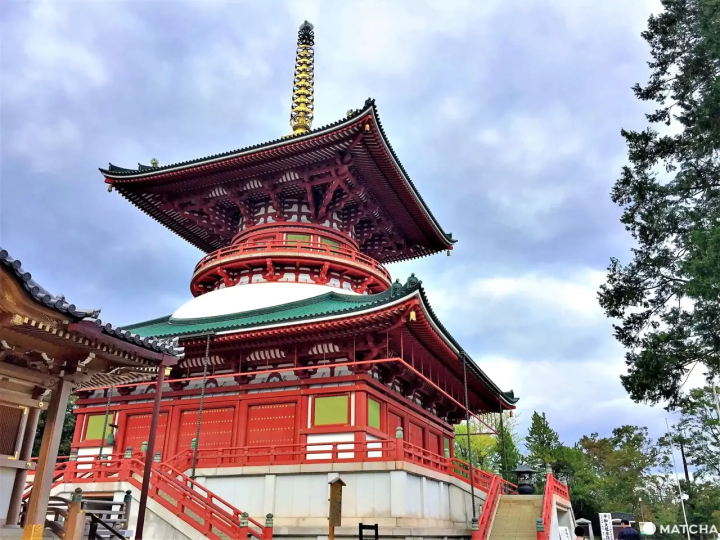
Erected in 1984, the towering Great Pagoda of Peace stands as a universal symbol of the core philosophies of Shingon Esoteric Buddhism. The interior houses historical exhibits detailing the evolution of Mount Narita, alongside sacred sutra texts and representations of Fudo Myoo.
Crucially, the pagoda hosts daily sutra-copying sessions (shakyo) on its first floor in Reikoden Hall from 8:00 AM to 4:00 PM. Requiring no advance reservations and providing all necessary writing implements, desks, and chairs, this meditative practice invites visitors to transcribe sacred Buddhist characters by hand, offering a profound mental cleanse and a moment of deep inner stillness.

7. Prayers for Love and Relationships: Komyo-do Hall
- Focus: Dainichi Nyorai and Aizen Myoo
- Associated Goshuin: Komyo-do Hall Seal
As the oldest surviving structure within the sprawling Shinshoji complex, boasting an unbroken history of 320 years, Komyo-do Hall exudes an irreplaceable historic atmosphere. At its altar sits Dainichi Nyorai at the center, flanked by Fudo Myoo and Aizen Myoo. Depicted with a fierce expression, one head, and six arms wielding ritual implements, Aizen Myoo is uniquely revered as a deity of passion who transforms worldly desires into spiritual awakening, drawing countless visitors seeking blessings for romance, marriage, and harmonious personal relationships.
Official Statements and Cultural Significance
Cultural preservationists and religious scholars emphasize that Naritasan Shinshoji is far more than a passive museum of architectural artifacts; it remains a dynamic cornerstone of Japanese spiritual life.

"When millions gather for hatsumode at the turn of the calendar, or when a quiet pilgrim collects their sixth goshuin seal on a misty Tuesday morning, they are participating in an unbroken chain of human expression that stretches back to the Heian period," notes a senior cultural liaison for the Chiba tourism board. "The physical structures—from the 320-year-old Komyo-do Hall to the towering Somon Gate—are testaments to an enduring architectural ethos. But the true value of Naritasan lies in its active role as a sanctuary where contemporary individuals can pause, reflect, and seek personal transformation."
Future Outlook & Visitor Information
As global interest in authentic cultural heritage tourism accelerates, Naritasan Shinshoji Temple continues to balance its ancient traditions with modern accessibility. While the New Year holiday season (hatsumode) brings an electric, festival-like atmosphere driven by millions of domestic and international visitors, travel authorities recommend visiting on weekdays during the off-peak seasons for a remarkably serene, contemplative experience.

During these quieter windows, travelers can leisurely complete the six-seal goshuin pilgrimage, converse quietly with temple clerics, and wander the expansive, tree-lined temple park without the press of heavy crowds.
Practical Details:
- Location: 1 Narita, Narita City, Chiba Prefecture 286-0023
- Accessibility: Easily accessible via train from central Tokyo, situated just minutes away from Narita International Airport, making it an ideal first or final stop for international visitors to Japan.
- Social Media & Updates: For continuous updates on seasonal ceremonies, festival dates, and travel advisories, visitors can follow official informational channels such as the Matcha Japan Travel Magazine Facebook Page.



Belum ada komentar. Jadilah yang pertama berkomentar!