

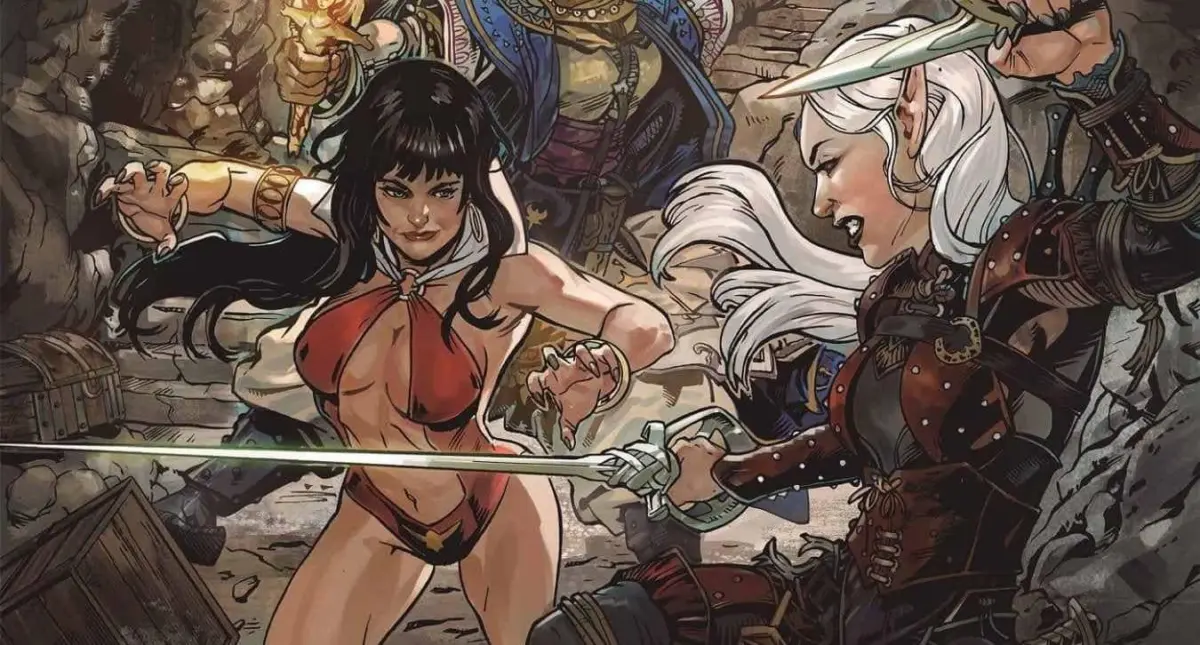
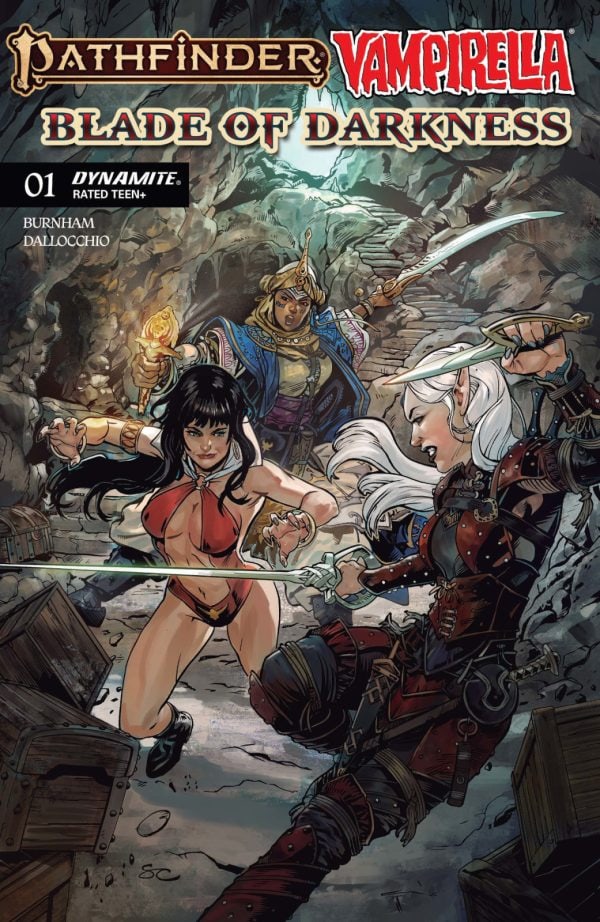
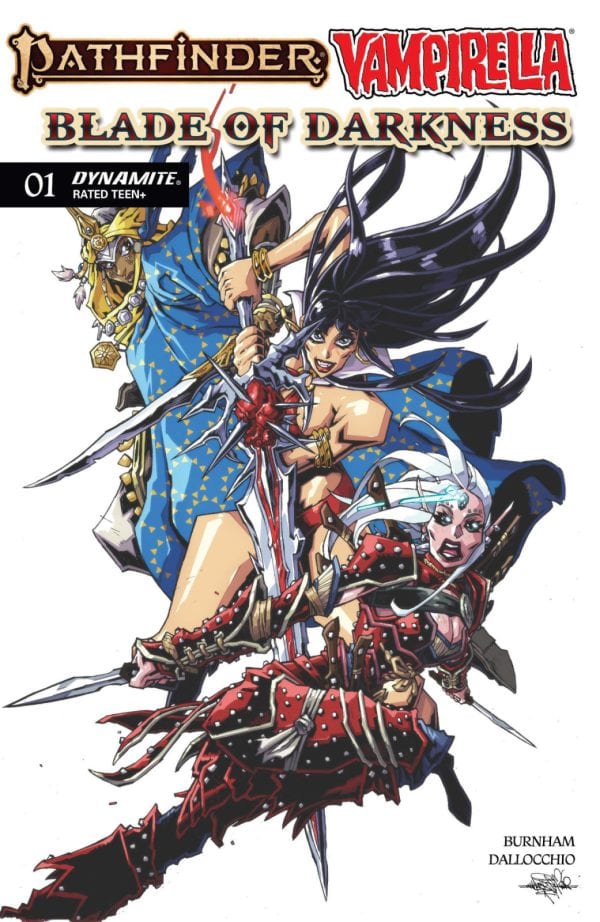
Dynamite Entertainment has once again proven its mastery of the crossover medium, bridging the gap between tabletop roleplaying lore and horror royalty with its latest four-issue miniseries, Pathfinder / Vampirella: Blade of Darkness. Hitting comic book store shelves and digital platforms this coming Wednesday, October 28, 2026, the debut issue promises an explosive amalgamation of dark fantasy, high sorcery, and iconic monster-slaying action.
At its narrative core, the series takes the rich, deeply established mythology of Paizo’s tabletop roleplaying phenomenon, Pathfinder, and plunges it headfirst into the chaotic, blood-soaked world of horror’s most famous daughter of the night, Vampirella. Helmed by the creative team of writer Erik Burnham and artist Federico Dallocchio, Blade of Darkness is designed to appeal not only to hardcore tabletop veterans familiar with the continent of Golarion but also to comic book enthusiasts looking for a high-stakes, supernatural thrill ride.
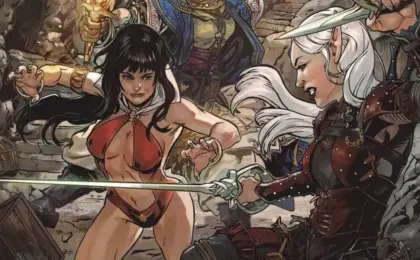
As publisher Dynamite Entertainment prepares for the launch, early previews reveal a narrative that immediately subverts expectations. When a powerful vampire lord attempts to summon a monstrous entity to turn the tide against his mortal and supernatural foes, he inadvertently drags Vampirella across dimensional boundaries and into the heart of Golarion. Complete with chaotic magic, high-velocity skirmishes, and the integration of beloved Pathfinder heroes Kyra and Merisiel, the miniseries stands as one of the publisher’s most ambitious genre-mashing releases to date.
Detailed Chronology: Unraveling the Events of Blade of Darkness #1
To understand the stakes of Pathfinder / Vampirella: Blade of Darkness #1, readers must first examine the precarious geopolitical and supernatural balance of Golarion, the core setting of the Pathfinder universe. Known as a world where swords clash against sorcery, adventurers frequently tempt fate, and shadowy monsters lurk around every corner, Golarion is a realm perpetually walking the razor’s edge between civilization and total darkness.
The inciting incident of the miniseries revolves around Zaloch, a powerful and ambitious vampire lord seeking to shift the balance of power in his favor. Weary of the constant threats posed by mortal crusaders, clerics, and rival factions dedicated to eradicating the undead, Zaloch devises a complex, forbidden blood ritual. His objective is straightforward within the logic of dark fantasy: summon a terrifying, raging demon from the outer planes—a creature of pure destruction that will serve as a vanguard, giving his vampire coven an insurmountable tactical advantage against those who seek their annihilation.
However, the arcane arts are famously fickle. As the ritual reaches its bloody climax, the fabric of reality tears, but the entity answering the call is not a mindless denizen of the Abyss. Instead, the ritual pulls Vampirella directly from her own reality and drops her into the mystical heart of Golarion.
Almost instantaneously, the arrival of the displaced vampire heroine disrupts the local ecosystem of the supernatural. The residual energy of Zaloch’s spell attracts unwanted attention, drawing local monster hunters and magical wardens to the site. What begins as a calculated summoning quickly snowballs into an unmitigated disaster for the vampire lord, characterized by chaotic dark magic, shattered architecture, and a visceral life-and-death struggle.
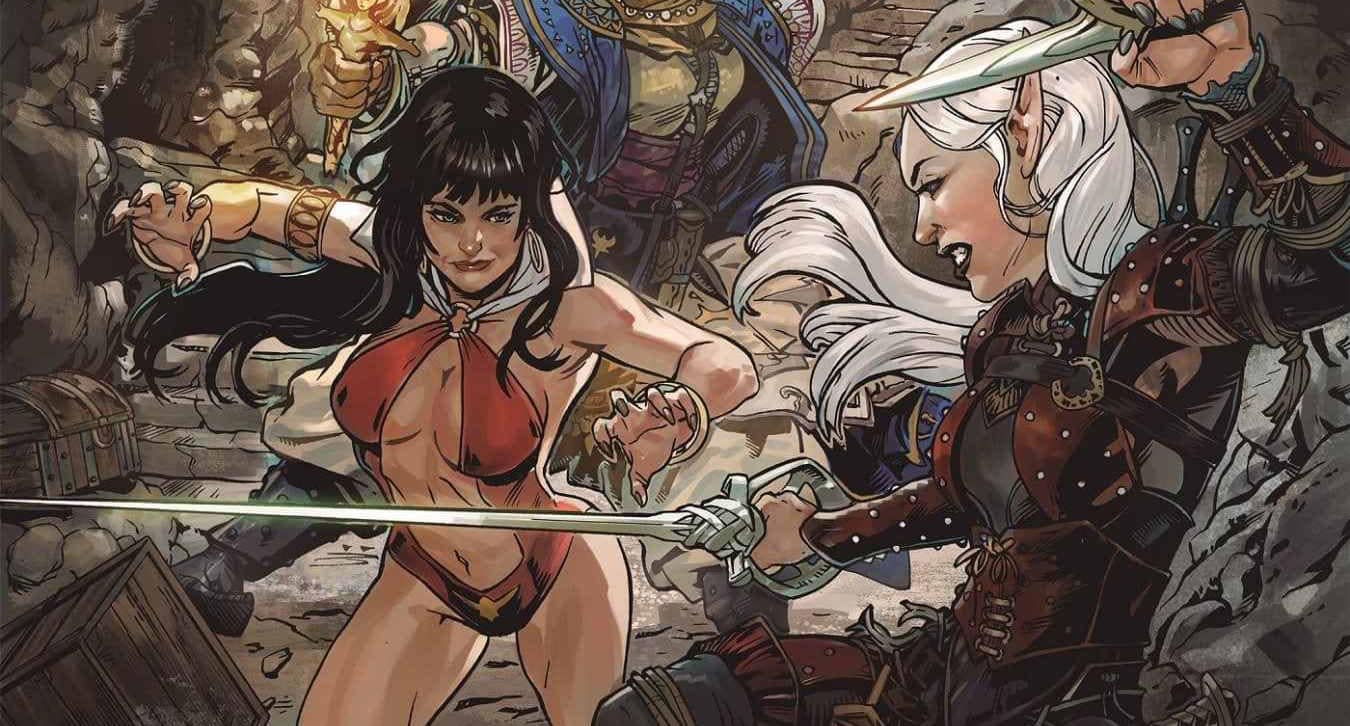
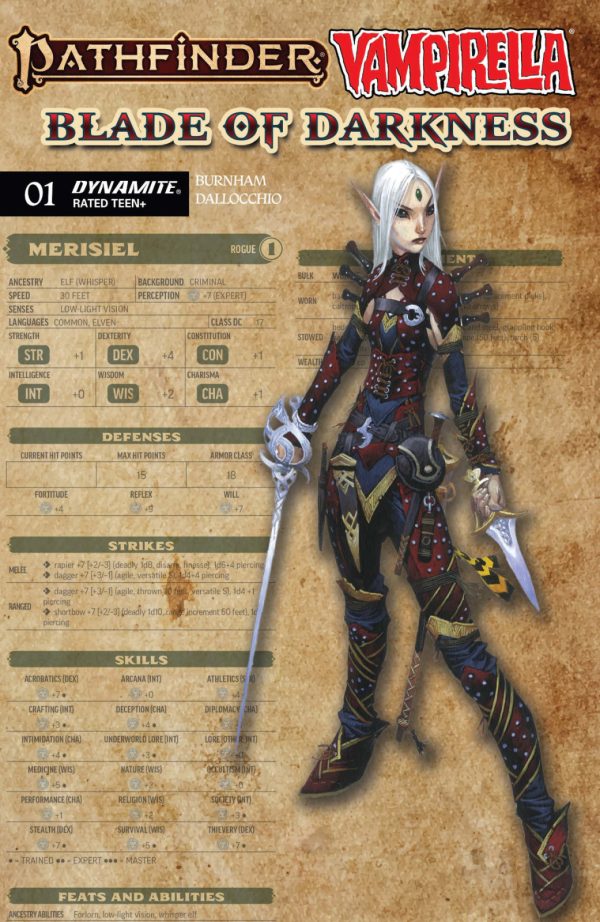
Adding fuel to the fire, the skirmish inevitably catches the attention of two of Golarion’s most legendary and battle-tested heroes: Kyra, the fierce cleric of Sarenrae, and Merisiel, the lightning-fast elven rogue. Their intervention transforms a localized supernatural mishap into a multi-faction melee, setting the stage for a tense, action-packed narrative where alliances will have to be forged in the heat of combat.
Supporting Context & Metrics: The Anatomy of a Crossover Event
The convergence of Pathfinder and Vampirella is far from a random pairing; it represents a calculated strategic alignment between two titans of independent nerd culture: Paizo Inc. and Dynamite Entertainment. To fully appreciate the scope of Blade of Darkness, one must examine the respective histories and cultural footprints of both franchises.
The Footprint of Pathfinder
Launched in 2009 by Paizo Publishing as an offshoot of the Dungeons & Dragons 3.5 ruleset, Pathfinder rapidly evolved into a cultural phenomenon in its own right. Boasting one of the most meticulously detailed fictional settings in fantasy literature—the Inner Sea region of Golarion—the franchise has expanded far beyond traditional rulebooks. It encompasses best-selling fiction lines, video game adaptations like Pathfinder: Kingmaker and Pathfinder: Wrath of the Righteous, and a robust comic book history, much of it previously published by Dynamite itself. The inclusion of iconic iconic characters like Kyra (the Cleric) and Merisiel (the Rogue) grounds the comic in authentic Pathfinder lore, ensuring that longtime tabletop players will find plenty of faithful callbacks and character dynamics.
The Legacy of Vampirella
Conversely, Vampirella is one of the most enduring icons in horror comic history. Created by Forrest J Ackerman and Trina Robbins for Warren Publishing in 1969, the character has undergone numerous creative evolutions over more than half a century. In the modern era, Dynamite Entertainment has served as her primary custodian, steering the character through critically acclaimed runs by master storytellers like Christopher Priest, Gail Simone, and Tini Howard. Vampirella’s innate adaptability—frequently transitioning from traditional gothic horror to cosmic fantasy, superhero team-ups, and dimension-hopping adventures—makes her the ideal vehicle for an out-of-genre crossover.
Production and Creative Synergy
The creative pairing of writer Erik Burnham and artist Federico Dallocchio brings a specific pedigree to Blade of Darkness. Burnham is widely celebrated for his sharp pacing, witty dialogue, and expert handling of licensed properties (including extensive work on Ghostbusters, Teenage Mutant Ninja Turtles, and Transformers). Dallocchio, known for his dynamic, high-contrast linework and mastery of atmospheric shadow, provides a visual style that bridges the gothic sensuality of Vampirella’s world with the high-fantasy aesthetic of sword-and-sorcery epics.
Furthermore, the strategic release window—landing just ahead of the late-October seasonal shift toward horror—capitalizes on consumer demand for spooky, atmospheric content. By utilizing digital distribution platforms like Amazon Kindle and ComiXology alongside traditional comic specialty shops, Dynamite ensures maximum accessibility for both tabletop RPG enthusiasts and traditional comic collectors.
Official Statements & Industry Perspectives
While major press releases from Dynamite Entertainment have focused primarily on the high-concept premise, industry insiders and creative teams have frequently spoken about the unique artistic challenges of executing a successful cross-genre narrative.
Crossover events inherently carry creative risks. Marrying the high-fantasy, rule-bound magic systems and tactical combat of a tabletop roleplaying game like Pathfinder with the pulpy, supernatural, and often subversive horror elements of Vampirella requires a delicate touch. According to early promotional notes from the publisher, the editorial directive was to honor the distinct mechanical and thematic identities of both properties rather than stripping away their core elements to force a homogenized story.
Erik Burnham’s approach to scripting the miniseries centers on fish-out-of-water dynamics. By dropping a character who has traversed multiple worlds, timelines, and cosmic conflicts into the rigid, lore-heavy fantasy environment of Golarion, Burnham creates immediate comedic and dramatic tension. Vampirella’s pragmatic, cynical approach to the supernatural contrasts sharply with the earnest, heroic crusades of characters like Kyra, establishing an immediate dynamic that drives the plot forward.
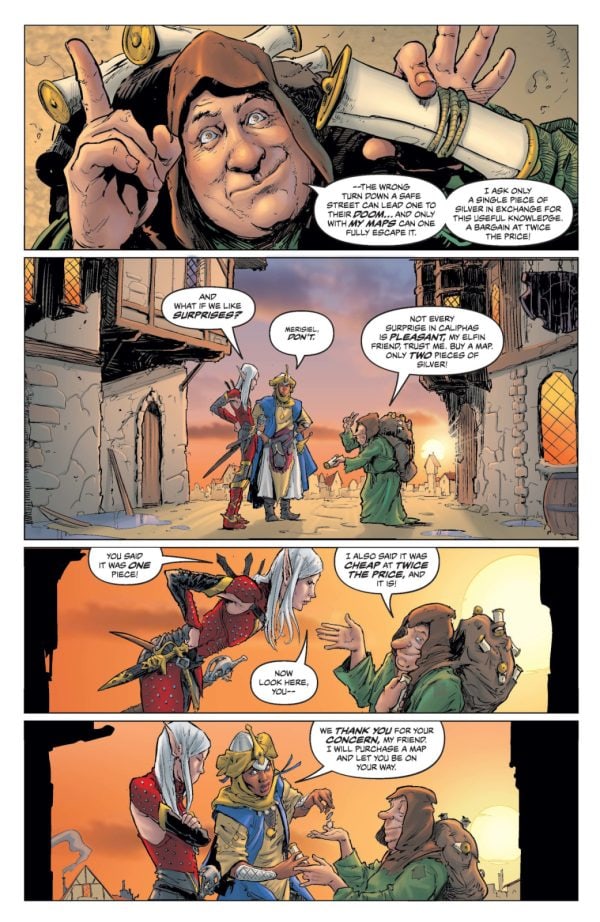
Federico Dallocchio’s artistic vision focuses on environmental contrast. The stark, shadowy architecture of traditional vampire lairs is juxtaposed against the vibrant, diverse cultural hubs and wild frontiers of Golarion. Early interior art previews highlight this dichotomy, showcasing fluid combat choreography that seamlessly blends magical spellcasting, elven acrobatics, and supernatural martial arts.
Future Outlook: What Blade of Darkness Means for Dynamite’s Crossover Strategy
As the four-issue miniseries kicks off this week, the broader implications for both Dynamite Entertainment and the wider comic book industry are significant. Limited-run crossover events serve as vital barometers for fan engagement, testing the appetite for unconventional intellectual property pairings in an increasingly crowded marketplace.
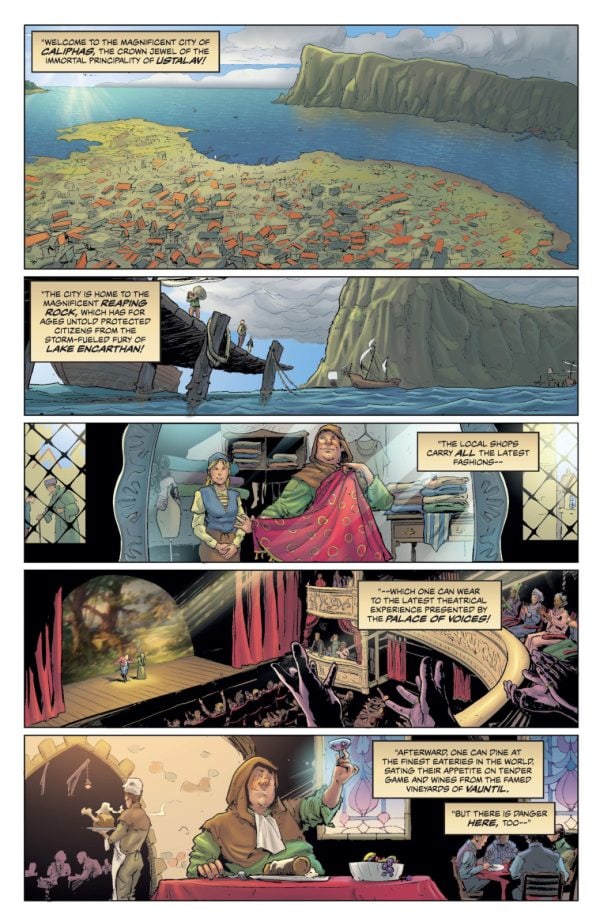
If Pathfinder / Vampirella: Blade of Darkness achieves its projected commercial and critical benchmarks, it could pave the way for a broader expansion of Paizo’s fictional properties within the comic medium. While Pathfinder has enjoyed previous sequential art iterations, a successful supernatural crossover opens the door for further explorations of Golarion’s darker corners—such as Ustalav, the gothic horror-themed region of the setting, which would theoretically serve as an ideal permanent sandbox for characters like Vampirella.
For collectors and investors, four-issue miniseries from independent publishers often become sought-after modern keys, particularly when they feature variant covers by industry-leading artists. Retailers have reported healthy pre-order numbers, driven largely by the built-in cross-section of tabletop gamers who actively collect campaign setting tie-ins and comic fans loyal to the Vampirella brand.
Ultimately, Pathfinder / Vampirella: Blade of Darkness #1 represents the best of what licensed comic publishing can achieve: a fun, unpretentious, and visually striking adventure that respects its source material while fearlessly breaking new narrative ground. As the dice are rolled and the blood begins to spill across Golarion, fans won’t have to wait long to see whether Vampirella can conquer this new world, or if the world of Pathfinder will prove too formidable even for her.
Pathfinder / Vampirella: Blade of Darkness #1 is available in comic book stores and via digital platforms starting Wednesday, October 28, 2026.



Belum ada komentar. Jadilah yang pertama berkomentar!