As the autumn wind sweeps through the changing leaves and the nights grow long, a very specific cultural ritual takes hold. Viewers worldwide begin to crave entertainment that balances cozy domestic comfort with a distinct, spine-tingling chill. While live-action cinema relies heavily on digital effects and CGI to conjure the supernatural, a surprising proportion of our most enduring seasonal masterpieces are brought to life through the painstaking, analog magic of stop-motion animation.
Stop-motion—the rigorous craft of incrementally manipulating physical models, miniature puppets, and physical sets frame by frame—possesses a rare dual nature. In the hands of master artisans, it can yield deeply endearing and charming results, yet it frequently dips directly into the "uncanny valley." Because the characters are physical objects moving in subtle, sometimes mathematically imperfect ways, they trigger a primal psychological disquiet. This makes the medium uniquely suited for the macabre season.
With major studios returning to the format—such as Aardman’s Shaun the Sheep: The Beast of Mossy Bottom and Laika’s Wildwood—stop-motion is undergoing a profound contemporary renaissance this October. To celebrate this tactile art form, this comprehensive retrospective explores the ten spookiest stop-motion films ever produced. Ranging from family-friendly gateway frights to avant-garde adult nightmares, these cinematic milestones occupy a wonderfully dark space between worlds.
Prepare for a journey dominated by the undisputed architects of animated shadows: Henry Selick and Tim Burton.
Detailed Chronology: Ten Masterpieces of Macabre Stop-Motion
1. Mad Monster Party? (1967)
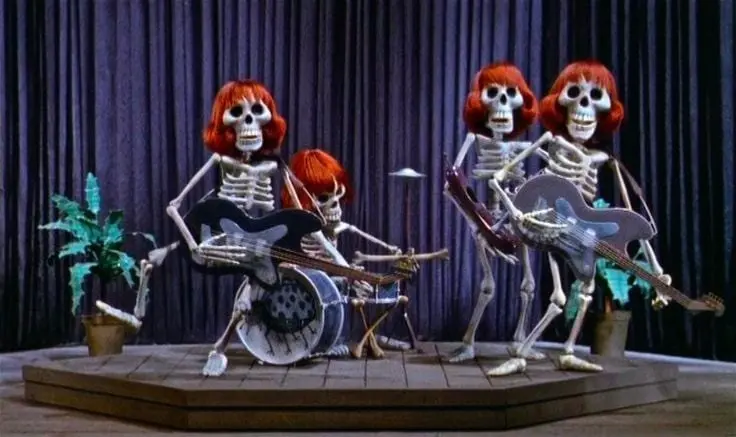
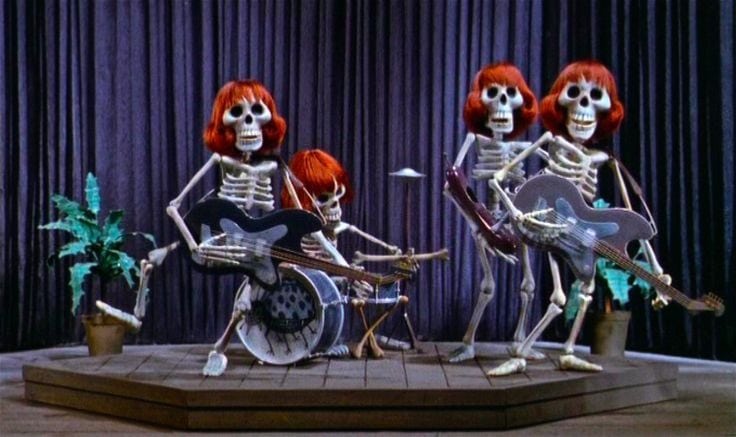
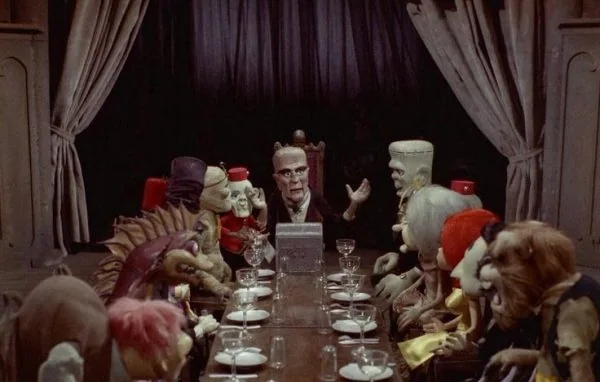
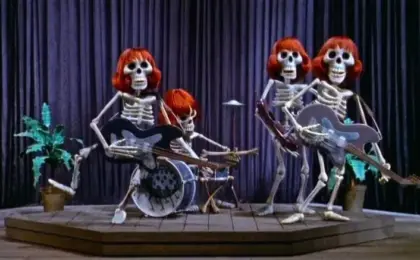
Produced by Rankin-Bass, this lesser-known theatrical feature marked a major departure from the studio’s cheerful, made-for-TV Christmas shorts. Bringing in the legendary vocal talents of horror icon Boris Karloff—in his final Frankenstein-related appearance, voicing the titular mad doctor—Mad Monster Party? serves as a feature-length expansion of the classic monster movie ethos.
The plot revolves around iconic ghoulish characters traveling to Castle Frankenstein to celebrate the doctor’s retirement and witness the reading of his succession. Utilizing Rankin-Bass’s proprietary "Animagic" stop-motion puppetry, the film populates a haunting island fortress with versions of Frankenstein’s Monster and his Bride, Dracula, the Wolf Man, and the Hunchback. Though its musical numbers are uneven, its physical world-building laid foundational groundwork for decades of subsequent dark animation.
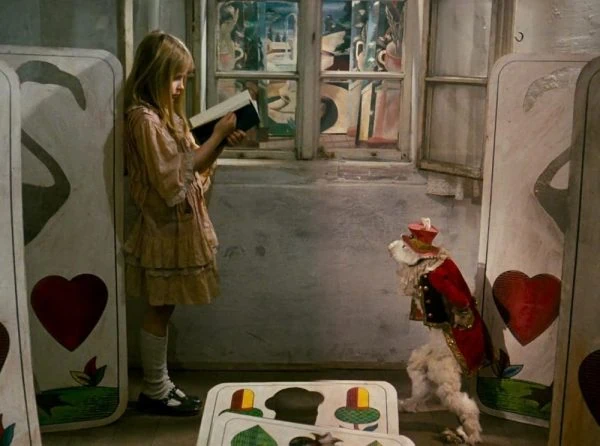
In 1988, Czech surrealist filmmaker Jan Švankmajer—renowned for his deeply unsettling short films—adapted Lewis Carroll’s Alice’s Adventures in Wonderland. Eschewing traditional cute aesthetics, Švankmajer utilized a hybrid of live-action and stop-motion animation, famously bringing Carroll’s creatures to life using taxidermied animals and organic detritus.
The White Rabbit is not a soft plush toy, but a decaying, waistcoat-wearing reanimated corpse shedding sawdust. Wonderland is portrayed not as a whimsical fantasy realm, but as a claustrophobic, decaying labyrinth of doors, drawers, and dusty corridors. While not a conventional horror movie, Alice is profoundly disturbing, capturing the genuinely dark, psychological undercurrents of Victorian children’s literature with uncompromising artistic integrity.
3. The Nightmare Before Christmas (1993)
Directed by Henry Selick and based on a poem and characters by Tim Burton, The Nightmare Before Christmas remains the undisputed titan of Halloween animation. The opening anthem, "This is Halloween," instantly establishes a mood that bridges the gap between autumn dread and winter festivity.
The film follows Jack Skellington, the Pumpkin King of Halloween Town, who stumbles upon Christmas Town and attempts to usurp the holiday. Selick’s direction embraced classic German Expressionism and Gothic architecture, redefining holiday aesthetics for generations of viewers. Beyond its groundbreaking technical execution and Danny Elfman’s iconic musical score, the film endures because it treats the macabre not as evil, but as a vibrant, celebratory culture of its own.
4. Corpse Bride (2005)
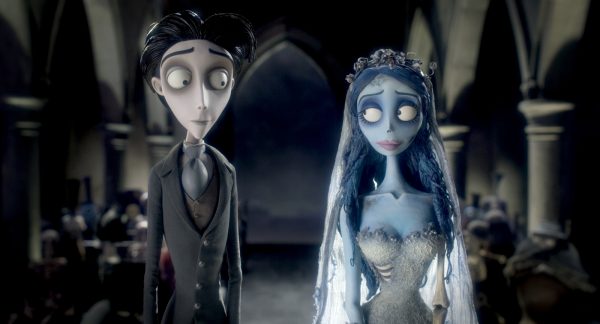
Co-directed by Mike Johnson and Tim Burton, Corpse Bride was Burton’s directorial debut in full stop-motion. Voiced by Johnny Depp, Victor is an anxious groom-to-be who inadvertently proposes to a deceased woman named Emily (Helena Bonham Carter) during a rehearsal in a dark forest, dragging him down into the vibrant, jazz-infused Land of the Dead.
Stop-motion’s notoriously rigorous production pace forced a disciplined, highly efficient editorial approach upon Burton, resulting in a lean, fast-paced 77-minute runtime. The visual contrast between the oppressive, gray-scale Victorian living world and the colorful, kinetic underworld highlights the emotional intelligence running beneath the film’s gothic exterior.
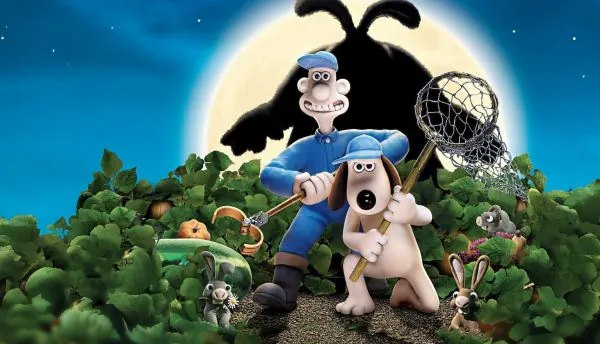
5. Wallace & Gromit: The Curse of the Were-Rabbit (2005)
While not traditionally viewed as an October-specific release, Aardman Animations’ feature-length debut of their beloved claymation duo is an autumnal masterpiece. Steeped in rural English folklore, the plot follows the eccentric inventor and his silent canine companion running a humane pest-control business ahead of the town’s annual Giant Vegetable Competition, only to be terrorized by a colossal, vegetable-munching beast.
Director Nick Park drew direct inspiration from classic Universal monster movies and Hammer Horror productions, consciously filtering them through a cozy, lighthearted British lens. The result is a pitch-perfect monster movie pastiche that provides high-stakes family scares wrapped in soft modeling clay.
6. Coraline (2009)
Adapted from Neil Gaiman’s dark novella and directed by Henry Selick at Laika Studios, Coraline stands as arguably the scariest mainstream family film of the 21st century. The story of a neglected young girl who discovers a seemingly idealized parallel version of her home behind a secret door taps into primal childhood anxieties of abandonment and identity.
The psychological horror of the film is rooted in the uncanny valley: the "Other Mother," with her polished black button eyes and shifting, predatory demeanor, remains a masterclass in cinematic terror. Selick’s refusal to sanitize the source material proved that young audiences could handle sophisticated psychological dread, cementing Coraline as a modern classic for generations of scarred, devoted fans.
7. ParaNorman (2012)
Laika Studios struck gold again with ParaNorman, a supernatural horror-comedy that follows a misunderstood young boy named Norman who can communicate with the deceased. When a centuries-old witch’s curse threatens his Massachusetts town, Norman must rally an eccentric crew of living and dead allies to save his home.
What elevates ParaNorman is its refusal to pander to its audience. By tackling themes of historical mob mentality, bullying, and grief through the lens of a zombie movie, the film honors classic Universal horror tropes while maintaining a sharp, modern wit. Its vivid, late-autumn color palette and tactile character designs make it an essential seasonal watch.
8. Frankenweenie (2012)
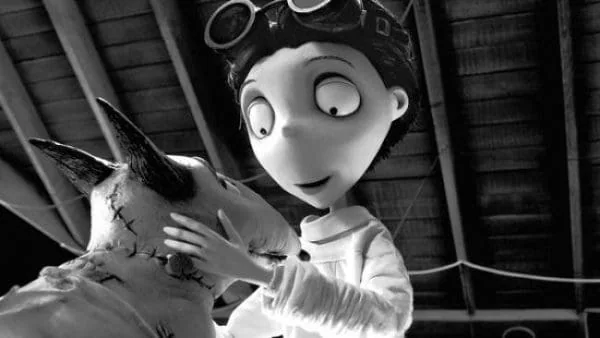
Expanding on his own 1984 live-action short film, Tim Burton returned to stop-motion with Frankenweenie, an affectionate homage to classic creature features. When young Victor Frankenstein loses his beloved bull terrier, Sparky, he uses the power of a lightning storm to reanimate him, sparking a chain reaction as his peers attempt similar scientific resurrections.
Shot in stunning black-and-white stop-motion, the film is stuffed with visual and narrative nods to Frankenweenie’s cinematic ancestors, including James Whale’s Franken(1931), Dracula (1958), Nosferatu (1922), and Godzilla (1954). It balances sincere emotional stakes with ghoulish fun.
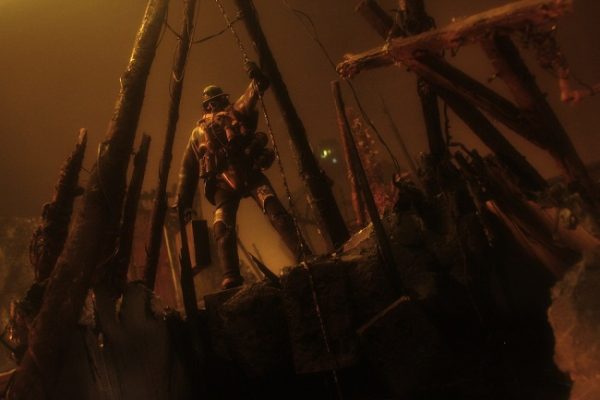
9. Mad God (2021)
Representing the absolute outer limits of the medium, Phil Tippett’s Mad God is a staggering, thirty-year labor of love by a legendary visual effects master. The film follows a mysterious assassin who descends into the depths of a grotesque, post-apocalyptic underground hellscape to detonate an explosive device.
Mad God contains no dialogue and follows no conventional narrative; it is pure, uncompromising experiential horror. Tippett populates this brutalist, industrial nightmare with twitching mutants, bubbling flesh, and corporate monsters. Despite its relentless nihilism, the sheer analog craftsmanship on display—every puppet sculpted, lit, and moved by hand—elicits awe alongside visceral dread.
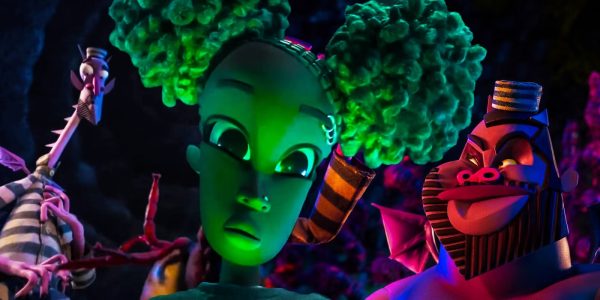
10. Wendell & Wild (2022)
Henry Selick returned to feature filmmaking with Wendell & Wild, co-written with Jordan Peele. The film centers on Kat, a troubled punk rock teen haunted by her past, who inadvertently summons two conniving underworld demons—played by Keegan-Michael Key and Jordan Peele—into the land of the living.
True to his artistic roots, Selick consciously left minor technical imperfections—such as visible seams in the character models—intact to preserve the tactile, handmade warmth of traditional stop-motion. Blending afropunk culture, supernatural corporate corruption, and family trauma, Wendell & Wild proves that stop-motion animation remains a vital vehicle for contemporary storytelling.
Supporting Context & Metrics: The Anatomy of Stop-Motion
To fully appreciate these cinematic achievements, one must understand the staggering logistical realities of the stop-motion industry. Unlike computer-generated imagery, where animators manipulate digital rigs via software, stop-motion requires physical fabrication.
The Frame Rate Standard: Standard film runs at 24 frames per second. Animators typically shoot "on twos," meaning they manipulate a puppet twice for every second of completed film, requiring 12 distinct physical adjustments per second of screen time. A standard 90-minute feature film requires roughly 129,600 individually photographed frames.
Daily Output: An experienced stop-motion animator considers two to three seconds of finished footage—around 36 to 72 usable frames—to be a highly productive day’s work. This painstaking pace explains why feature-length stop-motion projects routinely take anywhere from three to seven years to complete.
Technological Innovation: While the craft remains fundamentally analog, modern studios like Laika have revolutionized production through 3D printing. By utilizing rapid-prototyping color printers, animators can swap out thousands of distinct lower-face plates for a single character, allowing for hyper-nuanced micro-expressions that were impossible during the era of Mad Monster Party?.
Official Industry Perspectives
The enduring appeal of the medium has been championed by its primary architects. Reflecting on the tactile philosophy behind his work, director Henry Selick noted in production interviews:
"There is a physical reality to stop-motion that digital animation struggles to replicate. When you are looking at a puppet on screen, you are looking at something that someone actually touched, sculpted, and positioned with their bare hands. That physical presence triggers a psychological response in the viewer—a sense that the object exists in our physical space, for better or for worse."
Similarly, Phil Tippett reflected on the decades-long journey of completing Mad God as an act of artistic survival: "Stop-motion is a disease of the hands. It is maddening, slow, and punishing, but when you see a lump of clay or armature wire suddenly take a breath and come to life on the silver screen, there is no magic quite like it."
Future Outlook: The Next Chapter of Dark Animation
As the animation landscape evolves, the market for artisanal, hand-crafted horror continues to expand. The success of independent projects and major studio investments indicates that audiences are experiencing digital fatigue. Slick, hyper-polished computer graphics, while efficient, often lack the tangible grit that modern viewers increasingly crave during the autumn season.
With Laika developing upcoming projects like Wildwood and international auteurs continually pushing the boundaries of puppet animation and taxidermy surrealism, stop-motion’s dark golden age is far from over. Whether revisiting the classic melancholy of The Nightmare Before Christmas or diving into the industrial nightmares of Mad God, stop-motion animation remains the ultimate cinematic companion for the long, dark nights of October.


Belum ada komentar. Jadilah yang pertama berkomentar!