

Executive Overview
In the landscape of popular music culture, few phenomena rival the endurance of a well-crafted fan theory. From the persistent myth of Paul McCartney’s untimely demise and replacement in the Beatles to the intricate cryptographic puzzles woven into the oeuvre of British alternative rock icons Radiohead, audiences have long sought to bridge the gap between artistic output and personal mythology. While the Paul Is Dead urban legend is easily undermined by the stubborn survival of McCartney himself, Radiohead’s extensive catalog invites a different breed of analytical obsession. Fans have spent decades decoding hidden messages in music videos, plotting conceptual timelines, and anticipating secret, unreleased albums.
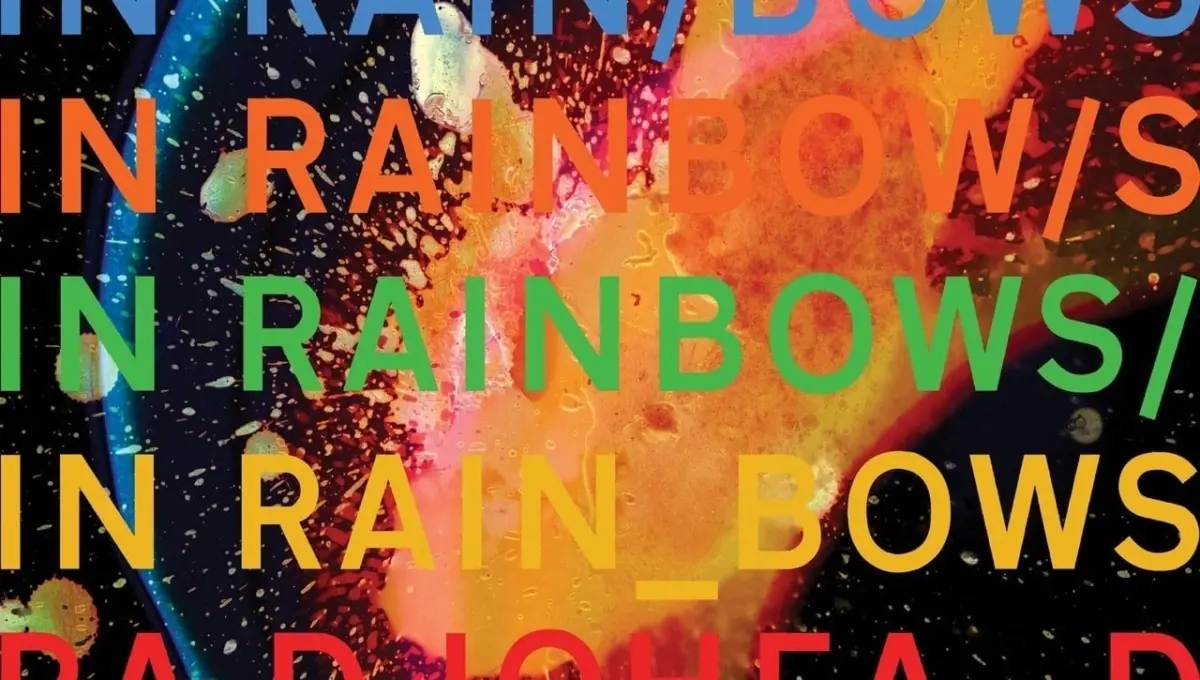
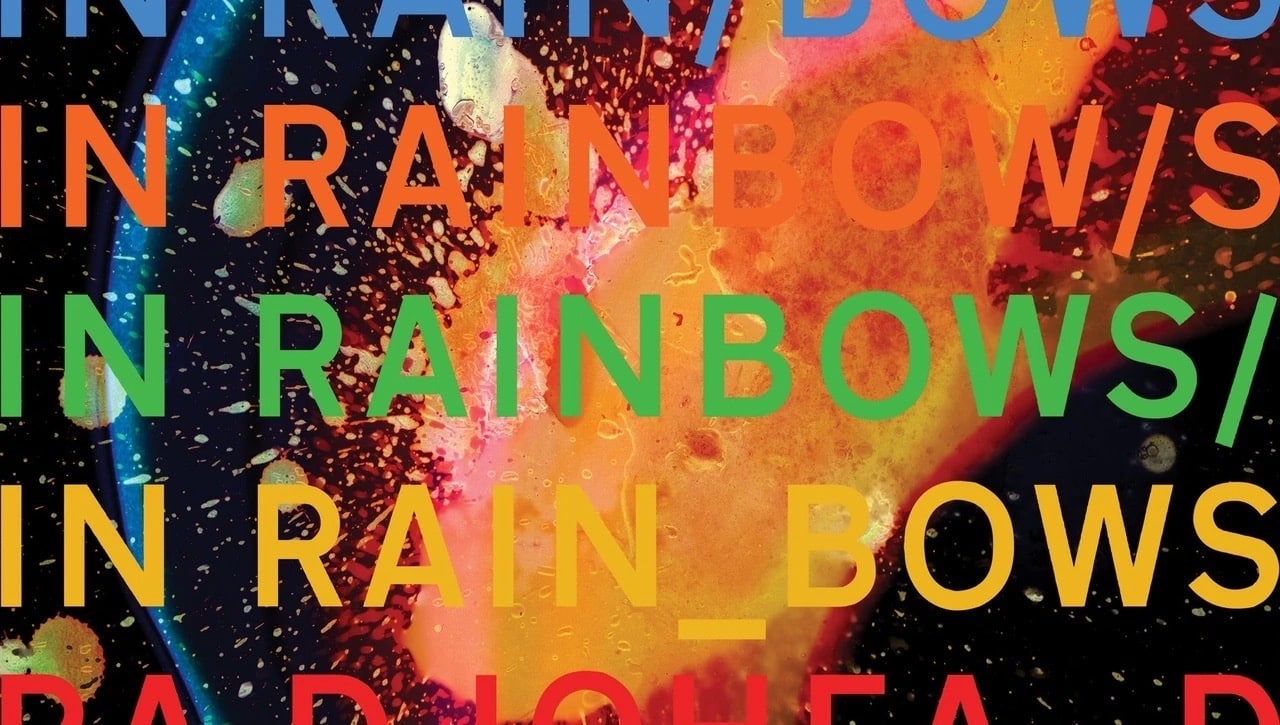
Among these, the "Binary Theory"—a speculative master-narrative linking the band’s landmark 1997 release, OK Computer, with their revolutionary 2007 album, In Rainbows—has captured the imagination of the alternative music community. Proponents argue that these two records, released a decade apart, function as a single, complementary piece of digital architecture based on a complex web of numerology, binary logic, and thematic echoes.
This investigation tests the veracity of the Binary Theory. By analyzing the band’s enigmatic marketing strategies, musical ambiguity, and the psychological frameworks that govern modern fandom—such as Robert Cialdini’s principles of persuasion and Henri Tajfel’s social identity theory—we explore whether the Binary Theory represents genuine artistic genius or merely a masterpiece of misdirected fan passion. Ultimately, while the mathematics and thematic cross-pollination of the theory fall apart under rigorous scrutiny, its existence highlights a symbiotic relationship between an elusive band and an hyper-engaged audience, transforming fan speculation into a self-sustaining marketing engine.
Detailed Chronology: Radiohead’s Riddles, Musical Mysteries, and the Genesis of Speculation
Radiohead’s journey from alternative rock success stories to enigmatic avant-garde architects is punctuated by deliberate sonic and visual obfuscation. Following their breakthrough with the 1992 single "Creep," the band achieved global fame with OK Computer, a record that crystallized late-90s anxieties regarding technological saturation. Rather than chasing commercial formulas, the band pivoted toward intricate arrangements, abstract lyricism, and metrical ambiguity.
This penchant for mystery is embedded deep within their history:
- The Narrative Ambiguity of Music Videos: The 1995 video for "Just" features a man lying motionless on a sidewalk, refusing to explain his actions until the song’s climax, where his whispered reason compels the entire crowd to lie down beside him. Director Garth Jennings has famously kept the secret, refusing to disclose the line. Similarly, "Karma Police" features a driverless car chasing a protagonist, while the animated video for "Burn the Witch" (A Moon Shaped Pool, 2016) utilizes a pastoral village exterior to mask a sinister, Wicker Man-esque cult.
- Rhythmic Illusions and Hidden Ciphers: Musically, Radiohead frequently subverts traditional time signatures. "Pyramid Song" (from 2001’s Amnesiac) features a veiled 4/4 meter that only asserts itself midway through the track. Music theorists, such as Brad Osborn, have noted that its palindromic 3-3-4-3-3 rhythm mirrors the geometric proportions of a pyramid, alongside subtle nods to the historical BACH musical cipher. Backmasking is also present; the reversed vocal snippet at the end of "Daydreaming" yields the line "half of my life, half of my love," widely associated with the passing of Thom Yorke’s long-term partner, Rachel Owen.
- Physical Artifacts and Hidden Booklets: From the secret booklet concealed within the jewel case of Kid A (2000) to cryptographic computer code hidden inside the cassette tape of the OK Computer OKNOTOK 1997 2017 remaster, the band consistently conditions its audience to look beyond the surface.
Against this backdrop, the release of In Rainbows in 2007 provided fertile ground for the band’s most elaborate conceptual myth-making to date.
Supporting Context & Metrics: Dissecting the Binary Theory and the Golden Ratio
Sixteen years after its release, In Rainbows is celebrated for its stripped-down, accessible sound and its unprecedented pay-what-you-want digital distribution model. However, among dedicated fans, the album is equally famous for inspiring the Binary Theory, originally posited by journalist Kevin Flick shortly after the album’s drop.
The Mechanics of the Binary Theory
Flick’s theory rests upon the omnipresence of the number ten surrounding In Rainbows:
- Cryptic Precursors: The album’s online announcement was reportedly preceded by nine cryptic, ungrammatical messages featuring the Roman numeral "X" (e.g., xendless xurbia).
- Temporal Symmetry: The album was announced on October 1, 2007, leaving a ten-day window until its October 10 release. Rumors also suggested the initial digital download was hosted across exactly ten servers.
- Linguistic and Visual Markers: The title contains ten letters; the letters "i" and "o" in the band’s name on the cover art visually mimic the binary digits
1and0; and the record contains precisely ten tracks.
Connecting this to OK Computer—whose working title was reportedly Ones and Zeroes—Flick argues that OK Computer represents 01 and In Rainbows represents 10. The logical apex of this theory is a complementary alternating playlist, beginning with OK Computer’s opening track, "Airbag," and concluding with In Rainbows’ closing track, "Videotape."
The Flaws in the Math
Despite some uncanny musical transitions—such as the metronome beats of "Airbag" flowing cleanly into "15 Step"—closer inspection reveals significant fractures in the theory:
- Track Discrepancies: Alternating In Rainbows (10 tracks) with OK Computer (11 tracks) creates an imbalance. Theorists conveniently exclude the spoken-word track "Fitter Happier" from OK Computer to make the math work.
- Temporal Inaccuracies: The albums were actually released on May 21, 1997, and October 10, 2007—nullifying the exact ten-year interval claim. Furthermore, archives show only eight, not nine, pre-release cryptic images.
- The Golden Ratio Alternative: Competing fan theories argue that In Rainbows is structured around the golden ratio, pointing to the vocal delivery of the album title in "Reckoner" at timestamp 2:50. While guitarist Ed O’Brien has cheerfully acknowledged the poetry of this coincidence, he has confirmed it was entirely unintentional.
Official Statements: How the Band Responds
Faced with elaborate fan conspiracies, the members of Radiohead have consistently balanced amusement with polite evasion. When questioned about the Binary Theory, drummer Phil Selway offered a characteristically dry response: "I’m sure that there must be. No smoke without fire… I feel like the custodian of Radiohead secrets here."
Frontman Thom Yorke has been similarly playful, acknowledging the ingenuity of his audience while ultimately debunking the rigidity of their claims:
"There’s one about… ‘ten’ comes up a lot… every time… I get asked about it… I say, ‘Oh, yes, absolutely! We thought of all that.’ Yes… [The fans are] usually slightly wrong… I think it’s nice that people are interested enough to come up with all these mad ideas."
These responses illustrate a dynamic where the band refuses to confirm or deny outright, allowing the mythology to organically fuel their cultural footprint without tying their artistic hands to immutable fan constructs.
Future Outlook: Enigmatic Marketing, Cognitive Psychology, and the Modern Fansafe
How do theories like the Binary Theory persist in the face of contradictory evidence? The answer lies at the intersection of music marketing and cognitive psychology.
The Psychology of Scarcity and Reciprocity
Radiohead’s long hiatuses, post-2005 independence from major labels, refusal to play by traditional promotional rules, and anti-streaming stances align precisely with Robert Cialdini’s "Principle of Scarcity." As Cialdini notes in Influence, humans are disproportionately motivated by potential loss; withholding easy access to music or information creates an aura of high value.
Concurrently, the band’s pay-what-you-want release model for In Rainbows leverages Cialdini’s Rule of Reciprocity. By offering seemingly generous, boundary-pushing gestures, Radiohead fosters a deep sense of mutual obligation, inspiring fans to invest emotional and intellectual labor—such as constructing complex theories—in return.
Social Identity and the Maintenance of Fandom
Drawing on Henri Tajfel’s Social Identity Theory, participation in specialized fan communities forms a core pillar of individual self-identity. Deciphering obscure musical codes allows fans to feel part of an exclusive, enlightened ingroup. Furthermore, continuity theory suggests that maintaining this deep relationship with an artist over decades provides a stabilizing sense of personal consistency.
As the music industry continues to grapple with digital oversaturation—where algorithms flood streaming platforms with thousands of tracks daily—Radiohead’s calculated opacity serves as an effective counter-model. By inviting fans into a participatory ecosystem of remixes, treasure hunts, and cryptographic Easter eggs, the band has engineered a self-sustaining marketing machine.
Ultimately, the Binary Theory may not hold up under musicological or mathematical review, but its enduring appeal underscores a profound truth: fan theories are rarely about the cold, hard facts of an album’s creation. Instead, they represent a vibrant, collaborative dialogue between artist and audience—transforming passive listening into an active, communal ritual of artistic exploration.







Belum ada komentar. Jadilah yang pertama berkomentar!