

Executive Overview
In the sprawling landscape of popular music culture, few phenomena rival the enduring allure of fan conspiracy theories. From the morbid persistence of the "Paul Is Dead" urban legend to elaborate speculations regarding hidden albums, audiences have long treated the oeuvres of major British rock bands as cryptographic texts waiting to be cracked. Among contemporary artists, few groups invite this level of forensic scrutiny quite like Radiohead.
For decades, the Oxford-formed alternative rock pioneers have cultivated an enigmatic image characterized by abstract lyricism, metrically complex arrangements, and unconventional marketing strategies. Among the myriad fan-generated conjectures surrounding the band, the "Binary Theory" has emerged as one of the most mechanically fascinating. Proposed shortly after the release of their seventh studio album, In Rainbows (2007), the theory posits a deliberate mathematical and thematic link between that record and their 1997 landmark masterpiece, OK Computer.
By mapping the binary digits "01" and "10" onto the respective album releases—separated by exactly a decade—supporters argue that the two records were designed to interlock into a single, alternating playlist. While a forensic examination of the music, numerology, and historical records reveals that the theory ultimately collapses under its own weight, it provides a compelling case study. It offers a window into the intersection of modern music marketing, cognitive psychology, and the deeply human compulsion to find order in chaos.
Detailed Chronology: From OK Computer to the In Rainbows Phenomenon
To understand how fans arrived at the Binary Theory, one must trace the chronological milestones that laid its groundwork. Radiohead’s trajectory from mid-1990s alternative hitmakers to avant-garde legends is marked by a steady escalation of musical mystery and deliberate obfuscation.
The Groundwork of Ambiguity
Following their initial commercial breakthrough with 1992’s "Creep," Radiohead quickly retreated from conventional rock stardom, culminating in the critical triumph of 1997’s OK Computer. The album captured an era’s ambient anxieties about technological alienation, setting a high-water mark for the band. However, rather than capitalizing on this momentum with traditional promotional cycles, the band pivoted toward abstraction.
With 2000’s Kid A and 2001’s Amnesiac, Radiohead abandoned standard single releases in favor of "blips"—short animated vignettes paired with sonic fragments—and embedded secret booklets inside CD jewel cases. On a musical level, they introduced complex rhythmic illusions. Tracks like Amnesiac’s "Pyramid Song" weaponized metric ambiguity, hiding a straightforward 4/4 time signature behind a syncopated, palindromic rhythm (3-3-4-3-3) that mirrored the geometric proportions of a pyramid.
The Birth of the Binary Theory
By 2007, Radiohead revolutionized the music industry once again. Frustrated by traditional release cycles and corporate leaks, they dropped In Rainbows as a surprise digital download utilizing an unprecedented "pay-what-you-want" pricing model.
Shortly after the album’s release, music journalist Kevin Flick published a thesis that would captivate the fanbase: the Binary Theory. Flick observed an obsessive recurrence of the number ten leading up to and during the rollout of In Rainbows.
- The Lead-Up: The album announcement was allegedly preceded by nine cryptic messages sent to fans featuring the Roman numeral "x."
- The Timetable: The album was officially announced on October 1, 2007, giving fans a precise ten-day countdown to its October 10 release. Initial downloads were rumored to have been routed across exactly ten servers.
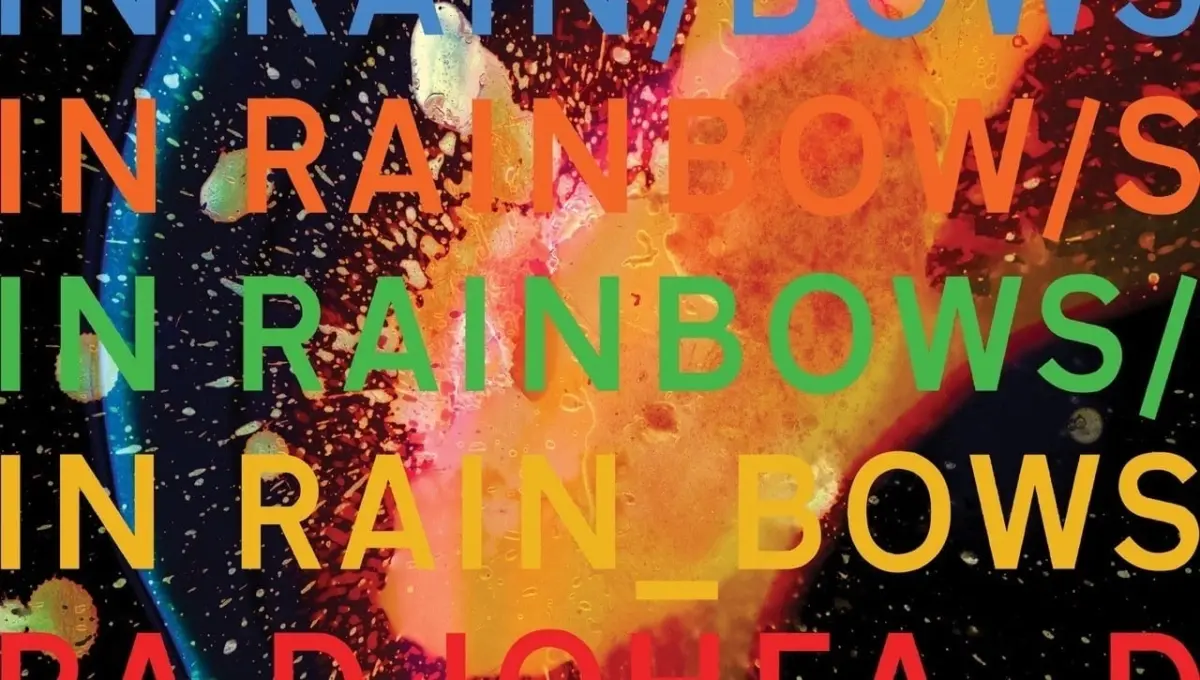
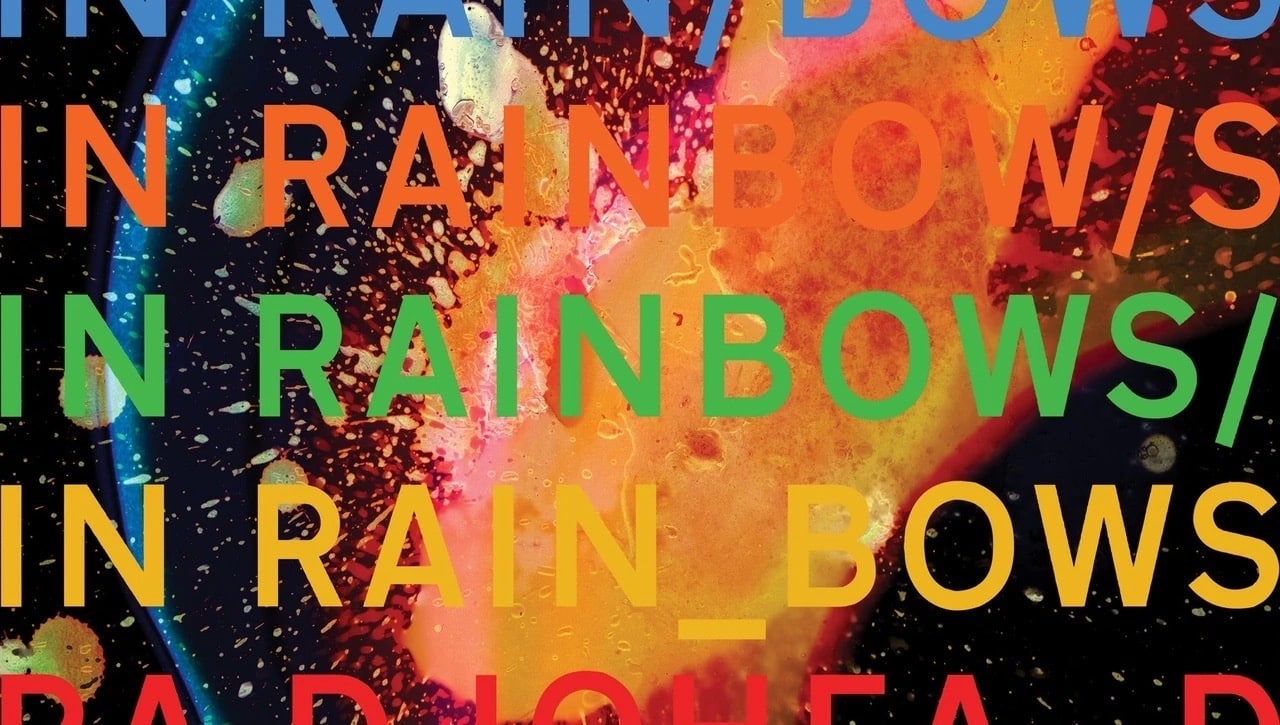
- The Numerology: The title In Rainbows contains ten letters; the font choices on the album artwork stylize the letters "i" and "o" to resemble the number ten; and the record features precisely ten tracks.
Flick argued that OK Computer—whose working title was reportedly Ones and Zeroes—represented "01" in binary code, while In Rainbows, released a decade later, represented "10." The logical conclusion of this numerological exercise was an alternating playlist: beginning with OK Computer’s opening track, "Airbag," and concluding with In Rainbows’ closing track, "Videotape," interleaving the 11 tracks of the former with the 10 tracks of the latter.
Supporting Context & Metrics: Forensic Breakdown of the Theory
When music theorists and dedicated fans test the Binary Theory by compiling the alternating playlist, the results are paradoxically both surprising and flawed.
Sonics and Coincidences
Played sequentially without artificial manipulation, certain transitions within the merged playlist exhibit startlingly fluid audio continuity. For instance, the mechanical metronome beats leading into "15 Step" (In Rainbows) can be seamlessly integrated into the rhythmic memory of OK Computer. Similarly, the reverb-drenched fade of "Subterranean Homesick Alien" provides an ethereal preamble to "Nude."
Furthermore, thematic ties between the records are undeniable. Frontman Thom Yorke has frequently described In Rainbows as exploring "that anonymous fear… sitting in traffic, thinking, I’m sure I’m supposed to be doing something else," drawing a direct psychological line back to the urban alienation of OK Computer.
The Fractures in the Mathematical Framework
Despite these moments of sonic synchronicity, closer inspection shatters the structural integrity of the theory:
- Track Discrepancy: OK Computer contains 11 tracks (including the spoken-word interlude "Fitter Happier"), while In Rainbows features 10. To make the alternation work, proponents must arbitrarily excise "Fitter Happier" from the count, introducing a methodological bias.
- Date Inconsistencies: The foundational premise relies on a neat ten-year symmetry. However, OK Computer was officially released on May 21, 1997, whereas In Rainbows dropped on October 10, 2007—falling several months short of an exact decade-long interval.
- The Data Errors: Flick’s original blog post cited nine cryptic promotional messages as evidence, but archival checks reveal only eight images, none of which featured the "xendless xurbia" branding claimed by the theory’s architects.
Moreover, the Binary Theory is not the only numerological framework applied to the band’s catalog. Competing factions within the fandom have argued for the "Golden Ratio Theory," claiming that the title words In Rainbows are whispered in the backing vocals of "Reckoner" at the precise mathematical point that mirrors the golden ratio of the album’s runtime. While mathematically tighter, guitarist Ed O’Brien readily debunked the notion, noting that while the emotional climax sits at the heart of the record, "it wasn’t deliberately done like that, obviously."
Official Statements: How the Band Reacts to Myth-Making
Artists are rarely straightforward when confronted with elaborate fan conspiracies, and Radiohead is no exception. Their public responses oscillate between deadpan humor, feigned astonishment, and gentle bemusement.
When drummer Phil Selway was pressed about the validity of the Binary Theory in interviews, his responses leaned into playful evasion:
"I’m sure that there must be. No smoke without fire… I feel like the custodian of Radiohead secrets here."
Thom Yorke has taken an equally self-aware approach, acknowledging the fans’ ingenuity while deflating the grander conspiracy claims:
"There’s one about… ‘ten’ comes up a lot… every time… I get asked about it… I say, ‘Oh, yes, absolutely! We thought of all that.’ Yes… [The fans are] usually slightly wrong… I think it’s nice that people are interested enough to come up with all these mad ideas."
These remarks underscore a fundamental truth: rather than engineering multi-album binary algorithms, the band recognizes that cultivating an atmosphere of mystery acts as a powerful catalyst for audience engagement.
Future Outlook: The Psychology of the Riddle in Modern Music
Why do fans continue to construct elaborate theories in the face of contradictory evidence? The answer lies at the intersection of cognitive psychology and modern digital media ecosystems.
The Scarcity Principle and Cognitive Load
In his seminal work Influence, psychologist Robert Cialdini outlines the "principle of scarcity," noting that humans are inherently more motivated by the thought of losing or missing out on something than by gaining something of equal value. Radiohead’s long hiatuses, erratic communication styles (such as the fictional persona Chieftain Mews), and intermittent physical releases create an aura of profound scarcity.
This scarcity counters the modern "paradox of choice" identified by Barry Schwartz. In an era where streaming algorithms oversaturate listeners with infinite content, human beings experience decision fatigue. As outlined by Clark L. Hull’s "law of less work," consumers naturally gravitate toward cognitive avoidance—filtering out the noise by hyper-focusing on a select few artists who demand deeper intellectual investment.
Fandom as Identity Formation
Furthermore, Henri Tajfel’s Social Identity Theory highlights that an individual’s sense of self is deeply tied to group memberships. By offering interactive elements—such as the In Rainbows fan-music video contest, the open-source stem releases for The King of Limbs, or hidden cassette codes on the OKNOTOK remasters—Radiohead actively invites its audience to co-create the art.
When fans decode hidden messages, map binary playlists, or trade conspiracy theories, they are engaging in a communal ritual that solidifies their identity within the fandom. Cialdini’s principles of social proof and consistency ensure that once a fan publicly commits to a theory, the psychological drive to maintain cognitive consistency protects that belief from rational deconstruction.
Conclusion
Ultimately, the Binary Theory does not survive rigorous musicological or historical scrutiny. It is an artifact of overactive fan imagination, much like the desperate speculation that characterized the rollout of The King of Limbs in 2011. Yet, dismissing these theories as mere delusion misses the point.
Fan theories like the binary alignment of OK Computer and In Rainbows serve a vital cultural function. They provide audiences with profound cognitive pleasure, foster tight-knit micro-communities, and transform passive listening into an active, participatory art form. For Radiohead, these unprompted mythologies operate as a frictionless, self-sustaining marketing engine—proving that in the modern musical landscape, the mysteries we invent are often just as valuable as the music that inspires them.









Belum ada komentar. Jadilah yang pertama berkomentar!